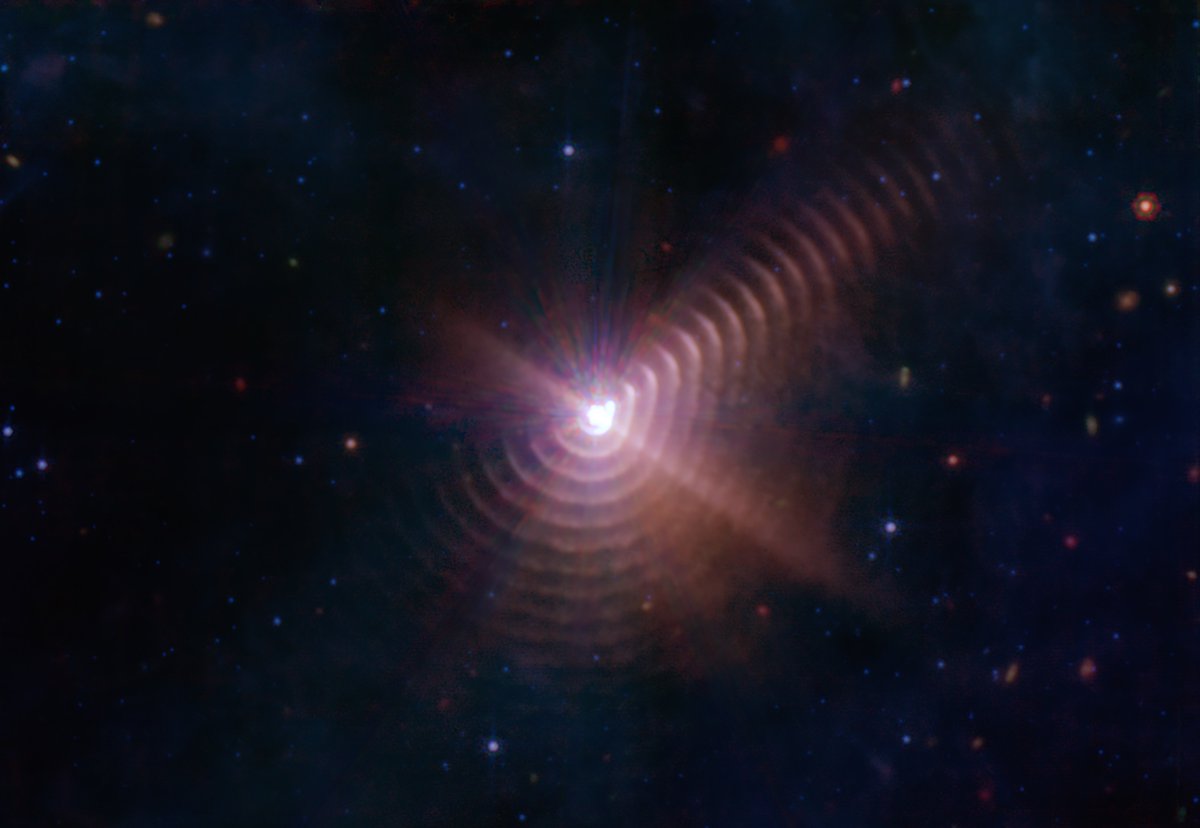
For the first time, @NASAWebb saw rings of stardust from a rare type of dual star system.
Every eight years, these two stars come close to each other, and the interaction forms a new cosmic ring. Ground scopes saw two; Webb revealed at least 17: https://t.co/7yuUMtPAxa
🌟 A star is born!
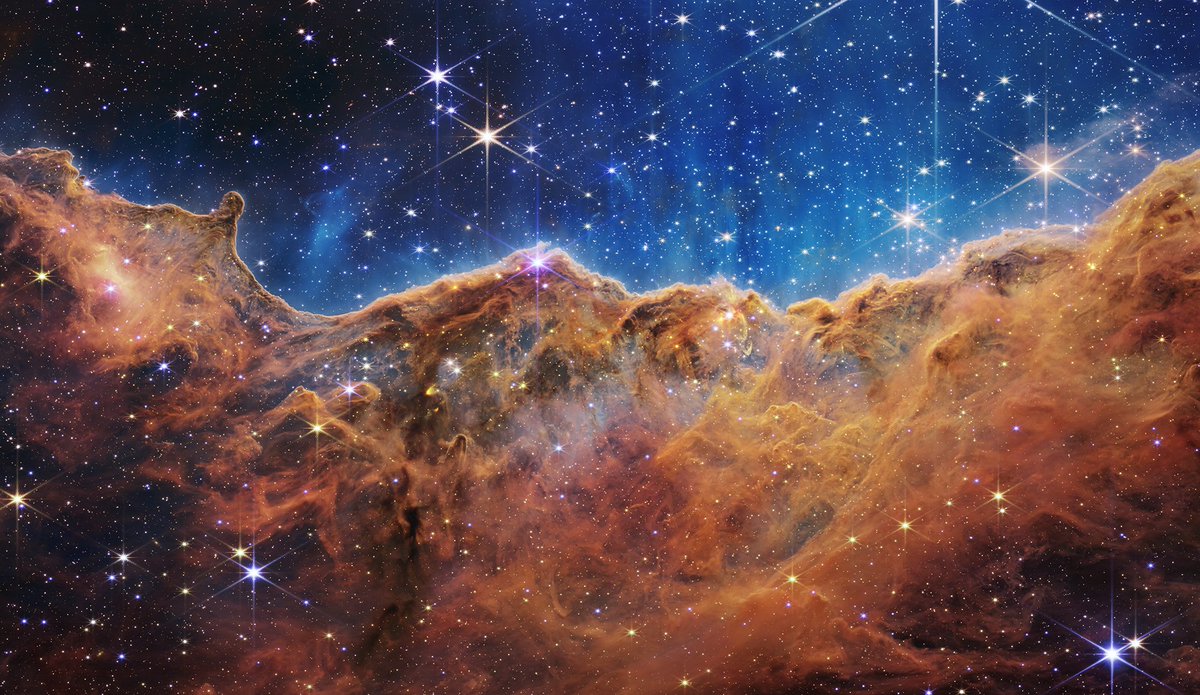
Behind the curtain of dust and gas in these “Cosmic Cliffs” are previously hidden baby stars, now uncovered by Webb. We know — this is a show-stopper. Just take a second to admire the Carina Nebula in all its glory: https://t.co/tlougFWg8B #UnfoldTheUniverse
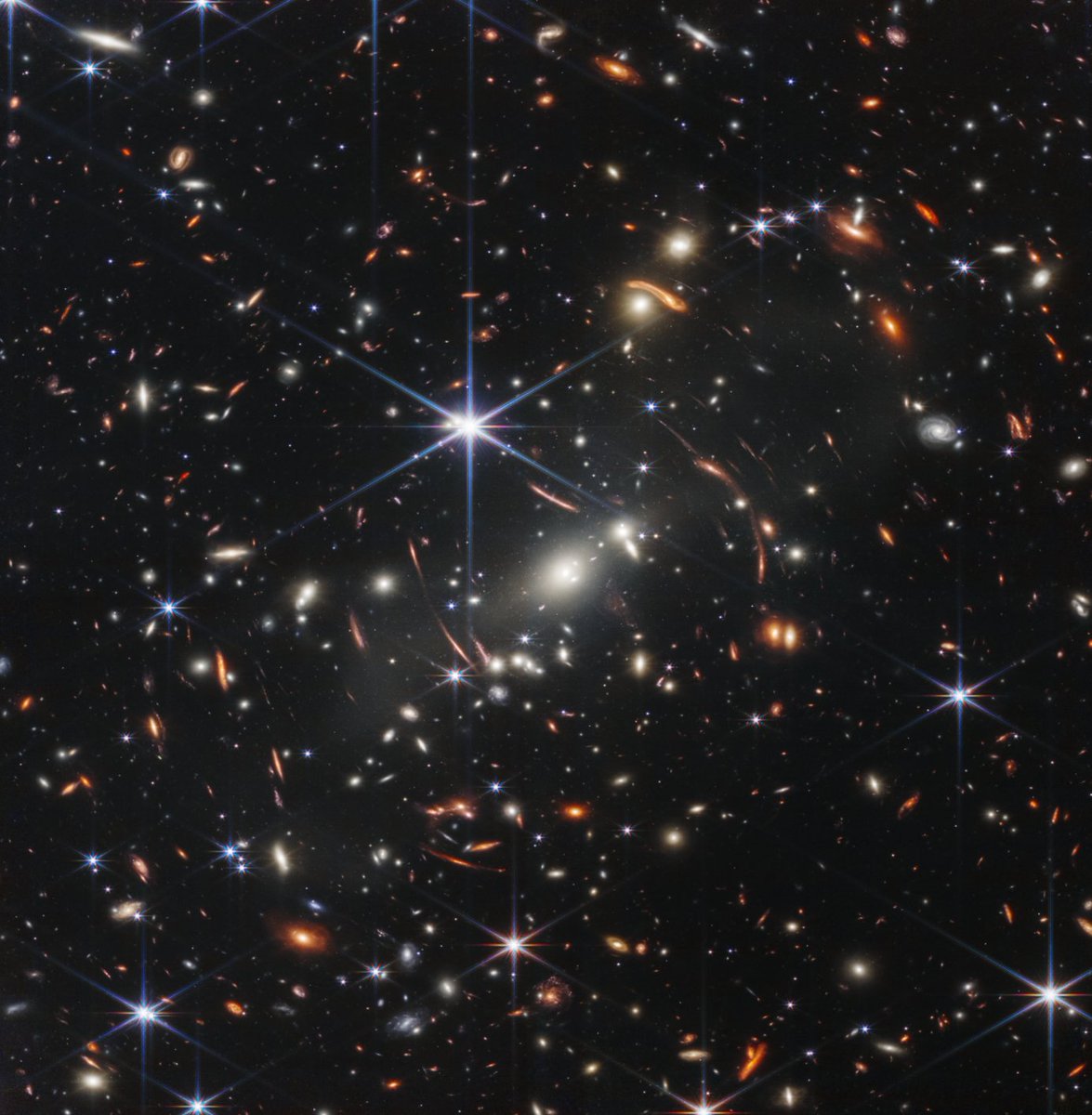
👀 Sneak a peek at the deepest & sharpest infrared image of the early universe ever taken — all in a day’s work for the Webb telescope. (Literally, capturing it took less than a day!) This is Webb’s first image released as we begin to #UnfoldTheUniverse: https://t.co/tlougFWg8B
What does our planet look like from space?
If you look down on Earth from just 300 miles above the surface, you can see bright swaths of red and green, or yellow and purple light from the upper atmosphere. This is called airglow.
Learn more: https://t.co/dWwkH0uuwY
🎧 What do young stars sound like?
Space is mostly quiet, but a sonification project translates data from @NASAHubble and our @ChandraXray telescope into audible sounds. Sit back, relax, and listen to the universe: https://t.co/ZgzoC8f2qS