Excited to share our new paper in @BMCBiology! Mnemiopsis muscle cells share key molecular and physiological properties with other animal excitable cells, supporting the presence of an excitable cell in the last common ancestor of animals.
https://t.co/9TvyRF0aGb
I’m sorry but I still believe in academia as a place where you can nurture a lot of creativity in the service of basic science (or ‘fundamental science’ as the cool kids say now).
https://t.co/1gJ2s9Ra7u
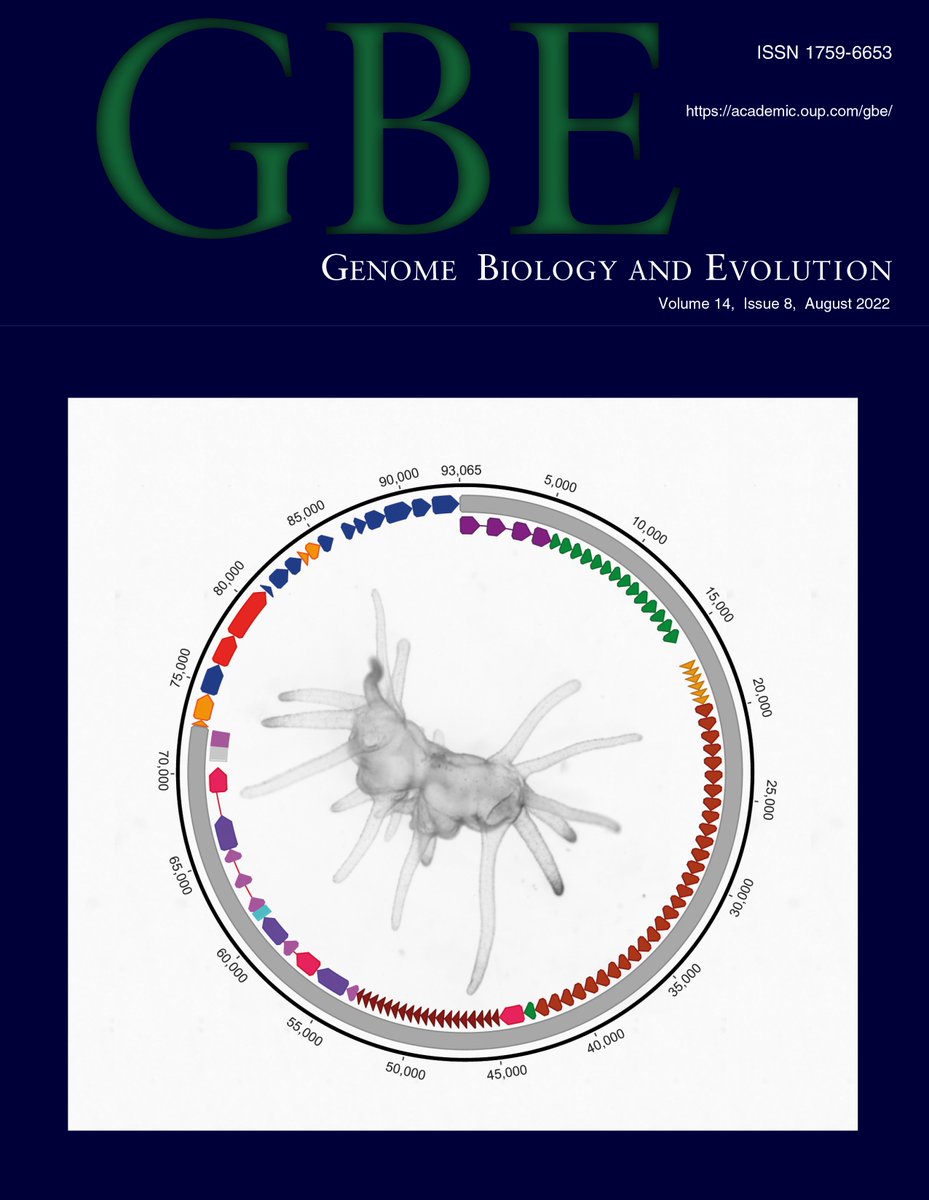
Aren't #Myxozoa weird parasites! Five protein-coding genes, two rRNAs, no tRNA and several unidentified ORFs. From single to fragmented #mtgenomes.
Evolution of myxozoan mitochondrial genomes: insights from myxobolids https://t.co/dnn9hs4aXK
Fantastic, @DorotheeHuchon et al.!
What an amazing 27 year long study! Wolves with parasites are 46x more likely to become pack leaders. I wonder if similar effects of parasitism can be observed in other animal groups and what the consequences are for disease spread and the ecosystem.
Short-read phylogenomics isn't dead! Check patchwork, our new tool to fully exploit the power of genome skimming. We use it especially to retrieve USCOs. Awesome work by @fethalen and Clara Köhne.
😍The supplementary of this paper includes a movie of Ceratomyxa plasmodia swimming 😍 ! #Myxozoa are amazing!
Expanding the geographic distribution of the freshwater parasite Ceratomyxa (Cnidaria: Myxozoa)... - https://t.co/XvPJEopOXE #ScholarAlerts
Fish disease is one of #aquaculture’s biggest challenges but also an opportunity for positive impact. Aquaculture can use technology to get ahead of disease outbreaks, says @tonychen091, co-founder & CEO of @Manolinaqua, in a guest blog for @Economist_WOI: https://t.co/8MmidpJtxx