Reporting on a shared atherogenic mechanism across multiple non-LDL lipoproteins that contributes to residual cardiovascular risk: https://t.co/21aucBEW0M
Cabodevilla et al. identify a region in apolipoprotein B critical for atherosclerosis development and generate a small peptide that reduces atherosclerosis in mice.
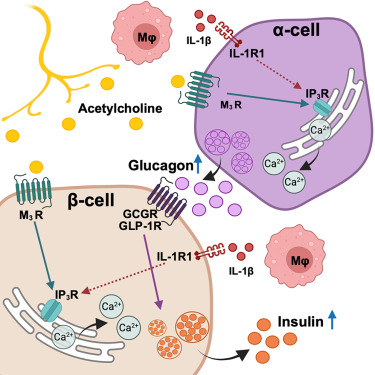
α-cell-derived glucagon positioned as a gatekeeper of immune and neuronal control of insulin secretion at fasting glucose in mice @CellReports https://t.co/1sBKrZEbEf
Did you see the #moon and #planets this week? Gene Hettel in Calamba, Laguna, Philippines, captured this image on Thursday of the moon, Venus and Jupiter plus a storm on the horizon. Thank you, Gene!
See more images from EarthSky Community Photos at: https://t.co/kXWoPxm4lT
Can type 1 diabetes progression be delayed in children? New insights on immunotherapy are helping reshape early intervention strategies.
Read more: https://t.co/nluztHgquQ
#Endocrinology
A robot guided by an AI just performed surgery with near-perfect accuracy and no human intervention.
In a major step toward autonomous surgical systems, researchers at Johns Hopkins University have successfully trained an AI-guided robot to perform gall bladder removal on a dead pig with near-complete autonomy.
The dual-layer AI model—trained on 17 hours of human surgery footage—translated video input into verbal commands like “clip the second duct,” which were then converted into precise tool movements.
The robot completed all 17 surgical tasks across eight procedures with 100% task success, demonstrating real-time self-correction and only limited human intervention.
While full autonomy in live human surgeries remains years away, the milestone marks a significant advance in surgical robotics.
Experts emphasize that while the robot occasionally needed tool changes or adjusted missed grabs, its ability to detect and fix its own mistakes shows the growing reliability of AI-assisted procedures. With regulators expected to weigh in heavily before human applications, researchers plan to move next toward testing in live animals. The long-term goal? Safer, more precise surgeries that reduce complication rates and ease strain on surgical teams.
source
Journal reference: Ji Woong (Brian) Kim. Science Robotics. 10 (4). SRT-H: A hierarchical framework for autonomous surgery via language-conditioned imitation learning
#ArchitizerAwards
505 First Avenue responds to the city of Seattle removing an elevated highway, taking advantage of the broader waterfront renovation by creating a new front door to the city, a new circulation hub for the neighborhood, and fresh opportunities to engage with the revitalized waterfront.
📍Seattle, WA, United States
Project by: Olson Kundig
Photos by: Kyle Johnson
Details: https://t.co/p8DYAOor1T
Did you miss the conjunction of Jupiter and Venus last night? You didn't! Not really, because the pair will still appear close together tonight. Look to the western sky after sunset. In this view from June 10th, see if you can spot Mercury near the horizon as well.
#ProjectOfTheDay: Design Studies Collaborative by O'Neill Rose Architects
O'Neill Rose Architects transformed a neglected local landmark into a serene, multifunctional workspace.
📍Brooklyn, Kings County, NY, United States #ArchitizerAwards
Photos by: Brooke Holm, Michael Moran Photography
Details: https://t.co/HlNXgzTLSj
Instead of designing a house within a landscape, this project rebuilds an entire ecosystem around a family retreat.
📍 United States
Project by: Design Workshop
Details: https://t.co/4b7PNMmbC4
Watch for the #BlueMoon tonight. It'll be blue in name only, as the 2nd full moon for May. It’s also the most distant full moon of 2026. The crest of the full moon falls at 8:45 UTC on May 31. That’s 3:45 a.m. CDT Sunday morning.
Read more at: https://t.co/PDIGbfZr9z
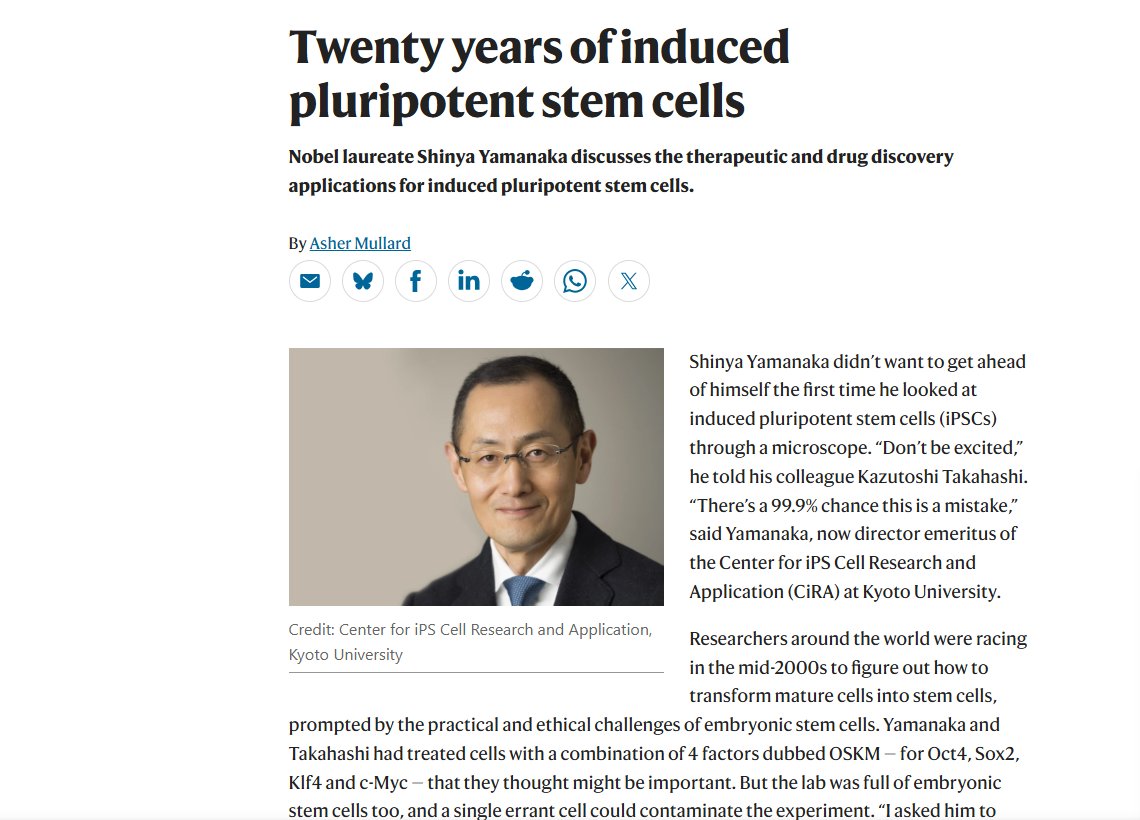
Twenty years of induced pluripotent stem cells
https://t.co/mw8AhRlYmk
Nobel laureate Shinya Yamanaka discusses the therapeutic and drug discovery applications for induced pluripotent stem cells in this new interview