USC's Stevens Neuroimaging & Informatics Institute pioneers neuroimaging tech to study the brain, sharing data globally. Home of the Lab of Neuro Imaging (LONI)
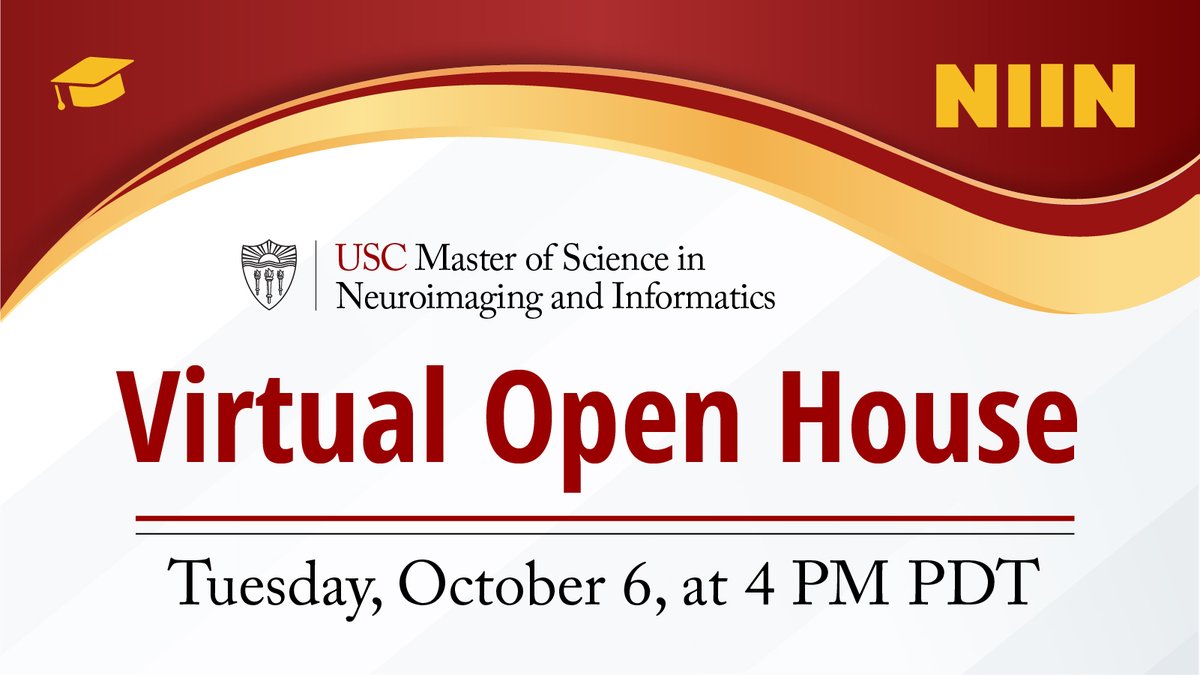
📣 Our Virtual Open House is Tues., Oct. 6, at 4 p.m. PDT
📚 Get to know our curriculum, where our alumni have taken their careers, and the research you can get involved in.
💻 To register, email [email protected] with the subject line "Open House" and include your full name.
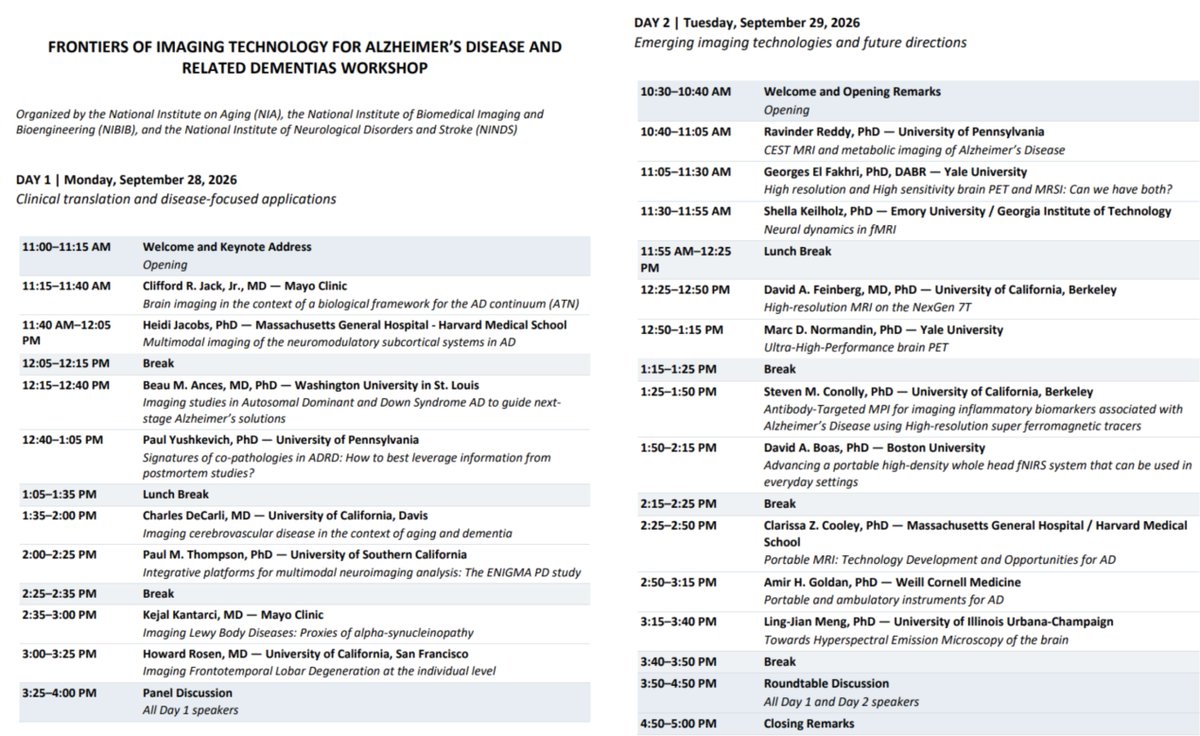
🔥 🧠 JOIN US* TOMORROW FOR AN ONLINE WORKSHOP: 🧠 🧠 - see line-up in screenshot
🔥 NIA/NINDS/NIBIB Workshop: Frontiers of Imaging Technology for Alzheimer's Disease and Related Dementias – September 28–29, 2026 – Virtual
🔥 This NIH-sponsored workshop will bring together clinical and technology-development scientists to discuss emerging noninvasive brain imaging technologies and their translation into Alzheimer’s disease and related dementias research and clinical studies. Topics will include advances in MRI, PET, portable imaging technologies, multimodal imaging, and other innovative approaches, with presentations from leading experts in the field. 🧠 More info: https://t.co/4NnwpJBFJb
🔥 *My talk is here, I put it on YouTube: https://t.co/YrnOsOhdCX
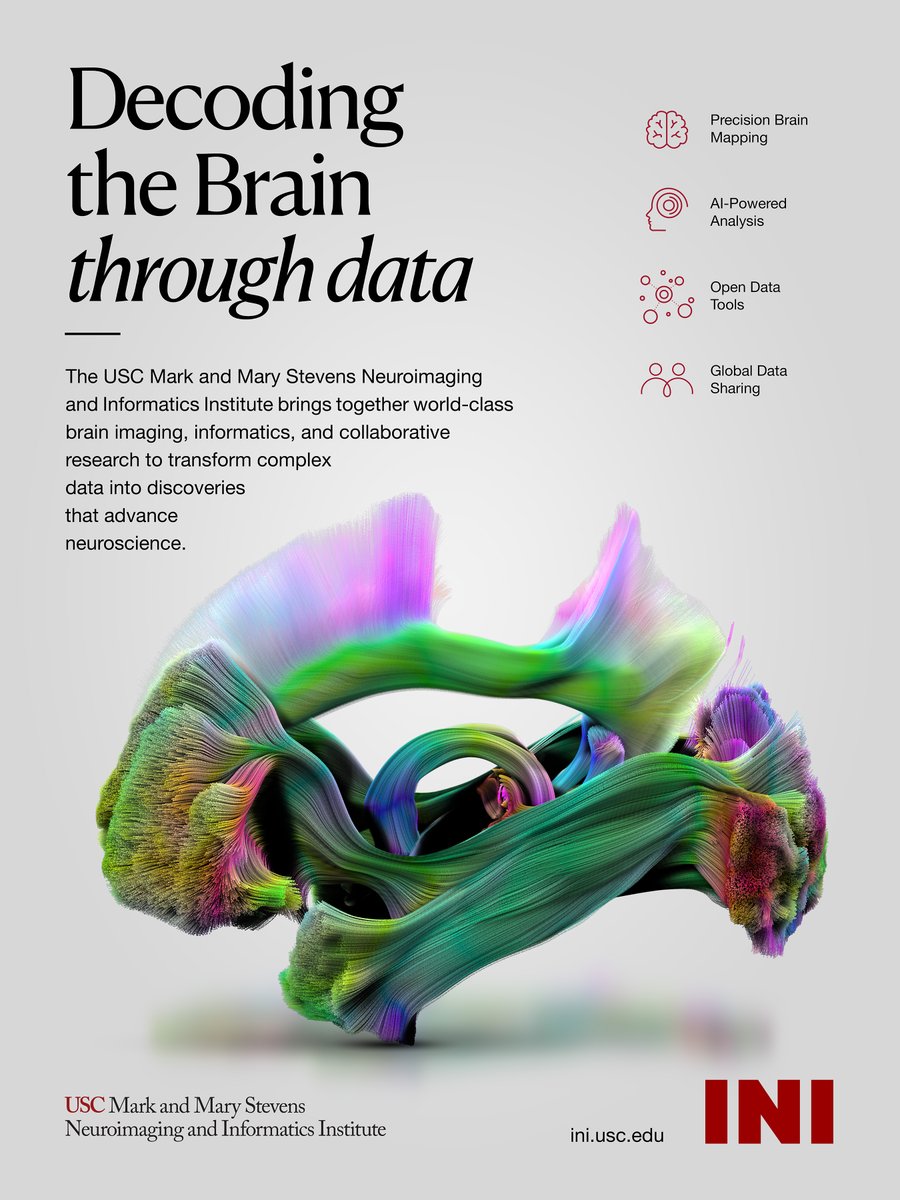
Decoding the brain through data.
We bring together world-class brain imaging, informatics, and collaborative research to transform complex data into discoveries that advance neuroscience. 🧠 https://t.co/y8ZiDhvSMQ
Our @USCNIIN Fall Seminar Series runs Tuesdays, 12 to 1 PM, on Zoom. Weekly speakers cover neuroscience, brain imaging, AI/data science methods, and more, with a Q&A after each talk 🧠
Register once, then join the talks that interest you: https://t.co/QtT4nXc14k
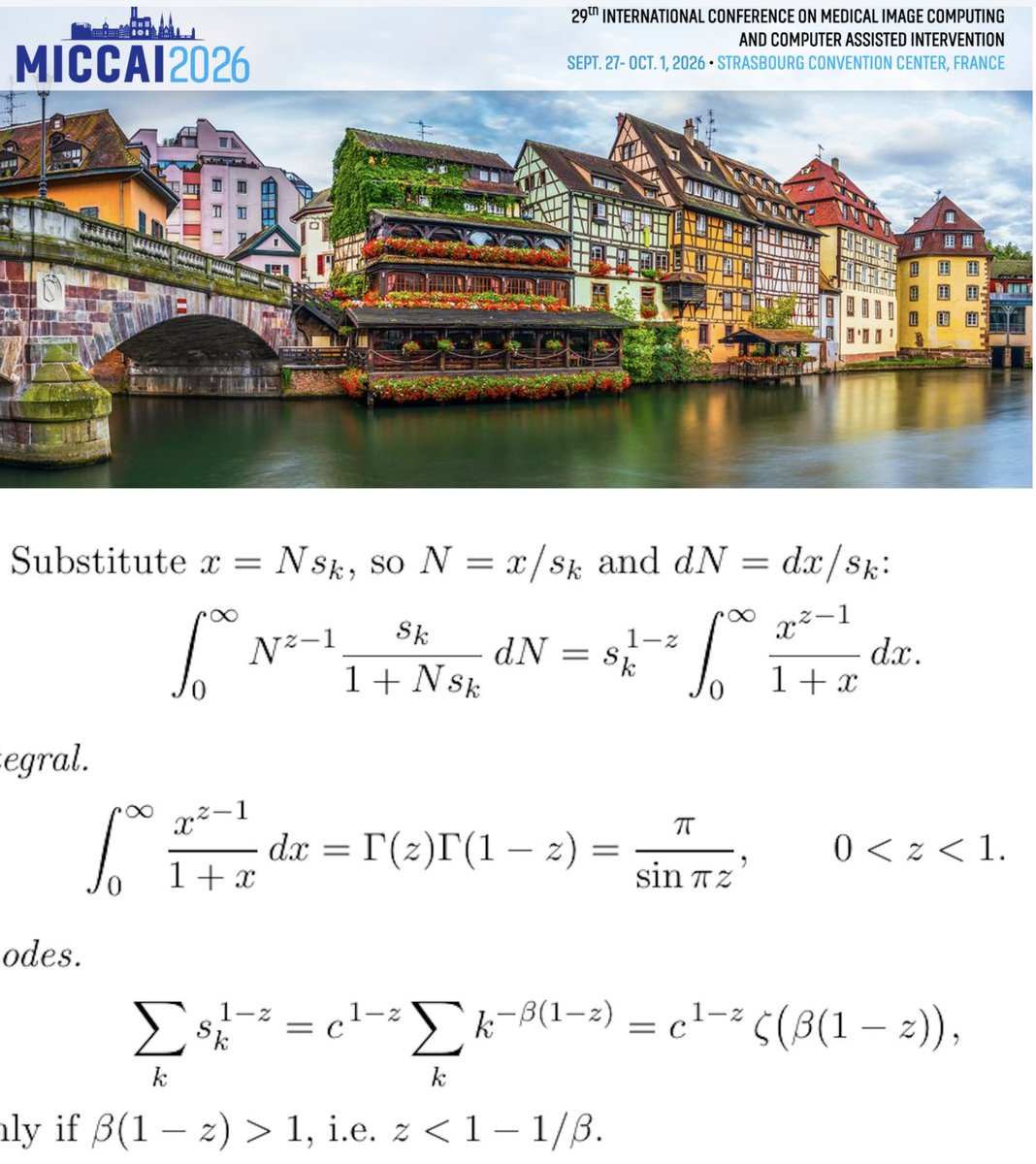
Can AI diagnose every brain disease from a scan with over 90% accuracy, and how much data would it take?
In this #MICCAI2026 talk, our associate director @PTenigma takes you through the world's largest neuroimaging collaboration 🧠 💻
https://t.co/Y8PhPheTfr
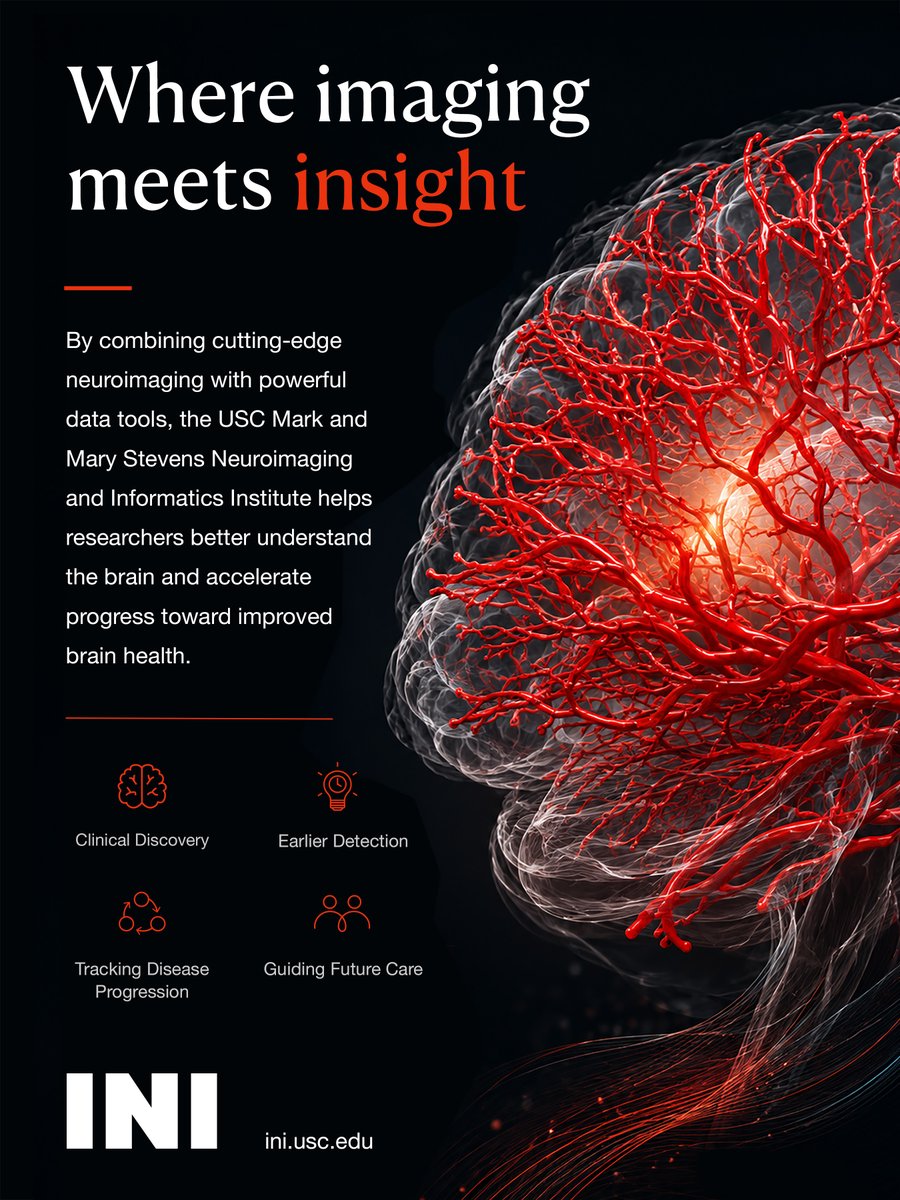
We harness large-scale brain data, artificial intelligence, and imaging technology to reveal patterns that deepen our understanding of the human brain. 🧠 https://t.co/y8ZiDhwqCo
🧠 NEW study led by Fanhua Guo, Chenyang Zhao, and @loft_lab introduces CCSI, a noninvasive imaging measure showing how closely blood flow matches brain cells' energy needs in the human cortex. Published in @NatureComms.
📰 Read the press release: https://t.co/IbgN8CR9XM
Our team, including postdoctoral scholar @ravirbot, built an AI-powered tool that maps the corpus callosum, the bundle of nerve fibers connecting the brain's two hemispheres 🧠
The @dailytrojan featured the work:
https://t.co/RehPeyMoMR
Learn more about what thousands of brain scans can reveal about disease 🧠 🧬
Our associate director, @PTenigma, takes us inside the worldwide @enigmabrains Consortium to explore how large-scale brain studies are revealing disease stages, distinct Parkinson’s subtypes, and differences between Parkinson’s and Alzheimer’s.
He also looks at how AI could help bring brain imaging discoveries closer to clinical use.
🎥 https://t.co/2UsSX1SAY1
Join us in celebrating Bayla Breningstall for receiving an NRSA Fellowship from the National Institute on Aging (NIA)! 🎉
Bayla’s research maps subtypes of Alzheimer’s histopathology, such as amyloid and tau, onto images of human brain sections from the USC Alzheimer’s Disease Research Center, with the goal of better understanding how amyloid and tau pathology contribute to AD presentation.
Congratulations, Bayla! 👏 👏
Coding and brain data, together from day one 💻
Our fall boot camp covers Bash, MATLAB, and Python, plus brain mapping and MRI data basics, a strong technical foundation before the research begins💪🧠
The path to solving Alzheimer's disease is paved with data🧠💻
In a new video, our director, Arthur Toga, explains how our researchers use advanced neuroimaging and AI to uncover the brain changes behind Alzheimer's, and how our Image and Data Archive, the world's most widely used repository of observational Alzheimer's data, powers global research and drug development.
Watch the full video: https://t.co/1UqWq8sZoL
New preprint from our researchers Yali Huang and Lu Zhao: the low-frequency signal fluctuations in the brain's white matter, long dismissed as background noise, turn out to be genetically influenced. Analyzing brain scans and genetic data from more than 35,000 UK Biobank participants, our team found this activity is heritable, most strongly linked to genes tied to cognitive ability, with weaker and inconclusive ties to neuropsychiatric disorders.
Read the preprint: https://t.co/EJDt1iYqha
What does day one look like for NIIN's newest class? 🧠
Our students recently wrapped up orientation at Stevens Hall, meeting faculty, discussing coursework, and getting to know the facilities at @USCLONI. Excited to see where this cohort takes their training! Welcome aboard!
🎉Congrats to PhD student Amaryllis Tsiknia on her new paper in Brain!
🧠We evaluated longitudinal cortical thinning in older adults from HABS-HD with and without type 2 diabetes.
Check out a summary of our findings below ⬇️
💻Read our paper here: https://t.co/ZUq0tSGdpX
As summer winds down, we’re looking back at a season of discovery and innovation at the Stevens INI ☀️🧠
Our summer newsletter highlights new research on bipolar disorder, Alzheimer’s disease, stroke, aging, and brain health. It also explores an emerging quantum computing approach that could help make MRI faster and celebrates recent awards and accomplishments across our team.
Check out the digital newsletter✌️https://t.co/q5IOfmWwjV