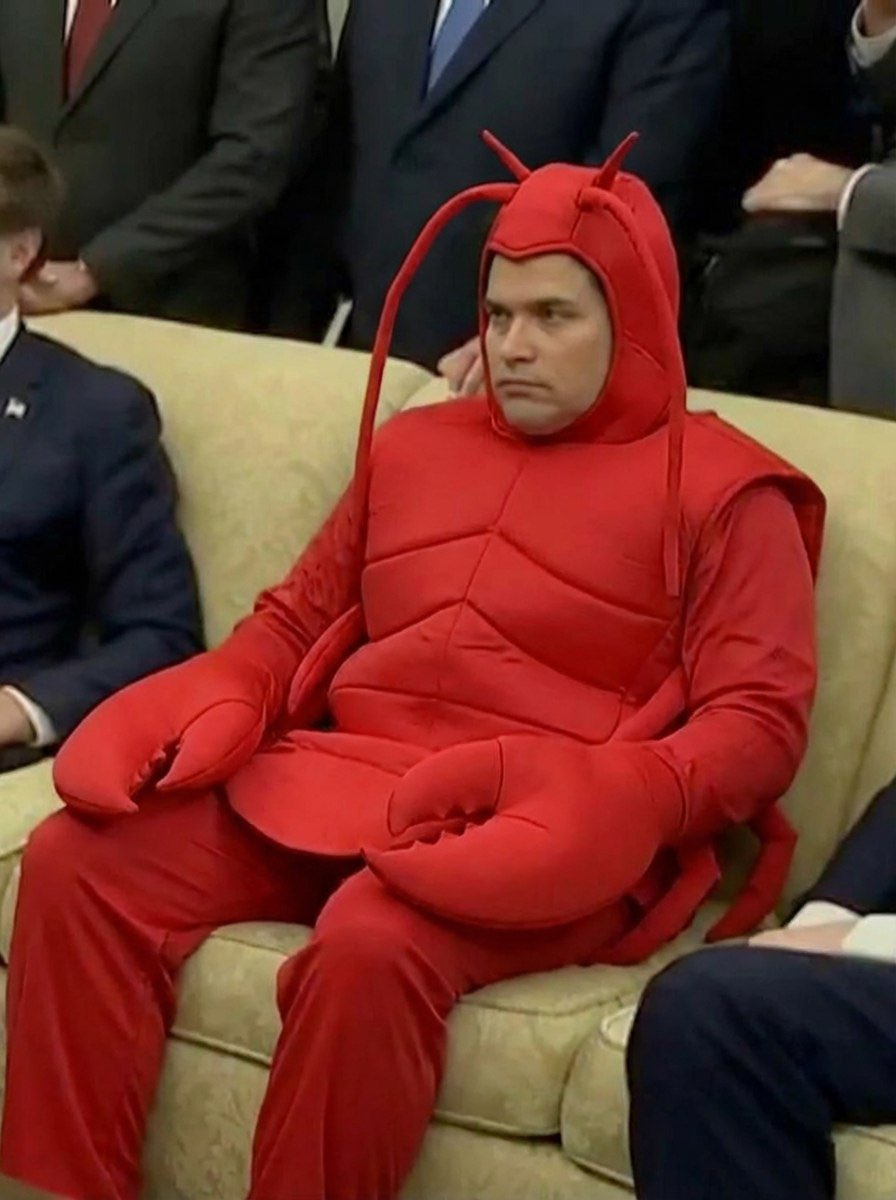
Are you 40? If you are, it's time to finnally buy a WinRAR license! Thanks to @buraktuyan for creating this awesome video that no one asked for but that everyone needs! 🤣😎
We just killed Loom and Screen Studio.
Clueso agent can capture any screen-recording of your product. Fully autonomously.
It can even edit the video with perfectly timed zoom-in effects, spotlights to highlight important UI elements, and generate stunning motion graphics to create a polished launch video.
Check it out at https://t.co/aHQONwnEUw
I made a website that plays bangers from indian barbershops
before you became fancy and started visiting salons. you once went to a 'saloon'. ₹20 haircuts. simple hairstyles with music that could fix your soul.
https://t.co/j3E8VfwiUU
Satya Nadella says LinkedIn merged four job titles, product manager, designer, front-end engineer and back-end engineer, into one:
"I'll give you at LinkedIn, we used to have product managers, we had designers, we had front-end engineers, and then we had back-end engineers and so on."
"So what we did is we sort of took those first four roles and combined them. In fact, increased scope and said, they're all full-stack builders."
"So at the same time, as you can imagine, if we're to build an AI product today, there's a complete new workflow, right? It starts with evals, right?"
"So basically, there's this eval to science, to infrastructure."
"And so evals are done by these full-stack builders and what have you and product managers in the new form, the infrastructure is built by the systems engineers at the back-end because they support the science that supports the product."
"So in some sense, there's a new loop and you have to structurally change."
LinkedIn has already put this into hiring. Its Associate Product Manager program is finished, and the replacement, the Associate Product Builder track, teaches code, design and product management at the same time.
Evals sit at the front of that workflow rather than the end, so writing them is now part of building the product instead of a check before shipping.
- Satya Nadella (@satyanadella), Chairman and CEO of Microsoft (@microsoft), with the All-In Podcast (@theallinpod) at USA House, Davos 2026.
When starting a marketplace, focus on getting more of whichever side is rarest, which is almost always buyers rather than sellers. (If it's sellers, you've discovered a gold mine.)
Sam Altman says an AI will be a better CEO of OpenAI than he is, and that he expects it reasonably soon:
"If we had an AI system that could do a better job at making decisions than anyone we could possibly have, be, say, president of the United States, would we, and like confidently, much better, would we politically or societally want that? It's very unclear. Most people I think today at least would say probably not."
"Or, you know, like an AI CEO of a big company, would you rather have, I think it'd be awesome for OpenAI to have an AI CEO. But I think a lot of people would be like, ah, that's a little scary."
"But I have no delusions that an AI will not be a better CEO of OpenAI than me at some reasonably soon time."
"If that's true, and if some companies or countries don't do that, and others do, and AI is much better, like that will have a real impact in economic competitiveness, national competitiveness, things like that."
"I think people will feel increasingly like, we either do worse, or we put the AI in more and more, influential positions."
"I think people will always want human board members, and that's probably a really great idea."
Read that third quote twice. He is not predicting this for other companies. He is saying it about his own job.
Then look at the pressure he describes right after. Nobody has to be convinced that an AI CEO is a good idea.
If one company hands over the decision and pulls ahead, everyone else picks between falling behind and doing the same. Competitive pressure does the deciding, and what most people would want stops mattering.
His answer to that is human board members. I would take it. I also do not think it is enough on its own.
A board oversees a CEO by reading what it is told, once a quarter. That works because a human CEO can be questioned, and thinks slowly enough for humans to follow along.
What does a board actually check when the thing it oversees makes a thousand consequential calls a day? Nobody has built that. Not for a single AI system anywhere.
- Sam Altman (@sama), CEO of OpenAI, at TreeHacks 2026.
Told my wife I’m down about $60k in the stock market the past couple weeks.
She said why don’t you just sell at the top?
She’s a genius.
Never even thought of that.
your specific knowledge + ai that vibes with you > entire departments of people who don't
this is the leverage Naval talked about, just faster than expected
VCs won't fund you. Accelerators won't accept you. "Experts" won't validate you.
You're solo. You're bootstrapped. You don't have the right background.
Here's what actually happens:
You pick one tight niche. You build for the network you already have. You ignore everyone telling you it won't work.
Then you start making money while they're still waiting for permission.
The unconventional path doesn't need institutional approval.
It just needs you to ship.
your org chart is about to be exposed as bad folder structure
when claude code needs to understand your business to ship features, every bullshit role becomes visible
/deprecated/vp-of-synergy is getting deleted
prediction: within 24 months every company using claude code will have flattened their architecture into a monorepo not because it’s better engineering
because the ai literally works better that way
we’re going to optimize for machine readability over human opinions