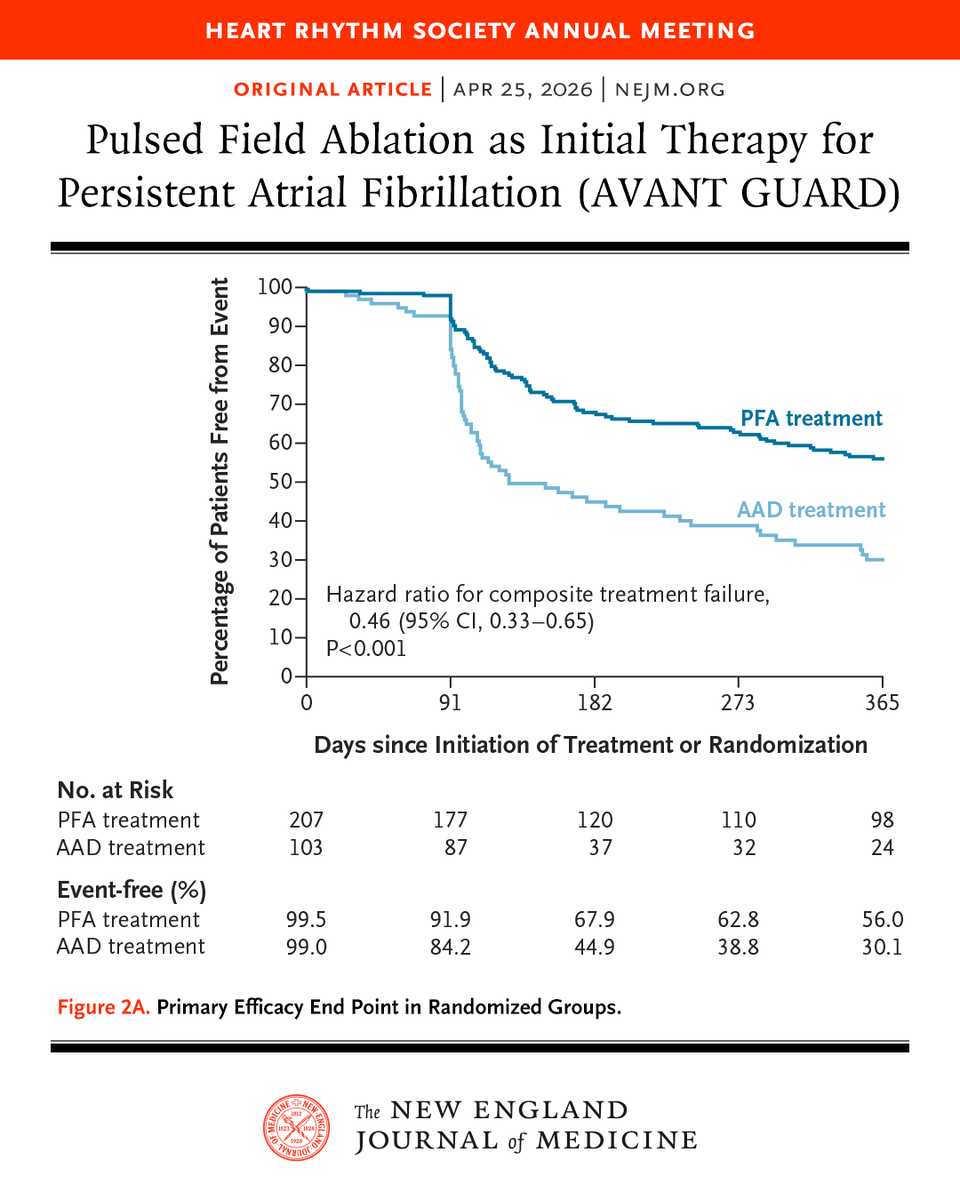
Presented at #HRS2026:
In patients with persistent atrial fibrillation, first-line treatment with pulsed field ablation reduced the recurrence of atrial arrhythmias at 12 months as compared with antiarrhythmic drugs. Full AVANT GUARD trial results: https://t.co/milHy26ojJ
@HRSonline
Results from the SURVIV study presented during a Late-Breaking Clinical Trial session at #ACC26: mViV vs. rMVR For Mitral Bioprosthetic Valve Dysfunction
Get full details: https://t.co/0vB0iZrxzU #CardioX
Summary of all Late-Breaking Trials at #ACC2026 – take home points
@ACCinTouch@ACCmediacenter@JACCJournals
1. HI-PEITHO: Ultrasound-facilitated catheter-directed thrombolysis led to a lower risk of PE-related death, cardiopulmonary decompensation or collapse, or recurrence of PE. vs anticoagulation alone in intermediate-high risk PE.
five studies I would put at the top of the ACC.26 March 28–30, 2026, in New Orleans
1.CHAMPION-AF — primary results comparing left atrial appendage closure vs oral anticoagulation in patients with atrial fibrillation.
2.STEMI-Door to Unload — results of primary left ventricular unloading in anterior STEMI without cardiogenic shock
3.Spironolactone in the Treatment of Heart Failure
4.TAVI Without Routine PCI — a randomized trial testing transcatheter aortic valve implantation without routine percutaneous coronary intervention.
5.Discontinuation of β-blocker Therapy in Stabilized Patients After Acute Myocardial Infarction
#ACC26 #Cardiology #MedTwitter #CardioTwitter #HeartHealth #Healthcare
@JACCJournals@ACCinTouch@DrMarthaGulati@hvanspall@BiykemB@ankeetbhatt@ShelleyZieroth@Hragy@cardioceptor
https://t.co/qdUNXUfOEl
🫀 Vasopressin in Cardiogenic Shock: Are we underusing a key tool?
A recent ESC Heart Failure review provides a comprehensive analysis of vasopressin in cardiogenic shock, covering pathophysiology, clinical evidence, and therapeutic applications.
While traditionally associated with distributive shock, vasopressin may play a crucial role in selected cardiogenic shock phenotypes.
🔍 Key takeaways:
• Cardiogenic shock is a heterogeneous syndrome requiring phenotype-driven therapy
• Vasopressin offers a non-adrenergic mechanism, potentially improving perfusion pressure while reducing catecholamine-related adverse effects
• Particularly relevant in:
– Low SVR / mixed shock states
– Post-cardiac arrest shock
– Tachyarrhythmia-related cardiogenic shock
• Important to recognize scenarios where vasopressin may be detrimental.
🎯 The message is clear:
We should move toward physiology-guided, individualized vasopressor strategies rather than a one-size-fits-all approach.
📖 Highly recommended reading for intensivists and cardiologists managing shock.
ESC Heart Failure (2026) 13, xvag053 https://t.co/s8awez1jKj
#CardiogenicShock #Vasopressin #CriticalCare #Cardiology #Hemodynamics #ESC #ICU