SFCC is building a cadet rank system. Here’s how it works and why.
> Series 1: Cadet/Enlisted — Active Development
We’re actively developing our first series of ranks so our pilot squadron (Space Coast) can begin pursuing advancement.
Cadets ages 12–17 will progress through enlisted ranks — from entry-level Specialists through Senior NCO grades. The focus is foundational skills, teamwork, basic drill, physical training, and introduction to space science.
We’re modeling after how Sea Cadets and Young Marines leverage enlisted ranks — proven frameworks that have worked for decades.
Once enough cadets achieve the maximum enlisted rank AND we’re absolutely sure the system is fully functional with any issues resolved, we’ll consider releasing the next series. This stabilization period could take 2-3+ years.
> Series 2: Cadet/Officer — Future Phase
Officer ranks will only be released after Series 1 gate criteria are met:
- Enlisted ranks operating smoothly for 2+ years
- Demonstrable need for officer structure (squadron size, leadership billets)
- Board selection process tested and functional
Senior cadets (ages 15–17) who demonstrate exceptional leadership may eventually earn officer ranks and serve in command billets. Focus: indirect leadership, organizational management, STEM specialization.
Timeline: Could take 3-5+ years from now, depending on how we scale.
> Series 3: Cadet/Warrant Officer — Long-Term
Collegiate-level warrant officer ranks are reserved for a select few cadets in academies or ROTC (ages 18–21). This series will only be released after officer ranks are established and stable — potentially 5+ years from now.
C/WOs select a specialization track (Space Operations, Cyber Operations, AI, or Strategic Leadership) while mentoring younger cadets. They’re technical specialists and mentors, not commanders — operating on a parallel track outside the cadet chain of command.
#SpaceForce #USSF #SemperSupra #Artemis #NASA
Preserving and improving quality of life for service is essential to the nation’s defense.
CMSSF John F. Bentivegna testified before Congress yesterday on how Guardians’ quality of life goes hand-in-hand with the lethality of the force.
More: https://t.co/fAU67bn2kS
We've definitely considered this. Right now, we’re sticking to our four main pillars (Space, Cyber, AI, and Leadership). Intelligence elements like OSINT and threat analysis are already tucked under Cyber and SDA, but we agree a standalone Intel track is needed. We’re planning to revisit this as we scale, but for now, we want to prove our current model works before adding more to the plate.
SFCC is building a cadet rank system. Here’s how it works and why.
> Series 1: Cadet/Enlisted — Active Development
We’re actively developing our first series of ranks so our pilot squadron (Space Coast) can begin pursuing advancement.
Cadets ages 12–17 will progress through enlisted ranks — from entry-level Specialists through Senior NCO grades. The focus is foundational skills, teamwork, basic drill, physical training, and introduction to space science.
We’re modeling after how Sea Cadets and Young Marines leverage enlisted ranks — proven frameworks that have worked for decades.
Once enough cadets achieve the maximum enlisted rank AND we’re absolutely sure the system is fully functional with any issues resolved, we’ll consider releasing the next series. This stabilization period could take 2-3+ years.
> Series 2: Cadet/Officer — Future Phase
Officer ranks will only be released after Series 1 gate criteria are met:
- Enlisted ranks operating smoothly for 2+ years
- Demonstrable need for officer structure (squadron size, leadership billets)
- Board selection process tested and functional
Senior cadets (ages 15–17) who demonstrate exceptional leadership may eventually earn officer ranks and serve in command billets. Focus: indirect leadership, organizational management, STEM specialization.
Timeline: Could take 3-5+ years from now, depending on how we scale.
> Series 3: Cadet/Warrant Officer — Long-Term
Collegiate-level warrant officer ranks are reserved for a select few cadets in academies or ROTC (ages 18–21). This series will only be released after officer ranks are established and stable — potentially 5+ years from now.
C/WOs select a specialization track (Space Operations, Cyber Operations, AI, or Strategic Leadership) while mentoring younger cadets. They’re technical specialists and mentors, not commanders — operating on a parallel track outside the cadet chain of command.
#SpaceForce #USSF #SemperSupra #Artemis #NASA
Big thanks to @SpaceForceAssoc for hosting a screening of our planetarium film ‘Always Above’ at the @af_academy. It’s currently being shown at dozens of planetariums nationwide to explain the Space Force mission. Experience the “flat” version here: https://t.co/Eooqbo1CC2
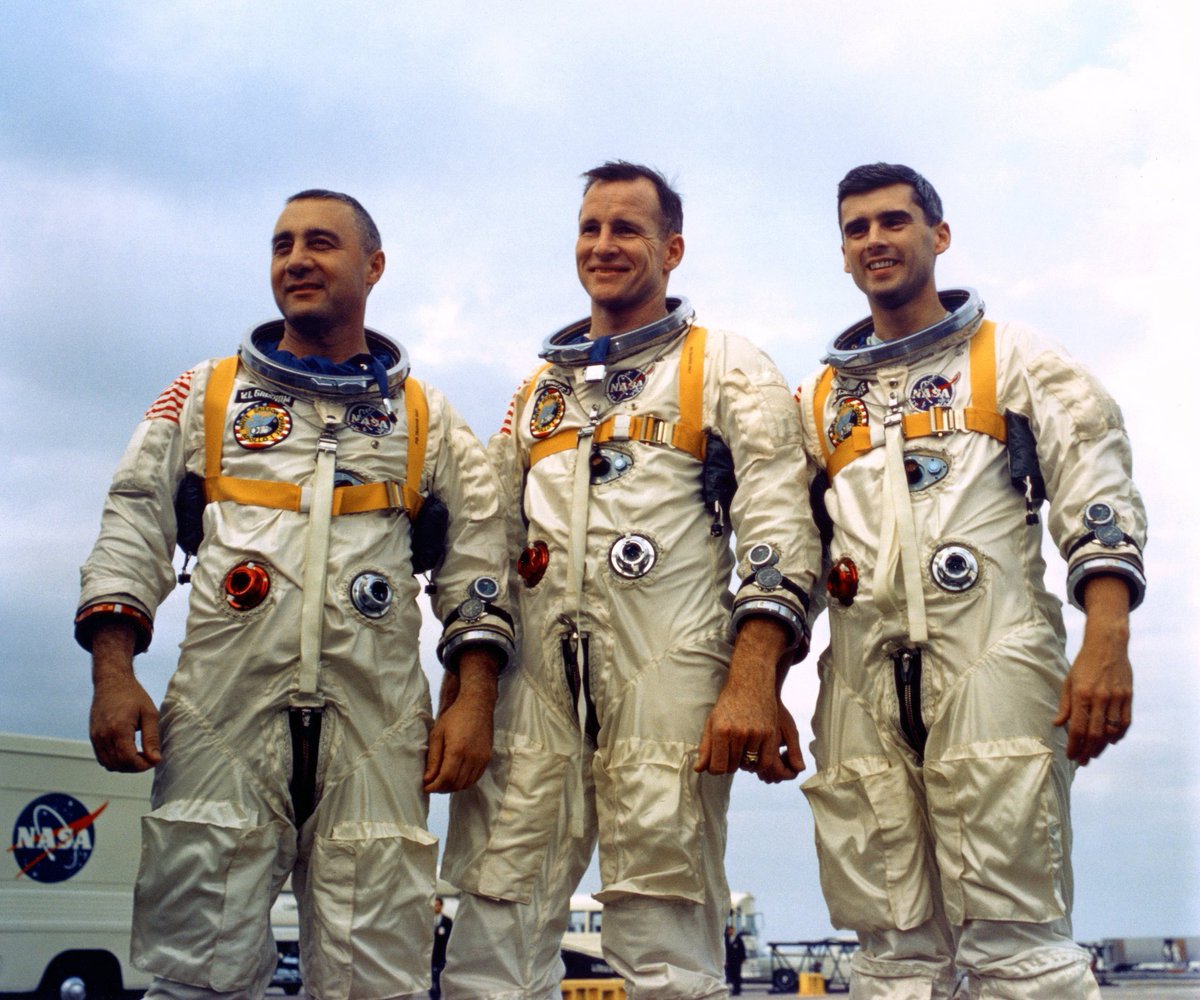
On January 27, we remember Gus Grissom, Ed White, and Roger Chaffee. The Apollo 1 fire was attributed to a “failure of imagination,” an inability to foresee how risk could compound in the most routine testing.
At @NASA we endeavor to never be blinded again, carrying those lessons forward in how we design, test, and fly. Their sacrifice demands nothing less.
Guardians and industry, moving fast and aligned around a shared vision. This is how the @USSpaceForce is bringing the @DeptofWar Arsenal of Freedom to life. 🇺🇸
How big could a Space Force cadet program actually become?
The math sets our vision.
Every military branch has a civilian youth cadet program affiliated with it:
- CAP Cadets (Air Force): ~26,000
- Sea Cadets (Navy): ~7,000
- Young Marines (Marine Corps): ~5,000
The Space Force has none. We're building it.
Conservative scenario: 500 cadets across 40 squadrons in 10 years. 125 graduates per year.
Optimistic scenario (with USSF/STARCOM partnership): 7,000+ cadets across 250 squadrons, producing 1,750 graduates annually for military, government, and private sector space careers.
The space economy is projected to hit $2 trillion by 2040. The Space Force is the fastest-growing branch. Youth interest in space careers is at historic highs.
The demand is there. We're building the program to meet it.
Military pipeline:
Like the Civil Air Patrol (CAP), SFCC isn't chartered to recruit for the armed services. We're a youth development program—not a recruiting arm. That said, ~12% of CAP cadets go on to join the military, and ~10% of USAF Academy cadets got their start in CAP.
Applying that benchmark to SFCC:
- Conservative (125 grads/year): ~15 pursue military careers
- Optimistic (1,750 grads/year): ~210 pursue military careers
For context, the Space Force enlists ~800 Guardians annually. At scale, SFCC could produce ~26% of USSF's annual enlisted accessions—pre-vetted, doctrine-fluent, and ready to contribute on Day One.
——
Notice: SFCC is an independent 501(c)(3) nonprofit and a Non-Federal Entity (NFE). We are not part of the Department of the Air Force or the U.S. Space Force, though we are pursuing a congressional charter to serve as a formal educational auxiliary. SFCC is not a military recruiting program. Engagement with this content by military/government personnel does not constitute an official endorsement.
——
#SpaceForce #USSF #SemperSupra #YouthDevelopment #STEMeducation #AlwaysRising
How big could a Space Force cadet program actually become?
The math sets our vision.
Every military branch has a civilian youth cadet program affiliated with it:
- CAP Cadets (Air Force): ~26,000
- Sea Cadets (Navy): ~7,000
- Young Marines (Marine Corps): ~5,000
The Space Force has none. We're building it.
Conservative scenario: 500 cadets across 40 squadrons in 10 years. 125 graduates per year.
Optimistic scenario (with USSF/STARCOM partnership): 7,000+ cadets across 250 squadrons, producing 1,750 graduates annually for military, government, and private sector space careers.
The space economy is projected to hit $2 trillion by 2040. The Space Force is the fastest-growing branch. Youth interest in space careers is at historic highs.
The demand is there. We're building the program to meet it.
Military pipeline:
Like the Civil Air Patrol (CAP), SFCC isn't chartered to recruit for the armed services. We're a youth development program—not a recruiting arm. That said, ~12% of CAP cadets go on to join the military, and ~10% of USAF Academy cadets got their start in CAP.
Applying that benchmark to SFCC:
- Conservative (125 grads/year): ~15 pursue military careers
- Optimistic (1,750 grads/year): ~210 pursue military careers
For context, the Space Force enlists ~800 Guardians annually. At scale, SFCC could produce ~26% of USSF's annual enlisted accessions—pre-vetted, doctrine-fluent, and ready to contribute on Day One.
——
Notice: SFCC is an independent 501(c)(3) nonprofit and a Non-Federal Entity (NFE). We are not part of the Department of the Air Force or the U.S. Space Force, though we are pursuing a congressional charter to serve as a formal educational auxiliary. SFCC is not a military recruiting program. Engagement with this content by military/government personnel does not constitute an official endorsement.
——
#SpaceForce #USSF #SemperSupra #YouthDevelopment #STEMeducation #AlwaysRising
Preparing Guardians for the pace of the threat.
From officer training to enlisted education and civilian development, the Space Force is investing in the force needed to win across domains.
#SPC25#SFA#Readiness#SpaceForce#ProfessionalDevelopment
People occasionally ask why a new cadet program is necessary when other established organizations exist. The answer lies in the history of the domains themselves.
The Space Domain cannot be a secondary focus.
The United States established the Space Force as an independent branch because the space domain is too critical to be a sub-function of another service. It requires dedicated funding, dedicated doctrine, and dedicated leadership.
Youth development follows the same logic.
You cannot build a space-specialized workforce by treating space as a mere elective. It requires dedicated infrastructure where space is THE priority from day one — where 100% of resources, training, and culture align with the space domain.
SFCC is built for this specific purpose: Space Domain Awareness, Cyber and AI for space, and USSF doctrine.
We are not competing with other programs; we study them and anticipate working alongside them. But just as the Air Force requires a different pipeline than the Navy, space requires a dedicated entity.
SFCC mirrors the independence of the @USSpaceForce with an independent Cadet Corps. We provide a singular focus—no split priorities, no competing traditions.
Youth cadet programs all share a similar structure: a civilian sponsor, a youth program, and cohorts of future leaders. SFCC follows this proven model. The @SpaceForceAssoc sponsors us. We are aligned with the Space Force (many thanks to @i5Space). We train cadets to be space-minded. And those cadets will use this experience to decide their own futures.
——
Notice: SFCC is an independent 501(c)(3) nonprofit and a Non-Federal Entity (NFE). We are not part of the Department of the Air Force or the U.S. Space Force, though we are pursuing a congressional charter to serve as a formal educational auxiliary. SFCC is not a military recruiting program. Engagement with this content by military/government personnel does not constitute an official endorsement.
——
#SpaceForce #USSF #SemperSupra
#YouthDevelopment #SpacePower
The @USSpaceForce has updated our fitness standards. This is an investment in the long-term readiness of our force to ensure every Guardian is prepared to thrive and win.
https://t.co/m87bfpdlkA
We are closely tracking the aftermath of a fire that destroyed the residence of Space Force Guardians living in Washington DC. Our focus is & remains on supporting our service members to ensure they have the resources, safety & care they need as they support our national security
Starting this week, SFCC is committing to a simple practice: every Monday, we will share what’s actually happening at SFCC. No fancy press releases. No vague mission statements. Real updates from the inside—the decisions we’re making, the challenges we’re facing, and the progress we’re tracking.
Why now? Because SFCC is at an inflection point. We’re pursuing a congressional charter to become a formal educational auxiliary to the United States Space Force. We’re developing curriculum benchmarked against USSF doctrine. We’re building the governance, training, and operational infrastructure for a national program. And we believe you deserve to see how it’s being built—not just what it looks like when it’s done.
Want to help? There’s no single way to contribute. Some people build hands-on—writing curriculum, reviewing documents, shaping systems. Some advise from the sidelines—sharing expertise when it’s relevant, making introductions, offering perspective. Some just follow along and providing feedback when something resonates. All of it helps. Whatever you can give, there’s a place for it.
This is an invitation to build a national program that will outlive us all. If you’re in the space community—Guardians, veterans, educators, industry professionals, parents—we want your input. What should SFCC look like? What would make you want to participate? What are we missing?
Keep an eye out for our new website launching in Q1 2026!
——
Notice: SFCC is an independent 501(c)(3) nonprofit and a Non-Federal Entity (NFE). We are not part of the Department of the Air Force or the U.S. Space Force, though we are pursuing a congressional charter to serve as a formal educational auxiliary. SFCC is not a military recruiting program. Engagement with this content by military/government personnel does not constitute an official endorsement.
——
#ussf #sfcc #spaceforce #sempersupra #jrotc
🎉 Happy 6th Birthday, United States Space Force! 🚀
In just six years, the United States Space Force has grown from a bold idea into an operational warfighting service: building doctrine, standing up commands, integrating cutting-edge technology, and shaping how the nation secures the space domain.
Today, we celebrate the Guardians whose innovation, professionalism, and dedication have accelerated spacepower at an unprecedented pace. The Space Force Association is proud to support the mission and the remarkable progress achieved in such a short time.
Here’s to six years of achievement, and the future ahead, as celebrated at Spacepower Conference 2025's Excellence Awards Gala annual cutting of the USSF birthday cake with Gen. Chance Saltzman and the youngest Guardian present.
#HappyBirthdayUSSF #USSF #6YearsStrong #Guardians #Spacepower #SFA
🆕
We're thrilled to officially unveil the strategic partnership between the Space Force Cadet Corps and @i5Space with the release of our new PARTNERSHIP FACTSHEET! The recent signing of our Memorandum of Understanding for Strategic Deconfliction and Synergistic Efforts formalizes a continuous, powerful cycle of leadership development. This Factsheet distills the key objectives of the MOU, highlighting how our joint effort creates a clear, structured pathway for future space professionals.
This unique collaboration centers around a Mentorship Pipeline where SFCC's foundational training for youth (ages 11-17) allows eligible members to advance into higher education opportunities, ready for the next phase. i5 Space—an undergraduate student-run organization focused on pre-commissioning students in ROTC and Service Academies —then provides specialized expertise from cadets who are prepared to operate to, in, and from space. This ensures that i5's high-level experience is passed down, creating a continuous mentorship cycle that inspires and prepares the next generation of SFCC leaders.
@SpaceForceAssoc
#SpaceForce #USSpaceForce #SemperSupra #SpacePolicy #CommercialSpace #STEM #LeadershipDevelopment