@Indian_Analyzer Point 5 of election commission's PR says "all decisions in the last year are an outcome of unanimous decisions by the commission." No scope of 2-1 also. All were 3-0.
MDR on UPI is here - meaning, some merchants will pay money to receive payments on some UPI transactions. First, those that won't pay at all even after this:
1) You and me types, individuals paying each other. Pay like there's no tomorrow, and you won't be charged.
2) Everyone else is a "merchant". So Any payment under Rs. 2000 to a merchant for anything regardless of what anyone says. Yes, you can even pay a merchant in multiples of Rs. 1500 and no one will be charged.
3) Small merchants that make less than Rs. 100,000 in UPI payments per month (including the less than Rs. 2000 ones). They don't have to pay.
Now who will pay: (Next item in thread)
Journalists who don't have the mental bandwidth to analyse the 40-page declaration document and what it can amount to are busy obsessing over the food served. The leaders or dignitaries weren't there for the food, but these journalists sure were. Get over your mutton-chicken.
Cloud succeeded because AWS did not peep into the internals of Netflix, Slack or Airbnb. “Trust” was earned and kept intact. Same cannot be said about OpenAI and Anthropic or any closed weight AI model provider. (1/2)
We are being subjected to embarrassing debates on the economy - largely due to the economic & statistical illiteracy of senior journalists in India. They should have the minimum preparation and knowledge to call out bs!
India pushes semiconductor drive as experts warn of latecomer risks
India had a fairly decent start in semiconductors in the 1970s, long before Taiwan's TSMC was founded.
"The fault is entirely on the political leadership and bureaucrats of that time"
https://t.co/uED7ZjW5sp
Not even surprised by Foxconn's move here and consider Gujarat over Tamil Nadu.
Remember, Foxconn's largest presence in India is in TN only. Still, they will go to Gujarat.
But given so many anti-industrial incidents that have happened in TN in the last 4-5 years, a company like Foxconn will think twice before investing in TN.
If I put 8 such big cases(there are lot more though)-
* Foxconn, Sriperumbudur — food-poisoning incident and factory shutdown — Dec 2021–Jan 2022
* Melma/Cheyyar SIPCOT — ~3,200-acre land acquisition and prolonged farmer agitation — 2023–25
* Melma/Cheyyar SIPCOT — arrests of protesting farmers / Goondas Act controversy — Nov 2023
* Pegatron, Sriperumbudur — factory fire and temporary production disruption — Sep 2023
* Samsung, Sriperumbudur — major workers' strike over wages and union recognition — Sep–Oct 2024
*Tata Electronics, Hosur — major factory fire disrupting iPhone-component production — Sep 2024
*Samsung, Sriperumbudur — second major labour dispute/sit-in — Feb 2025
* Tata Electronics, Hosur — groundwater/farmland contamination allegations and TNPCB scrutiny — 2025–26
TN is clearly giving a signal to industry that it won't be easy to do business in TN.
Hope the TVK govt takes note of this and rectifies the situation. TN cannot go down this path when industries have to think twice before coming there.
The X Safety team conducted an investigation into suspected Chinese inauthentic accounts involved in influence operations:
We identified a bot farm of approximately 200,000 accounts. Within this farm, we found 200 accounts posting in a manner that could manipulate a legitimate debate about American AI and energy policy.
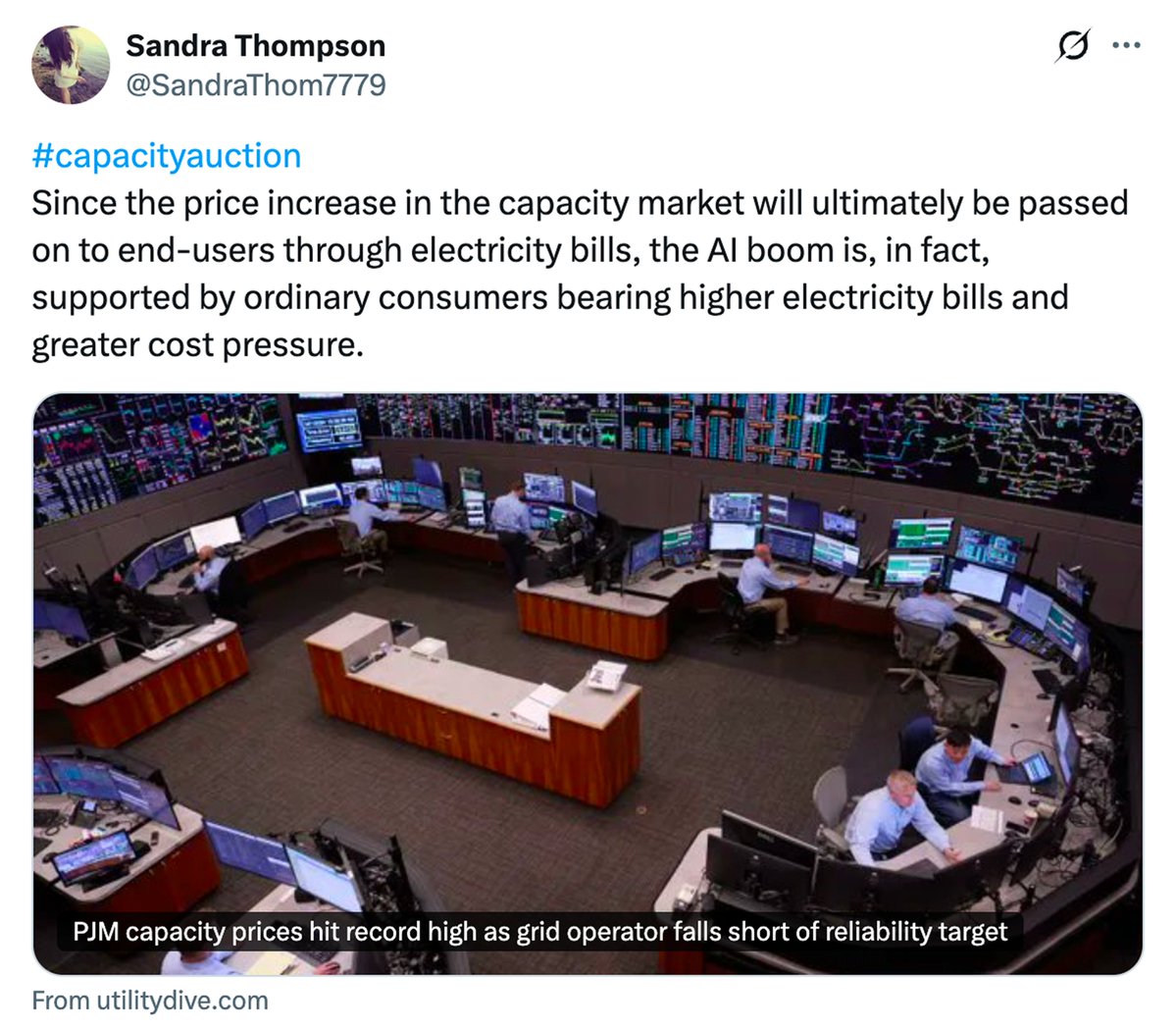
These posts contained claims that AI data centers are driving up household electricity prices and straining the grid. Others included AI-generated cartoons that depicted data-center operators enriching themselves at the public's expense.
We remain committed to maintaining an open and authentic platform where people debate topics of public interest. We take seriously any attempts to undermine the integrity of the global town square and suspend accounts that violate our Authenticity policy.
The Wire's @thewire_in fanciful report relies entirely on a manufactured "Synthetic India", a weighted blend of five unrelated economies (38% Ethiopia, 28% China, 25% Bangladesh, 7% Pakistan, and 2% Philippines), to erase a decade of structural transformation under Prime Minister Narendra Modi.
The cited working paper rests on a combinatorial fallacy. The authors cherry-picked a restricted 14-country donor pool and selectively used expenditure-side GDP from Penn World Table 11.0 to engineer an artificial post-2014 deficit. Rerun the identical model across standard IMF, World Bank, or Maddison datasets with a complete donor pool, and the result flips: Real India consistently outperforms its Synthetic twin.
The report’s governance claims rely exclusively on V-Dem, an opaque index of subjective judgements by anonymous experts. V-Dem absurdly rated India’s 2018 democracy no better than the 1975 Emergency and largely ignored massive pre-2014 corruption scandals, yet penalised India just as Direct Benefit Transfers (DBT) systematically dismantled middlemen and plugged fiscal leakages.
An honest counterfactual must project from reality. Trapped in the ‘Fragile Five’, India in 2013 suffered 10% inflation, a 4.8% current account deficit, depleted reserves ($275 billion), and a paralysed banking system under a hidden Twin Balance Sheet crisis. Without decisive leadership, India was headed toward runaway stagflation and a sovereign debt crisis.
Clearing this historic baggage delivered an unprecedented overhaul across key parameters:
📍Over 58 crore Jan Dhan accounts mobilized ₹3.08 lakh crore, providing the bedrock for UPI to settle nearly 50% of global real-time digital transactions.
📍The IBC recovered over ₹4 lakh crore, ensuring zero listed Indian banks carry net NPAs above 1%.
📍Forex reserves reached a record $716.9 billion, and inflation volatility has structurally eased.
📍Meanwhile, national highways expanded 1.6x, 7.8 lakh km of rural roads were built, and 100% village electrification wired 2.86 crore households.
📍Consequently, monthly GST collections touched ₹2.43 lakh crore.
📍Defense exports surged 10x to ₹38,424 crore
📍Extreme poverty collapsed to 5.3% (World Bank) and 10.8% (Rangarajan line), with 24.82 crore citizens escaping multidimensional poverty.
A rigged statistical blend of borrowed countries cannot overwrite the reality of an economy that has been banked, formalised, and structurally secured.
Manufacturing a phantom country to erase published macroeconomic data is not ethical journalism.
When Chinese commies finish building their industrial zones and nuclear plants, Indian commies finish writing books about how slums and open defecation are the soul of India.
𝗪𝗵𝗲𝗻 𝘆𝗼𝘂 𝗿𝗲𝗮𝗱 𝘁𝗵𝗶𝘀 𝗵𝗲𝗮𝗱𝗹𝗶𝗻𝗲, 𝘆𝗼𝘂 𝘄𝗶𝗹𝗹 𝘁𝗵𝗶𝗻𝗸 - 𝗪𝗵𝗮𝘁 𝗮 𝘀𝘁𝘂𝗽𝗶𝗱𝗶𝘁𝘆!!
𝗬𝗼𝘂𝗿 𝗺𝗶𝗻𝗱 𝘄𝗼𝘂𝗹𝗱 𝗵𝗮𝘃𝗲 𝗶𝗺𝗮𝗴𝗶𝗻𝗲𝗱 𝗮 𝗿𝗼𝗮𝗱 𝘁𝘆𝗽𝗲 𝗣𝗲𝘁𝗿𝗼𝗹 𝗣𝘂𝗺𝗽 𝗮𝗻𝗱 𝗠𝗲𝗱𝗶𝗰𝗶𝗻𝗲 𝗳𝗮𝗰𝘁𝗼𝗿𝘆 𝗶𝗻 𝘀𝗽𝗮𝗰𝗲.
𝗔𝗻𝗱 𝘁𝗵𝗮𝘁 𝗶𝗺𝗮𝗴𝗲 𝗶𝘀 𝗶𝗻𝗱𝗲𝗲𝗱 𝘀𝘁𝘂𝗽𝗶𝗱!!
But, as Nothing in the world is more stupid than the inability to learn new things, we will dig deep in this.
𝗟𝗲𝘁'𝘀 𝘁𝗮𝗸𝗲 𝗦𝗽𝗮𝗰𝗲 𝗽𝗲𝘁𝗿𝗼𝗹 𝗽𝘂𝗺𝗽𝘀.
A satellite doesn’t necessarily die when its instruments fail.
Often, it dies when it runs out of fuel.
Station-keeping, orbit correction, debris avoidance, deorbiting — all need propellant. So you can have perfectly healthy hardware sitting in orbit, but no fuel left to keep it there.
That’s a very expensive asset stranded in space.
This is what Modi’s “petrol pump in space” line was getting at after his meeting with 20 Indian space-startup founders.
Refuelling could extend the life of satellites already in orbit. It could also allow new satellites to launch with less fuel and more payload.
The hard part? Docking with a satellite that was never designed to be docked with, then transferring fuel in zero gravity. Normal air to air refueling of fighter jets is so difficult, so think it is near impossible in space.
But, Bengaluru's OrbitAID is working on exactly this. They are going to solve Space refueling problem.
𝗔𝗻𝗱 𝘁𝗵𝗲𝗻 𝘁𝗵𝗲𝗿𝗲’𝘀 𝘁𝗵𝗲 𝗲𝘃𝗲𝗻 𝘀𝘁𝗿𝗮𝗻𝗴𝗲𝗿 𝗶𝗱𝗲𝗮: 𝗺𝗲𝗱𝗶𝗰𝗶𝗻𝗲𝘀 𝗶𝗻 𝘀𝗽𝗮𝗰𝗲.
Protein crystals can grow differently in microgravity, potentially giving scientists cleaner structures for drug discovery.
𝐻𝑎𝑠 𝑎𝑛𝑦𝑜𝑛𝑒 𝑑𝑜𝑛𝑒 𝑖𝑡 𝑦𝑒𝑡? 𝑌𝑒𝑠!!
Merck has been studying Keytruda in microgravity since 2014. That research contributed to a formulation that can turn a lengthy IV infusion into a roughly one-minute injection.
Indian startups are now exploring whether pharmaceutical materials can actually be manufactured in orbit and brought back to Earth.
Neither orbital refuelling nor space pharma is commercially mature yet.
But that’s precisely the point.
Things that sounded like science fiction are increasingly becoming engineering problems. And India is trying to solve it.
The next space race may not just be about getting things into orbit.
It may be about what we can do once we get there.
So, now imagine what Petrol pumps and Medicine manufacturing is going to look in space. You will be astonished.
#IndiaStory
Indian Scientists Develop 'Smart' Drug RK-251 to Target Cancer Cells Selectively
* New "smart" drug RK-251 switches on only inside cancer cells, sparing healthy tissue
* Chemotherapy harms healthy cells too, causing side effects
For more information, log on to: https://t.co/2fYOQ0n5gs
@MIB_India@airnewsalert
There is no logical reason that Meta will find to push this shit to my feed, but it does. Of course, Vyom Bhatia and Anirudh Briefs will never be pushed on to my friends’ timelines. How does the government intend to solve it without arm-twisting Meta?
🧵Is India 25% Bangladesh, 28% China, 38% Ethiopia, 7% Pakistan and 2% Philippines?
That is the “Synthetic India” constructed by researchers at Texas Tech to estimate how India would supposedly have performed without Modi. (1/17)
Look, I would agree with Modi having underperformed expectations except that this is a sleight of hand by Dhume which puts both UPA and NDA in the same category of failures. It's like equating an arsonist and an inept firefighter.
If you are honest, you would start by acknowledging that NDA has been way superior to UPA on economic management though it has fallen well short of potential.
UPA was the luckiest govt in indian history. The stars had aligned for the rise of India. Globalisation was peaking. A lot of hard work by the previous govt had set the base. And yet a decade later, we were close to an economic precipice.
- Twin BS crisis as Sonia literally handed over taxpayer money to her cronies via PSU banks
- Twin deficit crisis
- Double digit inflation
- An unprecedented tax bonanza frittered away on premature welfarism (nrega, farm loans), an overly generous pay hike to the already overpaid, underworked babus and ill-thought out tax cut
- A rowdy FM who overruled the de jure PM and imposed retrospective taxes
It's a bloody long list. Modi fixed many of these. Partially helped by lower oil prices. But more than offset by a world which was deglobalising and a China which had become way too powerful to compete.