I'm convinced that 99% of success is just the ability to outlast uncertainty. The one who can tolerate the most uncertainty is the one who will eventually win.
You build the website. You post about it. You wait.
Then one day someone messages you, a total stranger, ready to pay. And you sit there thinking, this actually works. People buy things from strangers on the internet. Including you.
Someone, somewhere, saw what you built and decided you were worth their money. That never gets old, no matter how many years pass.
Storage or speed. Pick one.
Most hosting companies build their plans around one of two promises. Either you get generous storage, or you get real performance. Rarely both. The reason is simple. A server only has so much CPU, RAM, and disk throughput to share among everyone on it. Give one customer unlimited everything, and that capacity has to come from somewhere.
This is where the real specs matter, the ones most providers never show you. CPU limits determine how many processes your site can run at once. RAM determines how many visitors your site can serve before it slows down or crashes. IOPS and IO determine how fast the server can read and write files, which matters every time a page loads, a database query runs, or an image is fetched. Entry processes and NPROC limits cap how many simultaneous connections your account can handle.
When a plan advertises huge storage but stays quiet on these numbers, that silence is the answer. Ten websites on a plan with low CPU and IOPS limits means ten websites fighting for the same small slice of resources. Load them all at once and you will watch them queue up like cars at a single-lane bridge.
The providers who give you strong CPU, RAM, and IOPS numbers almost always cap your storage tightly. That is not stinginess. It is the only way the math works. They cannot give you premium performance for free, because performance costs them real money on their end too.
The honest question to ask before buying any plan is not "how much storage do I get" but "what happens when ten things try to load at once."
Did you know your website is probably smaller than the last app you downloaded?
A static site (portfolio, landing page) takes up 5 to 50MB. A typical WordPress site sits between 100MB and 500MB. A React, Vue, or Next.js site is often even smaller, 10 to 100MB, since most of it is just compiled code. Backend apps built on Laravel, Django, or Node usually keep their codebase under 200MB too, the bulk of any growth comes from user uploads, not the app itself.
Even a WooCommerce store with a few hundred products rarely passes 2GB. A blog with thousands of posts and years of images might reach 5GB, that is roughly 1,000 to 2,000 posts with photos included.
Compare that to your phone. A single 4K photo can be 10MB. A short video clip can be 100MB. Your entire website could be smaller than your camera roll from one weekend.
So when a hosting plan markets "250GB storage" as its biggest feature, ask yourself what you are actually being sold. Most websites will never come close to using even 1GB.
The real questions to ask are about speed, resources, and support. Storage is rarely the bottleneck. It is just the easiest number to print in bold on a pricing page.
Running ads on digital platforms is one of the most profitable moves you can make in 2026 — if you treat it as a numbers game.
We’ve run dozens of campaigns across Meta, Google, and others. Not a single one failed to deliver. Our consistent benchmark? A 10x ratio. This isn’t luck — it’s what happens when you test properly and scale winners.
Industry data backs this up. Many businesses achieve 5:1 ROI (strong) while top performers hit 10:1 or higher. Paid social campaigns often deliver around 2.5x–4.7x ROAS, and well-optimized Google Ads frequently return $2–$8 for every $1 spent.
The key? Stop treating ads as a cost. They’re a scalable profit engine. It’s all about the math.
When you respect the numbers, digital ads become predictable and highly profitable — exactly what we’ve experienced every single time.
If you’re still sitting on the sidelines wondering whether ads “work”… they do. The real question is: Are you ready to play the game properly?
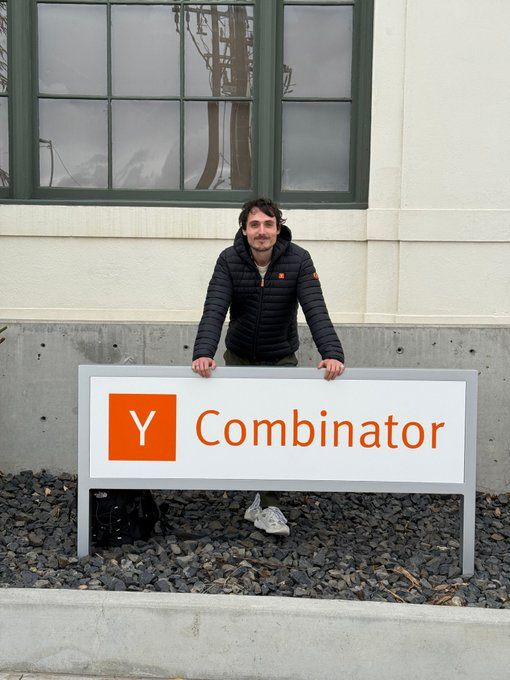
We went from 0 to 2,200 paying customers in under a year by following @ycombinator's 15 rules:
1/ Do things that don't scale. Get your first 10 customers by hand.
2/ Launch now, not when it's "ready". A mediocre product in front of real users teaches you more in a week than 6 months of polishing in the dark.
3/ Charge from day one. If nobody will pay, you don't have a startup, you have a hobby.
4/ Talk to users every single day. The roadmap you need is sitting in your customers' heads, and they'll hand it to you for free
5/ Always hunt the 90/10 solution. For almost any feature there's a way to capture 90% of the value with 10% of the effort.
6/ There are only two real jobs: write code and talk to users. Everything else (conferences, press, VC coffees, corp dev calls) is fake work.
7/ You pick your customers as much as they pick you. 10 users who love you beat 1,000 who kind of like you.
8/ Growth is an output, not a strategy. Grow before product market fit and all you're buying is churn.
9/ Do less, really well. Pick one or two metrics and judge every task against them.
10/ Know if you're default alive. Paul Graham's question: on current growth and current burn, do you reach profitability before the money runs out?
11/ Don't hire until it hurts. Headcount is not progress, it's burn. Every great startup was embarrassingly small for embarrassingly long.
12/ Momentum is the only real moat in year one. Ship something every week, even something tiny.
13/ Every great startup is badly broken at some point. The game isn't avoiding fires, it's how fast you put them out. Again. And again
14/ Ignore your competitors. Startups die of suicide, not murder. In year one, the only company that can kill yours is your own
15/ Startups rarely die from running out of money. They die because the founders fall out. Brutal honesty with your cofounder is the cheapest insurance you'll ever buy
Good luck !
How to avoid becoming an SEO who gets replaced by AI:
1. Build something AI can't replicate (think CRO, strategy, client trust)
2. Use AI to do the grunt work faster, then spend that time on higher level problems
3. Document what you learn so your value compounds
4. Get comfortable with R&D being part of your actual job description
Upwork is getting much tougher, especially for newbies who are just starting out. I think people need to start being honest about that platform, particularly when it comes to spending money on Connects and constantly buying more. It is becoming incredibly difficult.
One thing people are not talking about is why jobs are often outsourced to foreign countries. Many people do not want to hear this, but a big reason is pricing. That is one hard truth most people cannot swallow. A lot of clients are hiring based on budget.
Think about it. If they wanted to pay premium rates, they could hire professionals in their own countries. There are experts charging $50, $100, or even more per hour in those markets. But over time, I started seeing that pricing plays a much bigger role than many freelancers want to admit.
I'm Top Rated on Upwork. I tested my profile at $65 per hour and barely got anyone reaching out. I also tested $15 per hour. Yes, you get some attention, but it is still very limited. Maybe an invite every 3 months if your profile is strong and ranking well.
What I noticed was that when I reduced my rate to a level I was comfortable with, I started receiving more invites. Those invites allowed me to avoid wasting money on Connects.
One of the saddest things is applying for a job where the client has already invited people. You see 20 to 50 applicants competing for the same position, and the client has already reached out to preferred candidates.
This happened to me personally. There were 20 to 50 applicants on the job, but because I was charging the lowest rate, the client did not just send me an invite. They followed up with additional messages and wanted to jump on a call.
We got on the call and had a conversation. I even acknowledged that I was charging the lowest rate in that niche. They told me they knew, and that was one of the reasons they contacted me in the first place.
However, once we discussed the actual scope of work, the project ended up being worth much more than the original budget because of the amount of time and expertise required. Although I never got the exact amount I initially wanted, I was still able to negotiate significantly higher than my listed rate.
At the time, I had reduced my profile rate to $5 per hour. An enterprise client came in and essentially said, "We can get this done at this price, but we'd like to work with you." After discussing the project, I was able to move the rate from $5 per hour to around $20 per hour.
So through pricing strategy, negotiation, and good communication, I ended up getting paid much better than what my profile initially suggested.
This is why I believe Upwork is, in many cases, a platform where companies hire foreign talent while staying within a budget. Most clients come to the platform looking for value and cost efficiency.
You need to understand this reality. If you understand it, many things about the platform will start making sense. Most clients are coming with a budget in mind.
I know some people will disagree with this, but this has been my personal experience. I do not love to waste money buying connect as an African it's too expensive.
I receive invites every month. When an invite comes in, I review the opportunity. If the client is a good fit, we move forward. If not, I move on.
My advice is simple: be smart about how you buy Connects. You are generating revenue for Upwork before you have even made any money yourself. Personally, I do not think I will go back to heavily buying Connects.
Webmail is not a filing cabinet. If your inbox is sitting at 4GB, most of that is probably attachments from three years ago that you have not opened since.
Anything worth saving belongs on your computer or cloud storage, not sitting on a mail server. Download, archive, delete. The inbox should always feel like a desk, not a warehouse.
Nothing humbles you more than sitting at your desk for hours, staring at a blank canvas, moving layers around, opening Pinterest for the 100th time, and still having no clue where to start.
You paid premium, but you were mostly paying for comfort.
We have all done it. You see a much more expensive hosting plan and you convince yourself you are finally getting the best — faster servers, stronger security, proper infrastructure. You feel smart. You feel safe.
Then reality slowly settles in. The servers are not dramatically better. The speed is not night and day. What you actually paid for was the support team, the quick replies at midnight, the polished dashboard, and that reassuring feeling that someone is watching over your website.
It is the same story everywhere.
You pay ten times more at a private hospital for the same medicine you can buy at a small clinic. The difference was the nice waiting room and polite nurses.
The supermarket charges you double for the same cooking oil the kiosk sells — except they added air conditioning, trolleys and bright lights.
Expensive hosting is rarely about superior technology. Most of the time you are simply paying someone to hold your hand.
Sometimes that hand-holding is worth it.
But many of us have quietly outgrown it and keep paying anyway.
Sometimes shocking to me how people get taken advantage of. Talked to a potential client today...
They're currently paying $2800/year for hosting and support. The support, apparently, isn't even that good.
She tells me the server specs. You could literally get that same server on Vultr for about $45/mo. Managed through a solid panel like @xCloud_host instead of shitty cPanel.
They put all these buzzwords in front of the client. Like, OMG... you're getting LITESPEED included! Literally standard stuff.
What a weird response video with lots of wrong assumptions.
First: why should I be here for WordPress? I fell in love with Elementor because it allowed me to bring my designs (back then in Adobe XD, later Figma) to life so I could design and build websites. I started sharing what I know as I've done my whole life, even many years without making any money, which you haven’t seen because that was in Dutch.
I like Open Source but I also think that leadership, contribution model and vision is broken in WP, which made me care less about this specific open source project.
And what makes you think that AI builders are always closed platforms? This is not the case at all. Maybe you haven't actually experimented a lot with them. Open source LMM’s are becoming better and better and platforms like Lovable allow export and ownership.
Then on your money argument: my channel over the last few years has mainly focused on freelancers and agencies, which is actually not a great idea if you want to get a lot of affiliate sales. Focussing on beginners is much more profitable. But I do it because I am more passionate about that.
That being said, it is also an education business. So, it has to make sense from that pov as well. But that doesn’t mean that all my content is made for money. That’s a very shallow pov, which says more about you than me.
So I would advise you to first ask questions next time before you make a response video like this that is full of mistakes and assumptions.
Being an entrepreneur is a mental game.
Anyone can start a business and get a logo. But can you keep going when nothing's working and it feels like everyone has it figured out?
That's the real test.