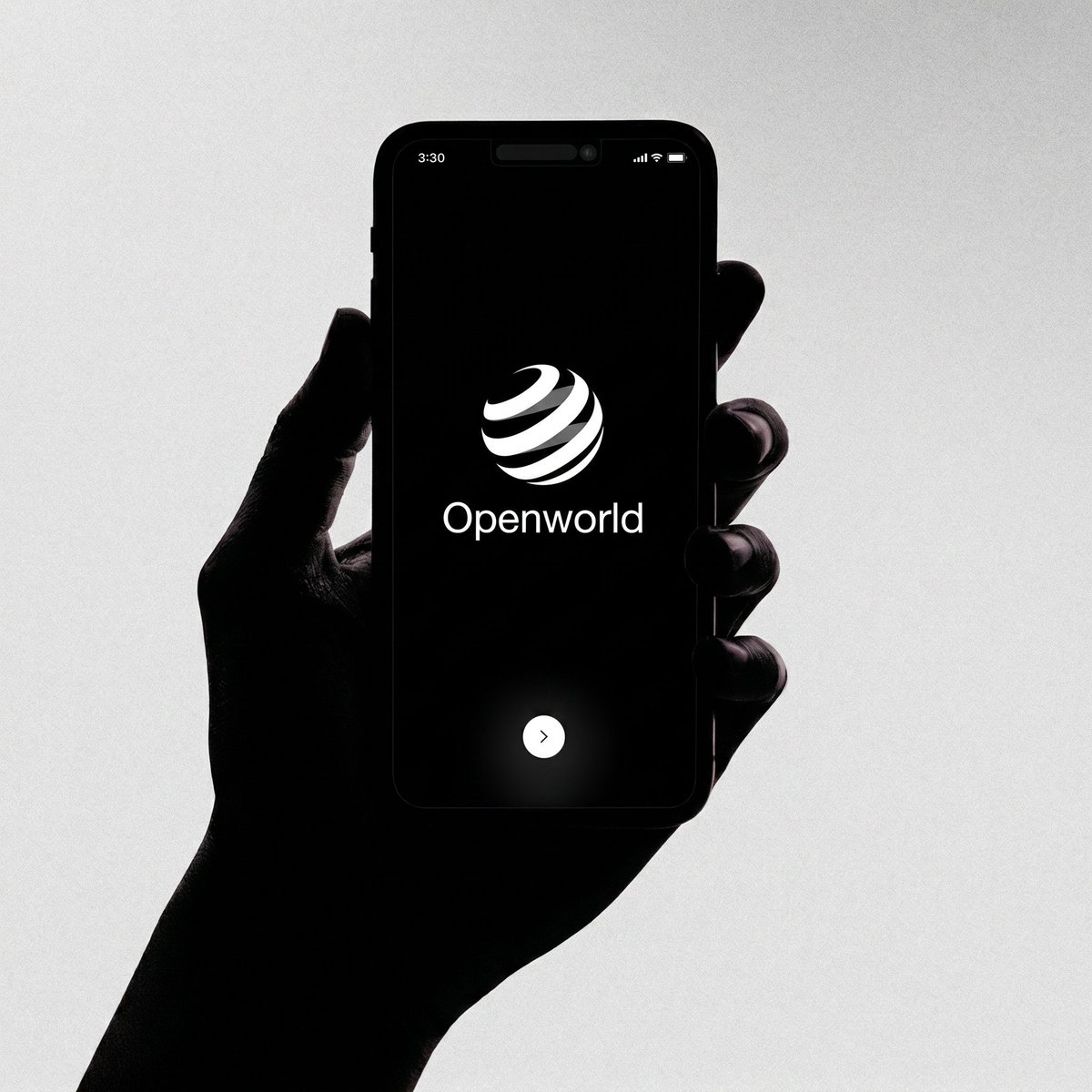
Left: the first build (January 2025)
Right: the latest (December 2025)
2025 was about foundations.
No hype.
Just work.
2026 is about public launch and scale.
From a prototype to something the world will use.
Today was Day 1.
PS: iOS TestFlight link drops today.
The IRL connection economy is a $400B+ market.
And companies are racing to own it.
In the last 6 months, $800M+ in capital was deployed on "IRL" bets.
@Tinder invested $60M into a new Events feature for connecting matches in-person. They're pivoting to IRL and offering experiences such as speakeasies, raves, and pottery classes.
@222place: raised a $10.1M Series A to curate blind social experiences for Gen Z. Personality-matched groups sent to hyperlocal nightlife events.
@JagermeisterUSA launched BestNightsVC - the only venture fund in the world dedicated solely to nightlife and IRL connection. 16 portfolio companies across 4 continents.
@timeleft: dinner with 5 strangers, every Wednesday. €18M ARR. 6,500 dinners/week across 200+ cities.
Dion: members-only social app where the first move is buying someone a real drink, redeemed IRL. 10K members, 30K+ on the waitlist founded by @revekkapal.
Pie: Bonobos founder @dunn built an IRL friendship app. $24M raised. 130K+ MAU.
@weroad_official: group trips for 20-30 year olds who don't know each other beforehand. $150M valuation.
Matchbox: is an algorithm-powered matching platform for IRL events and has powered over 100,000 connections. founded by @liamjmcgregor (prev @MarriagePact)
New dating apps like Known @Celesteamadon, Cerca @MylesCerca, and Ditto @AllenWangzian are aiming to improve connection amongst young people.
Billion-dollar companies are paying $$$ for community and events leads:
- @AnthropicAI: Marketing Events Manager ($255k)
- @tryramp: Community Manager ($223k)
- @tryramp: Events & Culture Manager ($181k)
- @duolingo: Senior Community Manager ($193k)
- @NotionHQ: Community Programs Lead
Everyone knows the more time we spend online, the more valuable real-life connection becomes.
The question isn't whether IRL wins.
It's who facilitates it best.
@a16z just raised $15B+.
American Dynamism $1.176B
Apps $1.7B
Bio + Health $700M
Infrastructure $1.7B
Growth $6.75B
Other strategies $3B
That’s ~18% of all U.S. VC deployed in 2025.
Capital is concentrating.
Conviction is tightening.
Infrastructure beats features.
From our POV
VC appetite is back, but selective.
Platform-scale problems win.
Consumer + infrastructure.
Online → offline.
Behavior change > dashboards.
It’s time to build $OWA
@GetOpenworld will be raising this year.
Left: the first build (January 2025)
Right: the latest (December 2025)
2025 was about foundations.
No hype.
Just work.
2026 is about public launch and scale.
From a prototype to something the world will use.
Today was Day 1.
PS: iOS TestFlight link drops today.
Agency > Intelligence
I had this intuitively wrong for decades, I think due to a pervasive cultural veneration of intelligence, various entertainment/media, obsession with IQ etc. Agency is significantly more powerful and significantly more scarce. Are you hiring for agency? Are we educating for agency? Are you acting as if you had 10X agency?
Grok explanation is ~close:
“Agency, as a personality trait, refers to an individual's capacity to take initiative, make decisions, and exert control over their actions and environment. It’s about being proactive rather than reactive—someone with high agency doesn’t just let life happen to them; they shape it. Think of it as a blend of self-efficacy, determination, and a sense of ownership over one’s path.
People with strong agency tend to set goals and pursue them with confidence, even in the face of obstacles. They’re the type to say, “I’ll figure it out,” and then actually do it. On the flip side, someone low in agency might feel more like a passenger in their own life, waiting for external forces—like luck, other people, or circumstances—to dictate what happens next.
It’s not quite the same as assertiveness or ambition, though it can overlap. Agency is quieter, more internal—it’s the belief that you *can* act, paired with the will to follow through. Psychologists often tie it to concepts like locus of control: high-agency folks lean toward an internal locus, feeling they steer their fate, while low-agency folks might lean external, seeing life as something that happens *to* them.”