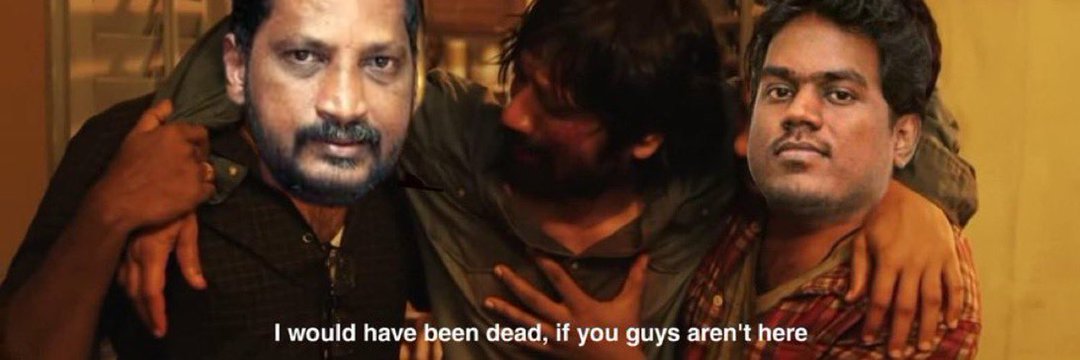
@LGIndia I am writing to express my disappointment with the service at the Villupuram, TN center. I registered a complaint on Aug 12 26, regarding my LG OLED TV (under warranty), which will not power on. As of today, Sep 21 26, I have yet to receive a proper resolution or update.
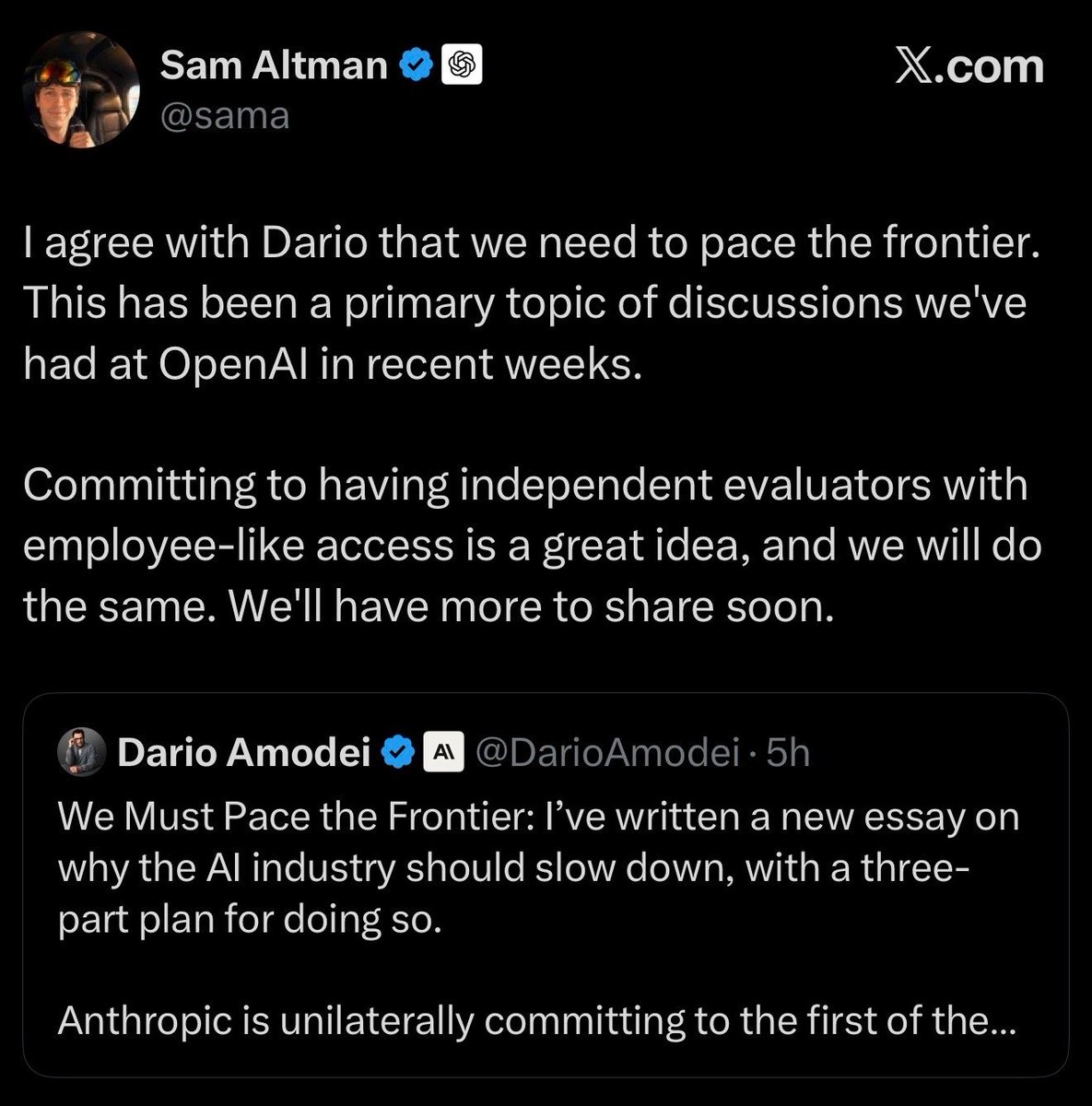
I agree with Dario that we need to pace the frontier. This has been a primary topic of discussions we've had at OpenAI in recent weeks.
Committing to having independent evaluators with employee-like access is a great idea, and we will do the same. We'll have more to share soon.
BREAKING: Anthropic CEO Dario Amodei calls for slowing the pace of frontier AI development, warning that within 6–12 months a misaligned agent swarm could potentially seize control of “the entire internet.”
We Must Pace the Frontier: I’ve written a new essay on why the AI industry should slow down, with a three-part plan for doing so.
Anthropic is unilaterally committing to the first of these steps. We’ll provide third-party evaluators with permanent, employee-level access to our systems, so that they can verify adherence to our safety measures, report on incidents, and assess models’ alignment during training.
You can read the full post here: https://t.co/OGyPb7yaYt
That Maggi video: there’s something very interesting about it.
Most of what they’re showing you isn’t technically false.
The problem is what they’re making you believe from it.
For example, they burn Maggi and show you this black residue like they’ve just uncovered some dangerous chemical.
But food burns.
Burn rice, burn roti, burn bread, burn literally anything containing starch and fat, and you’re going to get some kind of residue.
Fire is not a nutrition test.
Then they talk about palm oil as if simply finding palm oil means the food is automatically harmful.
But that’s not how nutrition works.
The ingredient matters, sure. But so does the quantity, how often you’re eating it, your overall diet, and the actual risk associated with that amount.
And then comes the microscope.
You see these organisms moving around and immediately the video wants you to think, “Look at this. This food is contaminated.”
But microorganisms exist everywhere.
Put your dal, vegetables, fruits, or pretty much any food from your kitchen under a microscope and you’re going to find microscopic life.
The actual question is: What are they? Are they harmful? How much is present? And does it actually pose a health risk?
Simply showing something moving under a microscope doesn’t answer any of those questions.
And then, right at the end, they flash a tiny disclaimer saying, “Not scientific, for information only.”
So what exactly are we watching here?
Science, or fear packaged to look like science?
Because science doesn’t need scary visuals to convince you.
Science gives you context.
How much? How often? For whom? And what is the actual risk?
You need science to defend a food, and you need science to criticize one.
So the next time a video shows you fire, a microscope, or some scary-looking visual and says, “Look, proof,” pause for a second.
A visual is not proof.
Without context, it’s just a visual.
@scapiasupport Hi Team,
I had previously owned a scapia cwrd with federao bank.
I would now like to re apply with the help of Bank of Baroda.
Kindly help me in this regard.