Imprisoned scholar Bahruz Samadov has written me a heartbreaking letter from prison. He asks me to share his message with the academic community. I am doing so, and I ask you to do whatever you can, including amplifying his appeal.
Dear Professor Altay,
I am deeply grateful to you for everything. I often think of the days we spent in Paris and Manchester. Both your appreciation of my research and your critical comments were deeply encouraging to me.
Unfortunately, my projects have been left unfinished. I had hoped to discuss with you such issues as the sacralisation of the concept of the “state” and the subjection of the “people” to it, but now I find myself here.
I believe that the unexpected cruelty directed against me is rooted both in my theoretical approach and in my firm position. At the same time, the international support I received thanks to you has enraged them further, and they have subjected me to the harsh punishment of imprisonment under a strict closed-regime system.
I ask you to publicise the deterioration of my eyesight, so that the academic community understands that the aim is to weaken me and cause irreversible damage to my health.
Please convey my greetings to Vicken, Aude, and Laurence. I would very much like to receive letters from them, as well as from our colleagues.
SAR is doing very important work, and I am grateful to them.
As long as people like you remain in this era of the world’s “Azerbaijanisation,” we must not lose hope.
With respect and warm regards,
Bəhruz
21 July 2026
Umbakı Prison
In the remote village of Soyudlu, nestled in the folds of Azerbaijan's Gadabay district, life once moved to the rhythm of the seasons planting, harvest, the murmur of mountain streams, and the quiet camaraderie of a close-knit community. But that peace has long since curdled. For years, local residents have raised alarms over pollution from a nearby gold mine operated by Anglo Asian Mining, a presence that has transformed their home into a landscape of fear and sickness.
The existing cyanide waste reservoir, built around 2012, looms at the village's edge like a poisonous sentinel. Villagers blame it for the foul odors that creep through their windows on still nights, for the soil that no longer yields healthy crops, for the water that tastes of chemicals, and most devastatingly for a sharp rise in cancer cases that has cut down young people in their prime. In an area where such illnesses were once rare, funerals have become disturbingly frequent, and families now speak of cancer not as a distant horror but as a daily specter.
Tensions boiled over on June 20, 2023, when residents learned of plans to build a second tailings dam for toxic mining waste. The news arrived like a death sentence—a confirmation that their suffering was not only being ignored but actively compounded. Hundreds gathered in protest, their numbers swelling with farmers, mothers, elderly grandparents, and young fathers who had watched their children grow pale and weak. They marched toward the local police station, their slogans rising in desperate unison: an end to the pollution, an end to the poison, an end to the slow murder of their village.
But the authorities did not come to listen. Security forces responded with overwhelming force. Riot police unleashed tear gas, pepper spray including directly into the faces of elderly women who could barely stand rubber bullets, and physical assaults to disperse the crowd. Videos from the scene, later circulated by journalists and activists, captured chaotic confrontations: the crackle of gas canisters, the thud of batons, the cries of the injured crumpling to the dusty ground. What began as a plea for survival descended into a battlefield.
The following day, further demonstrations took place, as outrage over the crackdown kindled fresh resolve among the villagers. But the authorities moved swiftly to smother any ember of dissent. A permanent police checkpoint was established at the village entrance, its concrete barriers and armed guards turning Soyudlu into an effectively closed area a village under siege from within. Only registered residents are now allowed in or out, their movements tracked and logged. Outsiders especially journalists, human rights observers, and anyone with a notebook or camera are barred at gunpoint. Communications are reportedly monitored, with villagers speaking in hushed tones, wary of tapped phones and listening ears. Locals face intimidation and threats if they dare speak to the media; some have been summoned for questioning, others hit with administrative arrests or spurious criminal charges including drug-related accusations widely viewed as retaliatory. This level of control over an entire village remains highly unusual in Azerbaijan, a testament to the government's determination to bury the story of Soyudlu.
Aytaj Tapdig , a journalist with Meydan TV, was among the first independent reporters to reach the village in the immediate aftermath and document the events, her camera capturing images that would later circulate around the world. Months later, she and her colleague Khayala Aghayeva tried to return to the area, determined to check on the villagers and chronicle their continued ordeal. But the authorities were waiting. From the moment they arrived in the Gadabay district center, they were closely followed and blocked by police officers who shadowed their every step, preventing them from even reaching the village limits. Both journalists are now imprisoned as part of a broader government crackdown on Meydan TV staff their only crime the act of bearing witness.
In the aftermath of the protests, several villagers received administrative arrests or fines, while others faced criminal charges that their families insist are fabricated reprisals. No independent accountability has been reported for the police actions that left protesters bloodied and battered.
A government commission was formed to investigate environmental concerns, but independent experts were largely denied full access to the site, the soil, the water, or the frightened residents. Their findings, predictably, exonerated the mine and dismissed the villagers' health complaints as unsubstantiated. The mine operations were briefly suspended a performative pause and then resumed in November 2023 after official assessments claimed no major threats to health or the environment.
Macaristan tarihinde bir ilk...
1993’te Romanlara yönelik ayrımcılık, polis şiddeti ve ırkçı saldırılara karşı düzenlenen sivil haklar protestolarında söylenen “The Forest is Green / Pădure vergyé” marşı Başbakan Péter Magyar’ın önerisiyle Macar parlamentosunda çalındı.
🔺Romanlar, Orban’ın iktidar yıllarında kamu düzeni problemi görülmüş, milliyetçi partiler anti-Roman kampanyaları yapmıştı.
🔺Bazı milliyetçi milletvekillerinin protesto ettiği oturumda birçok milletvekili gözyaşlarını tutamadı.
«در ج.آذربایجان، حکومت فقط بر شخص الهام علیاف تکیه نمیکند، بلکه بهتدریج خانوادهٔ علیاف را به محور مشروعیت سیاسی تبدیل کرده است.…، رسانههای نزدیک به دولت با برجستهکردن حضور مذهبی، خیریهای و نمادین اعضای خانواده، نوعی قدرت دودمانی را عادیسازی
https://t.co/UPJ2mA0wzu
The Azerbaijani media is softening the regime’s harsh authoritarian practices by contrasting them with images of Azerbaijani President Ilham Aliyev’s family conducting familial, religious and charitable activities. https://t.co/kI1f0fnkmU
Macaristan'da 16 yıllık Viktor Orban dönemine son vermeyi hedefleyen 45 yaşındaki muhalefet lideri Peter Magyar'ın vaatleri:
AB'yle en büyük çatışma noktası olan hukuk devleti uygulamalarına geri dönülecek.
Başbakanlık görevi sadece iki dönem yani sekiz yıl üstlenilebilecek.
Olağanüstü hal kaldırılacak. Ülke kararnamelerle değil, parlamentodan çıkacak yasalarla yönetilecek.
Devlet kurumlarına, kilit mekanizmalarına yerleştirilen iktidar partisi kadroları tek tek görevden alınacak
Devlet televizyonun haber dairesi derhal feshedilecek.
Yolsuzlukla Mücadele Bakanlığı kurulacak
Kamu ihaleleri, yandaş iş insanlarına verilen destekler ve AB fonlarının geçmişte nasıl dağıtıldığı denetlenecek.
İktidar partisi çevrelerine aktarıldığı tespit edilen ulusal servetin geri alınması için özel takip birimleri ve soruşturma savcılıkları kurulacak.
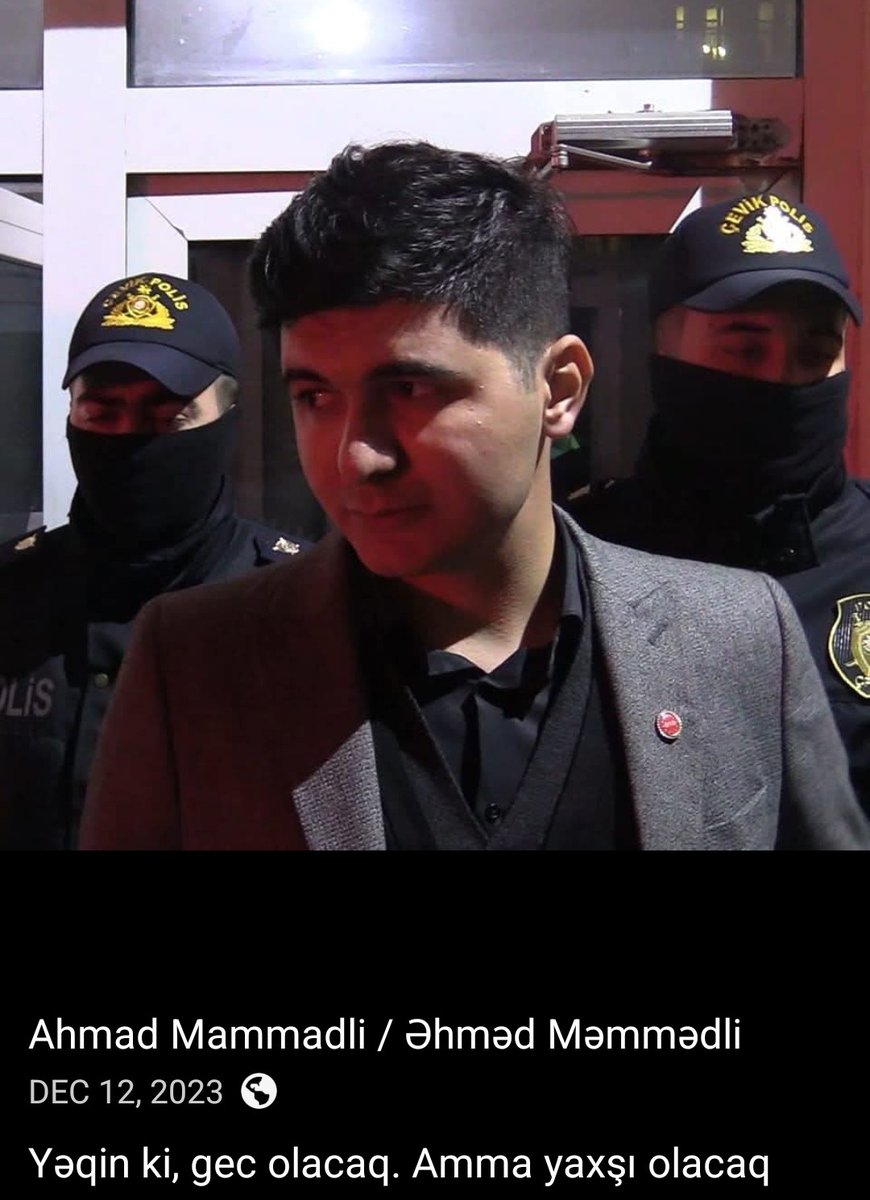
Our young comrade; azerbaijani left-wing activist, radical democrat and conscientious objector and journalist Ahmed Mammadli was sentenced to 6 years in prison today by the Aliyev regime's fake court of justice. He neither agreed to become Aliyev's soldier nor to obey him in any other way. What distinguishes Ahmed from other prisoners who should be released is also his worldview and the fact that he has adopted the most humane and liberating ethos and ideology. As he himself said, it will be late but it will be good. Ahmed will be a new example for the youth of the future.
In the famous book about freedom called "The Dispossessed", there is a phrase:
"There's a point, around the age of twenty, when you have to choose whether to be like everybody else the rest of your life, or to make a virtue of your peculiarities."
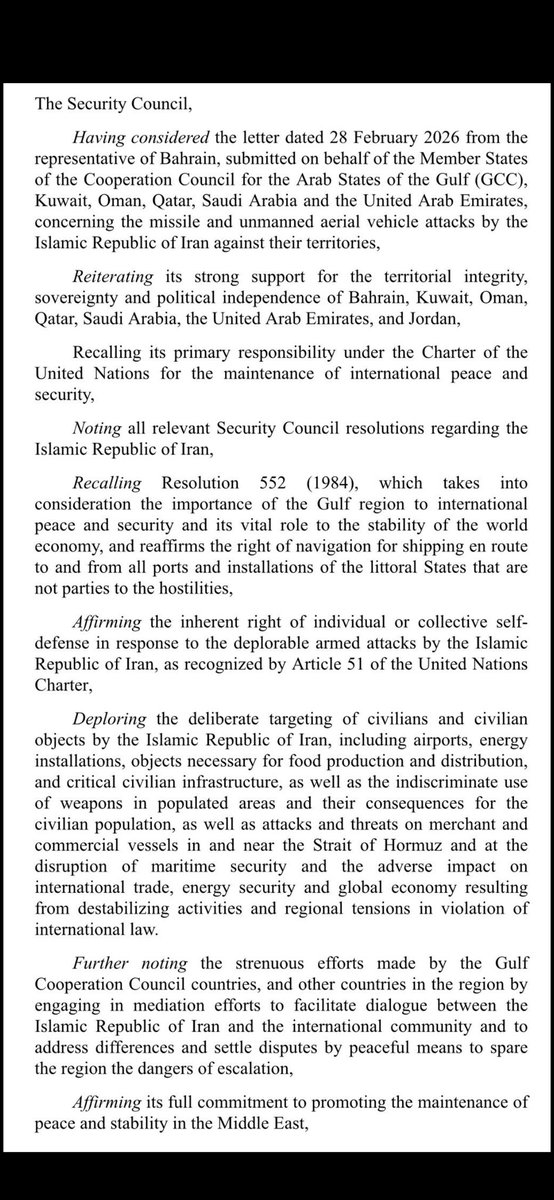
For the second time in four months (see res. 2803), the UN Security Council has today bowed to the US empire (and its vassals) and ignored international law on its behalf, and neither Russia nor China have acted to stop it through their veto rights. In the middle of the unlawful and bloody US-Israel Axis aggression on Iran, the Council is entirely silent on the aggression and on Iran’s Charter-based right to defend itself. Instead of condemning the aggressors, it condemns only Iran for attacks on the territory of countries in the region hosting US military bases, (some of which have been directly complicit in the aggression). Proving once again how oil and money are valued more than sovereignty, human lives, or international law, the resolution gained a record number of state co-sponsors. The Council that has allowed genocide and serial aggression to continue for more than two years in the region without action, has decided that oil prices are a step too far. #Shame
Eleştiri bir haktır ama Azerbaycan’da bu hakkın bedeli ya hapis ya da vatanından uzaklaşmak. Bu susturma politikası artık Türkiye hattına da sıçramış durumda. Özgür düşünce susturulamaz, sadece yeri değişir.
These individuals portray themselves as civil society members engaging in peace talks; however, they are nothing more than loyalists to the current political system.
1/2 The editor of https://t.co/4Bgvi4z0y2 gave an interview about the Yerevan meeting, saying that it was “constructive.” Yet when dialogue is monopolized by state-loyal NGOs, it reproduces the logic of control rather than trust.