a handsome ,patriotic , humble ( but underrated actor , )- who surprisingly seems to be intelligent too - since no actors are ;) - been his fan always .
Watch 🔥
Actor Arjun Sarja absolutely roasts Udhayanidhi Stalin.
He says Sanatan Dharma is a way of life that teaches us how to live and to treat parents like gods.
“So can you reject your own parents?”
“No.”
“Likewise, Sanatan can never be rejected or erased.”
The royal charters of the Chola kings were always written with Sanskrit verses in the Grantha script. These verses appear prominently on the seals of copper-plate inscriptions as well as at the beginning of several stone inscriptions. Here are some of the celebrated charter ślokas of the Chola kings.
Rammohun Roy the so called Sati reformer, hated the fact that his widowed mother Tarini Devi was a devout Hindu who contributed money for "idol worship" in Pujas. When he refused to pay his share from the family's land for contributions to Hindu ceremonies, his mother filed a case through his nephew, which Rammohun easily won due to his links with the British administrators. After winning the case against his mother, Rammohun took over all the property and kicked her out on the streets. His mother had to seek refuge in the temple of Jagannath Puri and died there in wretched conditions in 1822. When Roy's sister in law, Durga Devi also filed a case to recover back some money from family properties - Rammohun again ensured that his influence helped him win the case. He then forced his widowed sister-in-law out on the streets.
This is the man who is touted as the savior of widows - but himself ensured that the two widows in his own family were thrown out on the streets and forced to live in wretched poverty after taking over all their property - all in the name of his hatred against "idol worship".
@vaiju7 shameless ! should reprimand those inside his party who actually put him there ...do they still believe in him ? or have washed their hands off ?
One mother forbade medicines to the dying, converted them, then laughed at the death count; the other mother has provided free treatment to 5.9 million, built 13 million sqft, 95 OT, 101 speciality, 4050 bed hospitals employing 1540 doctors.
The first mother got the Nobel Prize.
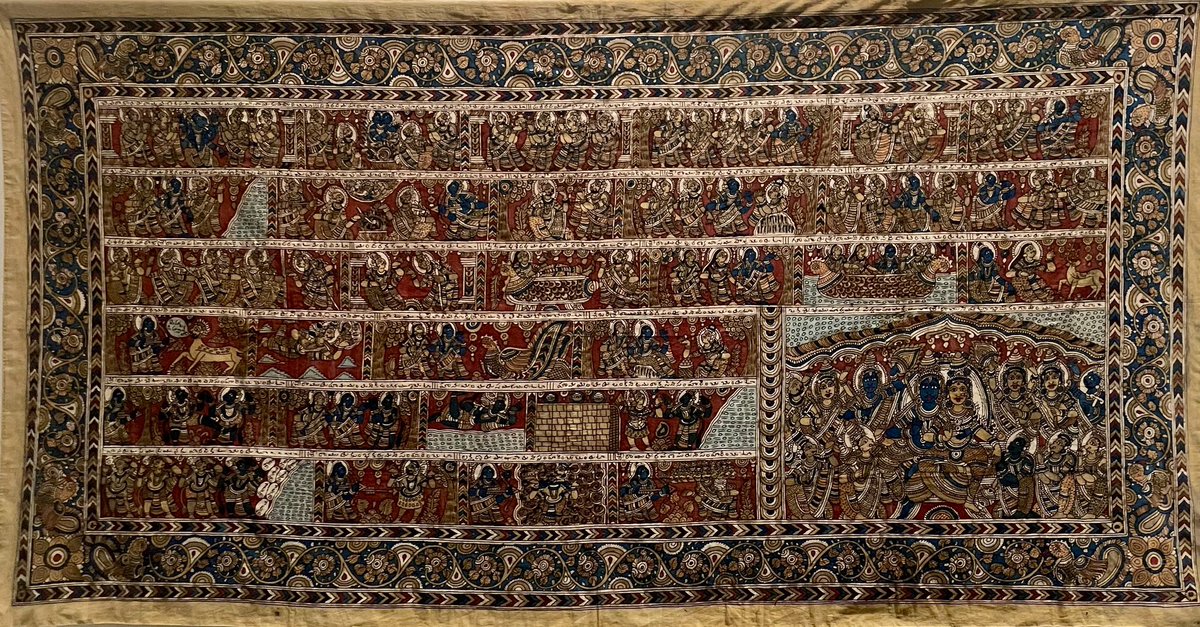
India has over a 100 documented art forms.
Just wanted to create a thread on a few of them so that more people can learn more about them, appreciate and take pride in our rich cultural heritage.
I have missed a few, add them to the thread below 🧵
The Madras Sanskrit College (MSC) is embarking on a bold new chapter! Since 1906, we have been a cornerstone of Sanskrit education. After decades of partnership under various government schemes, MSC has made the strategic decision to return to its roots as a private, self-financing institution.
This transition allows us to stay true to our mission while evolving for the modern world. Here is what’s changing:
Preserving Tradition: We remain deeply committed to the traditional study of the Shastras.
Modern Innovation: Our brand-new, progressive curriculum integrates ancient wisdom with cutting-edge technology.
Future-Ready Students: Students will now gain expertise in Artificial Intelligence (AI), Indian Knowledge Systems (IKS), and manuscript decoding.
Career Empowerment: We are training the next generation of IKS teachers and equipping students with the skills needed to thrive in today’s job market.
"The students are the main beneficiaries of this move."
This journey is made possible by the generous support of individuals and corporates dedicated to preserving our rich cultural heritage. We are excited to empower our students with a unique blend of heritage and high-tech skills!
@dpradhanbjp@SanjeevSanskrit@sain57356@SanskritChannel
#SanskritDiwas
@davidfrawleyved@sanskritiias
@TheSanskriti_
@kalyan97@annamalai_k@yajnadevam@Rtam86418021@SanjeevSanskrit@Kar_Sas123@subhash_kak@AGeorge56445@AkhilKumarSaho8@vikramsampath@DeepakChopra@jsaideepak@itisatp@BjpSashi@PMOIndia@DrManishKumar1@ARanganathan72@sanjeevsanyal@kalyan97@dushyanthsridar@RajVedam1@mmpandit@periyanatt96807@Ugrashravas
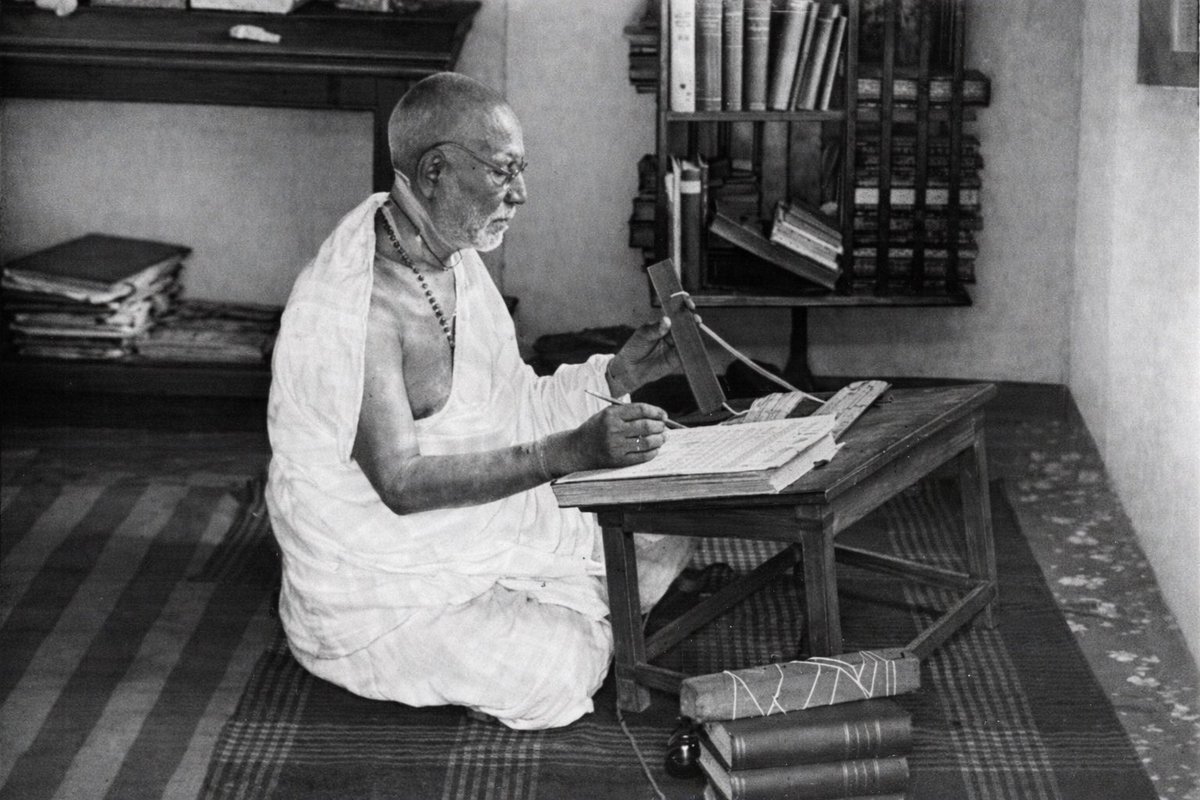
Today we commemorate the birth anniversary of Thamizh Thatha, U. Ve. Saminatha Iyer. Had it not been for his relentless, selfless, and often physically exhausting efforts, much of our Sangam corpus,and their traditional commentaries might have remained buried in fragile palm-leaf bundles, lost to time, insects, neglect, and decay.
In his autobiographical writing “Nilavil Malarntha Mullai”, he narrates the extraordinary journey of retrieving the manuscripts of Pathuppaattu.
After publishing Civaka Cintamani, he learned of the existence of this ancient Sangam anthology. Determined to locate a complete manuscript, he began searching across Tamil Nadu — but found only fragments. Hearing that Tirunelveli housed many vidwans with manuscript collections, he decided to travel there. But the journey itself tested him with his bullock cart overturned on the way to the railway station, resulting in him carrying his luggage by hand. During the train journey, he was woken at midnight and told that the compartment had caught fire.
Undeterred, he continued and reached Tirunelveli — only to face disappointment. No complete manuscript could be found.
He then proceeded to Alwar Thirunagari and met Lakshmana Kavirayar, who possessed thousands of manuscripts. Yet even there, the needed text was not immediately available. Lakshmana Kavirayar mentioned that some manuscripts might be in his father-in-law’s house — but strained family relations prevented him from visiting. U. Ve. Sa did not give up. He persuaded him: “For the sake of Tamil.”
That night, as the procession of Nammalvar moved through the street, Swaminatha Iyer prayed, “You who are known as Vedam Tamizh Seitha Maaran, bless me with the manuscripts of Pathu Paatu and enable me to publish this ancient work.” Moments later, Lakshmana Kavirayar returned with palm-leaf bundles. Under the moonlight, on the very street, Swaminatha Iyer eagerly opened them — and there he saw Mullai Paatu, one of the poems of Pathu Paatu. His joy knew no bounds. He later wrote that anyone who saw him that night might have thought him mad — such was his ecstatic happiness.
He had secured seven of the ten poems with full commentary. The remaining three were obtained later, and he eventually published the complete text.
Today, when we access Sangam poetry with ease, we must remember — behind those printed lines stands a man walking under moonlight, holding palm-leaf manuscripts like sacred treasure.