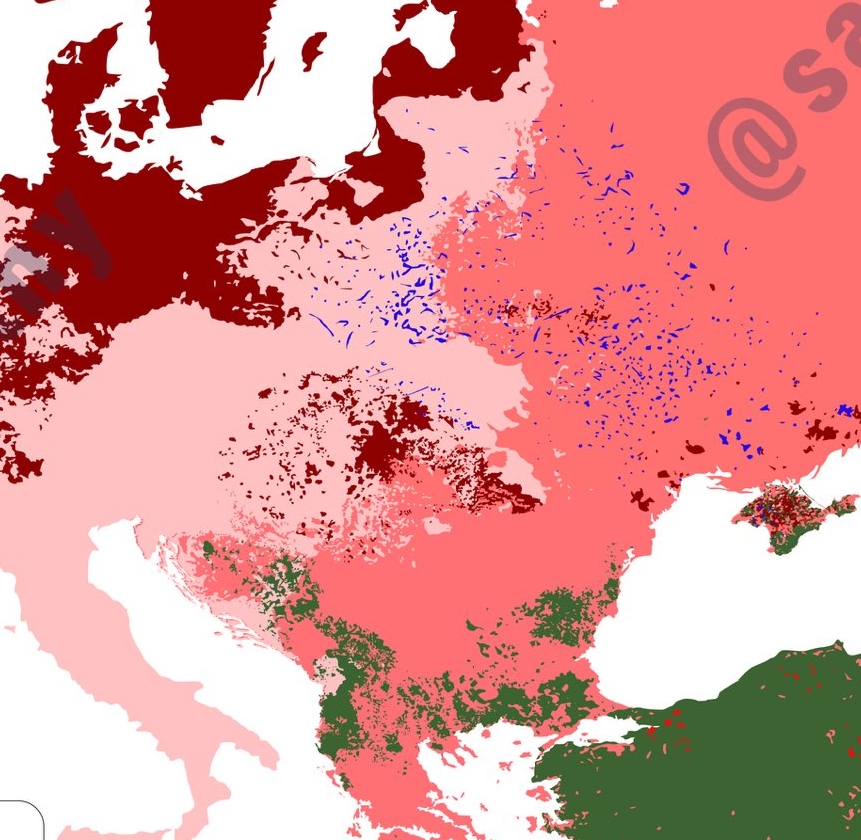
Notice how the dots signifying Protestantism overlap with the historic territory of Kingdom of Hungary.
The reason why Protestantism survived in Kingdom of Hungary but was eradicated from neighboring territories goes back to the complex situation of the Habsburg-Ottoman wars, in particular the events leading to the Treaty of Vienna (1606), which secured the rights of Protestants in Habsburg-controlled parts of Kingdom of Hungary (but not in their other lands).
I can give a quick overview of how this happened and why the religious situation in Hungary was different than in other Habsburg ruled lands, as this is a very interesting topic and important part of wider Central European history.
In 1526 Kingdom of Hungary suffered a crushing defeat to Ottomans at the Battle of Mohács where King of Hungary Louis II died. This not only led to a direct occupation of Hungarian territories by the Ottomans but also to a succession crisis.
The Habsburgs, ruling over neighboring Austria, claimed the Hungarian crown and established control of western and northern part of Hungary, while a rival faction of Hungarian nobles supported their own pretender John Zápolya as the king and had control over eastern territories of the kingdom, including Transylvania. The Ottomans pragmatically supported the latter faction against their bitter rivals the Habsburgs. Eastern Hungarian territories, which would be known as Principality of Transylvania from 1570 onward, would effectively become an Ottoman vassal state.
Because of this, the Habsburg-Ottoman wars in Kingdom of Hungary would have elements of civil war, as the said anti-Habsburg faction of Hungarian nobles would cynically side with the Muslim Ottomans despite being Christians, pursuing their own pragmatic politics of survival as Principality of Transylvania, while also having ambitions to one day reclaim entire Kingdom of Hungary.
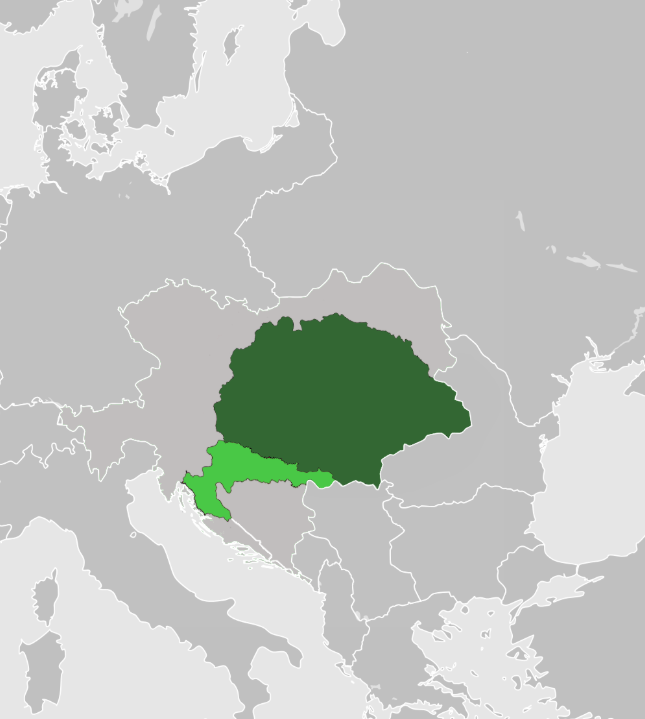
Religious situation in Hungary would also play an important part in this. In 16th century, Protestantism spread rapidly over entire Kingdom of Hungary and by 1600, 75% of population of historic territory of Kingdom of Hungary (in dark green on the second map) adhered to some form of Protestantism.
The Principality of Transylvania in particular was famously multi-religious, and had guaranteed religious freedom for Catholics, Lutherans, Calvinists, and Unitarians, going back to Edict of Torda in 1568.
Meanwhile the Habsburgs were pushing aggressive Counter-Reformation policies in the late 16th/early 17th century, as they wanted to eradicate the Protestant heresy and reestablish Catholicism in their lands.
This difference in religious policies obviously meant that Protestant nobles in Hungary had much more reasons to support the anti-Habsburg cause and Principality of Transylvania was trying to establish itself as the protector of Protestants across the entire territory of Kingdom of Hungary, including in the Habsburg-ruled territories in western and northern Hungary, where Protestant communities also existed in large numbers. This was not just out of religious reasons but also political, because Transylvanian princes wanted to portray themselves as legitimate heirs of Hungarian crown and guardians of Hungarian state traditions, so insisting on affirming religious rights across historic borders of this kingdom was tied to their ambitions to one day also entirely reclaim the rule over entire kingdom.
The war that really cemented this attitude was the Long Turkish War (1593-1606), which was an escalation of Habsburg-Ottoman wars along the Hungarian and Croatian frontier. It's interesting that in this war, the Principality of Transylvania under Prince Sigismund Báthory initially sided with the Habsburgs, breaking the alliance with the Ottomans. However Sigismund's rule was unpopular, particular among the Protestant nobles, and as the war was dragging on, there was less and less support for the anti-Ottoman policy.
The Long Turkish War was a long and grueling war which mostly included brutal border raiding and sieges of important border fortresses. It was essentially a stalemate; the Habsburgs had their victories and the Ottomans had theirs. Meanwhile the land and the finances were exhausted due this war.
In the final stages of the war in 1604, Protestant (Calvinist) Transylvanian nobleman Stephen Bocskai started an uprising. Initially loyal to the Habsburgs, serving them as a military commander against the Ottomans, he rebelled against them as the war went on, rallying a large number of Transylvanian nobles behind him, commanding a force of Hajduk border irregulars.
Having to fight a war on two fronts and financially exhausted, the Habsburgs were looking for peace and eventually signed The Treaty of Vienna in 1606 to make peace with Stephen Bocskai, before the negotiations to stop the war with the Ottomans started. The said Treaty of Vienna recognized the legal status of Lutheran and Calvinist denominations in Habsburg-ruled areas of Kingdom of Hungary (historians often refer to this territory as Royal Hungary), thereby affirming Transylvanian princes as protectors of Protestants over the entire territory of Kingdom of Hungary, which was like I explained before tied to their self-portrayal of being legitimate heirs of Hungarian crown. Bocskai would be elected Prince of Transylvania and reverted back to pro-Ottoman policy.
So it was essentially because of this Bocskai's uprising and the policies of Principality of Transylvania that Protestant enclaves were able to survive in Habsburg-ruled territories of Kingdom of Hungary, while the Habsburgs would go on to eradicate Protestantism in their Austrian hereditary lands, Croatia and Bohemia (after the Battle of White Mountain in 1620), as they recognized no rights of Protestants in these lands. This is why there is a "no-Protestant" zone around the historic borders of Kingdom of Hungary on the map of religions in Europe on the left.
The Habsburgs eventually (re)conquered the entire territory of Kingdom of Hungary from the Ottomans and their Transylvanian vassals in 1699, but by then the religious attitudes were already different and a full-scale aggressive recatholicisation was no longer in the plans. While there was a growth of Catholic influence following the Habsburg victory, Protestantism in Hungary survived in significant numbers to this day.
laikliğin, çağdaşlığın ve modern hayat tarzının savunucusu CEHAP vekili Meclis'te gündeme getirmiş; "Valinizi ya görevden alın ya incir yaprağı gönderin, Vali böyle dolaşamaz" diye
Suna Selen inanılmaz biriymiş ya şu düşünceye bakın. 87 yaşında inanılmaz dinç ve sohbeti akıcı. Ayrıca Fatma Aliye’nin öz torunu ve Şakir Paşa’nın geliniymiş. Aşırı keyif aldım sohbetten (sunucuya rağmen)
1927 Resmi Türkiye Ana Dil Sayımı
Sayıma göre toplam nüfus 13.6 milyon olup ana lisanlar;
-Türkçe 11.8 Milyon (%86)
-Kürtçe 1.2 M (Resmi sayımda Zazaca dahil edilmiştir)
-Arapça 134, Rumca 120, Çerkesçe 96, İbranice 69, Ermenice 65, Arnavutça 22, diğer diller ise 162 bin şeklinde tespit edilmiştir.
Ayrıca Türkçe, Kürtçe, Arapça ve Rumca'nın çoğunluk olduğu ilçeler bulunurken, diğer diller için bu duruma rastlanılmıyor. Bunun yanında Çerkesçe ise Kayseri/Pınarbaşı'da %30 ile dikkat çekiyor.
Ayrıca 1927'de anavatana bağlı olmayan Hatay için; dönemin Fransız yönetimi tarafından yapılmış sayıma da haritada yer verildi.
Halkın elinden alınan sahilin bir bölümü otele kiralandı..
Antalya’nın Aksu ilçesinde halkın kullandığı çardaklardan temizlenen Kumköy Plajı’nın bir bölümü otele kiralandı.
Ertuğrul Gün’ün haberi:
https://t.co/o8Y2X4UV6h
Historian Michael Wood takes us to a coffeehouse in Kars, Turkey, where a traditional bard (aşıks) performs the “Epic of Köroğlu.” As seen in 1979’s “In Search of the Trojan War.”
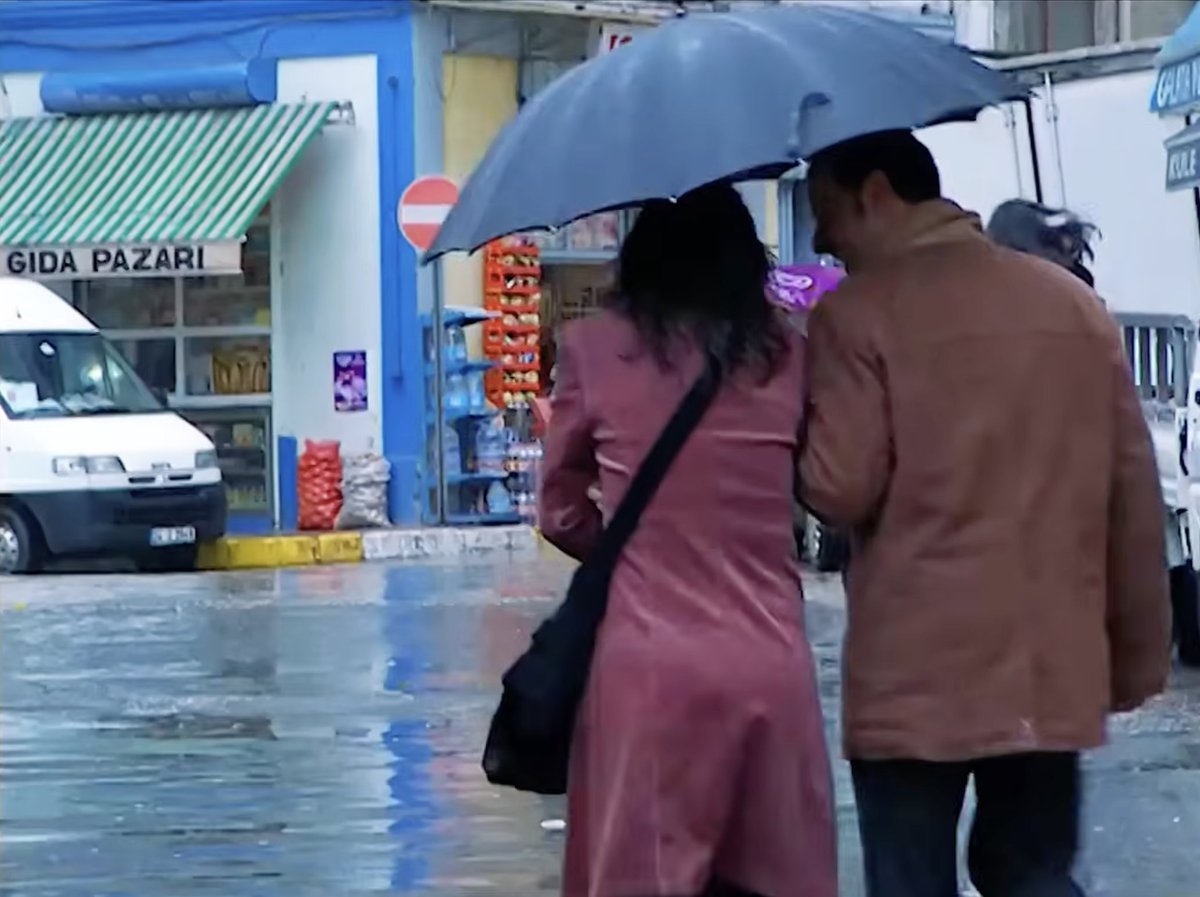
2000'lerin başında çekilen Bir İstanbul Masalı'nı bugün izleyince bambaşka bir İstanbul ile karşılaşıyorsunuz.
Örneğin şu an İstanbul'un en çok ziyaret edilen noktası Galata Kuledibi oldukça ıssız. Turist kalabalıkları yok. Yayalaştırma henüz gerçekleşmemiş. Şu an meydanın en popüler turistik lokantalarından olan Güney Restoran, o dönem öğle yemeklerinde rağbet gören bir esnaf lokantası; sokakta sıra sıra masalar konmamış. Ve belki de günümüzden bakınca algılaması en güç detaylardan biri, Kule'nin hemen karşısında ekmek, soğan, patates satılan bir bakkal var.
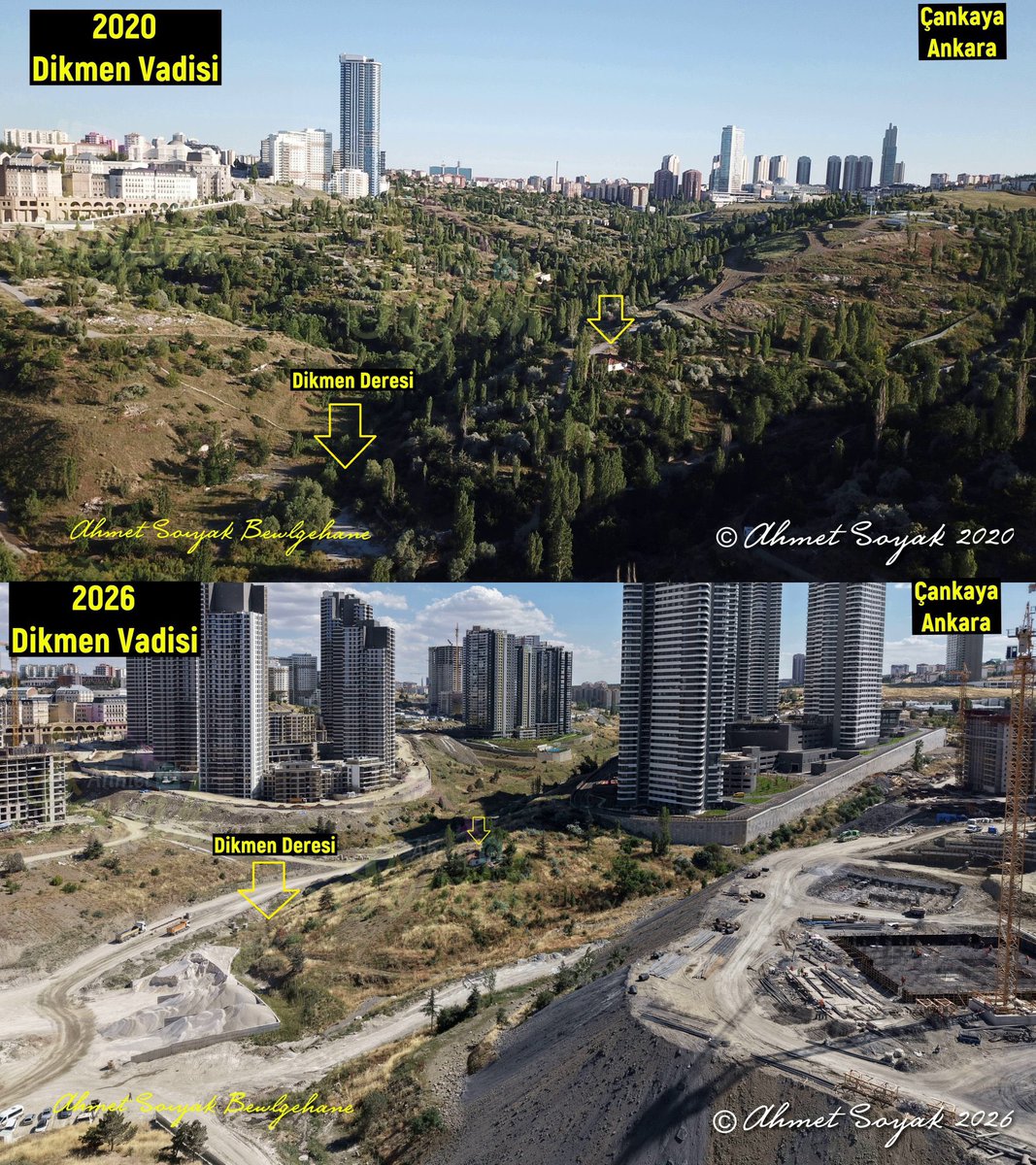
Brutal massacre of trees in Ankara’s Dikmen Valley.
It is painful to compare the pics. One has peace of mind and the second is just soulless piece of shit.
Ankara’s nature doesn’t produce many trees. This was a very valuable area.
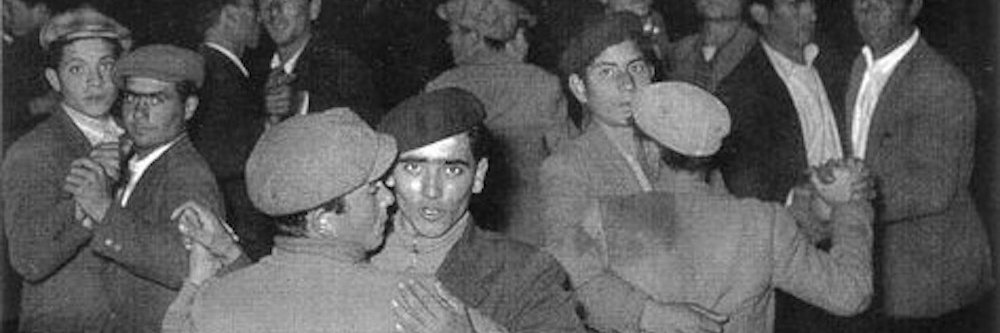
Watching this 1971 Yugoslav census footage is fascinating. One of the most striking moments is how many Bosnian Slavs identify as “Muslim”not simply as a religion, but as a nationality. Under socialist Yugoslavia, “Muslim” (with a capital M) was officially recognized as a national category, despite the word itself referring to followers of Islam. For many rural, poorly educated villagers, the distinction between faith and ethnicity was far from clear. In the Qur’an, a Muslim is simply one who submits to God, regardless of ethnicity. Combined with the long-standing Serbian habit of calling Bosnian Muslims “Turks” because of their Ottoman-era faith, this blurred identities even further. Two decades later, Bosnia’s devastating war would expose how deeply questions of nation, ethnicity, and religion had become intertwined.
Sanki tüm kıyılarda eş zamanlı bir kirletme operasyon başlatılmış gibi.
Bu görüntüler de Marmaris Içmeler’den.
Bu kadar da olmaz denilen ne varsa oluyor, kabus gibi.
Akdeniz’i de Marmara’ya dönüştürmek için ne gerekiyorsa yapılıyor…
@YusufYavuz3 Anlık Çıralı Yusuf bey. Çamyuva’da ve civarında kirlilikten denize giremeyen kardeşim, bir umut Çıralı’ya geçmiş ama durum felaket ötesi. Makro, mikro çöp, ne isterseniz var.
Çocukluğumdan beri denizle iç içe olan birisiyim ne yazıkki son zamanlarda denizimizin kirlendiğine ve canlılığını kaybettiğine şahit oluyorum . Son 5 gündür Antalya’dan , Olimpos’a kadar olan bölgede denizdeydim . Gerek açık deniz , gerekse bölgemizdeki koylara girdim konakladım inanın ki Kemer bölgesindeki en sakin koylar bile pislik içinde . Kemer’e gelirken artık gördüklerim karşısında dayanamadım ve sizlerle paylaşmak istedim . Bu kirlik sadece Antalya Kemer’in çöpü değil . Mersin’den başlayarak , Alanya , Manavgat, vs il ve ilçelerin denize giden bütün çöplerinin deniz akıntılarıyla Kemer sahillerine gelme sorunu . Artık bu sorun Çevre , Turizim bakanlığı ve Yerel belediyeler olmak üzere hepimizin sorunudur ve topyekun bir mücadeleyi gerektirmektedir . Denizin açığ��n da 80 metre derinlikte gübre çulalı oltama takılıyor ve bir tane de değil sayısını unuttum , ne işi var bu gübre çuvalının denizde ? Çiftçi zirai ilacı , gübreyi tarlada kullanıyor sonra tarlasının dışında bir yere atıyor , bu çöplerde , yağan yağmurla derelere karışıp denize sürükleniyor . Aynı şekilde sahillerde , koylarda , dere kenarlarında piknik yapanların pislikleri , çöpleri , boş arazilere atılan çöpler , yat turlarına gidenlerin , balığa gidenlerin çöpleri , pislikler hep denizi kirletiyor . Benim fikrim başta çöp atana ağır cezalar gelmeli . Sahil , koy , orman , dere ve tabiat alanlarında piknik , kamp vs yasaklanıp sadece devletin müsade ettiği yerlerde piknik kamp yapılmalı . Çiftçilerin aldığı tarım ilacı ve gübre çuvalları depozitolu olmalı ve iadesi mecburi tutulmalı . Deniz turlarına ve balığa çıkanlara zorunlu plastik hariçinde tek kullanımlık plastik malzeme başta olmak üzere poşet , vs yasak olmalı . Sahile yakın bütün otellerin havuz , vs giderleri tekrardan denetlenmeli , önlem alınmalı . 30 metre derinliğin altında av yasağı olmalı , sahile belli mesafede sürat , gezi teknesi , jetsiki , su sporları, vs yasak olmalı . Turizim , Çevre bakanlıkları ve yerel belediyeler tarafından yeni bir birim oluşturup derelerin ıslahı , temizliği , sahil ve koyların sürekli temizliğini bu birim yapmalı . Turizim bölgelerinde deniz çöpü toplayan gemilerin sayısı hızla arttırılmalı , vs . Yazacak çok şey var ama ne desek boş ne yazık ki kendi bindiğimiz dalı kesiyoruz .@csbgovtr ,@murat_kurum ,@TCKulturTurizm ,@MehmetNuriErsoy ,@iletisim ,@tcbestepe ,@RTErdogan ,@EmineErdogan
Deniz kirliliğinin turizme verdiği zarar savaştan beter.
İlk video Antalya Kemer’den, ikincisi Alanya’dan.
Turizmciler bölgesel savaş nedeniyle hükümetten destek istemiş.
Antalyalı Kültür ve Turizm Bakanı’nın deniz kirliliği konusunda henüz bir açıklaması olmadı. ⬇️
Greek wrestlers ( pehlivanidis) took to the arena at the Sochos Oil Wrestling event in Thessaloniki, Greece... After putting on their wrestling attire (kispedis), the Greek wrestlers smeared themselves with pure Greek olive oil. Participants claimed that oil wrestling is an ancient Greek sport and that the Ottomans learned this sport from the Greeks...+++
I'm not surprised Airbnb is losing revenue. If you're charging the same as or more than hotels, you need to offer more than just a place to sleep. I'd rather stay at a hotel with daily housekeeping and room service.
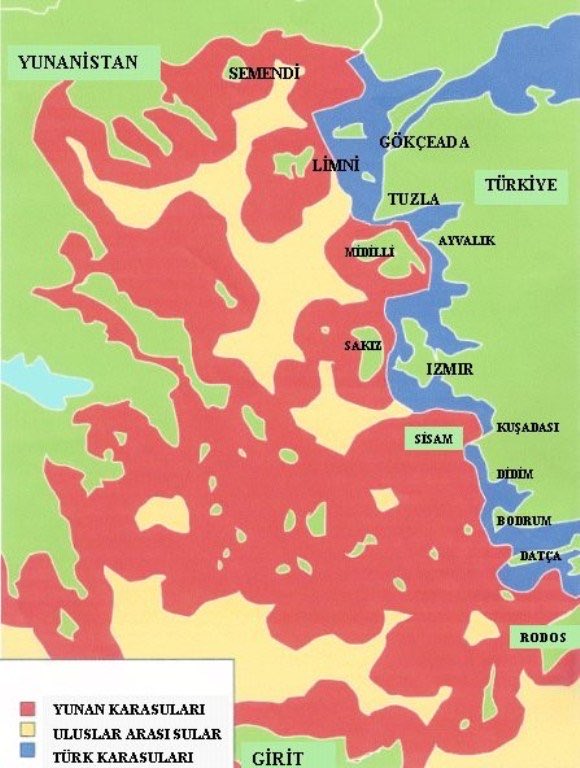
Bunun sebebi maalesef aşağıdaki haritalar. Yunanistan 10 milyon nüfusu için Ege denizinin tamamından balık ve deniz mahsulleri avlayabilirken, biz 85 milyonluk nüfusumuz için anca kıyı şeridimizin dibindeki mavi bölümden ya da sarı gör��nen uluslararası sulardan balık ve deniz mahsulleri avlayabiliyoruz. Yani nüfusumuza göre avlanma alanımız haliyle kaynağımız çok az.
Bir de bu iş arz-talep. Yunanistan da nüfus az, haliyle yerli talep de az. Gelen turistler için uygulanan fiyat politikası ile de turistik bölgelerde yaşayan halk gayet güzel geçinebiliyor. Bizde ise nüfus 85 milyon ve talep çok fazla. Haliyle nispeten daha turistik olan Ege sahillerimizde bu 85 milyonluk nüfusun %5 ine bile hizmet verirken talebe yetişemiyorlar ve mecburen dar zamanda kar maksimizasyonu için fiyatlar arttırılıyor.
Ha yine vize alabilen istediği yere gitsin tabi. Ben eleştirmek için değil, biraz sebep sonuç ilişkisi için bunları yazıyorum. Bu arada ülkemizde çok uygun fiyatlı yerler de var ama hem popüler bölge ve popüler mekan olsun hem de fiyat uygun olsun isteyince o olmuyor tabi. Çünkü kapasite sınırlı. Yoksa görece daha az meşhur yerlerde, çok uygun flyatlı mekanlar da yok değil.