You can get 95% of the results you want by calmly putting one foot in front of the other. One former Navy SEAL friend texted me a principle used in their training: “Slow is smooth. Smooth is fast.”
Do you wanna hear a tragedy?
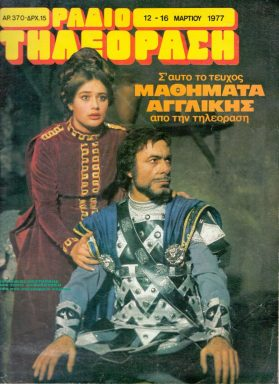
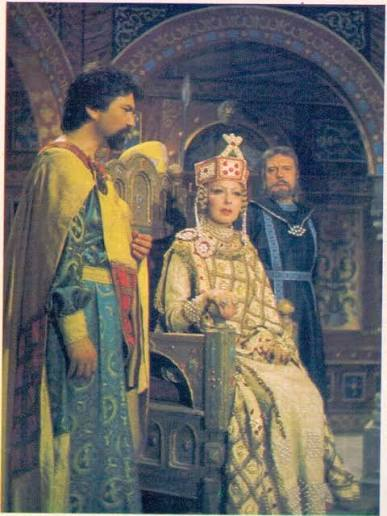
So, in the late 70s, Greeks actually made a show about Romanos IV Diogenes and the Battle of Manzikert
Romanos was played by Nikos Vastardis and Voula Zoumboulaki was Evdokia Makrembolitissa.
But then something weird happened. Just before "Purple and Blood" was to return in 1980, Hellenic Radio and Television Corporation employees deleted it from the archive...
All we have are few shots. Tragedy indeed...
"If employees are given a free trip to Paris, they are happy. If you give them a free trip to Hawaii, they are happy. But if you offer them the choice between the two destinations, they are less happy, no matter what they choose." https://t.co/1j1boOOMqB
Shopify billionaire co-founder & CEO Tobi Lütke — one of the most analytically rigorous founders alive — uses affirmations.
His exact words:
"If you tell yourself or write down something about yourself 100 times, it writes into the neurofrontal cortex at such a deep level that your brain will start reconciling you to that. It just works."
His personal example:
He was terrified of public speaking.
For one week he sat down every day for 10 minutes and wrote: "I love public speaking."
A week later the fear was gone.
"It's not like a placebo. You just actively change your neurofrontal cortex in this moment."
Your brain starts shaping your behavior around the identity you rehearse most.
This is the MOST asymmetric window I've ever seen in business.
It's honestly hard to comprehend. Never in history have this many categories opened at once, ALL ripe for the taking:
1. Take a boring business doing 20% margins, an accounting firm, an IT shop, a local service company, and swap the human labor for agents until it runs at software margins with customers it already has.
This is the Thrive Holdings model.
2. Build the picks and shovels, the clean API or data source that agents call 1000 times a day, and get paid per call instead of per user.
I call this being in the building blocks business.
3. Buy a sleepy SaaS with real customers and a tired founder, then rebuild it AI native and 10x what it can do while building a media machine along side it.
4. Run a service business that looks like an agency on the outside but is really you plus a team of agents doing the delivery, priced like consulting, delivered like software.
5. Watch what people are still hiring for on Upwork, the "data entry specialist," the "appointment setter," the "research assistant," and build the productized agent that replaces that exact role, then sell it to every company posting the job. Vertical agents are here!
I could keep going forever but you get the point.
Contrary to what a lot of people believe (AI is coming for us, you need to raise venture to compete etc), the opportunity right now is endless.
You don't need to quit your job. Finally, you can build a real startup on the side.
It's starting season.
If you've EVER thought about starting a something of your own, this is the moment to stop thinking about it.
Seasons like this don't last forever.
Start.
@tferriss If there's one I could recommend which profoundly moved me as it combines the core shared human experience through the lens of photography and art, it's the documentary featuring Sebastiao Salgado called "The Salt of The Earth". I recommend watching it 4K on a nice big screen :)
My biggest takeaways from @jjen_abel on the enterprise sales process:
1. Most people think enterprise sales is a five-step process. It’s actually around 15 steps. The classic CRM stages of a sales process (intro, demo, proposal, contracting, close) are a revenue forecasting tool, not how you successfully move a buyer through a decision and close a deal.
2. The “pincer” move for landing the first meeting: Target the executive or the n-1, and no one else. When prospecting into an enterprise account, there are only two valid entry points: the ultimate decision-maker (often the exec in charge of a department or business unit) and the person one step below. The pincer move runs both tracks at once: your company’s founder reaches out to the top, the AE targets the N-minus-one, and you work toward them from both ends.
3. Pitch the alpha, not the problem. Executives receive hundreds of cold messages; the oes that cuts through speaks directly to an unfair advantage they can get access to through your product. “We can save time on document review” won’t get execs very excited. “I can guarantee you a three-day timing edge on regulatory information your competitors will get later” does.
4. A healthy enterprise win rate is 25% to 35% of qualified opportunities, and higher means your price is too low. This number surprises founders who expect to close half of what they qualify. But enterprise buyers need time, organizational maturity, and internal alignment that sellers can’t always control. A significant portion of the market simply isn’t ready yet. Jen notes that roughly 25% of “lost” deals boomerang back within a year, so a no today is rarely a permanent no. Pushing price down to win more deals undermines the market: executives talk, and inconsistent pricing across logos destroys credibility faster than losing a deal does.
5. The intro call is the most valuable intelligence-gathering session in the entire sales cycle. Prospects open up on call one in ways they never will again, because it doesn’t yet feel like a sales process. Jen keeps it explicitly informal (“I don’t even know if we need a full 30 minutes”), lets the prospect go first, and uses open questions about organizational change (“What needs to be different in 2027?”) to surface priorities before ever mentioning her product. Do not record the call, do not show slides, do not demo anything. The more they talk, the more you can frame your eventual pitch around exactly what they told you they need.
6. Treat the demo as a carrot you withhold until you have co-authored it with your internal champion. Most sellers race from intro to demo in one jump. Jen always does a 15-minute “pre-demo prep” call with the champion to co-build the agenda: which features to show, which questions people will ask, and which attendees to include. By the time the group demo runs, the people in the room feel like the product was built specifically for them.
7. Demo 20% of the product—the 20% you know they care about. Showing the full product in a demo is one of the most common ways deals unravel. The moment stakeholders see features irrelevant to their team, they start calculating what they’re paying for that they won’t use, and the tight narrative you’ve spent weeks building collapses. Let the champion guide what to show beforehand, let curious prospects in the room pull you into additional features themselves (“Can it also do this?”), and keep the frame tight.
8. Text your champion for a raw debrief within five minutes of the demo ending. Before the room solidifies a polite consensus, get the unfiltered read: where you lost someone, where you landed, who needs another 15 or 20 minutes. There is always someone in the org who can kill the deal; your job is to find them early and protect alignment.
9. Time-box pilots to two or three days with three or four hand-picked users. Give a small group of power users (not the C-suite executive, who won’t be the daily user anyway) a specific set of tasks, a shared definition of what success looks like, and a 48-to-72-hour window to use your product. Any longer and you’ve added two weeks to your sales cycle with little additional signal. If the product requires deep integration before it can show value, charge for the longer pilot (typically one to two months) and credit the fee back against the contract if they proceed.
10. Your champion going quiet is a signal your deal is falling apart. The champion’s job is to help you navigate the people who might kill the deal, alert you to internal dynamics you can’t see, and keep the process moving when it stalls. If the champion goes quiet, something has shifted inside the organization. An enterprise deal is set up for maximum friction (deal-killers, procurement, legal, sponsor); the person on the inside is the key.
11. Sales is project management. After a strong pilot, email your champion a forwardable package—agreed timeline, price predicated on a signature date, and a kicker if they hit it—so they can loop procurement.
12. The expansion conversation starts the moment you sign. The close is five minutes of celebration and then back to pipeline. The real prize in enterprise is year-two expansion: moving from $100K to $350K, from a single team to multiple business units.
The full enterprise sales cycle, step by step with @jjen_abel
Most people think there are 5 sales stages. There are actually 15.
Skip a step and 💀
We discuss:
🔸 The “pincer model” for landing the first meeting
🔸 How to craft a winning 2-3 sentence cold outreach pitch
🔸 How to run an intro call that extracts maximum intelligence
🔸 The correct 2-3 day pilot structure
🔸 Pro tips for navigating pricing and procurement
🔸 So much more
84 minutes of enterprise sales alpha. Listen now 👇
https://t.co/HnZK0FyNON
One thing nobody is really talking about - that is super fascinating…
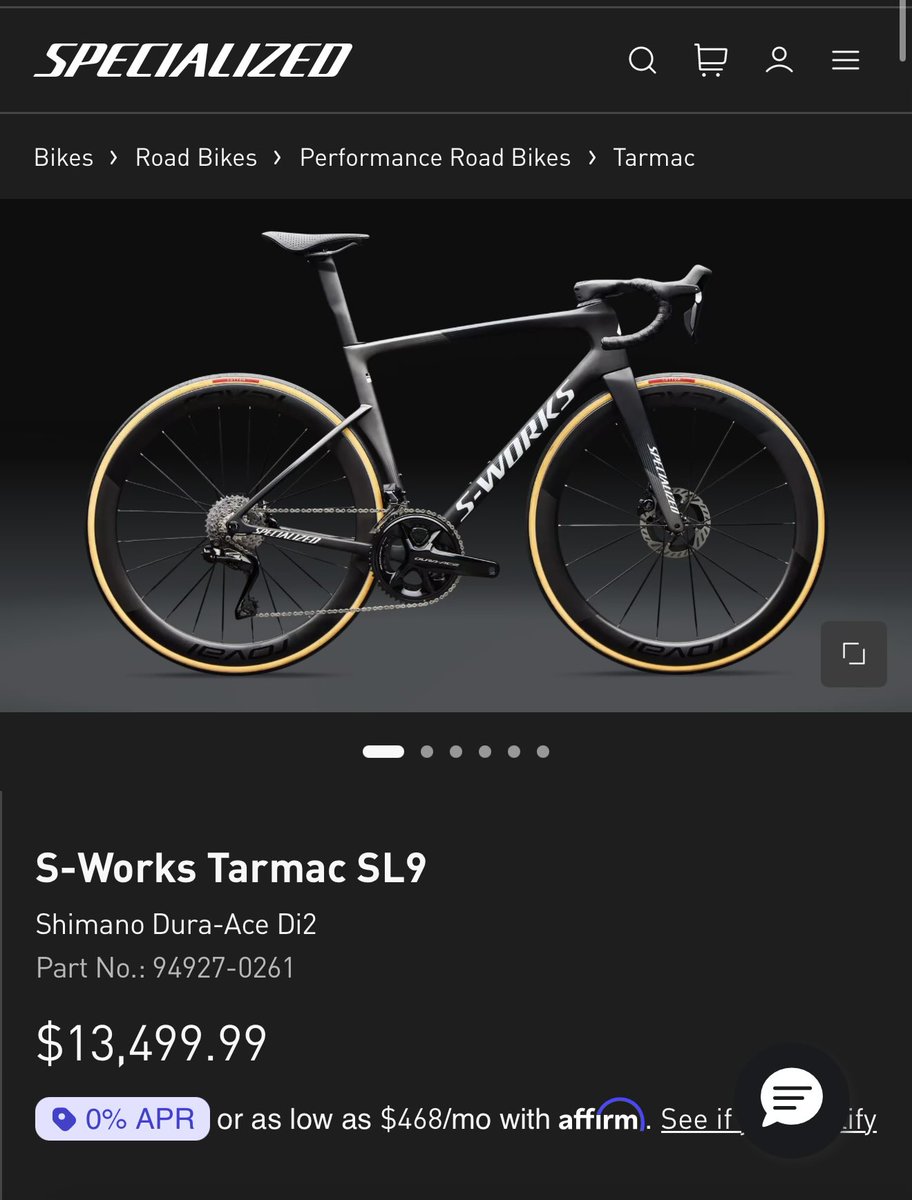
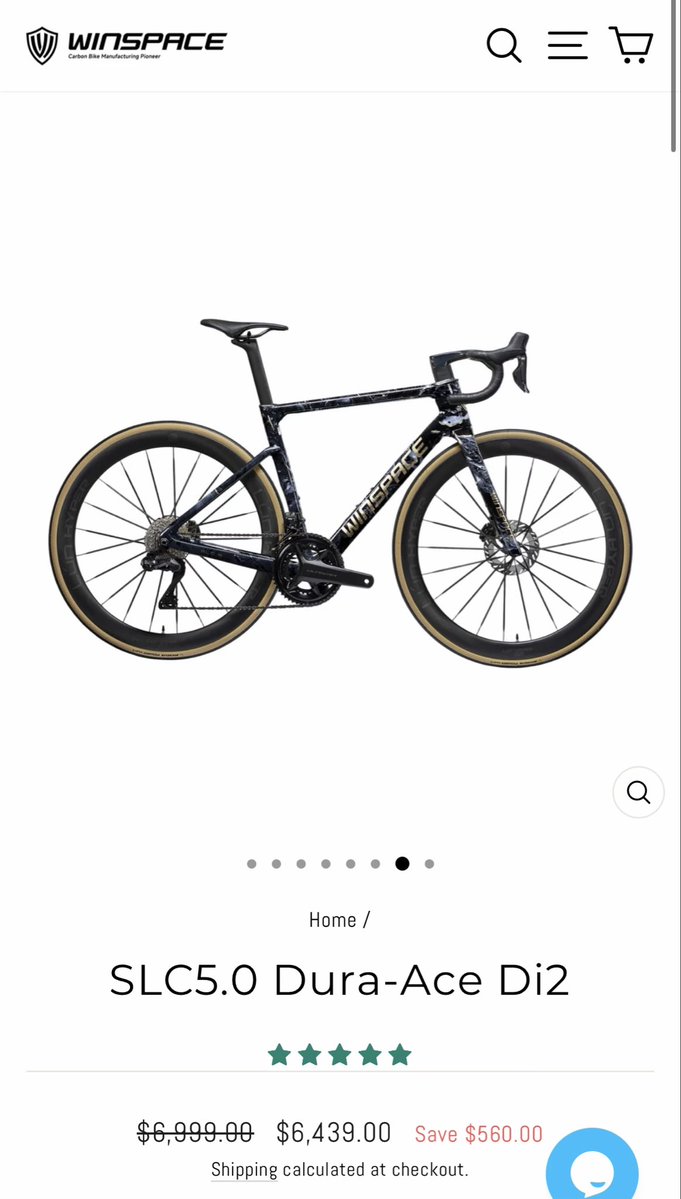
The bike industry is quietly having its “BYD moment.”
For years, Chinese companies manufactured bikes for Western brands.
Now the Chinese manufacturers are building world-class bikes under their own brands and selling for dramatically less.
Feels very similar to what happened in the EV industry.
Interesting article in the New York Times today:
"The more fixated we are on mental health, the more sensitive we become to anything that might qualify as a symptom and the more we use clinical language to describe normal emotional experiences like grief, burnout and loneliness. This broadening of what we think counts as a disorder — known as concept creep — encourages us to pathologize ordinary life and see ourselves as mentally unhealthy."
I boiled down everything I´ve learned about nutrition in 3 decades in this single ~30min article
All the FAQs
All the takeaways.
Eat to dodge disease, postpone death and instantly see through Internet misinformation
30 Years of Nutrition Knowledge Simplified in 30 minutes
https://t.co/CpMzMRxM5x
Arnold Schwarzenegger's no complaining rule:
“No complaining about a situation unless you're prepared to do something to make it better. If you see a problem and you don't come to the table with a potential solution, I don't want to hear your whining about how bad it is. It couldn't be that bad if it hasn't motivated you to try to fix it.”
The fastest way to improve your life is to sign up for a physical side quest. It could be a race, competition, event. Really anything. Maybe a marathon, Hyrox, long hike, or a weekend rafting trip. Something that scares you just a little bit. Just enough to spark action. Your day becomes more structured with the training for the side quest. You sleep deeper because you're tired from the training. You eat cleaner because your body wants the healthy fuel. You look better from the movement. You feel better from the momentum. Everything falls into alignment around the one small decision to sign up for that event. So, what's your side quest going to be?