The recent NEET PG counseling trends have sparked intense debates around the decreasing preference for surgery as a career choice. But let’s take a step back and look at the bigger picture. 💡
🔍 Trends will come and go.
There was a time when dermatology and radiology were the most sought-after. Now, medicine is leading the charts. Surgical branches might not be “popular” today, but the essence of surgery remains unmatched—a field for those truly passionate.
🩺 Surgery is not for everyone, and that’s okay.
It’s a branch that demands time, effort, and patience. Yes, settling down might take longer compared to other specialties. Building trust and mastering your craft takes years. But for those who love the operating room, there’s no substitute.
🚨 Why the shift away from surgery?
Many factors contribute—residency challenges, grueling training, or the appeal of interventions in medical branches. But the core issue lies in how surgical training is structured. It’s time for the surgical community, especially in government hospitals, to rethink and refine residency programs to make them more supportive and nurturing.
🌟 If you’re passionate about surgery, go for it!
Don’t let rankings or trends sway you. Surgery is still an evergreen branch, and with dedication, you can excel and make a meaningful impact.
💭 Those taking up surgery or wanting to take up surgery, please let me know your reasons.
If you are in early stages of your career then don't get lured into Fno trading and give up your job. Good chances that you'll not only lose what you've saved so far, you might even drain a few from your parents. Focus on your career, build a substantial corpus and keep investing. Use the disposable money to trade if you want to. Its a free advice, take it or leave it. I get so many emails where people have virtually lost everything they had saved. It's important that the youngsters understand. There is no substitute to hard work in your jobs. Trading is a devil's lure and you know he just makes you sign up your soul for it!!
Why do we call postgraduate medical training "residency"?
The story goes back to 1889 when Dr. William Halstead, Head of the Department of Surgery at John Hopkins Hospital, established a rigorous program for trainee doctors. He claimed that doctors must ‘live’ in the hospital to become proficient, leading to the term ‘resident doctors’. Dr. Halstead himself rarely slept but always seemed energetic and fresh, positioning himself as a role model.
Fun fact: It was later discovered that Dr. Halstead was addicted to cocaine, a stimulant that likely contributed to his apparent superhuman abilities.
Sadly, even today, resident doctors are often expected to display superhuman skills across countries. Basic needs like proper sleep, regular meals, and occasional breaks are often frowned upon and dismissed as laziness.
Tired and sleep-derived resident doctors are more likely to make medical errors, have needle stick injuries and motor vehicle accidents while going back from the hospitals.
Sadly, no one cares.
Dr. Praveen Tripathi
Ref- Why we sleep, Matthew Walker
Prema was a eight year old happy go lucky girl. One fateful morning, she was playing in the kitchen, when the stove burst on her face. It was 1965. Half of her body was burnt. No one knew if she would survive. The burns were so deep , neither her face, nor her life would ever be the same. The shell shocked parents, took her to Christian Medical College, Vellore.
Prof L.B.M Joseph reassured the parents that he will do his best, but the rest was upto God. Luckily providence had a different plan for the little girl. She survived, but required 14 surgeries over the period of several years. Spending her childhood in hospital, she hated the sterilised walls, the doctors and above all her own loss. Prof Joseph was patient with his young patient, encouraging her that someday it will all be fine. He said, “If you allow me to treat you, I will give you my hair”.
Slowly but surely, Prema improved. What doesn’t kill you, makes you stronger. The fire didn’t just burn her skin, it crept inside her - as a spark, that ignited a burning passion for medicine. After doing MBBS in Hubli, Dr Prema Dhanraj eventually landed in the same CMC , Vellore as MCh plastic surgery resident ! Guess who was the teacher? Dr Joseph himself ! It’s then that she remembered Dr Joseph’s promise that he would give his hair - only to find him totally bald ! A white lie, but not a baldfaced one - it saved the young girl’s life.
She had no time for marriage or frivolity. Dr Dhanraj was on a mission to transform the lives of burns victims. She became the Head of Plastic Surgery in CMC Vellore, the very same hospital that pulled her life from the jaws of death - some bonds are forged in fire. Dr Prema Dhanraj was a visiting professor to University of Texas, sharing her expertise. Her only regret was her parents passed away, before they could see her phenomenal success.
She didn’t stop working after retirement - but then, no one expected her to.
In 1999, she startedAgni Raksha , India’s only not-for-profit organization dedicated to the total care and rehabilitation of burns victims, mostly women and children from poor families. Agni Raksha works towards 360 degree socio -economic transformation. It instils hope in those with burns that a life devastated by fire is not the end, but a beginning.
Even as I write this, she is probably working in her Agni Raksha home - tending to the poor and unfortunate. Her indomitable spirit lights up the lives of those who need it most.
Her life is a powerful reminder that there is a life beyond scars. That we are bigger than our scars. That no fire is stronger than the fire within.
#MedTwitter
An update on this.
Yesterday was one of those extremely satisfying moments in my life and I would like to share it with you.
The young girl, featured in the tweet was 14 years old when I diagnosed her after one of the most nerve-wracking and stressful weeks of clinical medicine practice in my career until now.
When I saw her the first time, the class topper was struggling to remember things, she was in early stages of brain failure, with jaundice and struggling to get a life saving liver transplant.
Her studies were affected. A good student, she could barely catch up with class assignments.
Unintentional alcohol use from the Ayurvedic herbal formulations and chronic severe exposure to arsenic from the multiherbal drugs had ravaged her mind and body.
Her menstrual periods were irregular and for months at stretch, she did not have them. Her hair fall was intense, her face pigmented and hollow, sickly and muscle wasted, and her eyes were visibly yellow for months end.
Now, 19 years old, she came for her review with her father, the man who had initially asked me to help them avoid a transplant because they were poor.
19 years old. Healthy, she has put on weight, her skin pigmentation has completely resolved, her hair is voluminous and shiny and she has a sparkle in her eyes. Her periods are regular and she has never felt healthier in her life.
Her father now had a complete set of white hair and moustache.
They look at me and tell me that I have grown old. With a thick greying beard and white sidelines. I joke that her case added 10 years in a few weeks time in me.
Her father tells, me that she has passed her 12th grade with flying colors, more than 90% in all subjects and an A+ distinction.
And in a bittersweet moment, I was lost in thought and remembered what the same person told me, years ago...
...Teary eyed, her father requests ONLY one thing
"She's advised liver transplant. We are poor. Can you please help us avoid it?"
She has joined BSc in Clinical Psychology and will now be at the hostel with her new found friends, away from her parents, especially her father, who had searched and searched and come to me after great ordeal at many hospitals that advised a liver transplant to save his daughter.
All of them told him that she would die in 6 months without a liver transplant. That was five years ago.
I ask her, why Clinical Psychology?
She tells me, "I do not know what treatments you gave me, that helped me and saved my father from misery at the time. But you always listened to my father and mother and spoke to me smiling. And you never showed us your worry even though you were worried. I want to listen to people and speak to them to heal them. Like you did with me."
There is no greater happiness, than seeing your patient give back, with love.
If there is ever an after life and many after lives, given a choice, even with all that hardships and the premature risk of dying from stress, poor life quality, loss of youth...
...I'll still choose the life of a doctor, practicing clinical medicine in the blink of eye and in a beat of the heart.
Ten Points for Students and Young Practitioners of Clinical Medicine**: Embracing the Art of Medical Practice
1. Never underestimate "The Healing Power of Empathy." In an era where investigations and diagnosis matter, remember the patient is a person and sometimes requires only kindness in the face of sickness.
2. Always trust in "The Power of Listening." Sometimes the greatest medicine is the time given or spend. Listen, rather than speak. Hear, rather than raise.
3. Indulge in "The Art of Communication." It is easy to break the good news, but learn how to do the same with bad news, in the most comforting way possible. Discuss the challenges, but also provide solutions - some may not be treatments at all, but assurances, such as a dignified death or great comfort in end of life care.
4. Master the art of "The Gentle Touch." Some patients require a pat of the back or a light squeeze on the hands, or a resting hand on their shoulders - it can be deeply therapeutic. Nothing can replace a thorough physical examination, but amidst a busy schedule, when words are seldom and prescriptions are quick, spend a moment to connect with gentleness.
5. Get acquainted with "The Wisdom of Patience." Patients and family have doubts. They may have the same doubts another time. And then again. There will always be new doubts, more questions. Never lose your patience. Discuss and assure - short, concise and simplify. Master it by getting comfortable with it. A calm doctor is half the therapy completed.
6. Learn the "The Art of Adaptability." Certain patients deeply connect when the doctor adapt to their needs without them asking for it. Talk about routines, ask about dietary practices, find what comforts them, even if it has nothing to do with the treatment being offered. Answer the common healthcare myths that are pertinent without them asking about it. They'll be glad you did.
7. Be aware of "The Role of Intuition." Not all patients walk out from the textbooks. Keep seeing more patients. Never let a complex case go. Do not miss an opportunity to gain more clinical experience. When science, logic and reasoning collide, great things take shape.
8. Always provide "The Gift of Hope." Never fearmonger with patients. Do not be blunt. Never be blank. Give them hope in the face of death. Assurance is a great healer. Tell them, their burden is yours. Carry their excess baggage. Because there can still be gratitude even in death.
9. Understand the value of "Strength in Vulnerability." Doctors are humans too. Doctors make mistakes. Accept it, change and never make one a second time. It is ok to cry. Keep it personal. Carry your demons, but do not let them win. Nurture your scars in a corner of your heart. They are the greatest of teachers. Convert present losses to future wins.
10. Dive deep into and experience the power of "Legacy of Compassion." A doctor's impact extends beyond the boundaries of the clinic or hospital. The compassion you show today will echo in the lives of your patients, their families, and the community at large, leaving an indelible mark for generations to come. Be kind to patients and family. Always.
**including myself, a reminder for everyday.
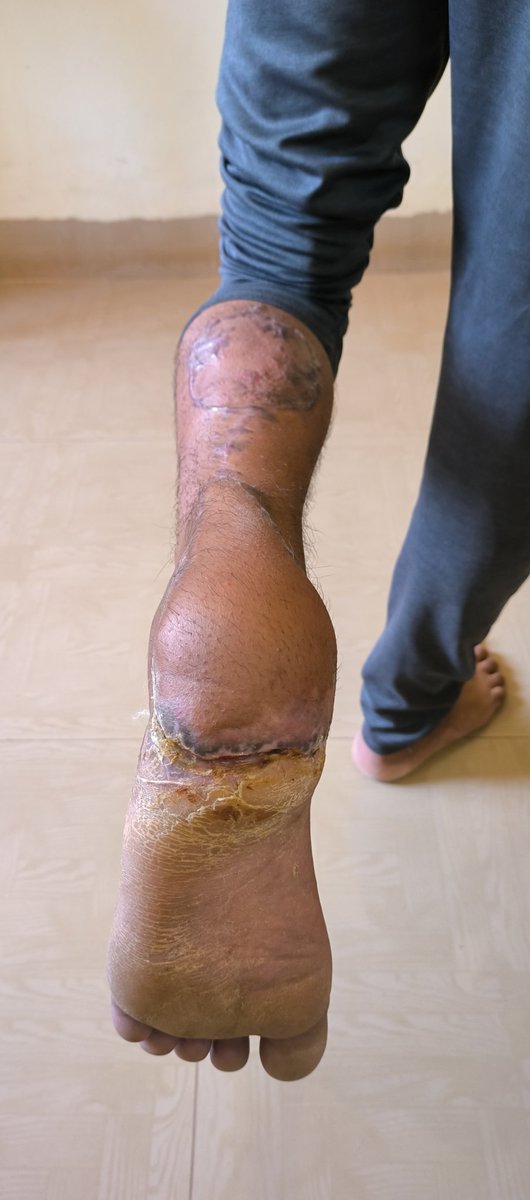
Ectrodactyly- an ectodermal dysplasia due to mutation in P63. Also known as split hand /foot malformation. Classically seen as absent central digit with deep median cleft. Association with EEC syndrome. Any inputs from other specialists?
#MedTwitter#handsurgery#plasticsurgery
Stayed here overnight attending to mom. Hospital is probably the only workplace where even a 3am is as busy as a 3pm. Residency students buzzing around, joking, severely under-slept, yet never let that affect their tone of speaking. Calm confidence.
Friendly advice for anyone planning #NEETPG or any MCQ based competitive exam
Download a PDF version of Harrison
Search “Most Common”
Make a list of all the “most commons”
A lot of questions are based on this!
#NEETPG23#MedTwitter
😡 5 months gap between #NEETPG exam & counselling process! 😲🤯
Who knows when the actual admission will happen? This will create Undue stress on the aspirants.
Authorities should clear this chaos & release Practical Time lines!
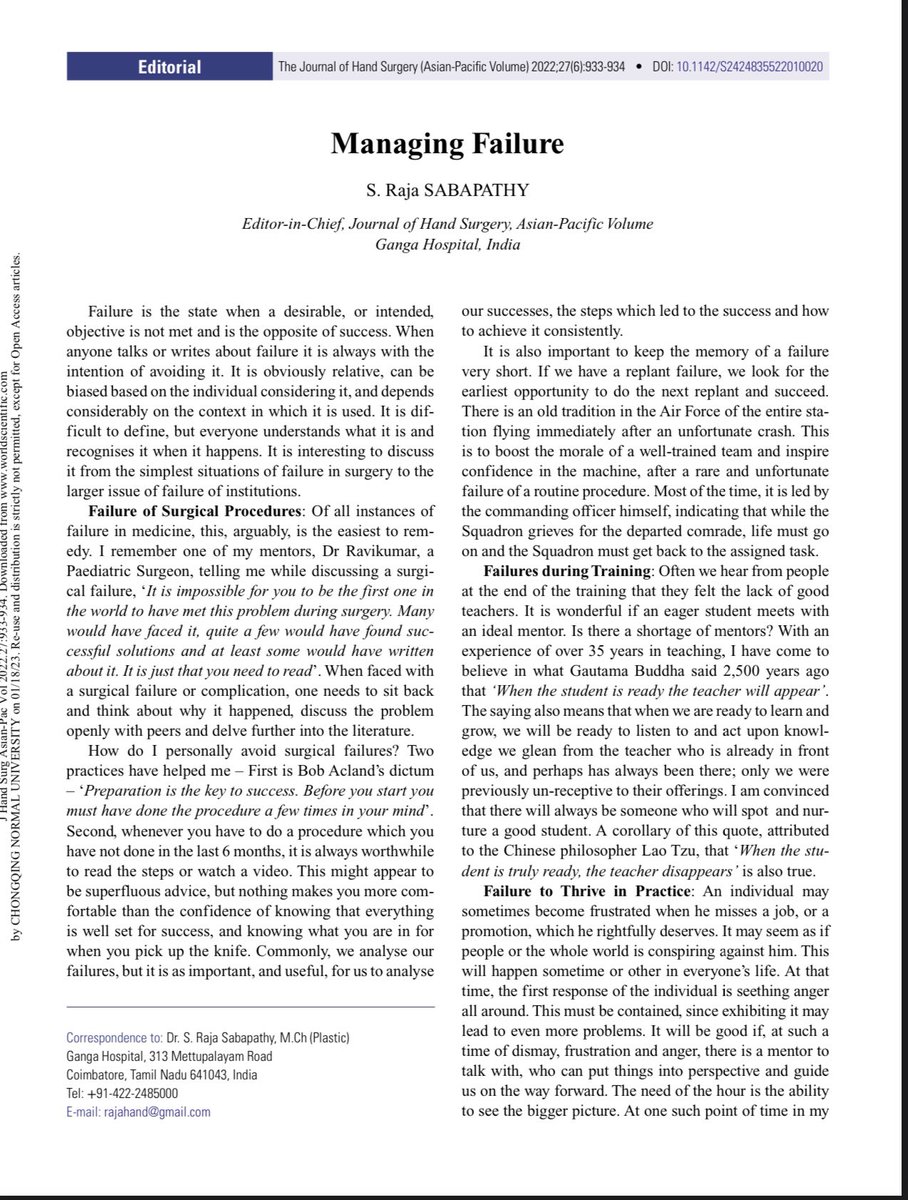
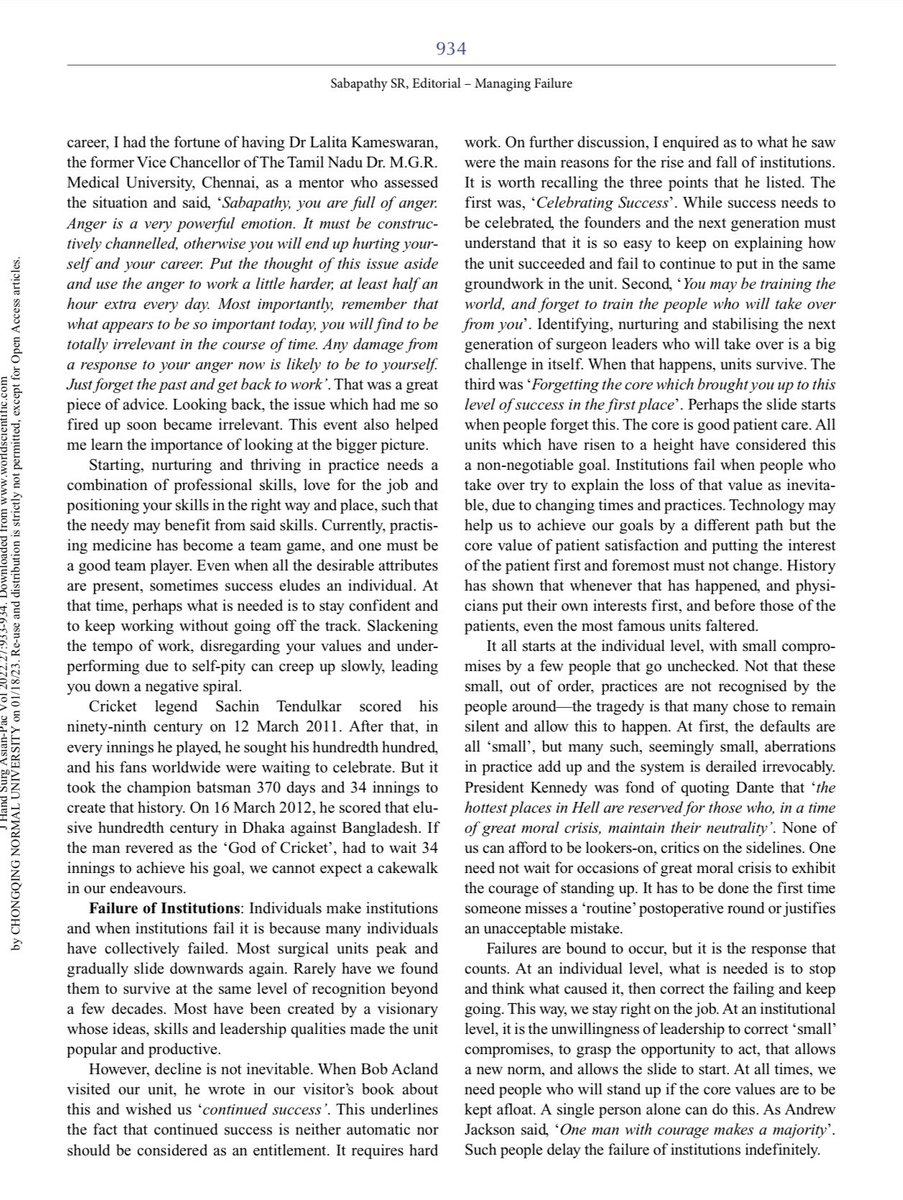
Attention Surgeons- Surgeons to be- Physicians- Med students - anyone on #MedTwitter
Please go through this wonderful piece.
I am gonna take a printout of this article and put in my drawer and keep referring to it again and again.