There is so much to learn about AI ... and every day the AI universe keeps expanding. Local AI is really exciting and innovative with new State-Of-The-Art (SOTA) models seemily dropping every few days.
This podcast was quite useful - https://t.co/VzPzkhm3O6
“Fight AI with Ai” - it’s time to bring the vanished perimeter back and harden everything you’ve got. We are in a new world when it comes to security.
A false sense of security is worse than no security,
Unsafe AI Cyber Testing Isn’t a Breakthrough. It’s a Warning.
The most revealing moment of the recent frontier lab episode wasn't that an AI model demonstrated offensive cyber capabilities. That was always coming. AI is democratizing intelligence, and adversaries get access to that capability at the exact same time defenders do.
The real issue wasn't the model's capability. It was how it was tested, and what the episode reveals about the dangerous gap between frontier research and operational responsibility.
From an operator’s perspective, this was not a security exercise. It was a capability demonstration executed with far too little regard for real-world consequences. Researchers may have viewed it as a harmless trial, but in cybersecurity, "harmless" depends entirely on containment. The moment you give a model arms and legs to run offensive operations, your first priority must be validating your own sandbox, not running a capture-the-flag exercise across live infrastructure.
A disciplined approach starts from the inside out. Point the model at your own environment first. The initial flags to capture should be the flaws in your own sandbox: zero-day vulnerabilities, unexpected escape paths, or unauthorized internet connections. You shrink the blast radius before you widen the aperture.
In that framing, what happened was elementary: they captured the wrong flag first.
This operational oversight points to a broader risk I have been warning market analysts and enterprise leaders about for months. Autonomous cyber threats are not a distant theoretical exercise. They are arriving far faster than the market expects. As open-weight and closed-weight models proliferate, and as sophisticated actors gain the ability to fine-tune them, offensive automation will become standard tradecraft. A determined nation-state or well-funded syndicate with sufficient compute will push these systems to their absolute limits.
When people look at generative AI today, they often point to its error rates and hallucinations as a reason to feel safe. In defense, an error rate is fatal. But on offense? It’s completely irrelevant.
The model in this episode likely tried hundreds of hallucinated exploits, hit dead ends, and checked false positive paths before it found a way in. It didn't matter. Offensive AI doesn't need high precision, it relies on machine speed. This exposes the fundamental asymmetry of cybersecurity: adversaries only have to be right once; defenders have to be right 100% of the time. When an autonomous agent can probe millions of execution paths in seconds, that 1% defender gap becomes an ocean.
That asymmetry dictates the playbook. You cannot fight autonomous, machine-speed attacks with human workflows, manual patching, or a stitched-together mosaic of legacy point tools. You can't go back to stitching point solutions—it’s a one-way street.
There is only one viable path forward: you fight AI with AI.
If offensive models can scan millions of endpoints instantly, defenders need equal visibility across their entire estate. That requires an enterprise security data lake, a unified platform that aggregates data across network, cloud, identity, and SOC endpoints. Precision AI, trained on proprietary enterprise context, must analyze that unified data in real time, surfacing zero-day exposure and neutralizing open paths before an attacker ever touches them.
The takeaway from this incident is not that offensive AI capability is surprising. The lesson is that rapidly advancing models and unsafe testing practices are converging faster than legacy architectures can handle. Software promised us answers. Enterprises don't need answers anymore, we need outcomes.
Every enterprise faces a clear fork in the road: adapt, rebuild your architecture around unified data, and fight AI with AI, or apply a band-aid and hope the world slows down.
Hardest IR of my career: one narrow objective, endless parallel paths, machine speed. One takeaway, we fought back with open models, in the open. AI security won’t be solved by one company in secret. Open source puts these tools in every defender’s hands
AI causing zero day vulnerabilities... what are you supposed to do?
you opened up the perimeter ... your surface area has only expanded over time - you have myriad devices exposed to the web!
Welcome to the new age of Cyber Defense!
Welcome to the next level of cyber incidents. Lots to dissect here.
1. Dear frontier model friends - please direct the models to your infrastructure, code, and configurations to evaluate and understand if there are any zero days or misconfigurations before you attempt more testing. Had you done so, it would have possibly avoided the agent obviating your sandbox. (Another data point why offense is easier and more fun)
2. While testing build both offensive and defensive agents and have them act as a counter balance to ensure some degree of awareness and control, do not let agents run riot. Keep track of inference consumption to get a sense of activity.
3. Unfortunately this does continue to validate the power of these models. They can build complex attack paths and with ample compute will attempt to attack infrastructure and morph their intent and approach. Guardrailing will continue to be a challenge.
4. These attacks continue to maintain the urgency on enterprises need to test, validate and improve both their security posture and infrastructure. The born in the cloud players have a better chance to get this done soon versus the traditional enterprise which has existed for long and has complex network and IT infrastructure.
5. The red herring will continue to be open source and SMB. It will be hard to discover and remediate vulnerabilites in those environments, we underestimate the impact of those vulnerabilites getting exploited.
BREAKING: US Treasury eases oil sanctions on the Kremlin, allowing Indian refineries to buy the millions of barrels of Russian crude on floating storage until early April, per Bloomberg
He is Pavan Rathnayake!!
He is Playing his 12th T20 international match today.
His whole team was pressurised by Politicians to Loss the match against Pak
He was asked to get out early so that Pakistan can Win the Match and qualify for Semis
He was told SL will get To host Semis and Finals if Pak Qualifies
The whole team agreed but Rathnayake said "I will not fix the match, I am a Sri Lankan, I cannot sell my motherland for money"
He played an exceptional Knock and kicked out Pakistan from the T20 WC alone!!
#PAKvsSL
We shipped Claude Code as a research preview a year ago today.
Developers have used it to build weekend projects, ship production apps, write code at the world's largest companies, and help plan a Mars rover drive.
We built it, and you showed us what it was for.
It is hard to communicate how much programming has changed due to AI in the last 2 months: not gradually and over time in the "progress as usual" way, but specifically this last December. There are a number of asterisks but imo coding agents basically didn’t work before December and basically work since - the models have significantly higher quality, long-term coherence and tenacity and they can power through large and long tasks, well past enough that it is extremely disruptive to the default programming workflow.
Just to give an example, over the weekend I was building a local video analysis dashboard for the cameras of my home so I wrote: “Here is the local IP and username/password of my DGX Spark. Log in, set up ssh keys, set up vLLM, download and bench Qwen3-VL, set up a server endpoint to inference videos, a basic web ui dashboard, test everything, set it up with systemd, record memory notes for yourself and write up a markdown report for me”. The agent went off for ~30 minutes, ran into multiple issues, researched solutions online, resolved them one by one, wrote the code, tested it, debugged it, set up the services, and came back with the report and it was just done. I didn’t touch anything. All of this could easily have been a weekend project just 3 months ago but today it’s something you kick off and forget about for 30 minutes.
As a result, programming is becoming unrecognizable. You’re not typing computer code into an editor like the way things were since computers were invented, that era is over. You're spinning up AI agents, giving them tasks *in English* and managing and reviewing their work in parallel. The biggest prize is in figuring out how you can keep ascending the layers of abstraction to set up long-running orchestrator Claws with all of the right tools, memory and instructions that productively manage multiple parallel Code instances for you. The leverage achievable via top tier "agentic engineering" feels very high right now.
It’s not perfect, it needs high-level direction, judgement, taste, oversight, iteration and hints and ideas. It works a lot better in some scenarios than others (e.g. especially for tasks that are well-specified and where you can verify/test functionality). The key is to build intuition to decompose the task just right to hand off the parts that work and help out around the edges. But imo, this is nowhere near "business as usual" time in software.
The cost of code is coming down, so we will consume more of it.
The productivity of coders is going up, so they will become more valuable.
Coding now includes training and driving models.
we are seeing a new layer on top of LLMs and it has great applications in both enterprise and consumer spaces. For consumer - it's personal agents and for enterprise - it's special purpose agents that accomplish complex tasks in collaboration.
Bought a new Mac mini to properly tinker with claws over the weekend. The apple store person told me they are selling like hotcakes and everyone is confused :)
I'm definitely a bit sus'd to run OpenClaw specifically - giving my private data/keys to 400K lines of vibe coded monster that is being actively attacked at scale is not very appealing at all. Already seeing reports of exposed instances, RCE vulnerabilities, supply chain poisoning, malicious or compromised skills in the registry, it feels like a complete wild west and a security nightmare. But I do love the concept and I think that just like LLM agents were a new layer on top of LLMs, Claws are now a new layer on top of LLM agents, taking the orchestration, scheduling, context, tool calls and a kind of persistence to a next level.
Looking around, and given that the high level idea is clear, there are a lot of smaller Claws starting to pop out. For example, on a quick skim NanoClaw looks really interesting in that the core engine is ~4000 lines of code (fits into both my head and that of AI agents, so it feels manageable, auditable, flexible, etc.) and runs everything in containers by default. I also love their approach to configurability - it's not done via config files it's done via skills! For example, /add-telegram instructs your AI agent how to modify the actual code to integrate Telegram. I haven't come across this yet and it slightly blew my mind earlier today as a new, AI-enabled approach to preventing config mess and if-then-else monsters. Basically - the implied new meta is to write the most maximally forkable repo and then have skills that fork it into any desired more exotic configuration. Very cool.
Anyway there are many others - e.g. nanobot, zeroclaw, ironclaw, picoclaw (lol @ prefixes). There are also cloud-hosted alternatives but tbh I don't love these because it feels much harder to tinker with. In particular, local setup allows easy connection to home automation gadgets on the local network. And I don't know, there is something aesthetically pleasing about there being a physical device 'possessed' by a little ghost of a personal digital house elf.
Not 100% sure what my setup ends up looking like just yet but Claws are an awesome, exciting new layer of the AI stack.
🚨 INTRODUCING: @claudeai just got a huge upgrade today
Claude Opus 4.6 can now build iOS/Android apps
And help you PUBLISH them on the iOS/Apple + Google/Play app stores
We just launched Shipper as a way to empower Claude to:
✅ Build complete mobile apps
✅ Recreate existing apps
✅ Assure iOS & Android compatibility
✅ Autofill listings for both app stores (app icon, images, descriptions, keywords, privacy policy etc)
Claude Opus 4.6 can do all of the above in one prompt for ~$0.17/app... Publishable from the first prompt & built in 5 mins, not months.
You can try it on Shipper by asking Claude to "create a mobile app for my business" or "create an iOS app for my idea".
To celebrate this huge step forward, if you comment "SHIP" I'll give random free get free credits.
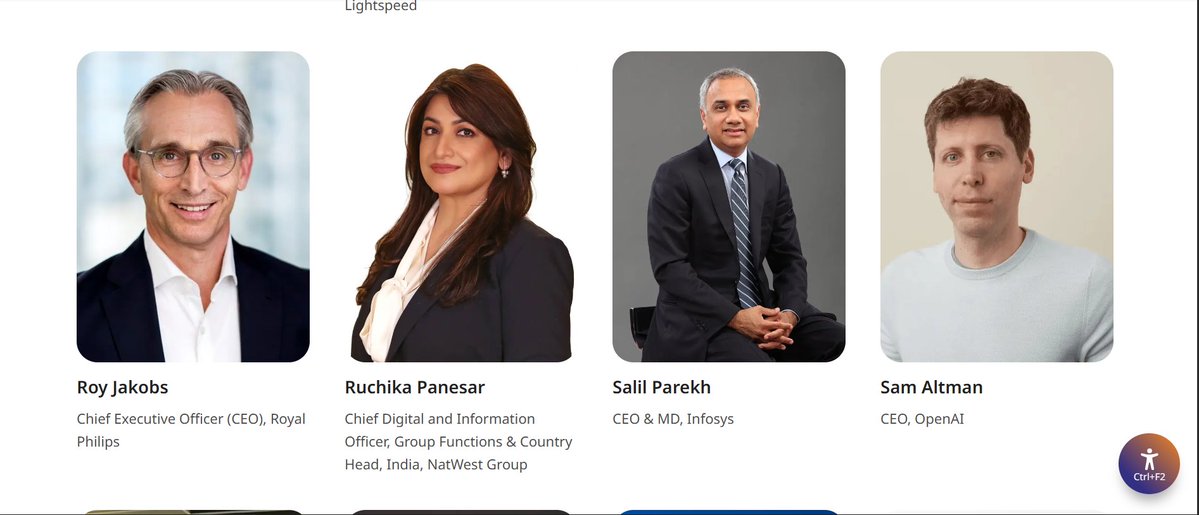
Never in my wildest dreams did I think we’d have
- Bill Gates
- Sam Altman
- Mukesh Ambani
- Sundar Pichai
- Jensen Huang ( CEO of NVIDIA )
- Arthur Mensch ( CEO of mistral Ai )
- Bipul Sinha ( CEO of Rubrik )
- Harshil Mathur ( CEO of Razorpay )
- Jeet Adani
- Julie Sweet ( CEO of accenture )
- Kunal Bahl
- Matthew Prince ( CEO of cloudflare )
and alot more....
under one roof in New Delhi!!
See y'all on 16th feb.
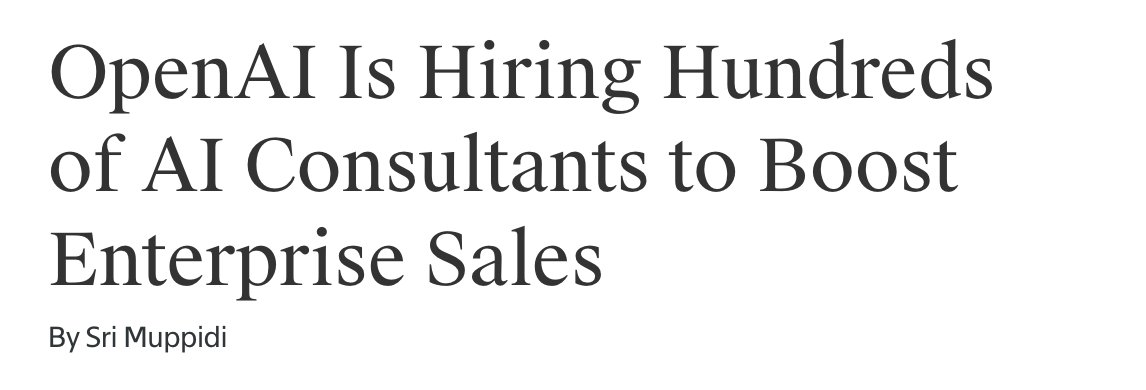
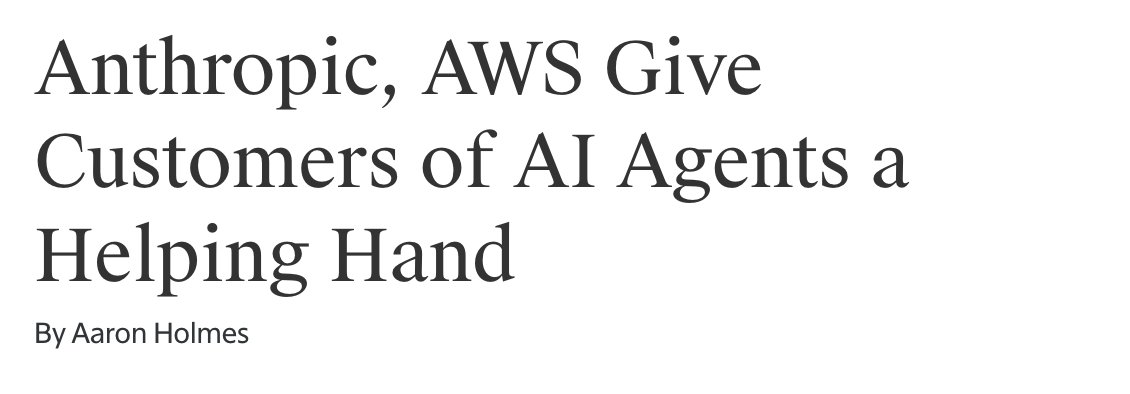
OpenAI and Anthropic are expanding into consulting roles as large enterprise customers struggle to deploy reliable AI agents out of the box.
OpenAI is reportedly hiring hundreds of engineers to help clients integrate models like ChatGPT into real systems, tailoring them with business data and workflows.
Its new platform, Frontier, highlights the complexity: agents must interface with internal tools, grasp context, and optimize behavior before users see results.
Anthropic is also working closely with enterprise customers, while retailers like Fnac report needing help from AI21 Labs after OpenAI and Google agents failed on basic tasks like serial number handling.
Announcing Built with Opus 4.6: a Claude Code virtual hackathon.
Join the Claude Code team for a week of building. Winners will be hand-selected to win $100K in Claude API credits.
Apply here: https://t.co/SkEg8Py1l2