Obsidian now has official connectors for every agent.
That means you can easily give your agents access to a shared knowledge base, while keeping total ownership of your data.
You can switch agents, let them collaborate with each other, organize your knowledge as notes, diagrams, canvas, tables, kanban, and more. What you create is saved locally on your devices, in open formats files that you own forever and can access offline.
As always, Obsidian has no built-in AI, no account required, no analytics, and cannot access your data. Obsidian is free, private, and has no storage limits or gated features.
You are in control. You can choose to use Obsidian completely AI-free. That is the default experience.
Obsidian is 100% user-supported. You can use our affordable and end-to-end encrypted Sync service which helps support our team, or you can use one of many alternatives documented on our Help site: Git, iCloud, Dropbox, GDrive, OneDrive, NextCloud, and many more.
If you want to give agents access to your Obsidian vault, visit your agent's marketplace or plugin directory. Obsidian is available for Claude, ChatGPT, Grok Bot, Hermes, and more in the instructions linked below.
Tools that are changing my workflows: @Tailscale@superlogical Rex @AmpCode and persistent always-on micro-VMs like @exedev - how we work in 2027 vs 2025 will be unbelievably different. Are there other tools that I should adopt?
A personal shopper that pays you back?!
Shop with Muse and get $25 back on your first eligible purchase over $100 using @Link, built by Stripe, or Shop Pay from @shopify.
After your purchase, you’ll get an email with a link. Follow it to claim your $25 back.
I gave @Muse (paid plan) a task to work on some financial google sheet and asked it to create its own suggested table with Muse as the header of the table. The table was created with header "CLAUDE" - I wonder if Muse offloads some tasks to Claude models.
.@AmpCode support for submodules needs some love. 1/ hydrating submodules from private repos fails during setting up the orb, attempting to fix shows submodules as modified, 2/ agent changes to submodules show up in the diff as a commit hash change rather than code diff cc @sqs
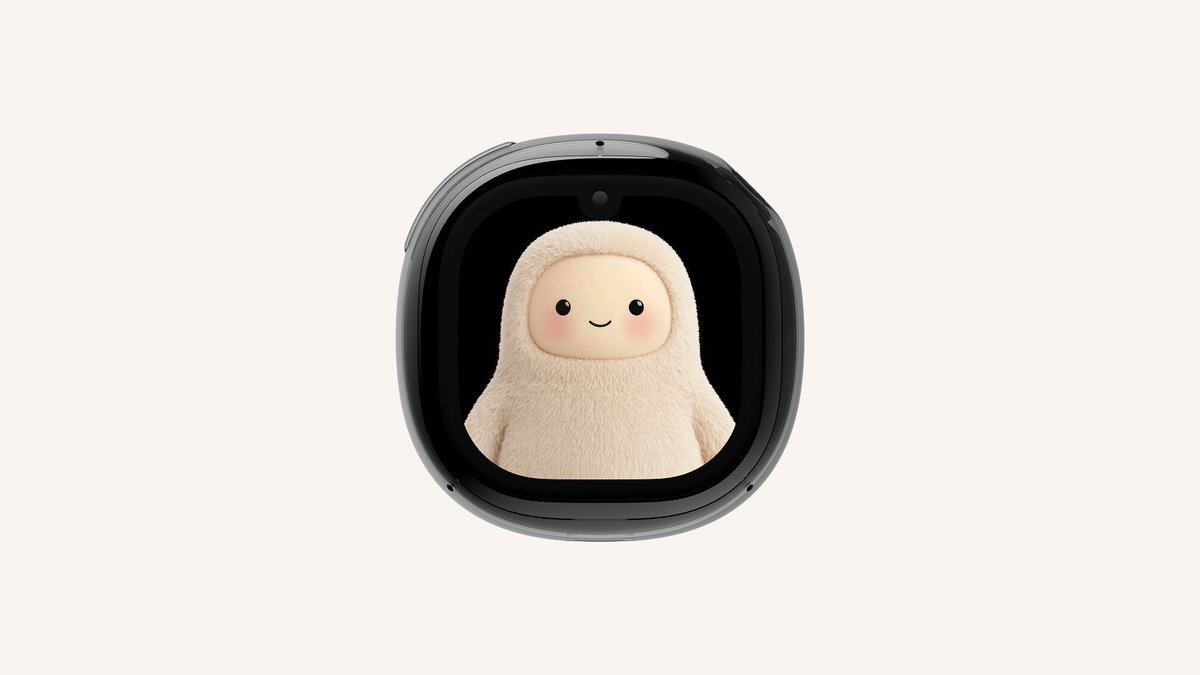
As much as I use @Muse, I have a feeling that if I get the Muse Charm I will use it for a week and then it will sit in my drawer. It looks great though - but I don't like the subscription for connectivity.
.@AmpCode I would love a smoother way to set up private GitHub submodules in orbs. The GitHub connection works after activation, but isn’t available during shared snapshot setup, so dependencies can’t be preinstalled.
The only use case where that could be helpful is when working with two amp windows for two different accounts and you want to be able to open portals from both. Right now the system browser will be signed into amp as one of the two accounts. Though that can be solved if amp can use a browser profile based on amp account.
@thorstenball I think the move of many projects to Rust is due to same reasons. People care less about their favorite/familiar/current language and more about the runtime performance, distribution (eg web assembly), and abstractions.