Had a fantastic visit to @fx_briol's lab and the Gatsby group to present my latest work on credal hypothesis testing for comparing epistemic uncertainties with credal sets! (https://t.co/SX2G87enEP)
Looking forward to more inspiring discussions and collaborations ahead!
@sejDino@OxfordStats Thanks Dino! It has been wonderful working with you for the past 3.5 years. I am very grateful to have had such an amazing mentor and supervisor to guide my research! Let us know next time when you are on the east coast :)
Huge congratulations to Dr Veit Wild @vdwild for successfully defending his DPhil viva @OxfordStats! Veit's work has resulted in a number of important new insights on Bayesian deep learning and Gaussian processes, and I was very fortunate to work and learn together with him.
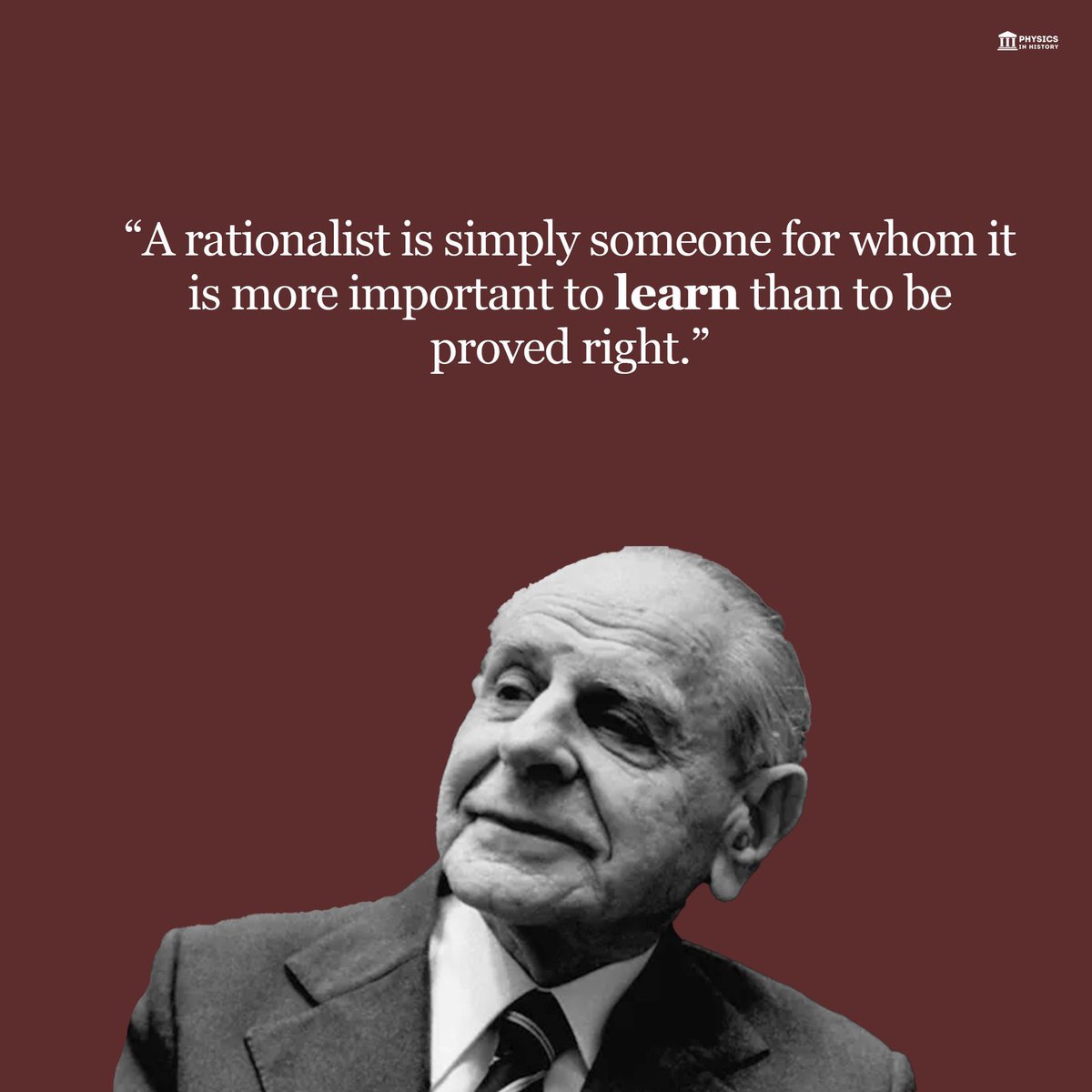
Karl Popper (1902-1994) on what it means to be a rationalist ✍️
When I speak of reason or rationalism, all I mean is the conviction that we can learn through criticism of our mistakes and errors, especially through criticism by others, and eventually also through self-criticism. A rationalist is simply someone for whom it is more important to learn than to be proved right; someone who is willing to learn from others — not by simply taking over another's opinions, but by gladly allowing others to criticize his ideas and by gladly criticizing the ideas of others.
The emphasis here is on the idea of criticism or, to be more precise, critical discussion. The genuine rationalist does not think that he or anyone else is in possession of the truth; nor does he think that mere criticism as such helps us achieve new ideas. But he does think that, in the sphere of ideas, only critical discussion can help us sort the wheat from the chaff. He is well aware that acceptance or rejection of an idea is never a purely rational matter; but he thinks that only critical discussion can give us the maturity to see an idea from more and more sides and to make a correct judgement of it.
-- as mentioned in All Life is Problem Solving (1999)
To all "it's merit based" responders: if you reward skills before they are introduced in the public school system, the vast majority of rewardees will come from extremely privileged backgrounds that support and incentivize them to acquire those skills privately.
People seem to be falling for two rather thoughtless extremes:
1. "LLMs are AGI, they work like the human brain, they can reason, etc."
2. "LLMs are dumb and useless."
Reality is that LLMs are not AGI -- they're a big curve fit to a very large dataset. They work via memorization and interpolation. But that interpolative curve can be tremendously useful, if you want to automate a known task that's a match for its training data distribution.
Memorization works, as long as you don't need to adapt to novelty. You don't *need* intelligence to achieve usefulness across a set of known, fixed scenarios.
In fact, that's the entire story of the field of AI so far: achieve increasing levels of usefulness and automation, while bypassing the problem of creating intelligence.
📰Linear Convergence Bounds for Diffusion Models via Stochastic Localization
https://t.co/M5ZDzj5vXu
We derive the first bounds which are linear in the data dimension without smoothness assumptions on the data distribution.
w/ @ValentinDeBort1@ArnaudDoucet1@GeorgeDeligian9
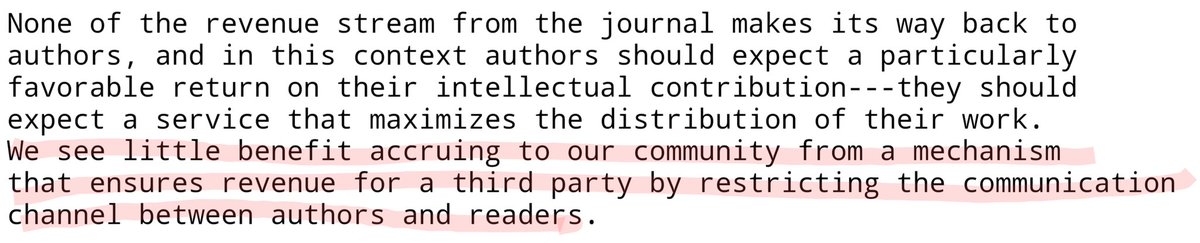
"Around the same time, the ML community rebelled against commercial journal publishers and created JMLR, which was one of the first open-access and totally free journal."
The awesome announcement of the creation of JMLR:
https://t.co/vXnIw7xfyh
Come to my Neurips talk today!
I'll talk about generalised variational inference and the Wasserstein gradient flow. @sejDino@SGhalebikesabi@LauchLab
I'll also bei at the poster session today at 10.45 at stand 1301.
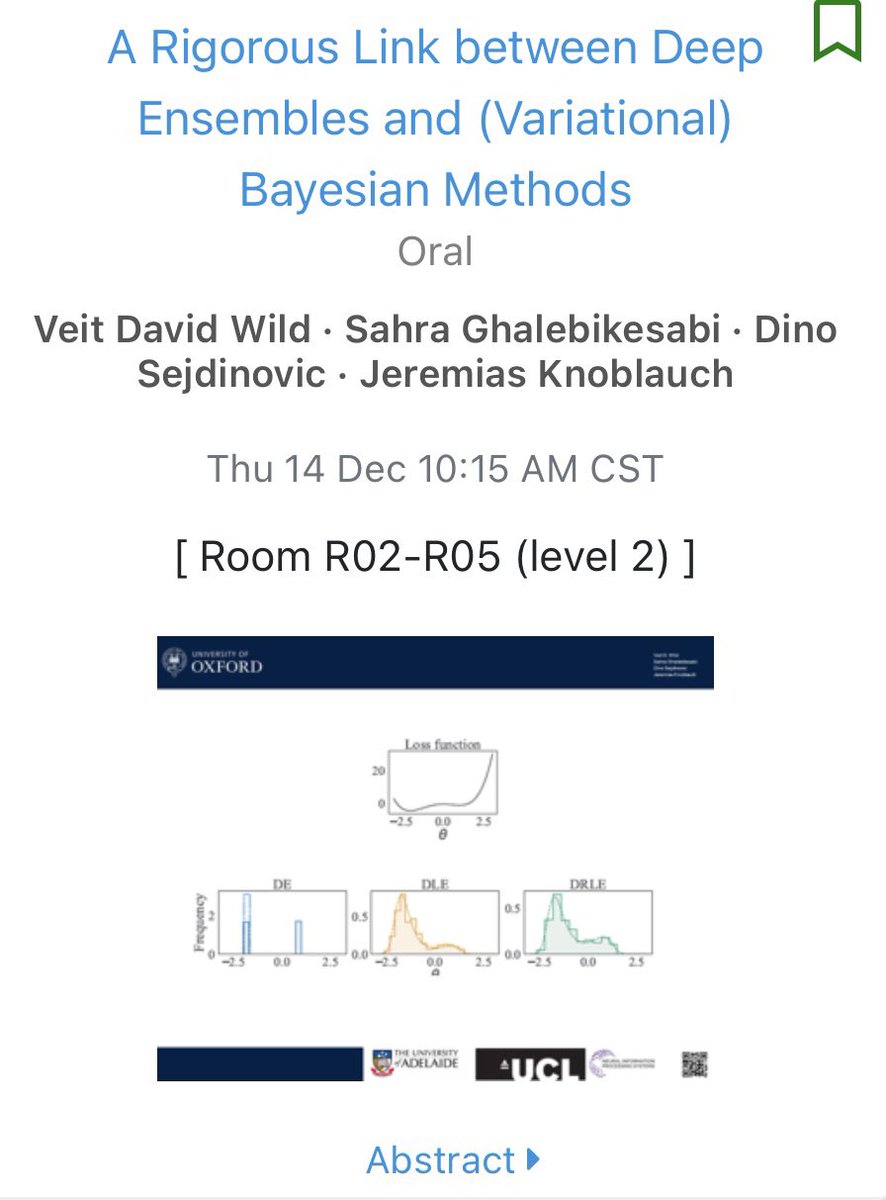
A Rigorous Link between Deep Ensembles and (Variational) Bayesian Methods [oral], with @vdwild, @SGhalebikesabi, @LauchLab, links variational inference, Wasserstein gradient flows and deep ensembles in a new and insightful way.
https://t.co/yJ4WXDSMml
https://t.co/ncAsj9Kpqi 2/4
I'll be at @NeurIPSConf#NeurIPS2023 next week, first time in person since 2016 (!?)
Excited to see old friends and meet new ones and tell you all about my move down under 🇦🇺 and why you should do it too.
Check out the papers with my amazing collaborators and students...🧵 1/4
@vdwild@SGhalebikesabi@sejDino and I rigorously connected Bayesian methods to deep ensembles using Wasserstein gradient flows!
Our results are summarised in a recent NeurIPS oral paper (https://t.co/3gGC4Edvgt), a 30-minute talk (https://t.co/p9RaB2z8o5), and below: