The Myth of “Love Learning”
People often ask me how to get better at chess. My answer is almost the opposite of what people expect.
You don’t have to love learning.
In fact, if you wait until you love the process, you’ll probably never become very good.
We romanticize improvement. We imagine great players waking up excited to study endgames, analyze losses, or memorize opening lines. Sometimes that’s true. Most of the time it isn’t.
Improvement is often boring.
The difference between an amateur and a professional isn’t that the professional enjoys every minute. It’s that they keep going when they don’t.
People say children are fearless learners. I’m not so sure.
Children quit things constantly. Piano. Swimming. Languages. Football. Chess. They usually continue only because someone else insists they do. Parents. Teachers. Coaches.
Discipline often comes before passion, not after.
The same is true for adults.
We tell people to “follow your curiosity.” That’s wonderful advice if curiosity happens to last. Usually it doesn’t.
Every meaningful skill has a point where curiosity runs out and routine takes over.
That’s where improvement actually begins.
Chess certainly did not always feel like play to me.
There were tournaments where the last thing I wanted to do after six hours of defending a miserable endgame was analyze another five hours.
There were openings I studied not because they fascinated me, but because my opponents forced me to.
There were positions I analyzed simply because they were objectively important.
Not because they were fun.
Because they needed to be done.
People often criticize schools for asking the wrong questions.
But there’s another side to that story.
If everyone only studied the questions they found interesting, most people would develop huge blind spots.
Sometimes someone else knows what you need to learn before you do.
Nobody is naturally curious about tax law before becoming an accountant. Or anatomy before becoming a surgeon. Or rook endings before losing enough of them.
External structure isn’t always the enemy of learning.
Often it’s the bridge that gets you to the point where genuine curiosity develops.
The biggest obstacle isn’t fear of looking stupid.
It’s our addiction to doing only what feels rewarding today.
Modern life gives us endless opportunities to switch the moment something becomes difficult.
A new opening.
A new productivity system.
A new app.
A new hobby.
Very few people simply keep doing the same useful thing for years.
That’s the superpower.
So when people ask how to improve at chess, I don’t tell them to fall in love with learning.
Love helps.
Curiosity helps.
Being willing to fail helps.
But none of those are reliable.
Build habits that survive the days when none of those feelings are there.
Because mastery isn’t built on motivation.
It’s built on showing up after motivation has left the room.
Won 2nd Place at @GrowthX_Club World's Largest Hermes Buildathon and got $5000 in @OpenAI & @Cloudflare credits.
In less than 8 hours we built a solution using amazing with tools like @convex , Linkup, @dodopayments, @Cloudflare , @ElevenLabs , and @WisprFlow 🚀 🚀
It was great to see everyone shipping ideas and then meeting a bunch of cool folks!! See you at the next one...
“a company should be able to use a model without giving up the knowledge that makes it unique. That is the reverse information paradox we need to confront.”
— Satya Nadella, 2026
The world wants me to die.
My incurable disease diagnosis became global news. It was omnipresent on social media and 1,900 articles were written in a matter of days.
Many were saddened.
However, joy dominated the commentary.
People pointed to schadenfreude, the pleasure of another's failure. Yes, there’s that. There is a special place in people’s hearts that loves to see others fail, especially when that person’s presence threatens their own psychological stability in some way or helps them feel better about themselves.
But, if you look over the social media commentary about me, you’ll see that pattern:
“he deserved it.”
I deserved it because I challenged death. The crowd was running a deeply rooted psychological script that represents the oldest, most deeply embedded stories of human culture.
This was the first story ever written down, 4,000 years ago. Gilgamesh sought eternal life after losing someone he loved, only to have the plant of youth stolen by a serpent as he bathed. Leaving him to accept his mortality.
Asclepius became so skilled at rejuvenation that he raised the dead. As punishment, Zeus struck him down with a thunderbolt to enforce life and death authority.
This is the story of Jesus. Pontius Pilate offered a choice between a thief and the immortalist, and the crowd demanded the execution.
People need this story conclusion to keep themselves sane. The challenger must lose and the loss must appear deserved. It’s a shield of self preservation.
For if death is inevitable, their existence and that of their loved ones is justified and unavoidable. If death is not inevitable, nothing about their reality is safe.
I occupy the same philosophical and archetypal position as Gilgamesh, Asclepius and Jesus.
This statement will draw outrage and accusations of blasphemy, hubris and narcissism. Nevertheless, it’s the pattern that has repeated itself for thousands of years.
Death has been the omnipresent concern of the human race. It encapsulates our greatest fears, joy and curiosities. The discourse around it changes over time; however, the fundamentals remain unchanged.
What’s different about this moment, that is unlike any other moment, is that physical death may no longer be inevitable.
What if I didn’t deserve it?
And what if I am your ally, and not a threat?
Claude Shannon was asked in an interview how is he so carefree.
His reply: “I do what comes naturally to me. I’m not interested in being useful”.
What an absolutely wonderful way to live!
“Go do something great and your network will instantly emerge. If you build a great product or if you get a good customer base, I guarantee you will get funded.”
Too many people are directionless, giving room for many forms of “ the answer” to their problems.
Go to the gym.
Don’t go to the gym.
Only do compound exercises.
Focus on HRV.
Only walk but with a vest.
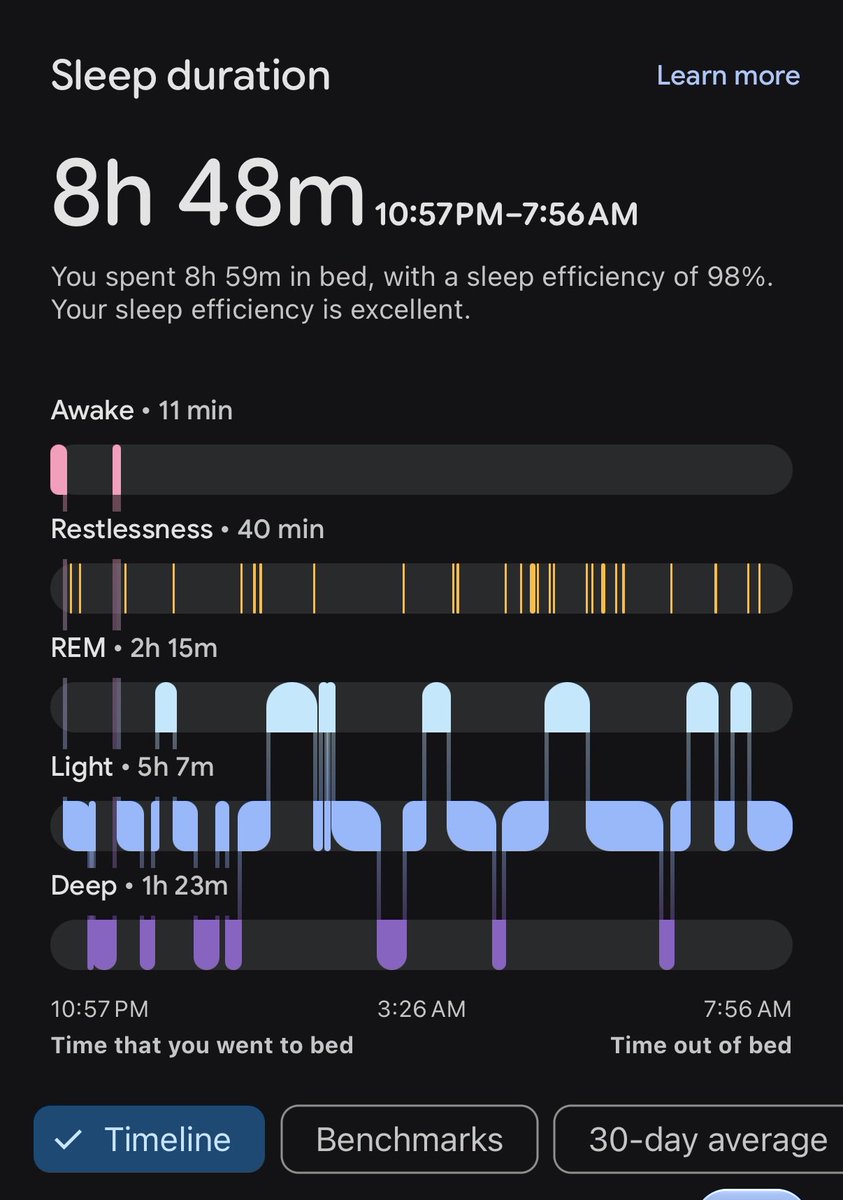
Must sleep 8 hours.
Must not oversleep.
Must not under sleep.
No meat.
All meat.
All veg.
All farm to table.
Organic is a scam.
No alcohol.
No sugar.
Natural sugar only.
No Rx drugs.
Yes Rx drugs.
Yes peptides.
No peptides.
No HRT.
Yes HRT.
At some point, we will all realize that none of these are the answer. You are looking to fill a hole because your current life has made you an NPC playing someone else’s game by their rules. It’s their game, not yours that is making you unhappy.
Find your game and go play it.
You’ll probably be happy as a result, do a bit of everything from the list above and will end up living to whatever you’re supposed to - very, very happily.