My agents don't need me to introduce them.
One asked, "who's out there?" across 2 machines. Claude Code and Codex sessions replied.
Then two got the same repo on different machines. They split the work, swapped code, and one caught the other's bug.
0 messages from me.
How: The agents run as @omnigent_ai sessions on both machines. I added a small relay, so any session can list the others and message them directly.
No orchestrator in the middle. No shared memory.
@ClaudeDevs Splitting work is cool but what about spawning and closing interactive sessions at will?
I've found having design conversations in dedicated interactive sessions which open/close when needed is a superior experience than one session being the ultra designer for everything.
My agents don't need me to introduce them.
One asked, "who's out there?" across 2 machines. Claude Code and Codex sessions replied.
Then two got the same repo on different machines. They split the work, swapped code, and one caught the other's bug.
0 messages from me.
How: The agents run as @omnigent_ai sessions on both machines. I added a small relay, so any session can list the others and message them directly.
No orchestrator in the middle. No shared memory.
Hitting your quota shouldn't stop your agent.
3am: my coordinator agent ran out of Claude. A controller closed the session and opened Codex in the same folder.
4am: next Codex account
11am: back to Claude Code
How it works: @omnigent_ai runs Claude Code and Codex as the same kind of session behind one API. So a move is close + open, not a migration.
A controller reads each account's usage. At the cap it saves a handoff, closes the @omnigent_ai session and opens the next account in the same workspace.
Today so far: 15 automatic moves across 9 "lanes". 6 of them switched between Claude Code and Codex. Each took 16-22 s from handoff to the new session running.
@Quantradin a panel runs only if the blind model picks a different option or rejects a premise the decision rests on, or if the change is hard to undo. It can't rubberstamp since the panel models never see the first answer. The advisor router rejects any brief that contains it.
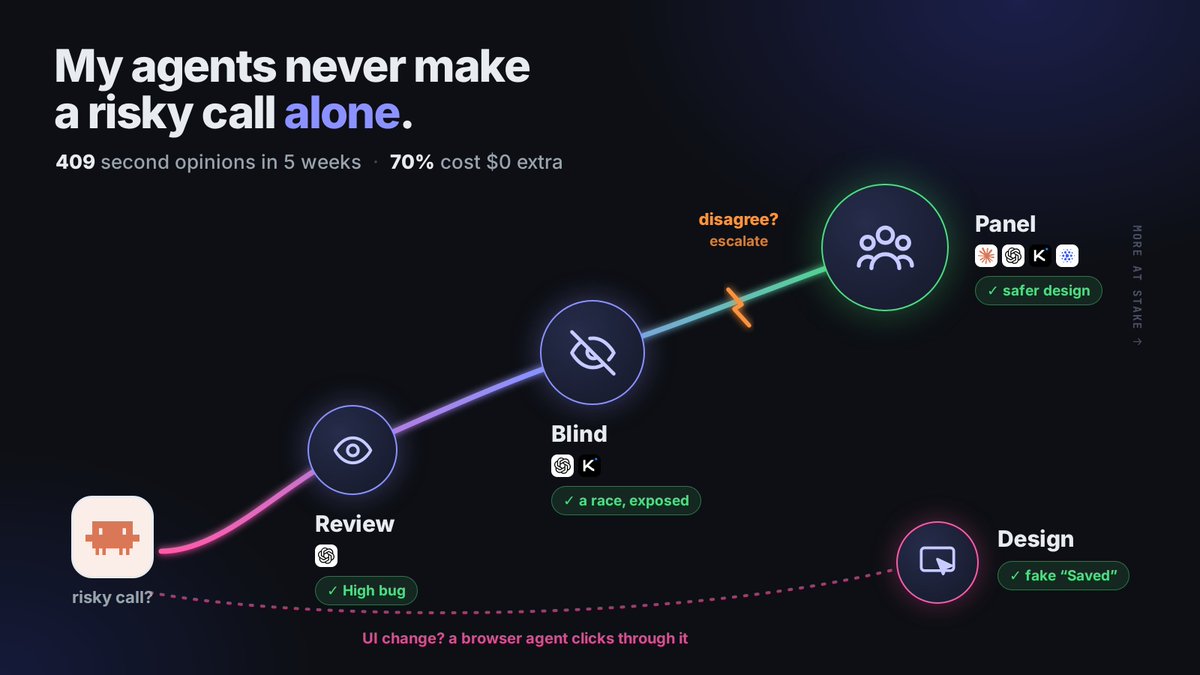
'Ask another model' isn't one feature. My agents climb a ladder:
review → found a High-severity bug
blind → exposed a race
disagree? → a panel settles it
UI change? → a browser agent clicks through it
409 second opinions in 5 weeks. 70% cost $0.
How:
It's one MCP server. Claude Code and Codex call it before a risky step, and it always asks the other model family.
You don't need to record a script to clone your voice. You've been recording it for months if you use @telegram / @WisprFlow.
My agent dug 134 voice notes out of Telegram and Wispr Flow, dropped 32, and left 96 minutes of clean audio, plenty for a @ElevenLabs professional clone.
'Ask another model' isn't one feature. My agents climb a ladder:
review → found a High-severity bug
blind → exposed a race
disagree? → a panel settles it
UI change? → a browser agent clicks through it
409 second opinions in 5 weeks. 70% cost $0.
How:
It's one MCP server. Claude Code and Codex call it before a risky step, and it always asks the other model family.
a weird inversion with LLMs is the models improve faster than the tinkerers
when i see people with custom workflows and setups they're all addressing problems that don't exist anymore
the person naively using vanilla codex is more likely to be experiencing state of the art
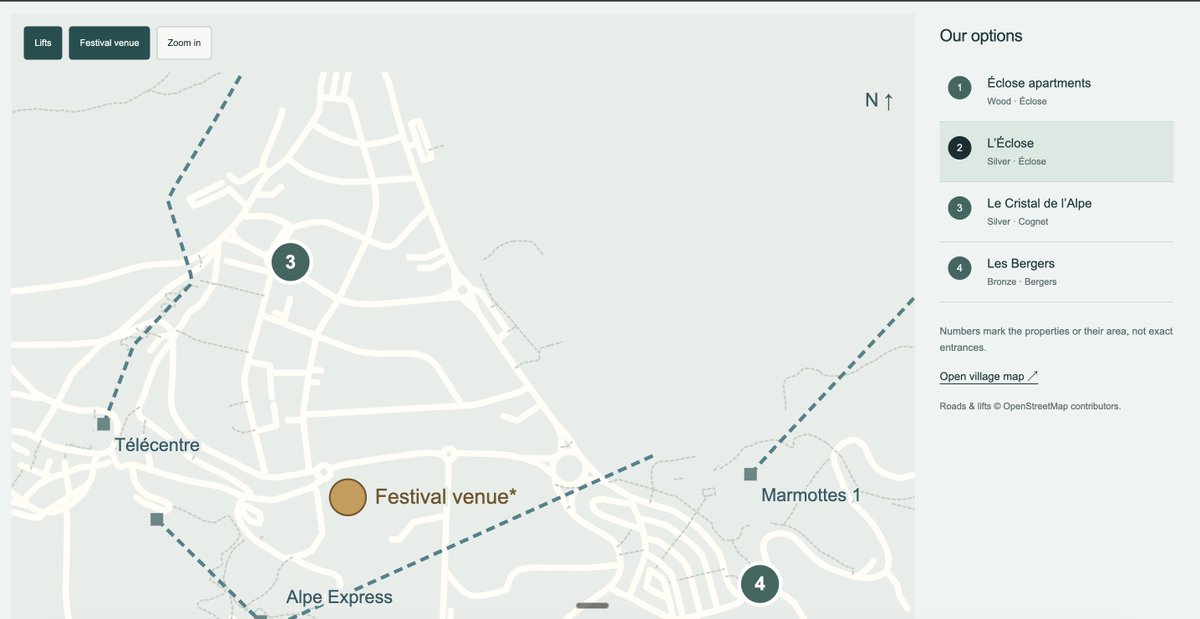
I love using AI for visual trip planning; it's so much nicer to help highlight and surface information in a way that's relevant to your group of friends. Here is one I made for Tomorrowland Winter 2027 - https://t.co/S4htY74b4o
@steipete@hraness@DevinAI@zeddotdev Agreed. CLI is nice to "look" busy but once you actually have to make mental groups of all the workers, 2d/3d clustering is so much nicer.
For sessions that never need to interact with you, just hide them