Woke up this morning and had a good laugh thinking about academics willing to spend $10,000 for putting a pdf on the internet. The academic publishing system is a joke
i like it when babies start crying because they are tired. just done with being conscious. i relate little buddies some days i am just done with this shit too, knock me the fuck out
We need a 1-to-N approval pathway for ultra-rare diseases that allows for:
• no placebo study design
• each patient’s baseline as their own control
• approval based on a single pivotal study
• approval based on a single quantitative biomarker primary endpoint
@nickmmark Only for severe PNA, bilateral pneumonias, major risk factors for Legionella, or people at high risk of catastrophic outcome (immunocompromised, pregnant).
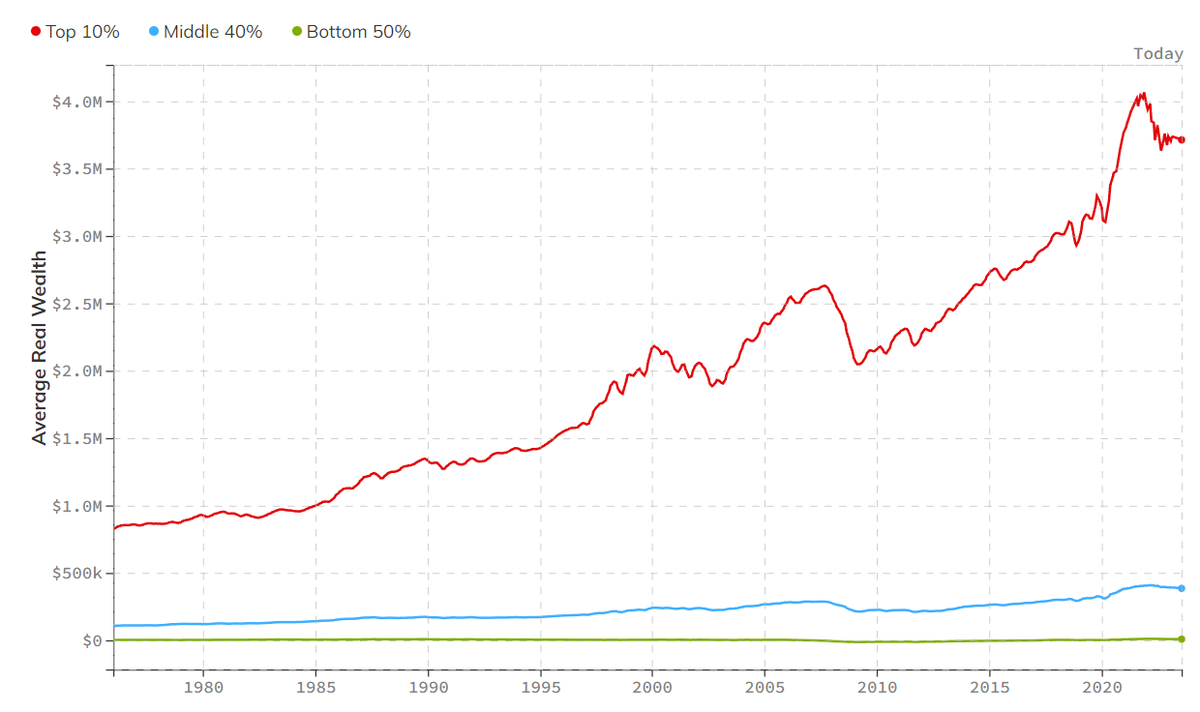
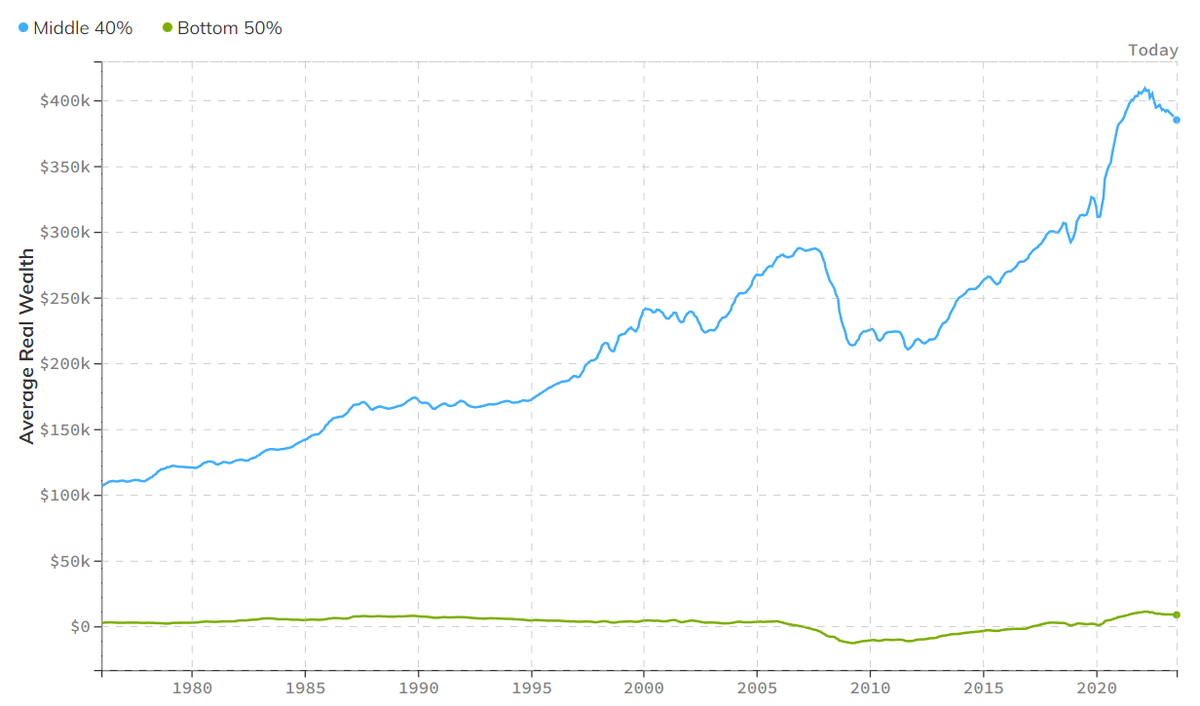
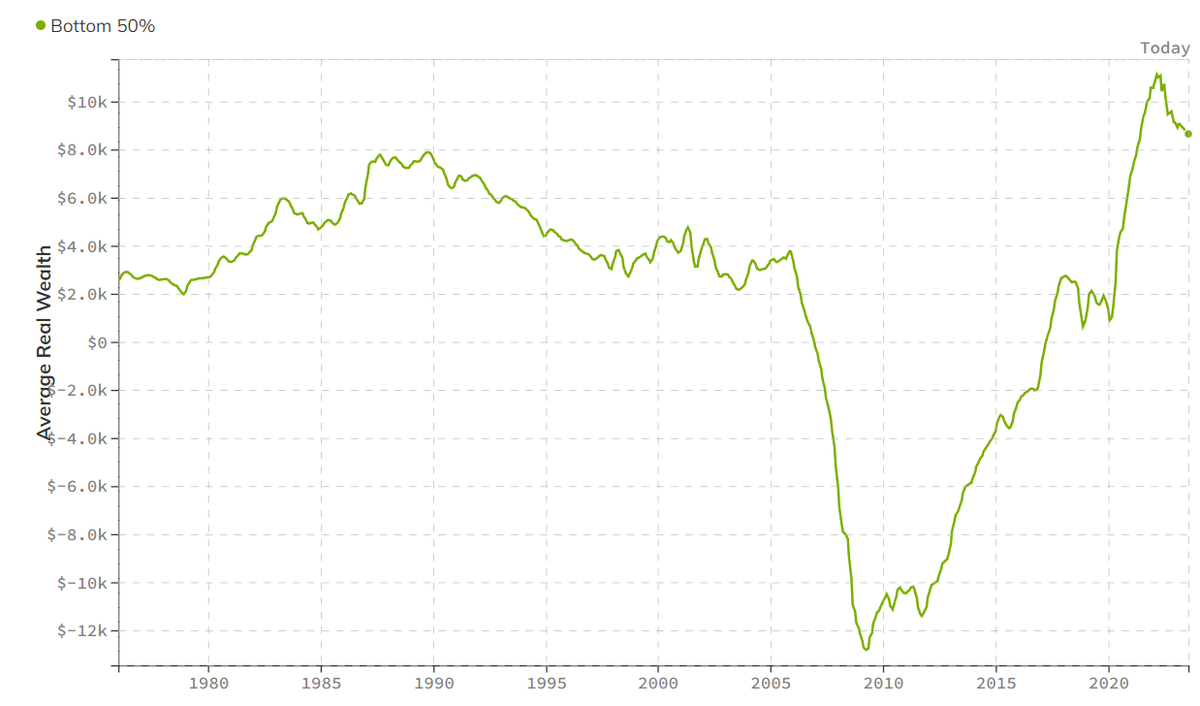
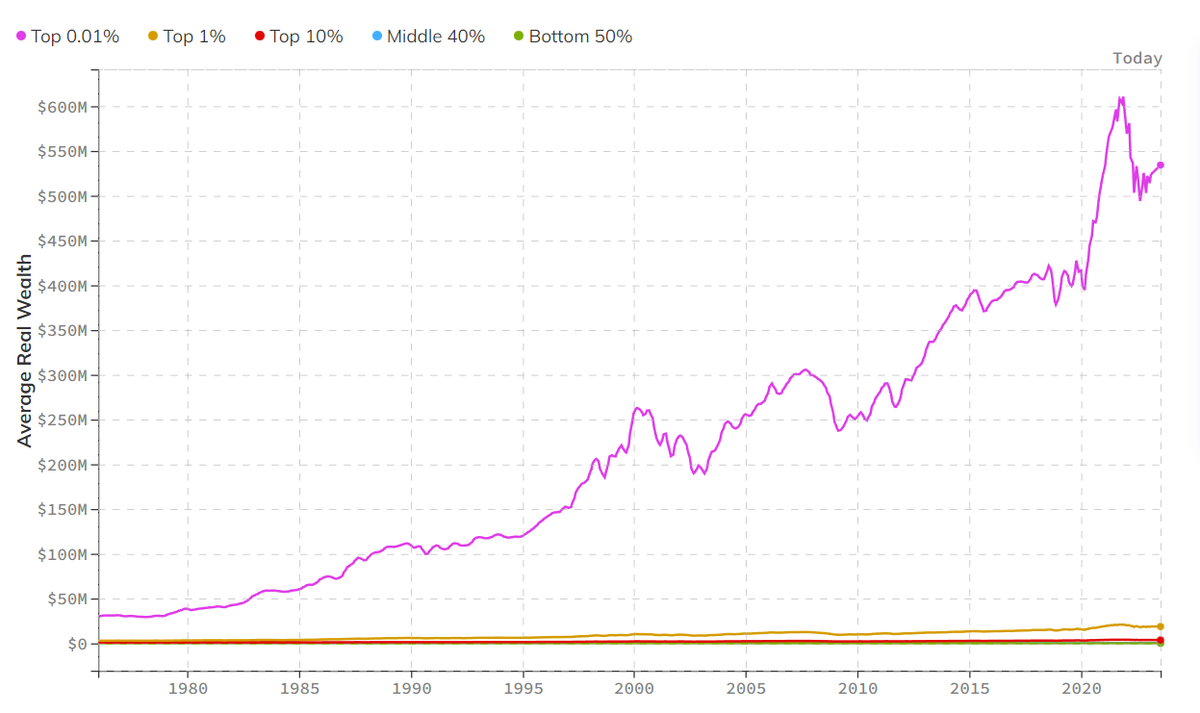
It's fun looking at the average real wealth of the bottom 50% over time, and then adding each successive wealth group and watching the scale shift so dramatically that the original line is basically flat.
(Next 40% is green, top 10% is red, top 1% is yellow, top .01% is purple)
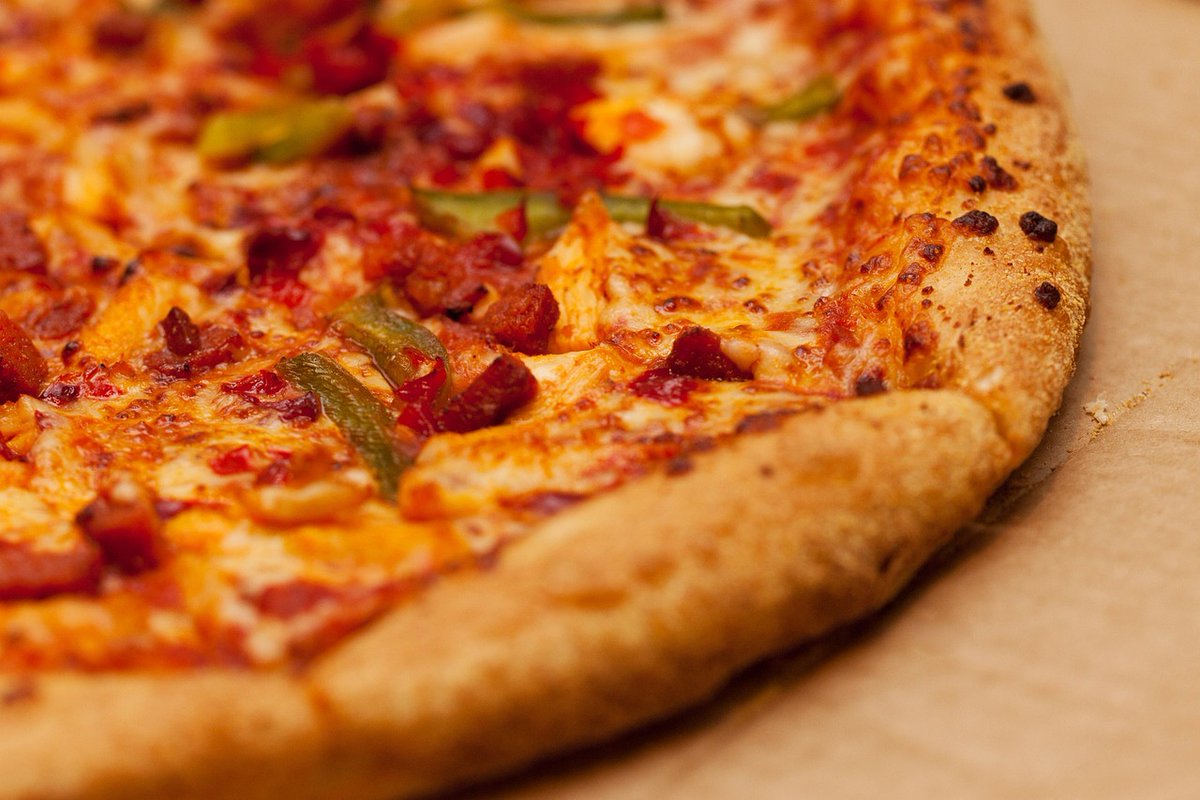
Cross-sectional study 365 RA pts showed eating half a pizza >1 time/wk (vs. ≤2 times/mo) was assoc w/ 70% less Dz activity; esp w/ more severe RA (80%) (benefit likely due to mozzarella & olive oil). YES, this was an italian study... https://t.co/6xKMIFdEWf
@nelke_IGB I really want the future books to write that queer fem biologists from Russia used (relatively) cheap equipment to refine the process, and that it was all documented on a notorious transphobic super rich useless techbro conman's social network.
A Blueprint Brunch, Would you Opt-in?
The ideas around Blueprint and Zeroism challenge the core of our current identities. Many people, upon hearing these ideas, either boomerang some form of hatred or fall into existential despair, unsure how to climb out.
I’ve seen this happen now hundreds of times as I’ve presented these ideas privately and publicly. After seeing the predictable thought patterns and emotions that people experience when cycling through these new models of the future, I decided to start hosting Blueprint brunches.
In a private and comfortable setting, I present the ideas and then create enough space and time for the participants to have multiple existential crises, and then rise up at the end with a basic level of reconciliation. My favorite follow-up is that the conversation broke the participant’s brain in ways they didn’t know it could be broken and have been unable to stop ruminating since. I suspect that the more time the idea sits in your mind, the more its inevitability creeps in.
It's hard to find arguments supporting the idea that we can remain as we are. The evolutionary pressure presented by advances in AI, a changing biosphere and unforeseen and unpredictable future events invites – no, demands – that we improve our speed of evolutionary adaptation.
Guests have been scientists, philosophers, engineers, educators, artists, astronauts, doctors, and entrepreneurs. Each gathering lasts around two to three hours. The meals all have the same arc. To prepare the group for the provocative nature of the ideas, I provide some thought experiments.
I start easy, with a simple question we all supposedly know the answer to: “How many glasses of water should you drink each day?”
“Eight,” someone always says.
“How do you know that?” I ask.
“I read it somewhere? Or maybe my parents told me? I don’t know.”
This exercise highlights what most of us experience today across most of the decisions we make about health and wellness. Our insides are off limits. So we use hunch, folk remedies, and anecdote. We act upon information that we feel we “know” without truly knowing if the answer is right for ourselves.
Is “eight” correct, for each of us, every day? How would we know the optimal amount at any given time? Perhaps if there were a way to measure and evaluate the effectiveness of our water drinking on our individual health, we could arrive at an evidence-based result.
This process is the essence of Blueprint—to implement, with the precision of scientific evidence and data, optimality for health and wellness.
Soon, the food arrives. Everyone has a full Blueprint spread in front of them, the result of algorithmic design. Each guest is primed and ready to go on a wild ride of new ideas.
Then we begin.
I pose: “Imagine that you have access to an algorithm capable of generating for you the best physical and mental health of your life. An algorithm, personalized to you, that can take better care of you than you can yourself. Opt in and the benefits are yours. The catch: what you eat, when you eat, and other health-related decisions will be determined by the algorithm, and this algorithm has been built upon the best science available from peak performance, health, and medicine. This means that pantry grazing, spontaneous pizza parties, and junk-food binging will no longer be options. Do you opt in or decline?”
Usually, a rare few respond in the affirmative: “Yes, please. Anything to save me from me.”
Another third or so wants to make modifications to the deal: “Yes, but I’d like to make sure I keep the following things …”
The rest, more than half, may give a direct and blunt: “No”; or something like, “This is creepy. Is this a cult?”
The reasons for individual refusal are often tied to personal attachments to existing lifestyles, to belief systems about life and death, or to imagined conflicts that a fully-implemented Autonomous Self would bring to cultural and social relationships.
The thought experiment is of course over-simplified, by design. To sincerely answer the question, we’d each need to ask hundreds more questions.
My personal experience is that after two years of saying yes to this thought experiment, I’ve never been happier, healthier, more emotionally stable, or as intellectually alive.
I pity my previous self who was continuously tortured by his mind and unable to actually live his best life. If this contemplated exercise invites an existential crisis of sorts right now, that’s understandable. This is a big idea. As big as the Earth not being the center of the universe.
Give it a little time and be patient with yourself.
“Think. Think harder!” is how we currently approach hard problems. Maybe, just maybe, the solution is to add dynamism to how we manage decision making, build systems that are superior in taking better care of our interests than our native abilities.
@DrTodayFinally By the end of first year, I learned to just laugh off the batshit crazy aspects of residency and I'm a lot better for it. I still get upset, still hate it, and still want to change it - but distancing myself mentally was 100% the right move for my sanity.
@DrTodayFinally Your main job in residency is to sustain yourself first, then hit all the milestones you need to complete residency, then you can use whatever you have leftover to do what you want (whether that means fighting against things, maintaining relationships, hobbies, etc).
This story is being used to spread misinformation and deny the horror of residential schools. As the author, I wanted to express my disappointment at this and offer some notes.🧵1/7