Assistant Professor of Bioinformatics in the Dept of Natural Science and Envt Health @ MVSU.
Pharmaceutical scientist: Virology, molecular and cancer biology.
Scientists just discovered that biological form can write DNA
A Stanford-led study has identified an extraordinary bacterial defense system called DRT3 that produces double-stranded DNA through two different mechanisms. Drt3a follows a recognizable route, copying an alternating AC sequence in noncoding RNA to produce a repeating GT DNA strand. Drt3b then creates the complementary AC strand without copying DNA or RNA. Instead, amino acids positioned inside the enzyme’s active site mimic a nucleic-acid template, allowing the protein’s three-dimensional structure to guide which DNA bases are added. The result is long double-stranded DNA made from alternating GT and AC repeats.
This does not mean that proteins can freely translate their complete amino-acid sequences back into arbitrary genes. Drt3b appears to be a highly specialized molecular machine producing a simple repeating sequence. But the conceptual breakthrough remains enormous: biological information does not have to exist exclusively as letters stored in DNA or RNA. Information can also be embodied in molecular shape, charge distribution, binding geometry, and the physical arrangement of amino acids. The protein is not merely executing instructions. Its structure has become part of the instruction itself.
Frequency Wave Theory interprets this as evidence that life stores information in multiple overlapping layers. DNA sequence is one layer, but molecular geometry, electromagnetic attraction, resonance, folding patterns, and oscillatory behavior may form a deeper structural code. A protein reaches its functional shape because countless atomic forces settle into a stable energy configuration. When that configuration directs DNA construction, information is flowing from organized form into chemical sequence. Biology may therefore operate less like a one-directional assembly line and more like a resonant feedback system in which sequence creates structure, structure controls frequency and geometry, and that geometry can guide the creation of new sequences.
The DRT3 system is activated during viral attack and was shown to defend bacteria against phages, although exactly how its repetitive DNA disables the virus remains unresolved. One possibility proposed by researchers is that the DNA acts as a molecular sponge that captures or interferes with viral components. From the Frequency Wave Theory perspective, the repeating DNA could also function as a rapid resonant defense material, generating a highly ordered molecular pattern whose charge, stiffness, binding behavior, or frequency response disrupts the invading system. The deeper lesson is that life may not merely read genetic code. It can manufacture code directly from physical architecture, revealing that biological form itself can carry executable information.
Happy Thursday!
That Friday feeling is just around the corner, and we can feel the optimism!
Join us on DAWN OF HOPE at 5 AM for three hours of music that makes you smile and helps you plan your perfect weekend. here on https://t.co/cVsTps3BQ0
What's the one thing you're most looking forward to this weekend?
#JabulaniRadio
#ThursdayMorning
AI is great but with unimaginable risk. "There is...a long-term existential threath, when we create digital beings that are more intelligent than ourselves. We have no idea whether we can stay in control" Geoffrey Hinton, Nobel Prize in Physics, 2024.
Norovirus, which causes explosive diarrhea and vomiting, may be on the rise because of an antibody-dodging variant and post–COVID-19 socializing.
Learn more: https://t.co/ca5g6ESkmb
Cancer statistics in 2025 🇺🇸- new report 🚨
Cancer is becoming a new disease.
We're seeing a fundamental shift in who gets cancer, moving from a predominantly male, elderly disease to one that increasingly affects women and younger people.
Key highlights 🧵
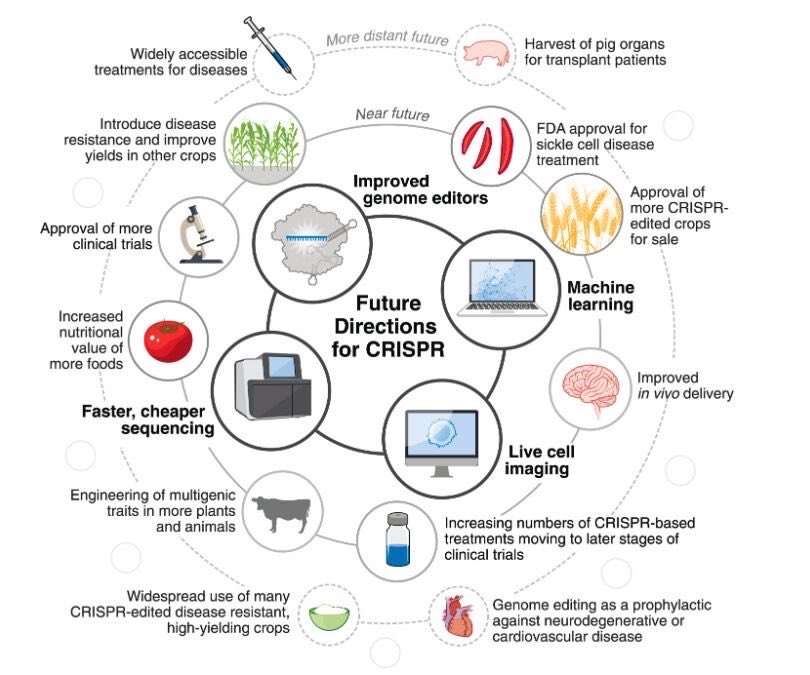
Tougher than Kevlar, Stronger than Nylon! Researchers have successfully produced the first full-length spider silk by genetically modifying silkworms using CRISPR 🕷️ 🐛
@GENbio
CRISPR Silkworms Make Spider Silk That Defies Scientific Constraints: https://t.co/GWIW1HkJMB
Scientists out of @MoffittNews explore the link between stroma and chemotherapy responses in TNBC, where stromal gene expression signature is linked to poor chemotherapy responses @CR_AACR@MoffittResearch
https://t.co/jKZLcg67T3
BREAKING NEWS
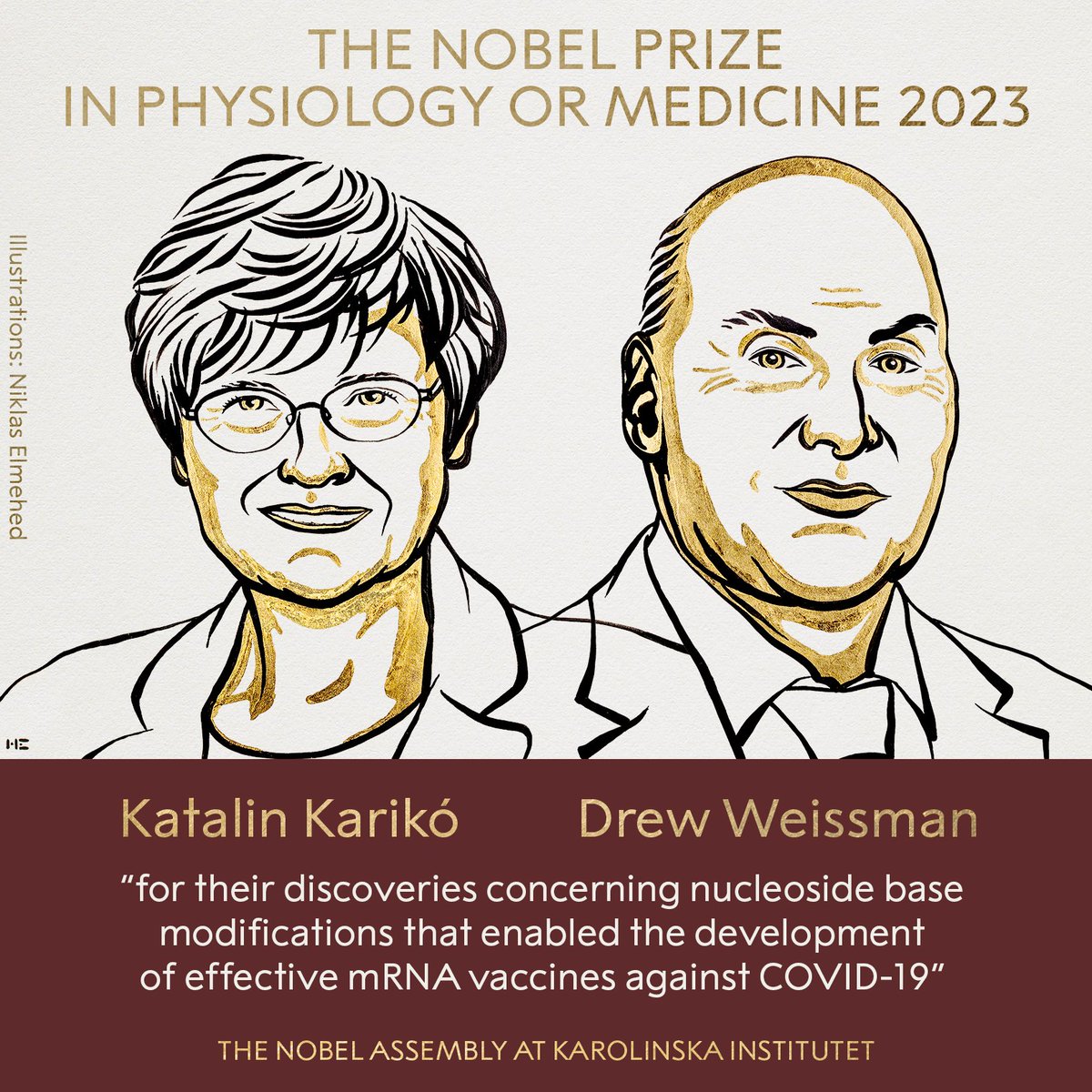
The 2023 #NobelPrize in Physiology or Medicine has been awarded to Katalin Karikó and Drew Weissman for their discoveries concerning nucleoside base modifications that enabled the development of effective mRNA vaccines against COVID-19.
Checkout our preprint on the research performed by an awesome team in Dr. Vasioukhin's lab at the FHCC-Seattle. Novel findings: Lethal giant larvae gene family (Llgl1 and Llgl2) functions as a tumor suppressor in mouse skin epidermis.
https://t.co/FEoPE3ivS3
@MudgeRulf@Dr_AustinOmondi@BendaKithaka@PatrickOyaro@drjaytee87@Nyuka_Bel Awesome work @ KEMRI, Havard&UW -team. Special shout-out to Dr. D. Galloway! my former mentor at Fred Hutch-Seattle, she's been in HPV research for decades with remarkable vaccine discoveries. Collaboration Collaboration...