« Pour distribuer de la richesse, il faut la produire ! », estime le Nobel d'économie Philippe Aghion
Merci @publicsenat pour cet entretien
https://t.co/cGihnKYM7l
Does having more data let firms charge higher markups? Not necessarily. A new paper by Jan Eeckhout and @laura_veldkamp asks what market power looks like when firms use data to predict demand
UM DOS MAIS ANTIGOS GESTORES DO BRASIL FALANDO SOBRE IA
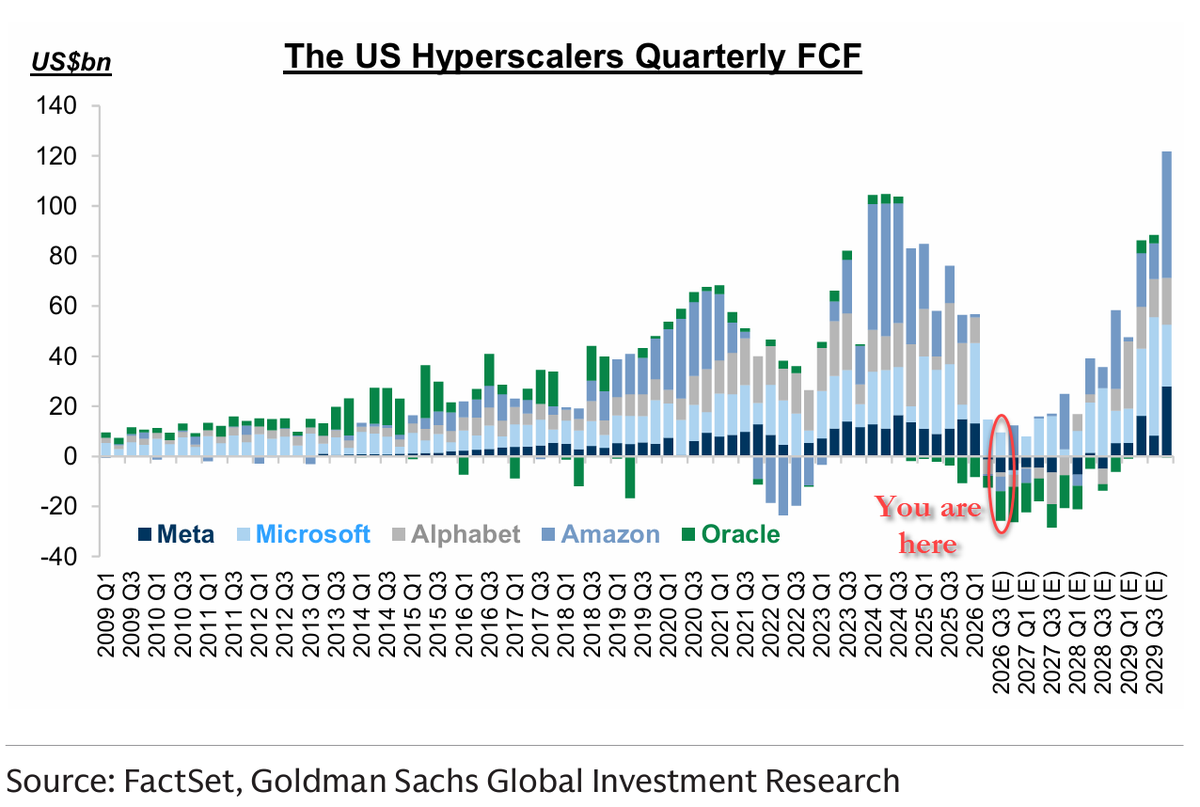
Sem saber o que rolou com ações de ferrovia no fim do séc. 19, não dá pra entender o medo dos gestores com o ciclo atual de IA.
Desconfiar de resultados “sempre bons” das big techs pode ser o mais racional agora.
PARA MAIS CORTES COMO ESSE SIGA O PERFIL
Forthcoming in the AER: "Default and Interest Rate Shocks: Renegotiation Matters" by Juan Nicolini, Victor Almeida, Carlos Esquivel, and Timothy J. Kehoe. https://t.co/JDSDWqYwQc
Why are aggregate markups rising? Standard decompositions point to reallocation toward high-markup firms, but @HasvanVlokhoven shows that signal reflects mostly firm churning. A new decomposition finds markup-distribution changes are the main driver.
https://t.co/uk1eM4VANg
In a blink, Leopold Aschenbrenner's wildly successful hedge fund Situational Awareness was forced to sell billions of dollars of technology investments as nervous banks began to demand more and more collateral for his trades. Then came billionaire Ken Griffin. Read more here: https://t.co/TIZ4oFK2Y2
📷: Aaron Schwartz/Bloomberg