The sickness is destroying Norway on every level.**
Our grandfathers lived in a time where a 44-year-old man could stand shoulder to shoulder with his son and grandson and fight for the same country, the same family, the same values. That created strong men.
Today we’ve built the opposite system.
We punish those who produce and reward those who only consume.
We punish men who build and maintain things that last, while we celebrate people who buy expensive new things that lose half their value in three years.
We punish those who work hard their whole life, while we give voting rights and benefits to people who have never contributed to society.
We sit on top of massive natural advantages — cheap hydropower, huge deposits of rare earth minerals, and stable energy — and instead of using them to build long-term wealth for Norwegians, we give it away to foreign companies for almost nothing while our own people pay some of the highest electricity prices in Europe.
This is not bad luck. This is a system built on permanent inflation.
Inflation hides how much real value we’re losing. It makes stupid decisions look smart and smart decisions look stupid. That’s why an old pickup truck that keeps its value is mocked, while a new car that loses hundreds of thousands in value is seen as normal.
We chose consumption over production.
We chose short-term pleasure over long-term strength.
We chose weakness over duty.
And now we’re paying the price — every single day.
Hva er det med AP-velgere? Hvor mange ganger må de bli løyet til av Pinocchio og hans kumpaner før de våkner?
Og hvorfor tillates det at politikere «får lov» til å lyve til velgerne sine i valgkampen? Løftebrudd burde få reelle konsekvenser. Når et parti går til valg på konkrete løfter og deretter gjør det motsatte, burde det føre til avgang og nyvalg.
Uten ansvarlighet er valg bare teater. Da stemmer folk ikke på politikk, men på fortellinger som kan kastes dagen etter valgnatten.
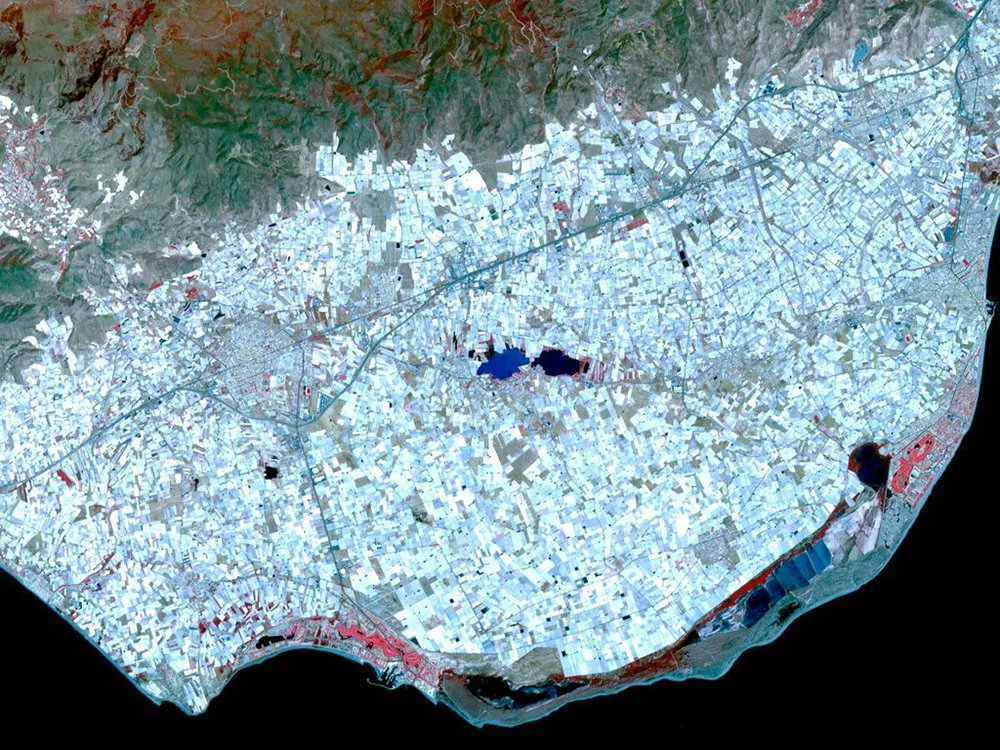
There's a region in southeastern Spain called Almería. If you look at it on Google Earth, you'll see something that looks like a glitch in the satellite imagery.
It's not a glitch. It's 64,000 acres of plastic greenhouses. So much plastic sheeting that it's visible from space. The entire landscape is white reflective plastic stretched over industrial farming operations growing tomatoes, peppers, cucumbers, and lettuce for European supermarkets year-round.
This plastic sea has created its own microclimate. The reflective surface is so vast it's actually lowered local temperatures by reflecting sunlight back into the atmosphere. Scientists call it the "Albedo effect of Almería."
The only place on Earth where human activity has cooled the local climate, and it's an environmental catastrophe they accidentally made while building plastic farms.
The plastic itself is single-use agricultural film. It degrades in UV light within 3 to 5 years, breaks into microplastics, blows into the Mediterranean, and ends up in the ocean and soil. Every year, 45,000 tonnes of plastic waste is generated just from replacing degraded greenhouse covering.
Inside these greenhouses, workers from Morocco and sub-Saharan Africa labor in 45°C heat for €30 per day, no contracts, no rights, spraying crops with pesticides that would be illegal if used on outdoor crops due to concentration levels. The ventilation is minimal. The chemical exposure is constant.
The groundwater underneath Almería is so contaminated with agricultural runoff that it's unusable. The region imports water from other parts of Spain while sitting on top of a poisoned aquifer they created.
And this is what supplies your "fresh" vegetables in January. Grown in plastic factories, by exploited workers, using groundwater they've contaminated, wrapped in more plastic, and shipped across Europe so you can have tomatoes in winter.
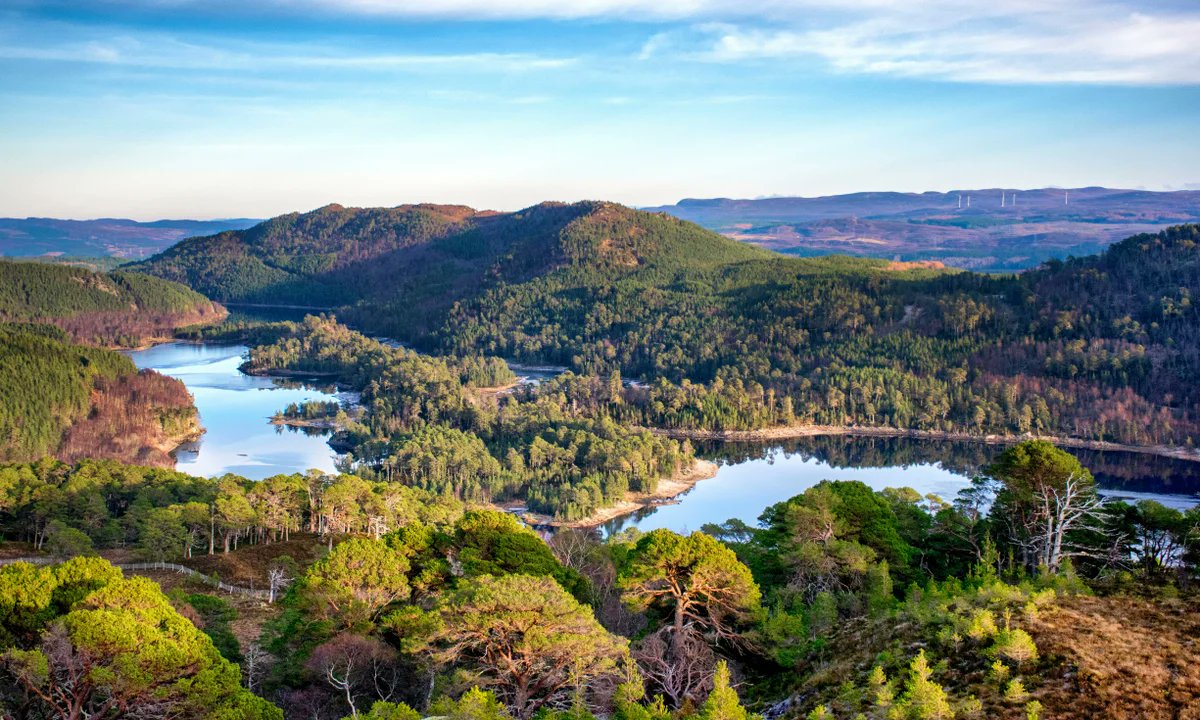
But sure, cattle grazing on Scottish hills are the environmental problem.
@MichaelAArouet Norway is not rich, it's even more overregulated than the other european countries. The norwegian state is rich, but after tax household income is far lower than the US.
Scotland's Rewilding Failure
2003: Environmental groups celebrate a major victory in the Scottish Highlands. Large tracts of land are designated for "rewilding." The goal is to restore the landscape to "natural" conditions.
Step one: Remove the sheep and cattle that have been grazing there for centuries.
The theory is simple. Livestock are "unnatural." Remove them and nature will recover.
What actually happens next is documented extensively, though rarely discussed outside specialist ecology circles.
Year 1-2: Without grazing, the grass grows tall and rank. Coarse species dominate. The flower diversity that existed under grazing pressure begins declining.
Year 3-5: Bracken invasion. Bracken is toxic to most herbivores, so it faced no natural check once livestock were removed. It spreads aggressively, shading out other plants.
Biodiversity drops.
Year 5-10: Scrub encroachment. Without grazing to control it, woody shrubs spread rapidly. This sounds good - "more trees!" - except it's the wrong kind of succession.
Ground-nesting birds that need open grassland lose their habitat. Species like curlew, lapwing, golden plover - all declining.
The tick population explodes. Without livestock to host on, they wait in vegetation for deer or birds. Lyme disease cases in surrounding areas increase.
Fire risk increases dramatically. Ungrazed vegetation creates massive fuel loads. Summer fires become a serious problem where they were previously rare.
Meanwhile, the soil isn't improving. Plant matter isn't being trampled in. No dung to feed soil microbes. The carbon sequestration that grazing provides isn't happening.
Year 10+: The land is assessed. Biodiversity has decreased. The landscape is dominated by a few aggressive species instead of the diverse grassland that existed under grazing.
The "rewilding" failed to restore what was there before livestock. It created something else - and something worse for most species.
Ecologists quietly start reintroducing grazing.
Sometimes with native breeds of cattle. Sometimes with Highland cattle specifically selected to mimic wild herbivore behavior.
The land begins recovering. The diverse grassland returns. Birds come back. Flowers reappear.
The lesson is clear: The British uplands evolved with large herbivores. Before cattle, there were aurochs. Before aurochs, there were other large grazers for millions of years.
Removing grazing doesn't restore nature. It disrupts the process that built the ecosystem in the first place.
But this story doesn't fit the narrative. So it's not publicized.
Environmental groups continue campaigning to remove livestock from hills while the ecological evidence shows this makes things worse.
"Rewilding" sounds natural. Until you realize the land evolved being grazed and removing that process is the actual disruption.
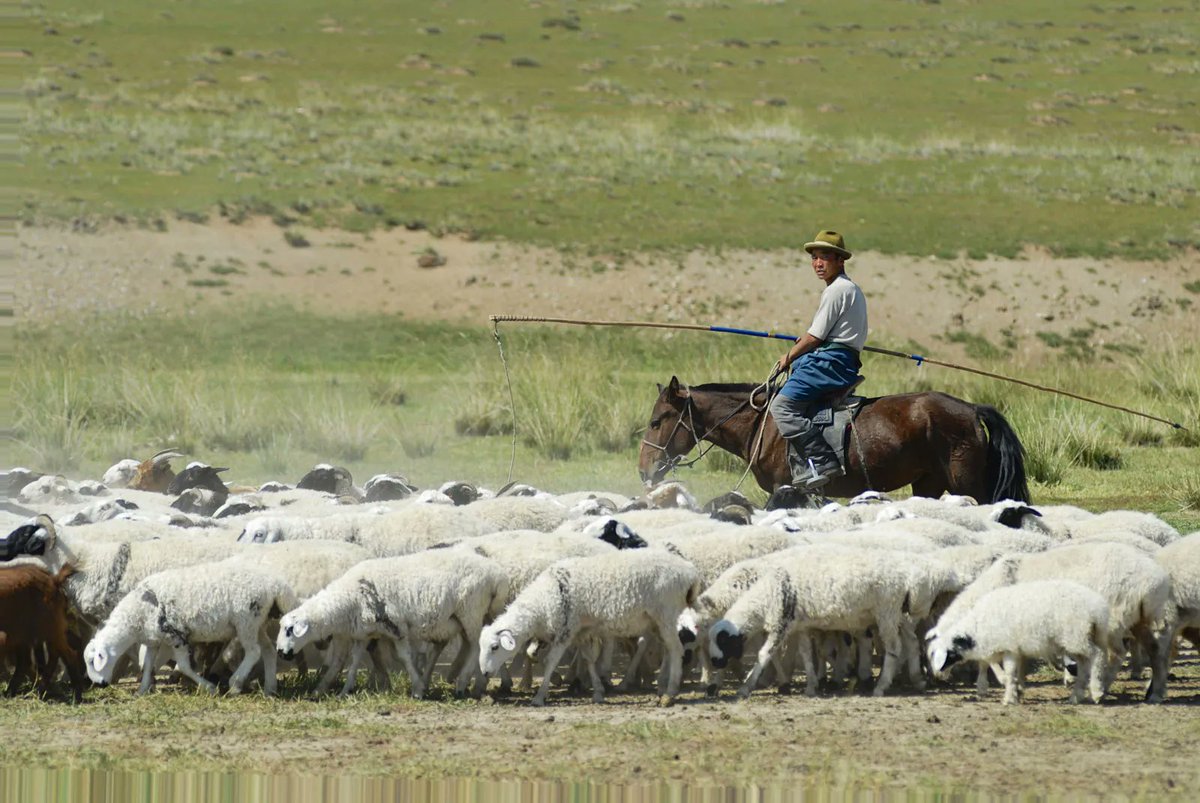
Mongolia: 64 million livestock. Sheep, goats, cattle, horses, camels.
For a country of only 3 million people, that seems excessive.
Environmental consultants from Europe and America regularly arrive to explain that Mongolia is overstocked and heading for ecological collapse.
The Mongolian herders listen politely. Then continue doing what they've done for thousands of years.
The steppes remain healthy.
How? The herders never asked for advice because they already solved this problem about 3,000 years ago.
The key is movement. Mongolian herders are fully nomadic. They move their livestock constantly, following ancient patterns that align with grass growth cycles and water availability.
A section of steppe gets hit with intense grazing from a large herd. Looks devastating. Grass trampled. Soil disturbed. Dung everywhere.
Then the herd moves on. And doesn't return to that section for months.
The grass explodes back. Faster and thicker than if it hadn't been grazed.
Why? Grazing stimulates tillering in grasses. One plant becomes five. The trampling breaks up soil crust and incorporates organic matter. The dung feeds soil microbes.
But this only works with movement. Stay too long and you destroy the grass. Keep moving and you stimulate it.
The Mongolian steppes are a carbon sink. The soil organic carbon levels are among the highest for any grassland on Earth.
This is being built by 64 million livestock doing exactly what environmental consultants say causes desertification.
Western researchers finally started studying this seriously in the 2000s. The data is clear: Nomadic grazing at high stocking densities maintains healthier grassland than low-intensity grazing on fixed ranges.
The Mongols have been right for 3,000 years. The modern range science was wrong.
There's a reason Mongolia's grasslands are still intact while American and Australian rangelands show degradation. Mongolia never adopted the Western model of splitting the range into paddocks and grazing each continuously at low density.
They kept the high-density, high-mobility system that evolved with the landscape.
Climate researchers studying carbon sequestration are now very interested in Mongolian grasslands. The carbon storage potential is enormous.
And it's being maintained by the exact thing climate activists want to eliminate: Large numbers of livestock.
The environmental movement doesn't publicize Mongolia's success because it contradicts the core message that livestock numbers must be reduced.
Mongolia's response: They'll reduce their livestock when the steppes start failing. That hasn't happened in 3,000 years of herding, so they're not worried.
The grassland knows what it needs. And what it needs is exactly what it's getting.
yes, asian and african rivers produce 95% of ocean plastic but nobody asks where the plastic comes from.
plastic recycling is a scam. always has been.
the industry knew since 1974 it “cant be justified economically”
they funded the recycling campaigns anyway because the alternative was banning plastic.
only 5-6% of US plastic actually gets recycled and europe isnt better.
the EU exports 1.1 million tonnes of plastic waste per year, 3 million kg leaving every single day.
31% goes to turkey, 16% to malaysia, 13% to indonesia, all labeled “recyclable”
most plastics cant even be recycled to begin with (thousands of types, different chemical properties). and for the few that can, the output is lower quality and more toxic than virgin plastic.
you literally degrade the material each cycle until its worthless.
so what happens to the other 95%?
western countries ship it to southeast asia and africa under the label “recycling exports” with the receiving countries promising to recycle it in their stead for a price, but those countries dont have facilities either. so they burn it or dump it in rivers.
every 20 minutes, a 10-tonne truckload of plastic enters the ocean in indonesia alone.
it may look like indonesians pollute more but that’s because we ship them our garbage and they have no infrastructure to handle it.
china used to absorb it all. when they banned imports in 2018, the west just redirected to countries with weaker regulations. malaysia, vietnam, philippines. the map below shows the result.
you sort your trash so you feel like youre helping, the plastic goes on a boat, gets burned in a village without emissions controls, poisons their air and water, flows into their rivers, enters the ocean, and in your food and water.
you feel good about the plastic you recycled and never think about it again but you end up eating it anyway.
then we ban straws and plastic bags and call it environmentalism
1950s: Dr. Cleave (British physician) publishes "The Saccharine Disease."
His argument: All modern disease can be traced to refined carbohydrates.
He examines populations across the British Empire:
- British soldiers in India
- Colonial populations
- Naval personnel
- Metropolitan British population
His finding: Disease follows refined sugar and flour consumption with 20-year lag.
Introduce white flour and sugar to a population. Twenty years later:
- Diabetes appears
- Obesity appears
- Heart disease appears
- Dental decay appears
- Hemorrhoids appear
He documents this pattern in dozens of populations. The timing is consistent. 20 years from refined carb introduction to disease epidemic.
His conclusion: Remove refined carbohydrates, disease disappears.
His prescription: Whole foods, unrefined carbohydrates if carbs at all, emphasis on protein and fat.
The medical establishment's response: Dismissive.
His work is published but ignored. Medical schools don't teach it. The "Saccharine Disease" concept doesn't enter mainstream medicine.
Why? Because in the 1950s, refined carbohydrates are the future of food production.
White flour is cheaper to produce and store than whole grain.
Sugar is profitable.
Processed foods are being developed rapidly.
Cleave's hypothesis threatens the entire food industry's direction.
By 1970s: The low-fat dietary guidelines emerge. Refined carbohydrates are recommended as "heart healthy" because they're low in fat.
Everything Cleave warned about is officially endorsed.
His book goes out of print. His work is forgotten.
Modern result: The diseases Cleave documented now affect 60%+ of the population in developed nations.
Diabetes, obesity, heart disease, dental decay - all following the exact 20-year timeline he documented.
We introduced refined carbs to developing nations. Twenty years later, they have diabetes epidemics.
Every population follows the same pattern Cleave proved in 1956.
But we're still calling these "diseases of civilization" as if they're inevitable byproducts of progress rather than predictable consequences of dietary changes.
Cleave gave us the diagnosis and the cure 70 years ago.
We buried his work and created the largest epidemic of preventable disease in human history.
Rapeseed was toxic. Gave heart lesions to mice in the '50s.
So they rebranded it “canola” and subsidized it into every kitchen in America.
Not to nourish us. To replace tallow with candle wax runoff.
Seed oils aren’t food. They’re industrial waste with heart healthy labels.
Dette stemte dere for, dere som stemte Ap. De var hele tiden klare på at de hater forbrenningsmotorer, enten de sitter i en traktor, en lastebil som bidrar med varer til nærbutikken eller en personbil. Kos dere med dyrtid og "trygg styring", spesielt dere som forlot Sp for dette! 🍀
@Kludgewerks@Goitericus Gamlinger forsvinner IKKE snart. De er generasjonen som får flest år levd, i fortida og framtida. Lykke til med å motvirke dem de neste 30 årene
@enur72 Ikke staten per se men systemet, eller "kathedralen", som består av staten, mainstream media, universitetene osv, en større gjeng som støtter hverandre og gjør det nesten umilig å kjempe imot