Report @JTOonline describes mechanisms of acquired resistance to 1L lazertinib in EGFR mutant NSCLC from phase 3 LASER301 trial.
Overall, 59% had an acquired alteration and of those, 58% were complex (≥ alterations). 16% on target EGFR dependent resistance (9% EGFR C797S). 43% EGFR independent including HER2 and MET alterations (10% each).
EGFR amplification at baseline significantly associated with shorter PFS. ctDNA clearance achieved by most (94%) of patients.
https://t.co/A0fhQA9ySi
Nature publication today from Dr. Tina Cascone et al with tremendous detail on biomarkers from CheckMate 77T predicting benefit from perioperative nivolumab in patients with resectable NSCLC. Amazing amount of detailed data in this @Nature paper.
https://t.co/Sb0H4YOpxz
【Osimertinib With or Without Chemotherapy in Advanced NSCLC With EGFR and Concurrent TP53 Mutations】
🇨🇳 Multicenter, randomized, open-label, phase 3 study
📚 JAMA 2026
https://t.co/x7liXNPCFY
🔑 Key Results
🚀 Osi+chemo improved PFS compared to Osi alone in EGFR/TP53 co-mutated NSCLC (median 34.0 vs 15.6 months, HR 0.44, P<0.001)
📈 Median Duration of Response more than doubled (32.7 vs 15.3 months) with a positive trend in OS
🎯 Consistent benefit across all subgroups, including patients with brain metastases
Robust report on 162 pts with EGFR transformed SCLC.
Median time to transformation: 25.8m
Post transformation OS 14.2m
1L chemo PFS: 5.3m
1L chemo + TKI PFS: 6.2m
1L chemo + IO PFS: 4.1m
Later line taxane PFS: 6.9m
Later line captothecin PFS: 1.1m
https://t.co/kKK2CXnaoQ
🔥Disease kinetics & practice patterns in ≥4-year ICI long-term beneficiaries (LTBs) in advanced NSCLC
🆙 @JTOonline@IASLC
🎯LTBs: 9.4% among 3144
🎯Lung cancer-specific OS 88% at 8y (4y after 4y LTBs)
🎯68% of late deaths: non-lung cancer related
🎯85% of Late PD: growth rates ≤10 mm/month
🎙 @M_Torasawa Dr. Yoshihiro Masui @HHorinouchi
#LCSM @OncoAlert@Larvol
https://t.co/4Dq08Nxy38
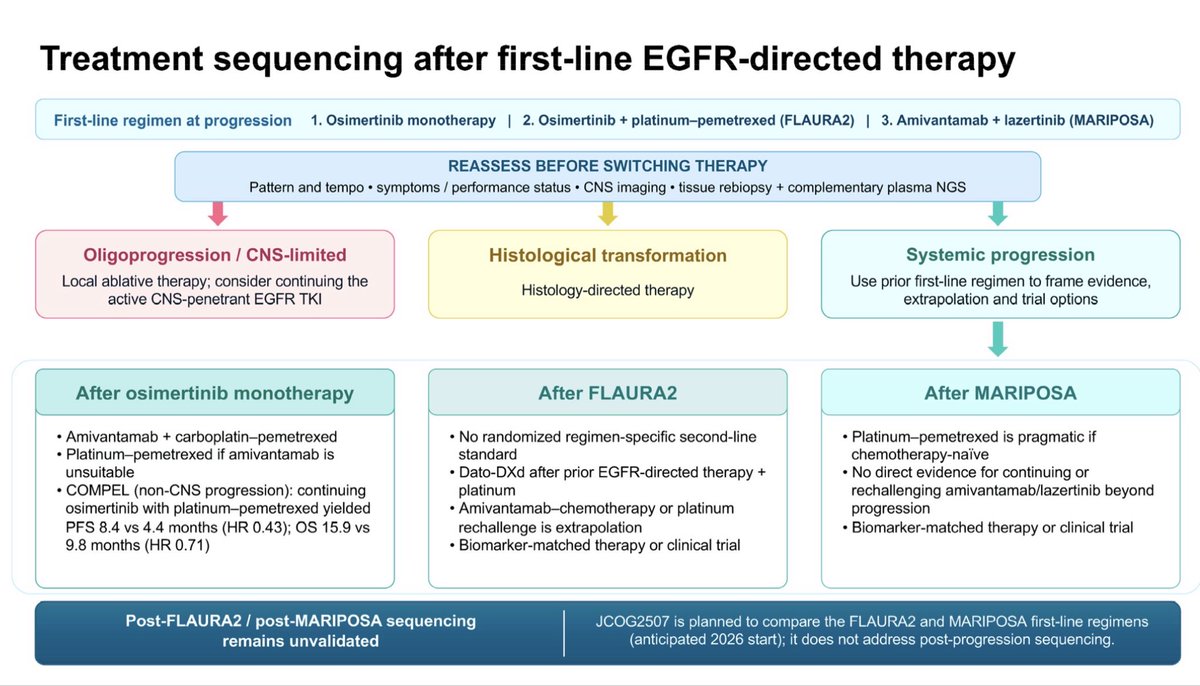
How far have we come treating EGFRm NSCLC and what new dilemmas do we face? We discuss biomarkers, rationalising options and challenging clinical scenarios. Always a pleasure to write with friends ☺️ @DrYujiUehara@hiroto_pulm@JiefeiHan@drkevin_chua_lm
https://t.co/H05IQofcFM
Sustaining the health of the thymus and our immune system, preventing its involution, may be key to promoting healthspan @nature@EdwrdChen
https://t.co/LM7KzJ3zoH
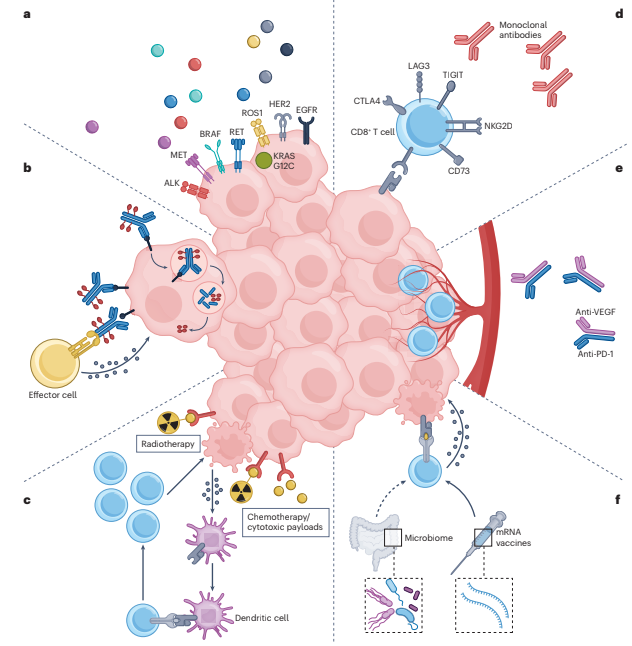
🎯 Regulation of Immune Checkpoint Molecules.
Tumors evade immune surveillance through complex regulation of immune checkpoint molecules at the genetic, epigenetic, transcriptional, translational, and post-translational levels.
Understanding these mechanisms may improve biomarker development and enable mechanism-guided immunotherapy combinations to overcome resistance.
📖 @NatureRevCancer
DOI 👉🏻 https://t.co/98JjkMBCHX
#CánCare #oncology #immunotherapy #immunecheckpoints
📣Just published in @NEJM: adjuvant ensartinib in completely resected ALK+ #NSCLC (ELEVATE, phase 3)
• 24-mo DFS, stage II–IIIB: 86.4% vs 53.5% | HR 0.20
• Overall population: 87.3% vs 57.2% | HR 0.20
• Grade ≥3 AEs: 35.8% vs 18.2% (mostly rash)
• OS still immature
✅ Same striking HR as ALINA.
⚠️ ensartinib came AFTER adjuvant chemo vs placebo
Link 👇👇👇
#LCSM #ALK
𝗜𝘀 𝗶𝗺𝗺𝘂𝗻𝗼𝘁𝗵𝗲𝗿𝗮𝗽𝘆 𝗮𝗹𝗼𝗻𝗲 𝗲𝗻𝗼𝘂𝗴𝗵 𝗳𝗼𝗿 𝗣𝗗-𝗟𝟭–𝗵𝗶𝗴𝗵 𝗮𝗱𝘃𝗮𝗻𝗰𝗲𝗱 𝗡𝗦𝗖𝗟𝗖? 🫁
For patients with advanced NSCLC and PD-L1 expression ≥50%, PD-(L)1 inhibitor monotherapy has long been a chemotherapy-sparing first-line option.
But a new JAMA Oncology systematic review and meta-analysis suggests that adding chemotherapy may improve outcomes.
Across 24 phase 3 trials and 5,546 patients, chemoimmunotherapy was associated with longer survival than PD-(L)1 monotherapy.
Key findings:
🔹 Median OS: 29.2 vs 19.8 months
🔹 Median PFS: 11.3 vs 6.8 months
🔹 Reconstructed patient-level OS HR: 0.74
🔹 Reconstructed patient-level PFS HR: 0.67
This does not mean monotherapy disappears.
The study was not a direct prospective randomized comparison, and toxicity remains central to treatment selection.
But the message is clear: high PD-L1 is not the whole decision.
Tumor burden, symptoms, pace of disease, comorbidities, patient preference, and the need for rapid control should all shape first-line therapy.
@DiFedericoMD@doctordegio@pecci_federica1@alessi_joao@HosseinBorghaei@marinagarassino@FedericoCappuz1@DrMarkAwad@BRicciutiMD
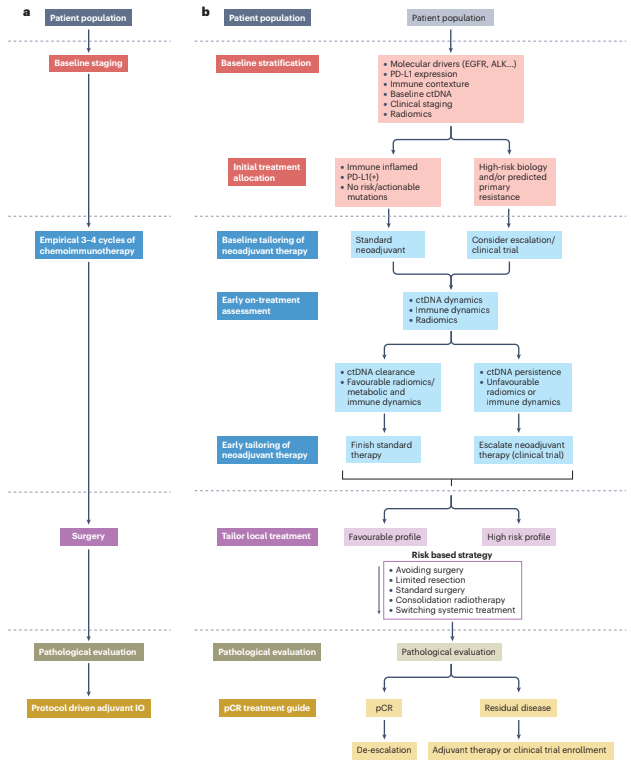
🫁 Our review is out in @NatRevClinOncol: improving neoadjuvant & perioperative therapy in resectable #NSCLC
The question is no longer *whether* chemo-#IO works, but *how* to use it 👇
🔑 pCR as a robust surrogate of durable benefit — 5-yr OS >95% in pCR patients (CheckMate 816)
🧬 Baseline biomarkers (PD-L1, genomics) to flag who won't respond upfront
🩸 Dynamic tools (ctDNA, radiomics, metabolic imaging) to adapt in real time
🎯 Escalate the biologically high-risk, spare the rest
🔍 Time for response-adaptive, biology-guided perioperative care.
Senior author: @MARIANOPROVENCI
Link 👇👇
@OncoAlert@Larvol@oncodaily
🫁 Not all TP53 mutations may carry the same meaning in EGFR-mutant lung cancer.
A multicentre study in ESMO Open explored whether specific TP53 gain-of-function (GOF) mutations influence outcomes with first-line osimertinib in EGFR-mutant lung adenocarcinoma.
Among 140 patients treated with osimertinib:
🔹 45.7% had a TP53 mutation
🔹 13.6% had a TP53 GOF mutation
🔹 32.1% had a non-GOF TP53 mutation
The difference in progression-free survival was substantial:
📉 TP53 GOF: 12.0 months
📉 TP53 non-GOF: 21.9 months
📈 TP53 wild type: 31.4 months
TP53 GOF mutations remained independently associated with shorter PFS:
HR 2.42
95% CI 1.34–4.38
P = 0.0036
Importantly, initial response rates to osimertinib were not significantly lower in the TP53 GOF group.
The concern was not that tumors failed to respond.
The concern was that resistance appeared to emerge earlier, even among patients who initially achieved tumor shrinkage.
🧬 Transcriptomic analysis also showed enrichment of ephrin signaling, including higher expression of EFNB1, EFNB3, and SRC, offering a possible biological clue to the resistant phenotype.
These findings do not change the current first-line role of osimertinib.
But they reinforce an important point for molecular oncology: a TP53 result may need more interpretation than simply “mutated” or “wild type.”
The specific functional class of the mutation may matter.
Read full article here 👇
Breaking: Your Android can do things the iPhone can only dream of.
But you never turn them on. 15 features have been buried in your settings for months and 2 will shock you.
Switch them on today:
🫁 Can routine CT imaging help predict which patients with metastatic NSCLC may benefit from immunotherapy?
A new multi-center study evaluated SCENT, a deep learning model that estimates PD-L1 expression from standard chest CT scans, potentially creating a noninvasive “virtual biopsy” for metastatic NSCLC.
📊 SCENT predicted PD-L1 expression of ≥50% versus lower expression with strong performance:
🔹 AUC 0.84 in the MD Anderson cohort
🔹 AUC 0.80 in the Mayo Clinic cohort
🔹 AUC 0.78 in the phase III LONESTAR trial
The imaging-derived PD-L1 classification was also associated with immunotherapy outcomes:
⏳ Progression-free survival: HR 1.49
❤️ Overall survival: HR 1.40
Importantly, combining SCENT with tissue PD-L1 immunohistochemistry appeared to add prognostic value. Patients classified as PD-L1-low by both approaches had the poorest survival outcomes.
🧬 Tissue PD-L1 testing remains the clinical standard. But this research raises an important possibility: routine CT imaging may one day complement biopsy-based testing, especially where tissue is limited, repeated biopsies are difficult, or tumor biology changes over time.
The next step is prospective validation to determine whether CT-based “virtual biopsy” tools can improve real-world immunotherapy decisions.
@liao_zhongxing@NIVokes@LeXiuning
Prospective analysis of ctDNA in pts with stage III NSCLC treated with chemoradiation and durvalumab @JTOonline. ctDNA detected in 35% after CRT but not prognostic. If ctDNA+ at 6m (in 28%), mPFS 14.7m vs 46.9m if negative (HR 2.45).
https://t.co/sCiwOGeRYR
🫁 Can patients with advanced NSCLC remain treatment-free after completing 2 years of immunotherapy?
A nationwide Korean real-world study published in Lung Cancer provides important data.
Using the Korean Health Insurance Review and Assessment Service database, investigators analyzed 10,275 patients with advanced NSCLC who initiated post-platinum immune checkpoint inhibitor therapy between 2017 and 2022.
Among them:
📌 786 patients completed 2 years of ICI therapy
📌 This represented 7.6% of the full cohort
📌 Median treatment-free survival was 32.8 months
📌 Median overall survival was not reached
Among 2-year completers:
➡️ 90.2% were alive 1 year after ICI completion
➡️ 77.1% were alive 2 years after ICI completion
➡️ TFS did not differ significantly across pembrolizumab, nivolumab, and atezolizumab
The study also examined survivorship.
After person-years adjustment, new-onset comorbidity rates were not increased among 2-year completers. However, comorbidities and infections occurred across a broad follow-up period, supporting the need for long-term surveillance after immunotherapy.
The takeaway:
Treatment-Free Survival in NSCLC may be durable after 2-year ICI completion in selected patients, supporting time-limited immunotherapy strategies while highlighting the need for structured survivorship care.
Reference: Lee et al., Lung Cancer, 2026.
#OncoDailyLung #NSCLC #LungCancer
A review of the effects of marathon running on the heart
https://t.co/argjLSDkMO
including release of blood biomarkers cardiac troponin, NT-proBNP without known clinical significance
📖 🔥New online from our group at @UTMDAnderson on ultra-precision oncology in #lungcancer
👉 Analysis from over 22,000 #EGFR-mutant tumor samples identified #PACC mutations in 12% of cases (A)
👉 While classical and #Ex20 mutations more commonly occur as single mutations, PACC mutations are more frequently (66%) observed as compound mutations (B).
👉 PACC/PACC and PACC/classical-like compound mutations function biologically similar to single PACC mutations, NOT classical mutations (C)
👉 Compound PACC mutations demonstrate greater sensitivity to EGFR TKIs than single PACC mutations (D)
⚡ 💡 Largest #EGFR mutation landscape in a Western population.
⚡ 💡 #Compound EGFR PACC Eare biologically analogous to #single PACC.
⚡ 💡 Important insights for drug development of next-generation EGFR TKIs.