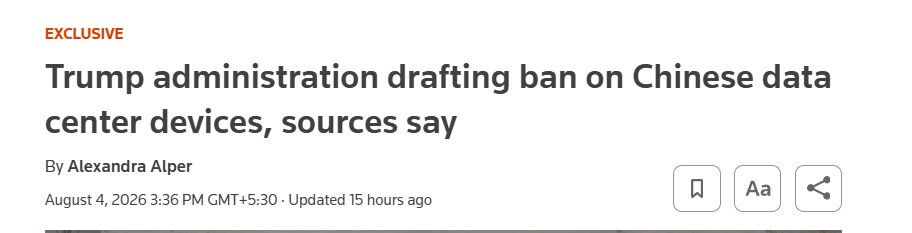
Trump administration is drafting ban on Chinese data center devices. Ban targets optical transceivers, which are small plug in devices that turn electric current into light so data can travel fast on glass fiber inside data centers.
Sterlite and HFCL do not make transceivers, They make optical fiber cable, which is glass strands that carry light - Different product entirely.
Chinese firm Innolight controls 27% of global optical transceiver market for data centers, and its 800G silicon photonics module has 50% share in that fastest growing sub segment.
Innolight is major supplier to Nvidia and Google. Ban would hit Nvidia supply chain hard. This is why earlier this year Nvidia put 4 billion dollars into US firms Coherent and Lumentum, which make similar transceivers.
Ban is not only about data security, it also helps Nvidia shift business to companies it partly owns now.
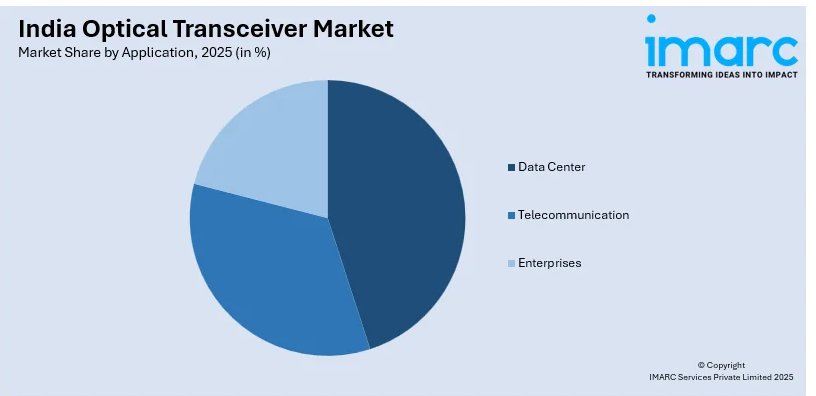
Global optical transceiver market is 26 billion dollars in 2026 and growing 60% every year on AI data center buildout. India does not make transceivers at all, that layer needs deep silicon photonics ability.
Every transceiver also needs 12 to 18 months of testing to fit specific switches, so new suppliers cannot show up overnight.
HFCL is entering data centre interconnect through HTL subsidiary but that adds only 400 crore in FY27. India will benefit through more fiber cable orders as US builds more data centers.
Corning is also must watch :) better than Indian player but Hype and Sentiment ....lies in india
SMT lines place electronic parts on circuit boards through automated machines
Aimtron management says 1 SMT line can support around ₹100cr of annual business when used well. Total SMT lines can increase from 4 in FY24 to 13 in FY28E based on planned expansion. Such growth can give Aimtron enough production capacity for more than ₹1,000cr revenue.
New lines also need customer approval before regular production begins. Orders and machine use will decide annual revenue.
₹100cr revenue from 1 SMT line looks possible because Aimtron management uses this estimate internally. Current setup has 9 SMT lines, which management says can support around ₹800cr to ₹900cr revenue.
Planned expansion can take total capacity to 13 SMT lines by FY28E. Reaching 13 lines does not bring ₹1,300cr revenue immediately because every new line needs orders, workers, materials and customer approval.
Revenue grows only after production reaches good use.
More SMT lines can help Aimtron accept larger orders from telecom, power, industrial and electronics customers. Revenue can rise further when Aimtron supplies complete finished products instead of only assembled circuit boards.
This explains why box build work matters along with higher SMT capacity. Box build formed 68.8% of FY26 revenue, while PCBA formed 28.6%. Aimtron recorded ₹301cr revenue in FY26 and now targets around ₹1,000cr over coming years.
Added capacity supports growth when customer orders increase. If yu want to understand in more details watch out this Video :)
https://t.co/CXs1FeP7qP
@WeekendInvestng He was the only anchor who was saying to SEBI chair woman two years ago Mam Midcap mein froth hai.. Wahan action lo.. Derivatives ki training class bana diy news channels ko... Investment karna, study and wealth creation per, investor education per focus karna tha. But TRP ....
Microcap multibaggers aren’t built on intelligence alone.
They’re built on conviction strong enough to survive doubt and patience long enough to let compounding do its work.
#LNPR#Investing
A 10× multibagger isn’t created by chasing momentum. It’s created by identifying exceptional smallcap businesses before the crowd, staying invested through volatility & letting compounding do the heavy lifting.
In smallcap #investing, conviction + patience = extraordinary wealth
India assembles $123bn worth of electronics but domestic value addition is only 18 to 20%
When Maruti-Suzuki came to India, it did not just sell cars. Over time, it created an entire auto-ancillary supply chain around it.
Apple ecosystem and the new electronics plants coming online can create a similar shift. It will take time, but these factories can build an electronics supply-chain belt around them - from components and jobs to exports, forex earnings, and eventually even a political vote bank.
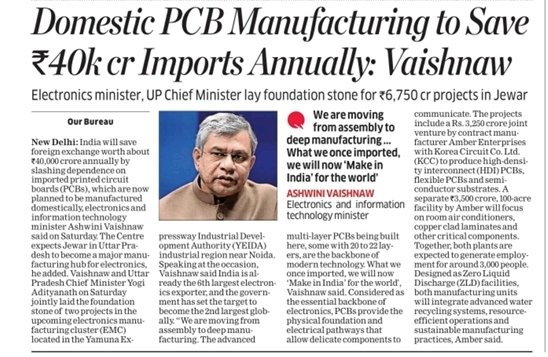
India imports ₹40,000 crore in printed circuit boards every year, These are the green boards inside every phone and laptop that carry all connections between chips.
Making phones in India without making PCBs means capturing volume but missing the value. Amber's ₹3,250 crore JV with Korea Circuit to make 20 to 22 layer HDI boards is the kind of deep component work India has never done at this level.
India electronics import bill crossed $116bn in FY26 while electronics exports were $38bn. That is a $78bn gap inside one sector.
About 40% of component imports come from China. PCBs alone account for ₹40,000 crore. India meets 88% of PCB demand through imports and 90% of copper clad laminates, the base material for making PCBs, still comes from overseas.
Amber Korea Circuit JV at Jewar is a 70 to 30 partnership bringing Korean process technology into Indian factories and many plants will come online soon
India makes 99% of its smartphones domestically but puts in only 15 to 18% of the value. Rest is imported parts snapped together on assembly lines. PCBs are where that changes.
A 20 layer HDI board is not something you assemble, you fabricate it through dozens of chemical and precision steps.
India PCB production is just ₹18bn against consumption of ₹135bn. Government has approved ₹22,919 crore under ECMS and 12 semiconductor projects worth ₹1.64 lakh crore.
Moving from assembly to fabrication is where India builds real industrial depth
this is not just 40k import but look 10 year later 1 lakh cr + will be save and much more ... think in long term :)
Most investment mistakes begin long before the buy or sell button is pressed. They begin with the company you keep, the content you consume, and the emotions you repeatedly expose yourself to. Guard your environment carefully. Your portfolio is often a reflection of it.
@SureshKBN Yes Sir . In my opinion FTA with OMAN, Australia and New Zealand will also benifit them . Russian and Australian markets were big importers of Indian Shrimps in the past and they are likely to comeback, as per Apex Frozen con call, They hv already started and will reflect in FY27
@SureshKBN Sir should not we focus on seafood exporters? Where the TAM is huge, with capacity already available , so no major capex required. FTAs should create a major headwinds for them. Valuations are also attractive. Please share your views 🙏🏻