Why does a farmer get only Rs 1 to Rs 2 for his cauliflower crop when consumers are made to shell out Rs 20 to Rs 30 per kg in retails? Doesn't it call for fixing an #MRP to ensure consumers are not looted?? #ConsumerRights
Just sharing - Indian farmers taxed $169 billion (~ Rs 14 lakh crores) via export bans or restrictions in 2022: OECD report
No other country in world tax its own #Farmers so much - and then we say that we are subsiding farmers - Really ?? @AgriGoI
https://t.co/zuNRIFrmHP
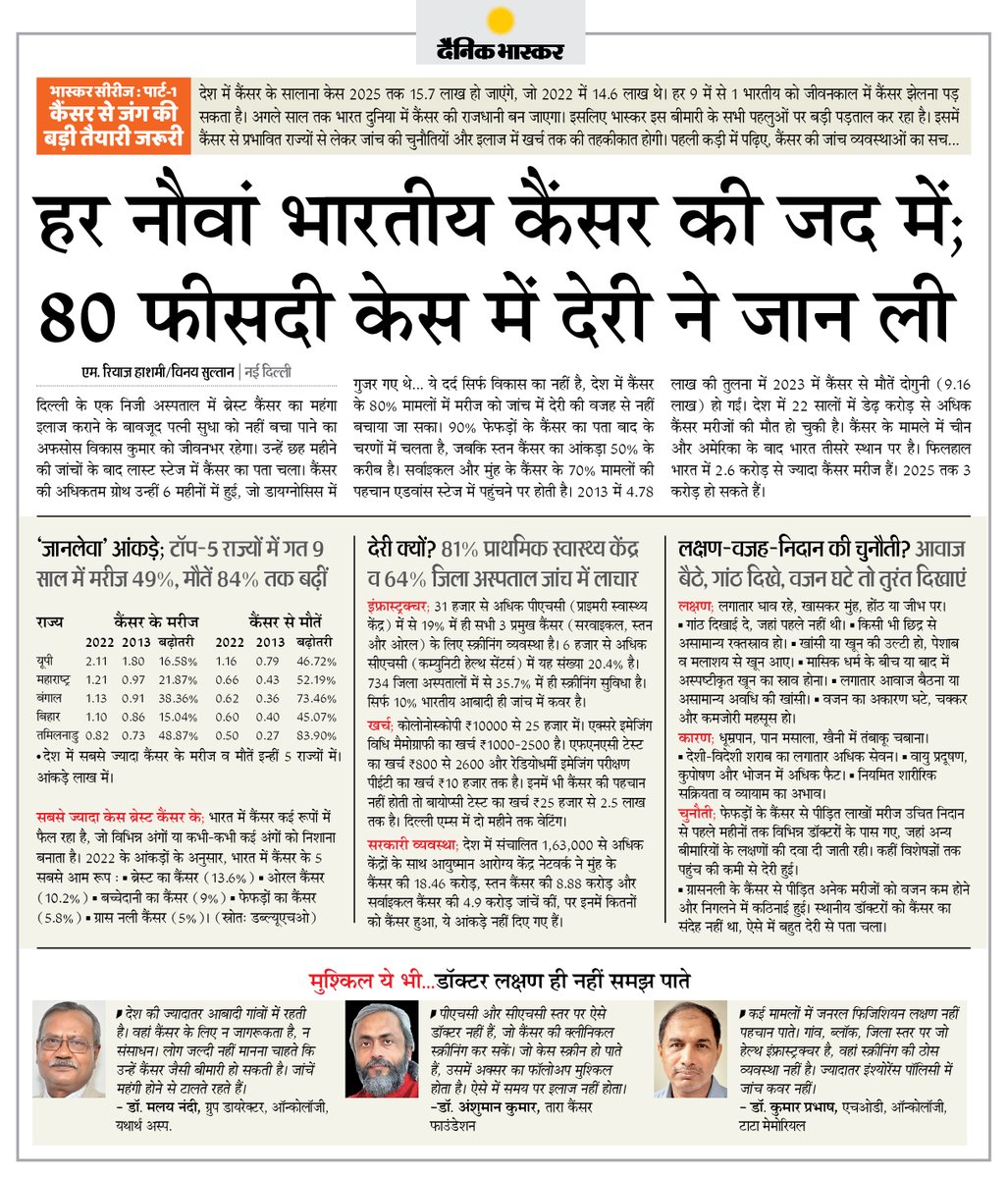
हर 9वां भारतीय कैंसर से जूझ रहा, 2025 तक हो सकते हैं 15.7 लाख पेशेंट... 80% मरीजों की समय पर जांच- इलाज न होने से गई जान
#Cancer#Health
अधिक खबरें और ई-पेपर पढ़ने के लिए दैनिक भास्कर एप इंस्टॉल करें - https://t.co/uXrhGpuirk
Again sharing my old article:
भारतीय किसान, 'चक्रव्यूह' में फंसा अभिमन्यु
देश के ग्रामीण क्षेत्रों की लगभग 58% आबादी खेती पर निर्भर है, इतने बड़े तबके का अशांत होना देश के लिए अच्छा संकेत नहीं है
https://t.co/f6WhK12OQp
अक्षय तृतीया सिर्फ सोना खरीदने का दिन नहीं है यह किसानों के लिए कृषि के नए चक्र की शुरुआत का भी दिन है।
पूरा लेख पढ़ें
#AkshayaTritiya
https://t.co/KoqbnEqIsI
सेंटर फॉर साइंस एंड इंवायरनमेंट की रिपोर्ट के अनुसार ऑर्गेनिक कार्बन की कमी भारत में व्यापक है। 24 राज्य और केंद्र शासित प्रदेशों में कम से कम आधे मिट्टी के नमूनों में ऑर्गेनिक कॉर्बन की कमी है। उनमें से सात राज्यों में 90 प्रतिशत से अधिक नमूनों की कमी है.
https://t.co/fRkFadRkWA
AMR poses a significant threat to Low- and Middle-Income Countries (LMICs) due to limited resources and capacities
40 global stakeholders to convene @ CSEs workshop to discuss LMIC priorities before 2024 UN General Assembly's High-level Meeting on AMR.What should LMICs focus on?
Zakariyapura — India’s climate-smart model village for biogas production & utilisation
The monthly revenue from slurry sales typically ranges from Rs 1,500-2,500. In total, the biogas system helps households save between Rs 3,500 and Rs 4,500 per month
https://t.co/C39uhj5vzW
Livestock have been closely integrated within the Indian farming system, efforts to reduce methane emissions shouldn’t reduce the use of manure as fertilizer on India’s farms, as chemical fertilizers emit nitrous oxide, an even more potent greenhouse gas.
https://t.co/5DIJTEtbte
Foodies, rejoice!
Don't miss out on the grand unveiling of "Future of Taste" with culinary maestros Manjit S Gill, Rajiv Malhotra, @manishmehrotra, Jatin Mallick, @sunitanar & @vibhavarshney. Join us for a delectable journey in our "First Food" series today at 6PM at @IHCDelhi
मध्यप्रदेश के किसान खेतों में खड़ी रबी फसलों पर ट्रैक्टर चला रहे हैं। इनकी फसलें ओला, पाला और ठंड के कारण फसल खराब हो गई है। गेहूं को 20 से 50 प्रतिशत तक नुकसान पहुंचा है तो दलहनी फसलों में चना, मसूर फसलें पूरी तरह बर्बाद है
https://t.co/jLx36Opi6l
Why guarantee a minimum price and why it is important?
Minimum Support Price or MSP is calculated to ensure a reasonable return over cost of production. Making it statutory is a recognition that trade below this minimum price is UNFAIR and EXPLOITATIVE. Think of it as statutory minimum wages which are already in place. A responsible food company, trader and the government are expected to pay this minimum price to the farmer. The government had a stated goal to double farmer incomes— its expected that farmers will expect a fair price.
With a population of over 1.4 billion, food security is too important for India to leave to private markets. When the Ukraine war broke out and pushed wheat prices to record highs, India could tame consumer prices reasonably by using public food stocks, MSP purchases from farmers and export curbs. MSP was critical to the green revolution strategy which pulled India out of a terrible food shortage. It is needed today to guard against future shortages arising out of repeated climate shocks.
A minimum price guarantee ensures that farmers do not lose interest and the country has enough supplies of different food commodities. With regular climate shocks our public stocks are no longer overflowing. Which is why the government had to step in and curb rice and wheat exports. Farmers paid a price for this— they would have earned more if were allowed to supply freely to international markets. They did not hit the streets then. They are doing it now to ensure fair prices in the future.
Farmers in at least 65 countries rose up in protest since January 2023.
Producers in South America, Europe, India, Nepal demand better prices and policies
https://t.co/VrAyhk2dsw