This raging Bull turns 75 today. Born in crisis at Ambala on hand-me-down Spitfires as war clouds, No. 14 Squadron would fight over Kalaikunda and Dacca, fly from captured Jessore and become the IAF’s first Jaguar unit. Few carry such a story.
14 Sqn was one of four ‘Emergency Teen’ squadrons raised in eight weeks in 1951, before formal sanction, budget or fresh aircraft existed. Its first cadre at Ambala was 11 officers, including two from the Indian Navy; its Spitfire XVIIIs came from the Air Force Academy.
The beginning was improvised. When the Air Force Academy shifted from Ambala to Secunderabad, it left behind 14 Spitfires, 11 of them initially unserviceable. No. 14 Squadron received half.
Its first CO, Sqn Ldr L.R.D. ‘Creamy’ Blunt, had already flown Spitfires in Kashmir in 1947 and was the only IAF Spitfire pilot to be awarded the Vir Chakra.
The Bulls did not remain a Spitfire squadron for long. The jet age came with Vampires in 1957, followed by Hunters in 1959, an aircraft that would become inseparable from 14 Squadron’s identity.
In October 1962, the squadron moved to Kalaikunda. The base would remain home for nearly 17 years and become the setting for some of the Bulls’ most important chapters.
There was still time, before war came, for a glimpse of the changing world of air combat. In November 1963, 14 Squadron’s Hunter Mk 56s took part in the eastern sector of Exercise Shiksha at Kalaikunda, sharing the skies with RAF Javelins in India’s first multinational air force exercise.
Two years later, those same skies were very different.
On 7 September 1965, Kalaikunda came under attack.
The PAF had already struck the base once that morning and inflicted serious damage. When the Sabres returned at around 10.30 am, the interception fell to just two Hunters of 14 Squadron, flown by Flt Lt Alfred Cooke and Fg Offr S.C. Mamgain.
What followed has become one of the most memorable air combats of the war.
Cooke found himself fighting against multiple Sabres, turning hard at low level, firing when fleeting opportunities appeared and refusing to give up the fight. He shot one Sabre down and continued the engagement until his ammunition was exhausted.
Even then, he manoeuvred behind another enemy aircraft and kept up the chase before the attackers finally disengaged.
Mamgain, fighting the same battle, was credited with another Sabre destroyed and one badly damaged.
For 14 Squadron, Kalaikunda was no longer simply its home station. It had become a battlefield.
And the raging Bull had announced itself.
Six years later, the Bulls were at war again. Once more, the eastern theatre would define their campaign.
By December 1971, 14 Squadron’s Hunters were flying hard and often. The targets ranged from airfields and ferries to ships, tanks, gun positions, bunkers, trains and fuel installations. Much of it was the unglamorous, dangerous business of going out under fire, finding the target, attacking it and coming back to do it again.
On 4 December, with the war barely hours old, the CO, Wg Cdr Ramanathan ‘Sandy’ Sundaresan, was already on his third sortie of the day.
Leading a strike against Tezgaon airfield near Dacca, his formation was intercepted by four PAF Sabres. Despite heavy ground fire, Sundaresan engaged them and shot one down.
Later, his logbook reduced the episode to a single line:
“Strike ARI Dhaka – Bounced by Sabres – Shot down one, No 2 Shot down.”
His No. 2, Flt Lt K.C. Tremenheere, had indeed been shot down. He ejected, became a POW and survived the war.
But the story of 14 Squadron in 1971 was much larger than one dogfight.
Few embodied the relentless pace of the campaign more starkly than Sqn Ldr R.C. Sachdeva.
In just six days he flew 15 operational sorties, attacking ships, tanks, gun positions, bunkers, trains and fuel installations. Twice he brought his Hunter back with serious bullet damage.
On 10 December, after attacking an enemy boat, his engine flamed out.
This time, he did not return.
As the campaign moved rapidly towards its conclusion, the Bulls acquired another remarkable distinction. With Jessore in Indian hands, 14 Squadron began operating its Hunters from the captured airfield.
A squadron that had entered the war based at Kalaikunda, operating forward from Dum Dum, was now flying from what had been enemy territory only days before.
No other Indian unit did so during the war.
Then, in 1979, another chapter opened.
Wg Cdr D.R. ‘Natty’ Nadkarni was selected to command the unit that would introduce a completely new strike aircraft into IAF service. He and the first group of pilots went to Britain to convert onto the Jaguar.
The first two Jaguars reached India on 27 July 1979.
No. 14 Squadron became the IAF’s first Jaguar unit, and was declared operational on the type in September 1980.
From a makeshift beginning with ex-Air Force Academy Spitfires in 1951 to pioneering the IAF’s deep-penetration strike aircraft less than three decades later.
Spitfire. Vampire. Hunter. Jaguar.
Kalaikunda. 1965. Dacca. Jessore.
Seventy-five years beneath the sign of the charging Bull.
For me, there is a personal connection too.
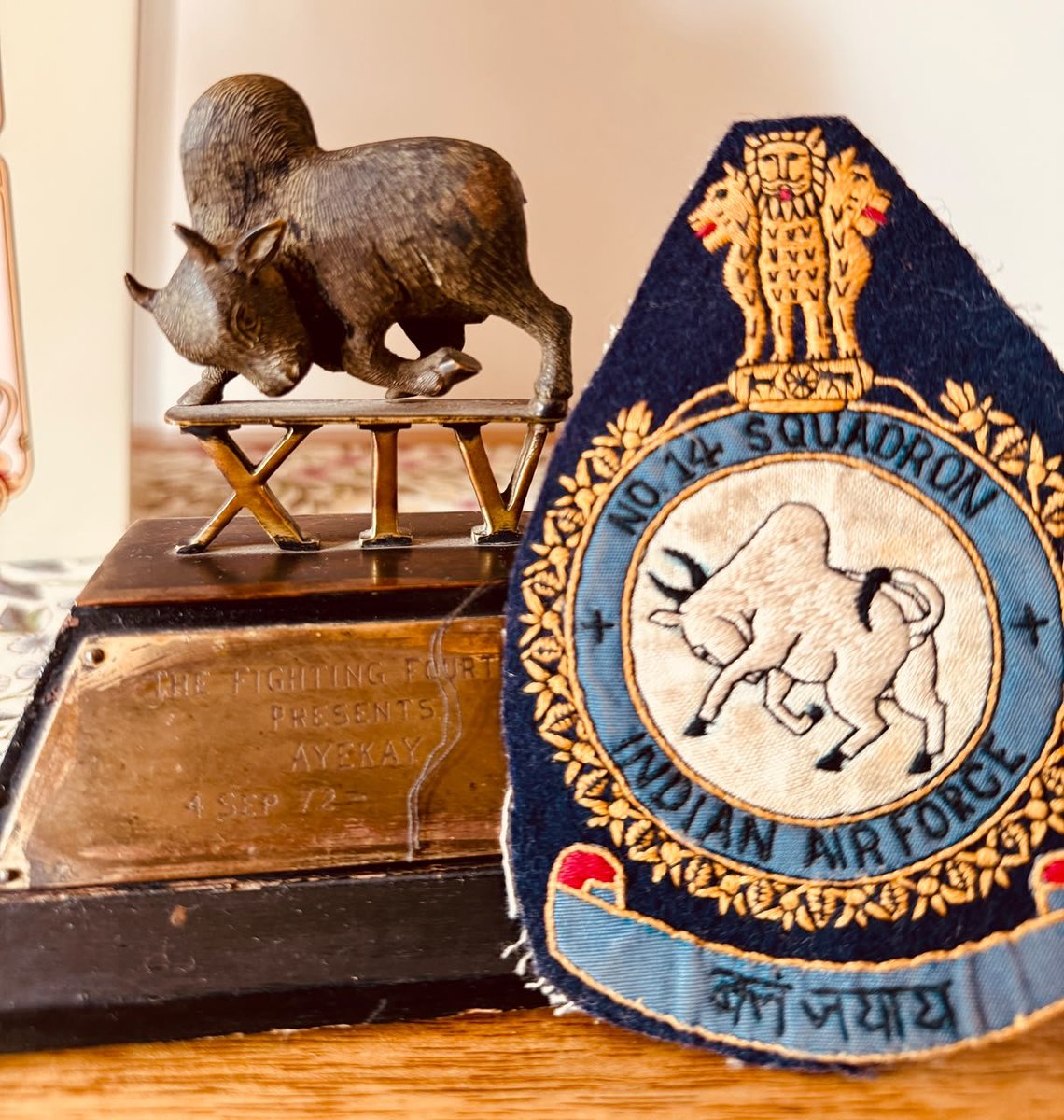
This old ‘Fighting Fourteen’ memento and squadron patch came from my father, who served with 14 Sqn from 4 Sep 1972 to 24 March 1974, joining the Bulls less than a year after the Bangladesh War.
They have sat at home for decades, small reminders of a much larger story.
बलं जयाय — Strength Will Conquer.
Happy 75th, No. 14 Squadron.
#IAFHistory @iaf_mcc
@IamRajat_Pandit@manaman_chhina We should talk about the dip in their performances instead, Men's team came 8th in FIH Pro League out of 9 teams which concluded last month.
The chances of reaching World Cup semis are bleak.
30 Years of Painting the Skies in Red & White.
800+ Air Displays. Legacy of Excellence.
From the iconic Kiran Mk-II to the Hawk Mk-132, the SuryaKiran Aerobatic Team has spent three glorious decades inspiring millions with precision, passion and professionalism.
“Ambassadors of the Indian Air Force”, SKAT continues to showcase the spirit of teamwork, courage and excellence through breathtaking close formation aerobatics across India and beyond.
As SKAT celebrates its 30th Anniversary, we honour every pilot, engineer and air warrior who made this extraordinary journey possible.
“Sadaiva Sarvottam” — Always the Best.
#SKAT30 #Suryakiran #IndianAirForce #SadaivaSarvottam #Bidar #IAF
@DefenceMinIndia@SpokespersonMoD@HQ_IDS_India@adgpi@indiannavy@CareerinIAF@Suryakiran_IAF
🎶 credit: Dhurandhar
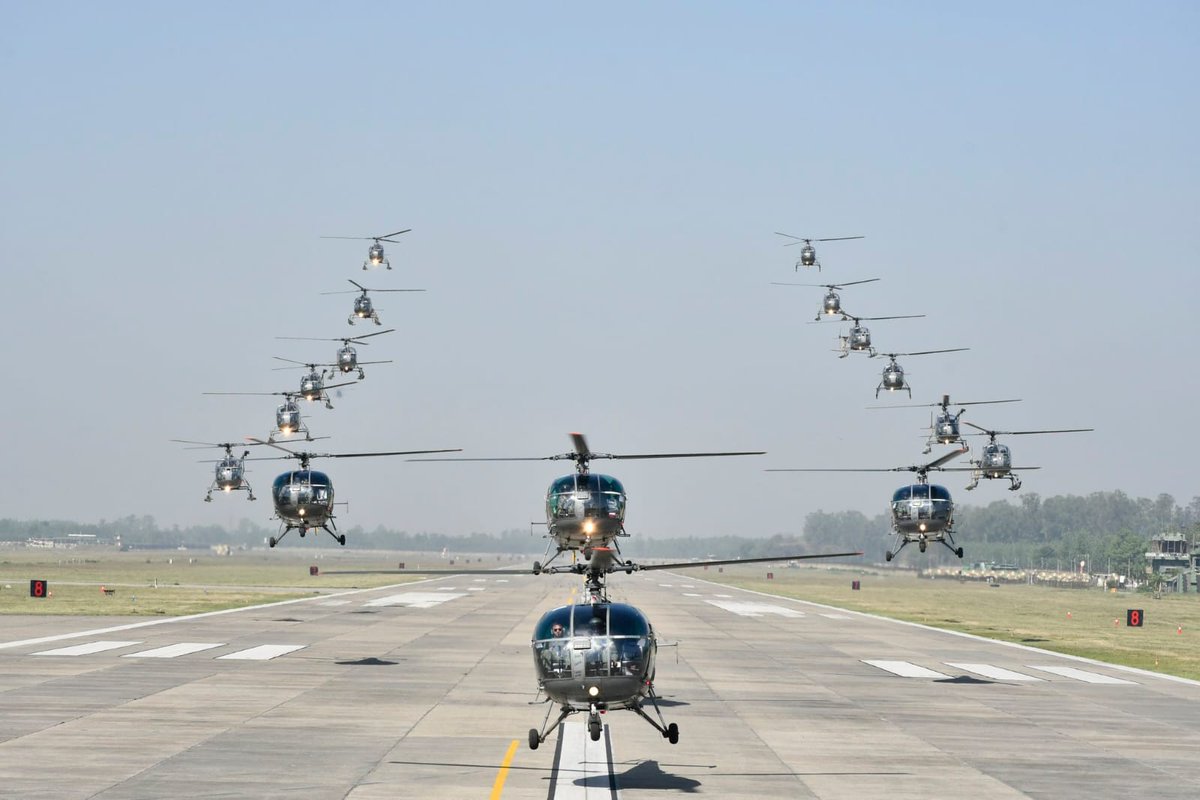
The Indian Air Force proudly marks a significant milestone as 132 Helicopter Unit, The Hovering Hawks, complete 40 years of dedicated service to the nation this year. The unit has achieved 100% serviceability for all 16 aircraft of its Chetak/Cheetah fleet—an outstanding feat reflecting unwavering professionalism, technical precision and commitment to operational readiness: IAF
From concept to capability is where most programs slow down.
This is where we accelerate.Introducing #DivyastraMK1 not a concept, but real flight trials.Built over months of prototyping, integration & testing:
• #LoiteringMunition
• #ISR
• #Decoyops#HoverIt#indianarmydrone
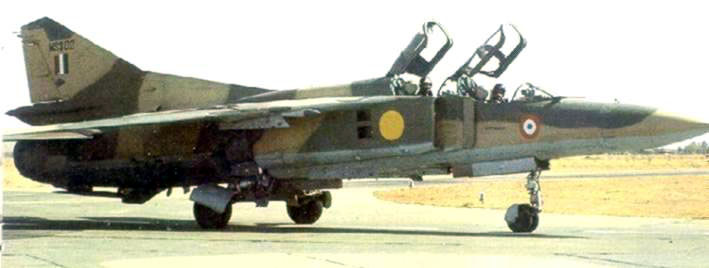
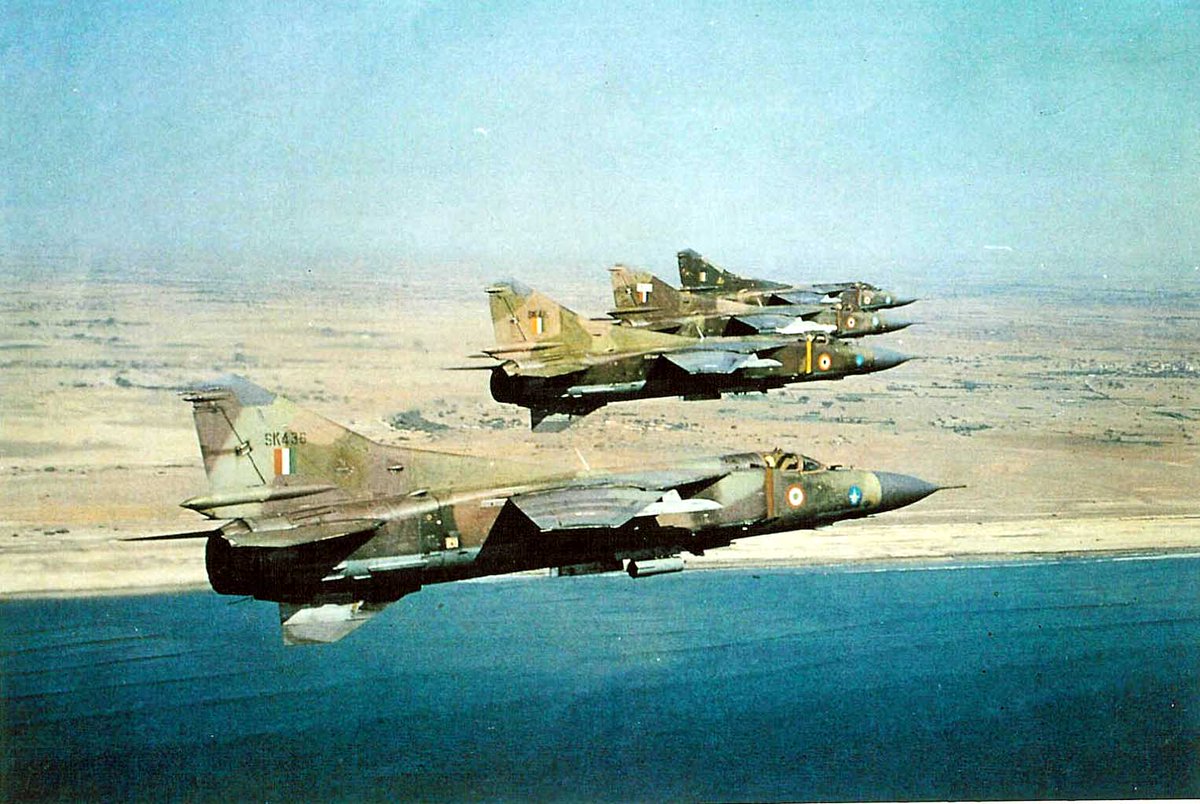
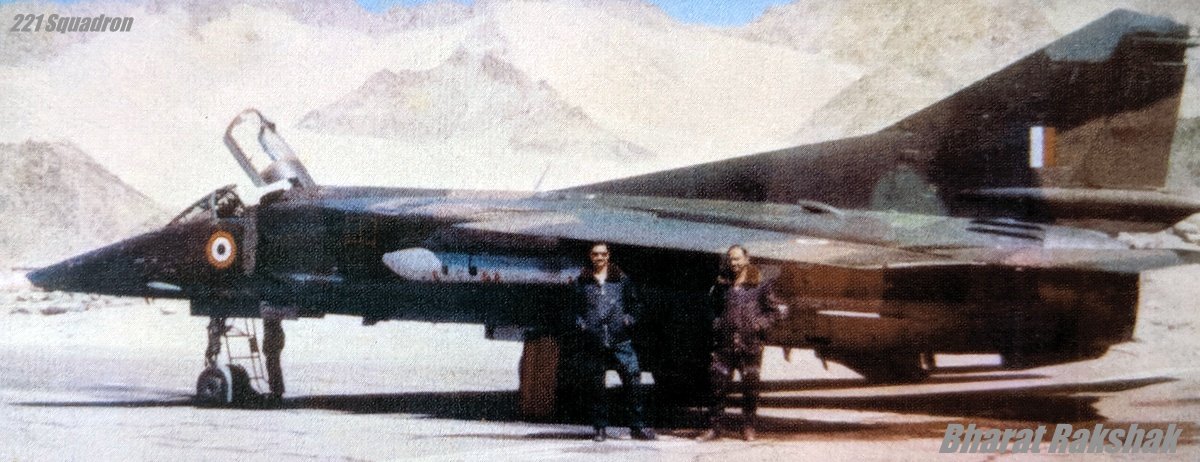
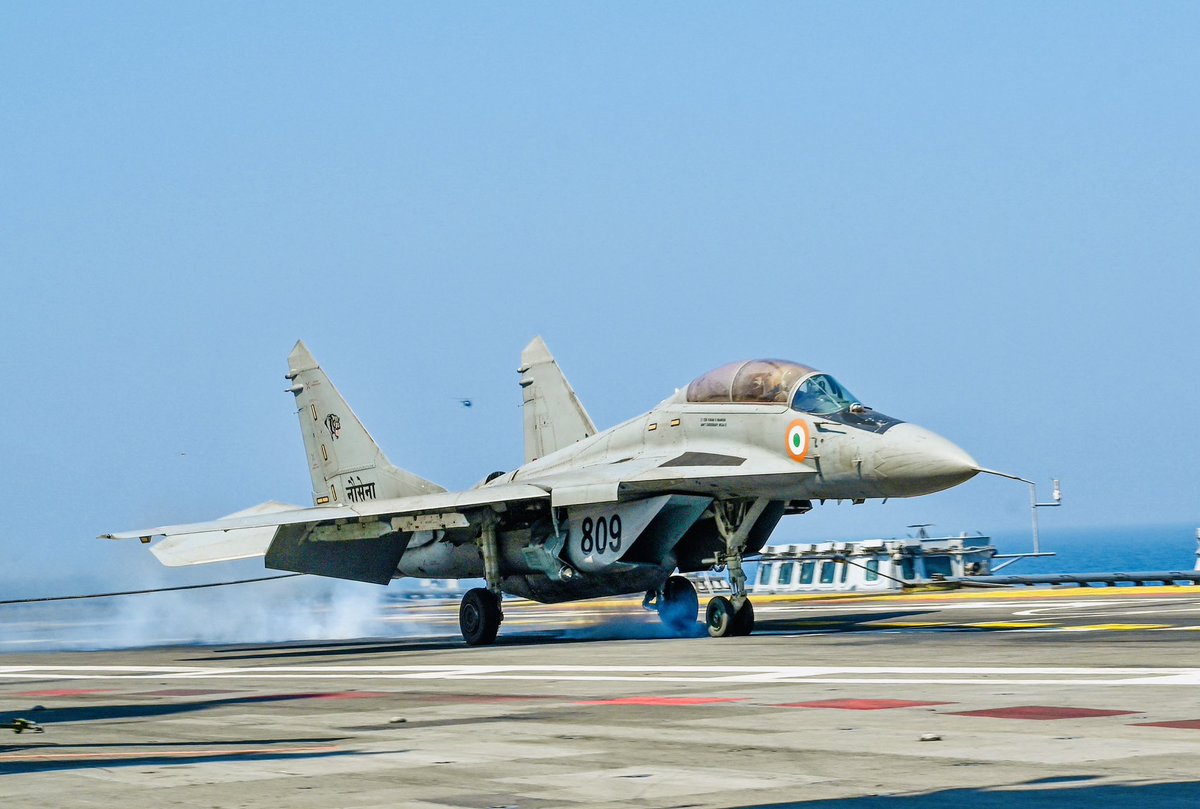
On this day in 2009, the Indian Air Force closed the MiG-23 chapter.
The MiG-23BN flew its final sortie on 6 March 2009 from Halwara with No. 221 Squadron, the Valiants, the last IAF unit still operating the type. Air Chief Marshal Fali Homi Major presided over the phasing-out ceremony, and Wing Commander YJ Joshi and Squadron Leader TR Sahu flew the aircraft on its last flight. The fighter variant, the MiG-23MF, had already left service in 2007.
The MiG-23 entered IAF service in two types, each answering a different operational requirement. The MiG-23BN came in as a dedicated strike aircraft after the Jaguar decision, part of the wider effort to modernise the IAF’s tactical strike arm and move beyond older platforms such as the Su-7 and Marut. The MiG-23MF followed as a quicker air-defence response to the changing regional balance, especially after Pakistan’s F-16 acquisition, bringing look-down/shoot-down radar and early beyond-visual-range capability into IAF service before the Mirage 2000 arrived.
By the time the final BN landed, the MiG-23 had compiled a substantial operational record. In service from January 1981, the BN went on to feature in operations ranging from Meghdoot to Safed Sagar. During Kargil, MiG-23BNs struck targets around Tiger Hill and Muntho Dhalo, and by retirement the type had logged more than 1,54,000 flying hours in Indian colours.
Roughly 162 MiG-23 BN, MF and trainer aircraft are understood to have served with the IAF. To the best of my knowledge, Air Cmde Hari Naidu logged the highest hours on the BN at 2,052. The Bharat Rakshak database lists 54 MiG-23 airframes lost in accidents, including the trainer variant, which continued in service for years alongside the MiG-27.
MiG-23 Squadrons in IAF
10 Sqn (BN): 1981-1993
220 Sqn (BN): 1981-2005
221 Sqn (BN): 1981-2009
31 Sqn (BN): 1983-2003
223 Sqn (MF): 1982-1989
224 Sqn (MF): 1983-2007
@zone5aviation has enough material and knowledge to write a book on the subject, perhaps one day :-)
#IAFHistory @IAF_MCC
#𝗪𝗵𝗶𝘁𝗲𝗞𝗻𝗶𝗴𝗵𝘁𝗖𝗼𝗿𝗽𝘀 | #𝗢𝗽𝗧𝗿𝗮𝘀𝗵𝗶-𝗜 |#𝗢𝗽𝗧𝗿𝗮𝘀𝗵𝗶-𝗜 | #𝗧�#𝗧𝘄𝗼𝗧𝗲𝗿𝗿𝗼𝗿𝗶𝘀𝘁𝘀𝗞𝗶𝗹𝗹𝗲𝗱
𝗧𝗪𝗢 𝗧𝗘𝗥𝗥𝗢𝗥𝗜𝗦𝗧𝗦 𝗞��𝗟𝗟𝗘𝗗 | 𝗢𝗣𝗘𝗥𝗔𝗧𝗜𝗢𝗡 𝗧𝗥𝗔𝗦𝗛𝗜-𝗜
Pursuant to credible intelligence inputs collated from #JKP, #IB and own intelligence sources, a deliberate joint operation was launched in the Kishtwar region under Operation Trashi-I to track and neutralise terrorists operating in the area.
Following successful contact established earlier, troops of CIF Delta #WhiteKnightCorps, in close coordination with @JmuKmrPolice and #CRPF, re-engaged the terrorists today at approximately 11:00 AM in challenging terrain. Displaying tactical precision, seamless synergy and resolute aggression, troops dominated the encounter site wherein 𝘁𝘄𝗼 𝘁𝗲𝗿𝗿𝗼𝗿𝗶𝘀𝘁𝘀 𝗵𝗮𝘃𝗲 𝗯𝗲𝗲𝗻 𝘀𝘂𝗰𝗰𝗲𝘀𝘀𝗳𝘂𝗹𝗹𝘆 𝗻𝗲𝘂𝘁𝗿𝗮𝗹𝗶𝘀𝗲𝗱. 𝗪𝗮𝗿-𝗹𝗶𝗸𝗲 𝘀𝘁𝗼𝗿𝗲𝘀 including 02 x AK-47 rifles have also been recovered.
𝗧𝗵𝗲 𝗵𝘂𝗻𝘁 𝗰𝗼𝗻𝘁𝗶𝗻𝘂𝗲𝘀 — 𝘁𝗵𝗼𝘀𝗲 𝘄𝗵𝗼 𝘀𝗲𝗲𝗸 𝘁𝗼 𝗱𝗶𝘀𝘁𝘂𝗿𝗯 𝗽𝗲𝗮𝗰𝗲 𝘄𝗶𝗹𝗹 𝗳𝗶𝗻𝗱 𝗻𝗼 𝘀𝗮𝗻𝗰𝘁𝘂𝗮𝗿𝘆.
𝗪𝗲 𝗦𝗲𝗿𝘃𝗲, 𝗪𝗲 𝗣𝗿𝗼𝘁𝗲𝗰𝘁!
@adgpi | @NorthernComd_IA | @SpokespersonMoD | @prodefencejammu | @ProDefLko | @PRODefPrayagraj | @PRODefDehradun | @PRODefPune | @PRODefKohima | @PRO_Vizag | @PRODefRjsthn | #IndianArmy | @crpfindia | @official_dgar