West Virginia-born mathematician Katherine Johnson computed the trajectories for some of NASA's most significant missions.
This new piece of textile art by Catherine M. Stewart honors Johnson's contributions to aerospace though embroidery, incorporating mathematical equations based on Johnson’s trajectories.
On this day in 1983, Sally Ride launched aboard Space Shuttle Challenger on STS‑7, becoming the first American woman to fly in space.
Beyond this historic milestone, Dr. Ride's passion for inspiring young people to explore science and math is part of her lasting legacy.
Sally Ride became the first American woman in space on this day in 1983 aboard Space Shuttle Challenger, on mission STS-7. Her legacy continues to inspire people of all ages to explore STEM topics: https://t.co/gR0B8m6Q3T
Bessie Coleman made history when she became the first African American woman to earn a pilot’s license on this day in 1921. As a Black woman, she wasn’t able to learn to fly in the U.S. so she had to move to France to do so. Learn more: https://t.co/6gRFMBwZI6
Ruth Lawrence (born 1971); one of the highest-IQ mathematical prodigies on record.
Pictured here as a young girl. At age 9 she earned a Grade A in A-level Pure Mathematics.
At age 10 she passed the Oxford University mathematics entrance exam, ranking first among 530 candidates and becoming the youngest student ever admitted.
She completed her BA in two years, graduating at 13 with a first-class degree and special commendation.
She earned her DPhil (PhD) by age 17, later contributed to knot theory (notably the Lawrence–Krammer representation), and is now a professor of mathematics at the Hebrew University of Jerusalem.
In her Nobel Prize acceptance speech in 1983, the octogenarian geneticist Barbara McClintock asked the question, “What does a cell know of itself?” Forty years later, scientists are realizing that the answer might be: Much more than we thought.
https://t.co/pP2oJH6Q6q
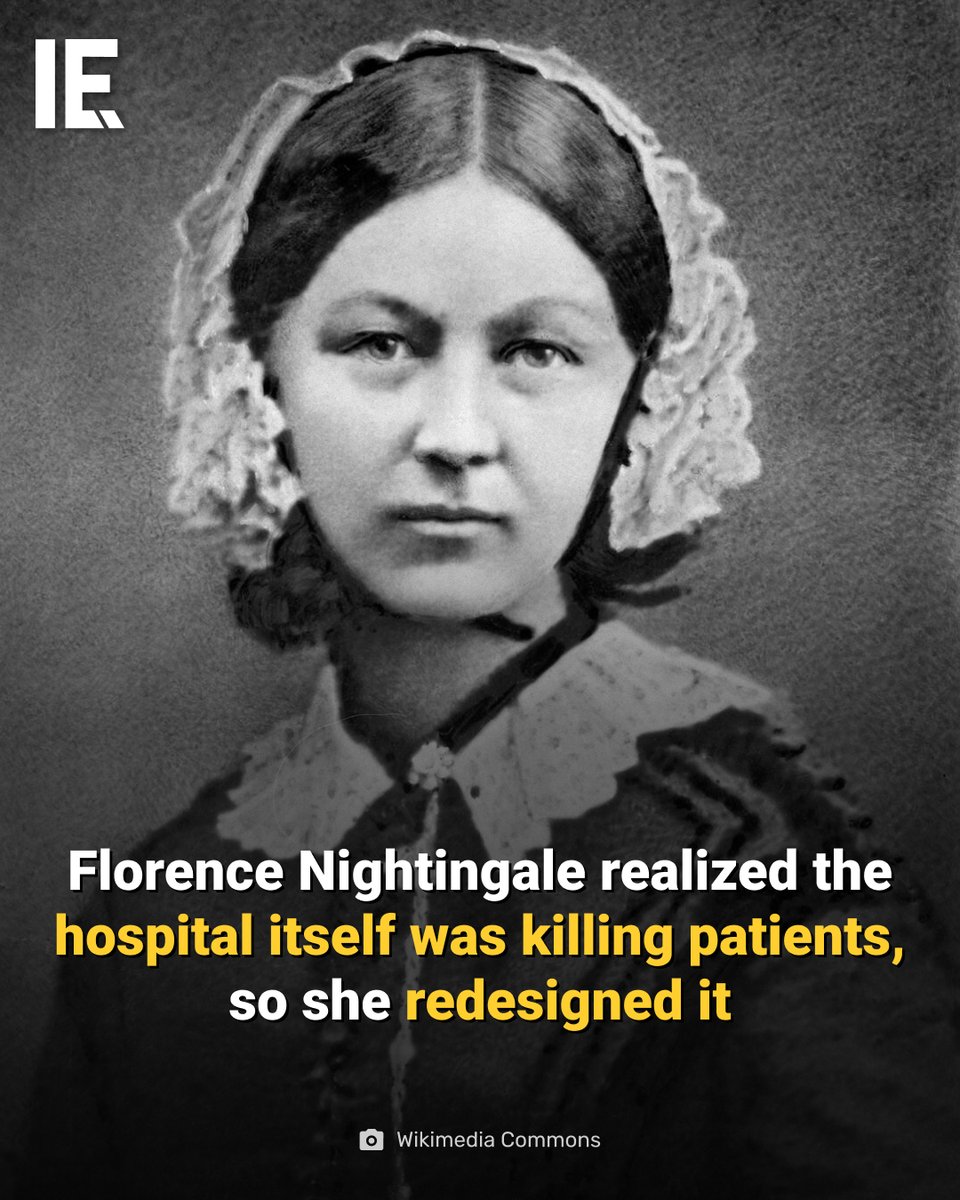
On Florence Nightingale's 206th birthday, it's worth remembering that her most lasting contribution wasn't nursing — it was redesigning the environment patients were dying in. After documenting catastrophic death rates in Crimean military hospitals, Nightingale concluded that the buildings themselves were killing patients. Poor ventilation, overcrowding, and lack of natural light were creating conditions where infections spread faster than they could be treated. She developed the "pavilion plan" — long, narrow wards with high ceilings, large windows, and cross-ventilation that minimized airborne pathogens. Implemented at the Herbert Hospital in London in 1865, it became the template for hospital architecture across Britain and beyond for decades. Her insight was fundamentally an engineering one: that the built environment directly determines patient outcomes, and that changing the design of a room could save more lives than any individual treatment.
#FlorenceNightingale #PublicHealth #MedicalHistory
Today we’re spotlighting renowned biochemist Dorothy Crowfoot Hodgkin, who was born #OnThisDay in 1910. Dorothy studied chemistry at @UniofOxford as an undergraduate and returned in 1934 to take up a research fellowship in chemical crystallography.
She is the only British woman to have been awarded a @NobelPrize in science, receiving the award in 1964 in recognition of her pioneering work establishing the structures of vitamin B12 and penicillin.
Dorothy donated part of her Nobel Prize winnings to @SomervilleOx to help create the college nursery.
The Dorothy Crowfoot Hodgkin Building, home to @BiochemOxford and @KavliOxford, is named in recognition of her trailblazing work in chemistry.
📷 Creative Commons CC0 1.0 Universal Public Domain Dedication
In the 1970s, Vera Rubin was studying the rotation curves of galaxies when she noticed something that couldn't be explained by visible matter alone. Stars at the outer edges of galaxies were moving far too fast — as if being held in place by an enormous invisible mass. Her observations provided the most compelling evidence yet for dark matter: a substance that makes up an estimated 85% of all matter in the universe but emits no light, reflects no light, and has never been directly detected. Rubin spent decades building the observational case for dark matter, often working in environments that actively discouraged women from astronomy. She was repeatedly passed over for the Nobel Prize despite her discovery being considered one of the most significant in 20th-century physics. She died in 2016, never having received it.
#VераRubin #DarkMatter #Astronomy #WomenInScience #SpaceHistory
In her 1925 doctoral thesis, Cecilia Payne-Gaposchkin determined that stars are composed almost entirely of hydrogen and helium — contradicting everything scientists believed at the time. The most prominent astronomer of the era, Henry Norris Russell, called it "clearly impossible" and pressured her to bury the finding in a footnote. Four years later, Russell reached the same conclusion independently and received the credit. Her thesis was later called "the most brilliant PhD thesis ever written in astronomy."
#WomenInScience #Astronomy #ScienceHistory #CeciliaPayne #SpaceHistory
On this day in 1964, Geraldine "Jerrie" Mock became the first woman to fly around the world solo. She made the month-long flight in her Cessna 180 "Spirit of Columbus," which is on display at the Museum in DC.
@BrandonLuuMD In our family, we handle this by having a different family member watch for side effects than the one actually taking the medication, for exactly this reason. It helps us stay informed without making the person taking it focus on every possible symptom.
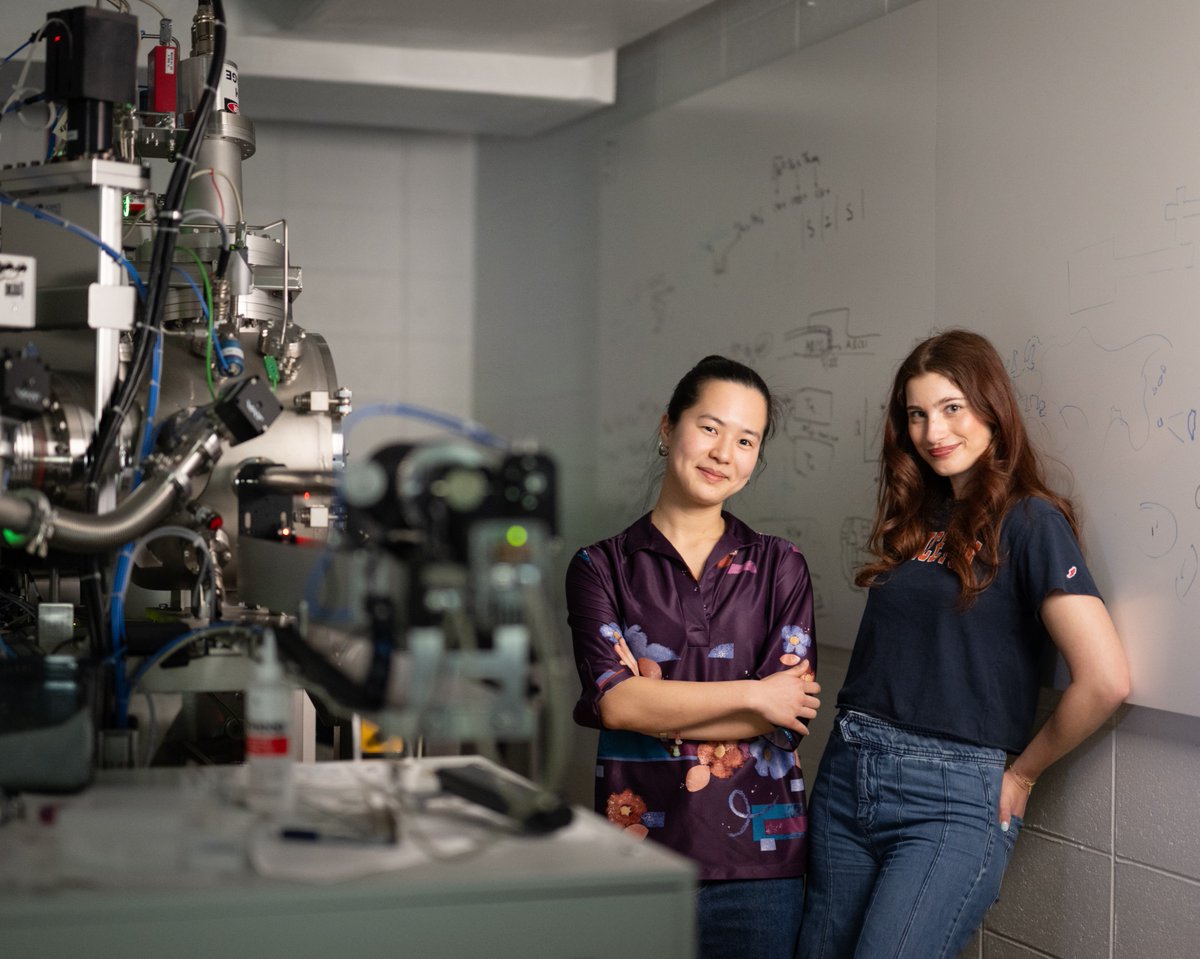
Kalli Zervas was at a California art school when she found she had a knack for math. She taught her peers second-year calculus when her high school couldn’t offer it. She thought she would become a doctor.
Laura Futamura was an art kid at a New Jersey STEM school, playing flute at Carnegie Hall.
But instead of soloing in concert halls, Futamura now studies molecules at low temperatures — 100 billionths of a tick above the coldest temperature in the universe. Zervas is making the world’s cleanest diamond surfaces, perfecting them to the point where she can attach single molecules and measure the delicate signals of their nuclear spins.
In 2024, both women joined the inaugural cohort of Princeton’s quantum science and engineering graduate program, pioneering a field that promises to define the next era of discovery and invention: https://t.co/jF45jeRNaR
#WorldQuantumDay
"I got letters from girls from all over the world, and many of them said things like "I didn't know that girls could do this." I really felt a lot of gratification from that."
Poppy Northcutt reflects on working on the Apollo program: https://t.co/FGa3HmTnMm #WomensHistoryMonth
Harriet Quimby was the first American woman to earn a pilot's license and was one of the most popular early female aviators. She also became the first woman to complete a solo flight across the English Channel. More on her: https://t.co/D4fRfQPPu3 #WomensHistoryMonth
Tiny Broadwick was one of the most popular and prolific parachutists in the early 20th century. In 1913 she became the first woman to parachute from an airplane. She went on to make over 1,000 jumps in air shows across North America. Learn more: https://t.co/oEZwUTEjI6 #WHM
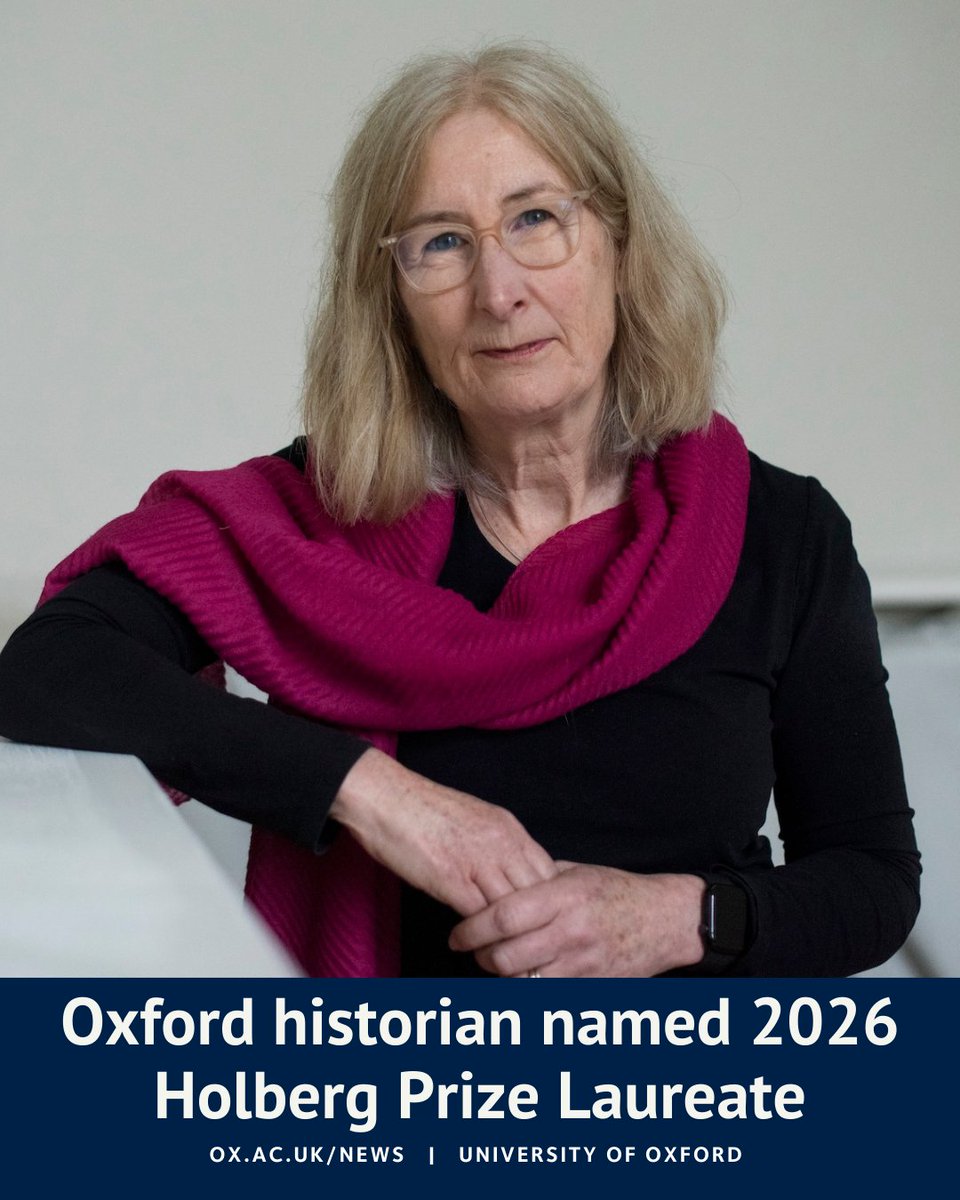
Lyndal Roper, Emeritus Regius Professor of History at Oxford University, has been announced as the winner of the prestigious @HolbergPrize for 2026.
Congratulations, Prof Roper 👏
Find out more ⬇️
https://t.co/pFzrZLBhNN
#OnThisDay in 1910, Raymonde de Laroche became the world's first licensed female pilot. The French aviatrix was issued with the licence number 36 by the Aero-Club de France.
📸 Getty
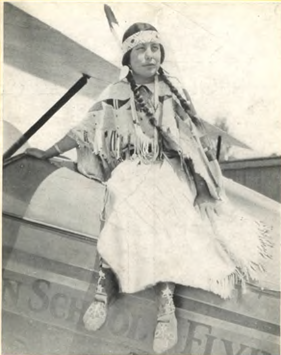
Mary Riddle always wanted to fly growing up but was told women pilots couldn't be successful. She was determined to prove them wrong, and she did. Riddle was one of the first Native American women to earn a pilot's license: https://t.co/jQ2ODjplXc #WomensHistoryMonth