Sardines supply one of the fats your eyes use to turn sunlight into electrical information.
That fat is DHA, an omega-3 concentrated in the membranes of your retina’s light-sensing cells.
And understanding what it does connects a can of sardines to something most people never think about: how light becomes the world you see.
Start with the food.
Sardines provide preformed DHA. Your body can make DHA from shorter plant-derived omega-3s, but that conversion is limited, so eating it directly supplies the finished molecule.
Once incorporated into cell membranes, DHA becomes part of their physical structure.
Its structure is unusually flexible:
• DHA has 22 carbon atoms and six double bonds.
• Those double bonds introduce bends into its chain.
• Its changing shape affects how tightly neighboring fats pack together and how proteins move inside the membrane.
That last point matters enormously in your eyes.
Your retina contains rods and cones, cells that detect incoming light. Inside the rods is rhodopsin, a light-sensitive protein embedded in membranes rich in DHA.
Rhodopsin has to physically change shape to start a visual signal.
So the membrane surrounding it influences how effectively it activates and connects with the next part of the signaling machinery.
DHA helps create the conditions for those movements.
Now follow a photon entering your eye.
At the center of rhodopsin sits retinal, a small molecule made from vitamin A.
When retinal absorbs a photon, it changes from a bent configuration into a straighter one. That movement changes rhodopsin’s shape and activates it.
The activated protein starts a chain reaction:
• It switches on transducin, a molecular signal relay.
• That relay activates an enzyme that lowers cGMP, a molecule holding tiny membrane channels open.
• As cGMP falls, those channels close, reducing the inward flow of positively charged ions.
Here is the surprising part: light makes the rod cell MORE electrically negative.
The cell responds by releasing less glutamate, its chemical messenger. Other retinal cells detect that change, process it, and pass information toward the brain through the optic nerve.
An incoming photon has now produced a biological electrical response.
DHA supports the membrane machinery carrying out that translation.
And this is where the connection to “rendering reality” becomes interesting.
Your brain receives patterns of nerve activity representing differences in light across the visual scene.
It processes those patterns into:
• Edges and contrast.
• Color and movement.
• Shapes, faces, and objects.
• Spatial relationships that help you navigate your surroundings.
The visual world you experience depends on that conversion from light to retinal activity to brain processing.
DHA is part of the physical infrastructure at the beginning of that process.
But your retina also sends light information along another route.
Special retinal cells containing melanopsin measure environmental light and communicate with the brain’s central clock. They detect light themselves and also receive input from rods and cones.
That information helps your body coordinate sleep timing, melatonin rhythms, alertness, and other daily functions.
So sunlight entering your eyes carries information about both your surroundings and the time of day.
There is another layer to DHA’s role, too: maintaining the tissue doing all this work.
Behind the photoreceptors sits a support layer called the retinal pigment epithelium. It supplies nutrients, helps recycle visual pigments, and clears away worn-out photoreceptor material.
DHA is also the starting material for neuroprotectin D1, a signaling molecule involved in limiting inflammatory activity and supporting cell survival under oxidative stress.
That gives DHA two connected jobs: helping build light-sensing membranes and supplying material for protective signaling around them.
When you eat sardines, some of their DHA becomes available for incorporation into the tissues that detect light, relay its message, and maintain the cellular machinery your visual system uses every day.
Hi @quantumfiber I've had no internet for 5 days. The automated line only gives incident #95528, and the fix time keeps moving.
Please tell me the actual cause of the outage. I need a real explanation, not another estimate. This is the least I would expect at this point. DM sent
@quantumfiber 6 Days and ETA moved to this evening.. still the Network Operations team has not been able to give a reason? I would assume they would know by now.. @CenturyLink
@quantumfiber Thanks, but I would really like to know the reason. As you mentioned in the DM, since customer facing teams have not been made aware of the reason, can someone from operations team help with this?
@ATT@quantumfiber
You are waiting for a sunny morning to go outside.
But an overcast morning still delivers ten to twenty times more light than any indoor environment.
⠀
That gap exists because indoor lighting is built for your eyes, not for your biology.
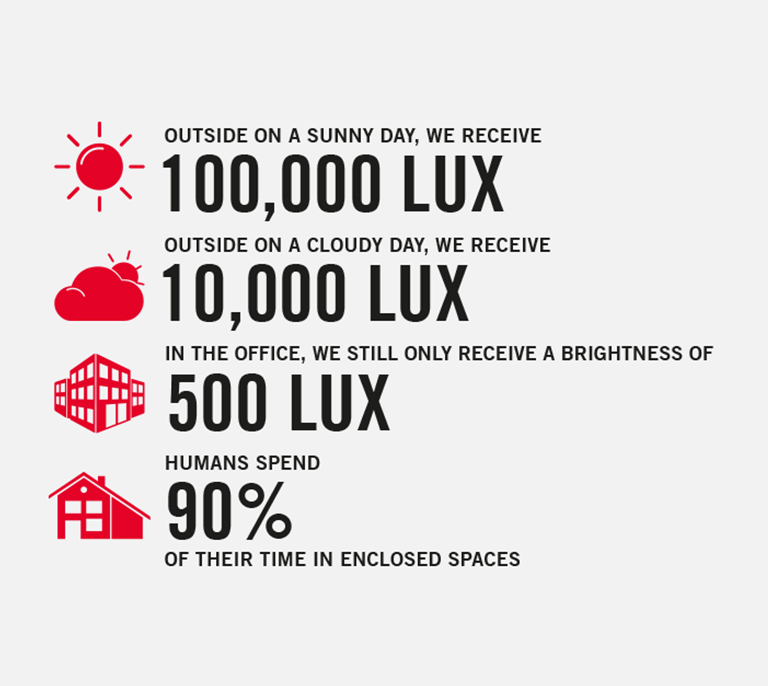
A bright room sits somewhere around 300 to 500 lux. Outside on a heavily overcast day, you are standing in 1,000 to 5,000 lux, and on a clear morning it climbs past 10,000. Your eyes barely notice the difference because they adapt automatically, which is exactly why people trust the wrong signal.
The biological system reading that light is not your vision. And there is actually a separate set of cells in your retina, packed with a pigment called melanopsin, and their only job is to measure how much light is hitting you and report it to your master clock.
Those cells integrate intensity over time, so they care about total dose, not whether the sky looks pretty. A gray sky delivering 2,000 lux for fifteen minutes gives your clock a stronger signal than an hour at the kitchen table.
And that morning signal is what anchors your entire day!
It sets the timing of your cortisol rise, your alertness curve, your appetite cues, and the melatonin release that will come fourteen or so hours later.
So go outside regardless of the forecast, and if it is especially dim, just stay out a little longer.
Two people can eat the same meal and get very different blood sugar responses.
And one of the variables almost nobody accounts for is what light they were under beforehand.
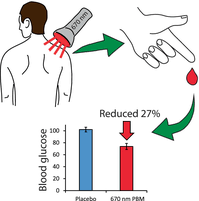
In a 2024 study, researchers gave healthy adults 15 minutes of 670 nm red light on the back, 45 minutes before drinking a standard glucose solution.
⠀
That single exposure cut the overall rise in blood glucose by 27.7% across the following two hours, and knocked the peak spike down by 7.5%.
Nothing about the drink changed. Only the light did, which massively impacts your mitochondria (the drivers of these results).
⠀
Mitochondria are the structures inside your cells that burn glucose to produce energy. Red and near-infrared wavelengths penetrate deep enough to reach them, and they increase mitochondrial membrane potential and ATP output.
More ATP production means more demand for fuel, so glucose gets pulled out of your bloodstream and put to work instead of circulating and spiking.
What hardly anyone knows is that sunlight is loaded with those same long wavelengths, and outdoor light delivers them across your whole body for free.
⠀
However....
Indoor lighting does not. Think of light as a spectrum running from blue on one end to deep red on the other, and your mitochondria only respond to the red end.
⠀
LED bulbs pump out almost all of their output in the blue range and produce nearly nothing in the red and infrared range where that mitochondrial effect lives. They give your eyes enough to see by while delivering none of the wavelengths your cells actually use.
⠀
Which means if you eat lunch at your desk under LED panels and then eat dinner under the same bulbs, your mitochondria are running that whole metabolic process without an input they evolved to expect.
So eat outside when you can, or take a short walk in daylight after meals, and let your body have the full spectrum while it is doing the work.
Your kid's eyes may be taking permanent damage right now, and glasses do not fix it.
Nearsightedness, or myopia, is when distant things go blurry while close things stay sharp. Most people assume that just means the eye needs a stronger lens.
But that is not what is happening underneath. The eyeball itself is physically growing too long from front to back, and once it stretches, it never stretches back.
That elongation is permanent, and the longer the eye gets, the higher the lifetime risk of retinal detachment, glaucoma, and macular degeneration. So the prescription your kid gets at nine is not just about seeing the whiteboard. It is a marker of how much their eye has already changed, and where it is headed.
Most parents assume screens and reading are the cause, and that is the story everyone repeats.
But when researchers dig into the data, the strongest protective signal has nothing to do with what kids are doing indoors, and everything to do with how many hours they spend outside.
The Sydney Myopia Study followed twelve-year-olds and found that more total time outdoors meant significantly lower rates of myopia, even after accounting for near work, parental myopia, and ethnicity. And critically, indoor sports did not produce the same protection, so it was never about activity or eye movement. It was about the light.
Then Taiwan ran the real experiment. One school simply pushed kids outside during recess and changed nothing else, and over a single year, new cases of myopia dropped to roughly half of what showed up at the comparison school, 8.4% versus 17.7%.
The mechanism is straightforward once you see it. Outdoor light is ten to a hundred times brighter than any indoor room, and that intensity triggers dopamine release in the retina, which acts as a brake on the eye's growth. Indoors that brake is barely engaged. Outside, it is actually working.
None of this means a sunny weekend undoes anything, and it does not replace a real eye exam.
But the pattern repeats consistently enough that it should change how you build your kid's day. Protect outdoor daylight hours the way you protect sleep, because the focus apps and blue light glasses are optional, and the hours under open sky are what is doing the work.
Poor eye health isn't because of a kale deficit.
It's because of a sunlight deficit.
Those macular pigments (lutein and zeaxanthin) from kale, spinach, corn, orange peppers, and egg yolks do help filter blue light and act as antioxidants, that is legit.
But treating them as the main solution is incomplete and often impractical. Not every climate or traditional diet has those specific plants growing year-round.
And human eyes evolved across deserts, high latitudes, and tropics long before supermarket greens were an option.
Sunlight does the heavier lifting: its UV and infrared wavelengths improve blood flow to the retina, support the retinal pigment epithelium, help regulate dopamine that keeps the eye the right shape, and protect against the thinning and degeneration driven by modern indoor blue light.
Sunlight >>> mass produced "ancient herbs"
For anyone dealing with gut issues, regular and strategic sunlight exposure is a much better solution than buying gut health supplements on amazon.
What you need is the UVB part of sunlight.
When it hits your skin, it triggers vitamin D production which has been shown to reshape the mix of bacteria living in your gut by raising overall variety and boosting the good kinds tied to better metabolism and less inflammation.
Vitamin D also works right inside the gut. It helps the cells that line your intestines form a tighter seal so fewer harmful toxins leak into the bloodstream.
It also increases the natural protective compounds your gut makes, and it cuts down on bacteria and toxins slipping through into the rest of the body.
Finally, the daily cycle of natural light and darkness, sensed by special light-detecting cells in your eyes, keeps your body’s main internal clock in sync. That clock then keeps the clocks inside your gut running on schedule.
This helps food move through at the right pace, keeps the protective mucus layer healthy, and keeps the bacterial populations rising and falling in a healthy daily rhythm. Too much artificial light at night or living indoors most of the time throws those clocks off, weakens the gut lining, and lets the bacterial balance go sideways.
EAT ALL YOUR MEALS OUTSIDE: Red light from the sun blunts your blood sugar spike after a meal by 27%.
A study from Glen Jeffery's lab found that people exposed to 670 nm red light had a 27% lower glucose spike after eating, without changing the meal itself.
This works via your mitochondria, the tiny energy-producing engines inside almost every cell.
Red and near-infrared wavelengths can penetrate tissue and interact with cytochrome c oxidase, an enzyme embedded in the mitochondrial electron transport chain.
This enzyme helps your mitochondria convert oxygen and nutrients into ATP, the energy currency your cells use.
When these red wavelengths interact with it, they can alter how efficiently the electron transport chain operates, increasing ATP production and changing how efficiently cells handle glucose.
Red and near-infrared light can also affect the physical properties of mitochondrial membranes, making it easier for the machinery embedded in them to move electrons and carry out its job.
More efficient mitochondrial function means your cells are able to process incoming fuel more effectively.
So remember, where you eat is just as important as when or what you eat. EAT OUTSIDE!
No matter what the issue, everyone just wants to shill an easy "fix" via a supplement.
To heal your vision, you need SUNLIGHT (specifically morning sunrise).
Morning sunrise light supplies the precise electromagnetic spectrum (balanced red, blue, and UV/IR frequencies) that the eye requires to function optimally as a camera.
This natural light “sculpts” the retina and retinal pigment epithelium (RPE), improving their ability to process incoming light signals and act as expert refraction devices.
Red and near-infrared wavelengths also support mitochondrial energy production in photoreceptors.
Consistent exposure at this time of day will prevent photoreceptor atrophy caused by artificial blue light and insufficient natural spectrum, allowing the eye’s visual machinery to regenerate and maintain better performance.
I see so many hair-loss posts on here, yet none of them recommend the fundamental piece of the puzzle: sunlight.
In her post, she recommends:
Low-histamine diet → Sunlight is better.
Vitamin D helps regulate mast-cell activity and immune signaling, both of which can influence scalp inflammation.
Instead of eliminating entire categories of food, sunlight supports the underlying biology involved in maintaining a healthy follicle environment.
Vitamin C → Sunlight is better.
Vitamin D receptors are present in hair follicles, where vitamin D signaling helps regulate the hair-growth cycle.
Vitamin C supports collagen formation and iron absorption, but it doesn't provide this direct signaling role in the follicle.
Quercetin/Bromelain → Sunlight is better.
Vitamin D influences immune regulation throughout the body, helping maintain a more balanced inflammatory response.
Quercetin and bromelain may have anti-inflammatory effects, but their evidence for improving hair growth is far less established.
Local raw honey → Sunlight is better.
Vitamin D isn't simply a nutrient you consume. Your skin can produce it through UVB exposure, allowing your body to regulate vitamin D status through its own biological pathway.
Honey has no comparable role in follicle signaling.
Herbalism → Sunlight is better.
Vitamin D signaling is involved in follicle cycling, including the transition between growth and resting phases.
Herbs like Astragalus, Nigella, Stevia, and Stinging Nettle don't have comparable evidence for regulating the hair-growth cycle.
DAO enzyme → Sunlight is better.
DAO acts primarily on histamine in the digestive tract.
Vitamin D operates much more broadly, with receptors throughout the body and in hair follicles themselves, linking vitamin D status to immune function and follicle biology.
The point isn't that these things are useless.
It's that we're constantly looking for another supplement, food restriction, or herb while overlooking one of the most fundamental environmental inputs humans evolved with (which is sunlight).
The culprit might not have actually been the popcorn... eating this popcorn indoors under isolated blue modern lights and tech screens would have caused her glucose to spike significantly higher.
Artificial blue light from LEDs and screens acts as a false daytime signal that hits your eyes at the wrong times.
This keeps your stress system activated, raising or mistiming cortisol release.
The elevated cortisol then pushes more glucose into your bloodstream and reduces insulin sensitivity, so the same meal produces a higher blood-sugar spike.
So when you can, eat outside, because sunlight lowers your blood glucose.
You know what else removes toxic heavy metals like lead, mercury, and nickel? MELANIN.
The same pigment that colors your skin, hair, eyes, and even the special form in your brain is a highly effective natural binder and absorber of heavy metals.
Studies show melanin can soak up 76–95% or more of metals like lead, mercury, nickel, cadmium, and copper from solutions.
This is possible because melanin is a complex chain of molecules loaded with reactive chemical groups (phenolic OH, carboxyl, amine, catechol, and related sites).
These groups form strong bonds, traps, and attractions that lock onto metal ions.
The structure can expand, pull the metals deeper inside, and hold them in stable forms that keep them from causing harm.
In the brain, this specialized melanin concentrates environmental toxins like mercury (up to thousands of times higher levels) and lead, acting as a protective sink so they don’t trigger oxidative damage.
On the skin, something even more practical happens: as outer skin cells naturally shed, the melanin carrying the bound metals leaves the body with them.
This is one of the few dedicated routes for clearing certain toxic metals that the kidneys and liver don’t handle well. That’s also why hair and pigment tests have long been used to detect metals like arsenic or lead.
Your skin health is not determined by your expensive skincare routine or your "cutting edge" copper peptide stack.
It's controlled by how much morning sunlight you get.
Here's why:
Skin cells run on their own 24-hour clock, and that clock helps regulate things like cell turnover, hydration, barrier function, collagen production, and inflammation.
Morning sunlight is one of the signals that helps set this clock.
Sunlight hitting your eyes in the morning tells your master clock what time it is, and your peripheral clocks, including the clock in your skin, synchronize to that signal.
Miss that morning signal, and you can disrupt the timing of the biological processes your skin relies on to repair, regenerate, and maintain its barrier.
So before you spend another $200 on a skincare routine:
Get outside in the morning.
Let natural light hit your eyes.
Give your skin the timing signal it evolved around.
Sunlight is also a great tool for blood pressure management.
Here are three widely recognized studies that clearly show sunlight can lower blood pressure:
1. Opländer et al. (2009) – Circulation Research
Whole-body UVA exposure in healthy volunteers dropped systolic and diastolic blood pressure by ~11% within 30 minutes. The effect lasted up to an hour and was caused by nitric oxide released from stores in the skin.
2. Liu et al. (2014) – Journal of Investigative Dermatology
UVA irradiation of 24 healthy people lowered mean arterial pressure by 3.5 mm Hg and diastolic pressure by nearly 5 mm Hg. The drop happened independently of vitamin D and the body’s normal nitric-oxide enzymes.
3. Weller et al. (2020) – Journal of the American Heart Association
In a large group of hemodialysis patients, higher daily solar UV radiation was linked to lower systolic blood pressure, even after adjusting for temperature.
Interesting data on PDE5 inhibitors for sure.
But the far older, free, zero-side-effect version of “systemic nitric oxide + improved perfusion + better cellular signaling” has been available every morning for the entire history of our species.
Sunlight (especially morning full-spectrum + modest UV) triggers the release of nitric oxide stores from the skin, improves local blood flow, supports circadian regulation of hormones that influence hair cycling, and carries broad metabolic and immune effects without requiring a daily pharmaceutical.
Folks. Can I explain something about world models? Seems like today might be a good day for that.
Advances in large-scale “world models” — whether developed by partners like Google or others — materially expand the frontier of interactive content creation. These models can generate high-quality, interactive, video-like experiences from natural language or minimal input.
Today, they are primarily editable through prompting, which limits the level of determinism and precision required for production-grade game mechanics. As a result, their outputs remain probabilistic and non-deterministic, making them unsuitable on their own for games that require consistent, repeatable player experiences.
Rather than viewing this as a risk, we see it as a powerful accelerator. Video-based generation is exactly the type of input our Agentic AI workflows are designed to leverage—translating rich visual output into initial game scenes that can then be refined with the deterministic systems Unity developers use today. Our agents already generate high-quality scenes from static video. Interactive, camera-controllable video from world models would further enhance this pipeline and materially improve the fidelity and speed of early-stage content creation. We believe this represents a meaningful step forward for AI-driven development across the industry.
Unity’s role is to operationalize these advances. Outputs from world models are ingested into Unity’s real-time engine, where they are converted into structured, deterministic, and fully controllable simulations. Within Unity, creators define physics, gameplay logic, networking, monetization, and live-operations systems to ensure consistent behavior across devices and sessions.
This combination enables developers to move faster from concept to scalable product: AI accelerates environment and asset generation, while Unity provides the execution layer that transforms generated content into reliable, monetizable experiences.
As a result, world models expand content supply and reduce development friction, while Unity remains the system of record for runtime, distribution, and long-term operations. This dynamic broadens Unity’s addressable market and reinforces its central role in the interactive ecosystem.
Thank you everyone for your incredible messages of support and encouragement.♥️
Many of you asked what it was like in the ER right now. I want to share a bit with you. Please RT:
A Day in the Life of an ER Doc - A Brief Dispatch from the #COVID19 Frontline: