A major debate in research on conscious perception is whether its neural substrates include the prefrontal cortex or are limited to posterior regions of the brain.
Excited to share our recent work, which addresses this debate.
Now out in @NatureComms 🧵👇https://t.co/GyWaIf3ABs
Happy to share my review article on #prefrontal cortex and #consciousness just published in a special issue on consciousness at @NeuroCellPress
An integrative view of the role of prefrontal cortex in consciousness https://t.co/L6ItQWNk0j
Decoding Conscious Contents of the Brain
This recent paper by @fanispa@vishneuro et al., 2022 in @NatureComms@Nature is extremely careful experimental work that rules out alternative explanations, such as the possibility that voluntary report of the conscious event might be responsible for the observed brain activity.
A leading laboratory at the Max Planck Institute for Biological Cybernetics in Tübingen, Germany has carefully ruled out the possibility that the voluntary reporting response could be responsible for the conscious neuronal code as expressed in the cellular activity in the prefrontal cortex.
This is the philosophical ideal finally achieved after many years of work: Dissociating the subjective percept for the monkey from other possibilities.
The philosopher Ned Block @De_dicto has argued that qualitative perception with colors and movements and personal meaning occurs in the posterior (rear) half of the brain, but that the front half is not necessary for rich subjective qualities.
These experimental results in two macaque monkeys demonstrated conclusively that conscious perception involves numerous parts of the cortex, not just the posterior visual projection area.
These results answer numerous questions that have bedeviled the field.
We finally have a clean, neural correlate of visual consciousness.
This evidence is consistent with Global Workspace Theory (GWT). (Baars, 2005; Deco et al 2021).
#prefrontalcortex #consciousness #OnConsciousness #cortex #perception #neuroscience #NeuroTwitter #psychology #subjectivity #BRAIN #Science
@NatalieGeld@theASSC@carlzimmer@heather_berlin@sbkaufman@DrSueSchneider@hakwanlau @smfleming @DrStevenLaureys@meganakpeters
https://t.co/Og0avX04hX
_______
An exciting new study by Watakabe et al, which reveals the anatomical organization of the marmoset prefrontal connectome published in @NeuroCellPress with a wonderful cover art.
You can read my preview highlighting this work here: https://t.co/RzVgRMdw0o
Check out our latest issue: https://t.co/ImgPc6z4Dp
A study identifying columnar and diffuse topographies in the marmoset prefrontal connectome is on the cover.
Find the paper here: https://t.co/0JBI0IB6nU
And a preview of this work by Vishal Kapoor https://t.co/0JBI0IB6nU
SimCo agenda is now up. Come join us in Chicago this September to hear about amazing NHP neuroscience, learn the Neuroethical issues critical to our community and how to be a NHP science advocate https://t.co/6RMADoYFqT @slimanjbensmaia@MIcheleABasso1
😀🎊 Woohoo! Now published in @CellReports! 🎆😀
https://t.co/1owQFAPkqw
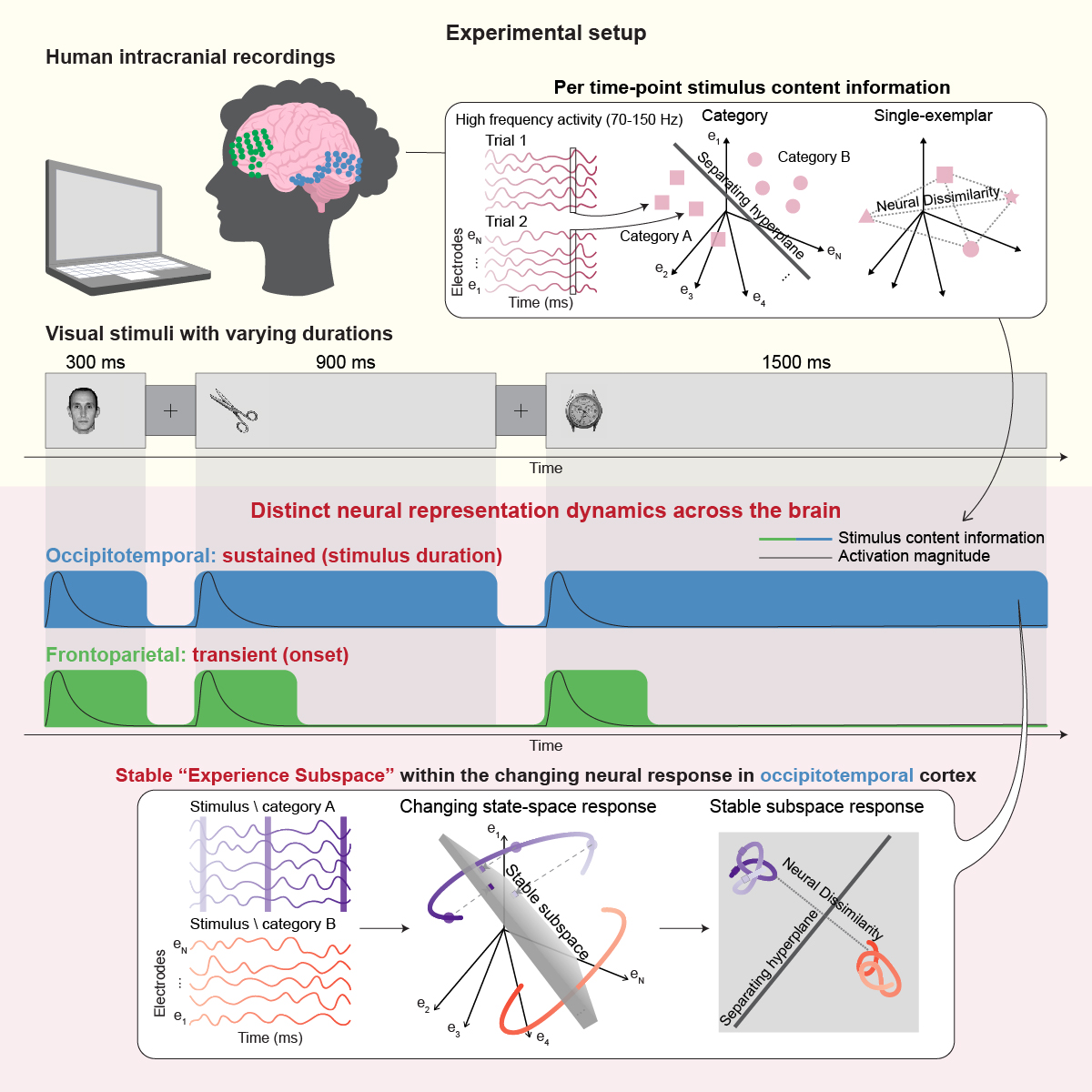
How is ongoing visual experience represented?
Using intracranial recordings, we uncover distinct representation dynamics in the ventral stream and prefrontal cortex.
w @Deouell@edden_gerber BobKnight
1/7
our paper on a neural network model of perceptual confidence is finally our
it reconcils some pretty puzzling and apparently conflicting previous findings
One of the major questions addressed by the adversarial collaboration on #consciousness is the role of prefrontal cortex. The findings were mixed since visual stimulus category but not stimulus orientation could be decoded from macro and mesoscale signals https://t.co/f8rQ9YxS9z
1/Hello all! Our article dealing with prefrontal mechanisms of conscious access is now online in Neuron
https://t.co/Wz38CSe4GW
With @vishneuro@fanispa et al.
We investigated the prefrontal dynamics of no-report binocular rivalry. We found that beta activity signifies percept
New paper out in @NeuroCellPress. With @abhidwarakanath, @vishneuro et al. we found local field potential signals that control access to consciousness in the prefrontal cortex
https://t.co/ZmQYQV583J
So excited that my review on consciousness is now available online @TrendsCognSci ! This paper summarizes my thoughts on the neural basis of conscious awareness over the past few years, and lays out a vision for consciousness research ahead.
https://t.co/iHaX0k8FXl
New paper co-authored w/ Maz Fallah out @ELSneuroscience
Here we discuss the idea of a temporal cortex attention network (TAN), its functional properties, connectivity, & how it can be beneficial for social interactions 1/2
@CentreforVisio1@vistayorku
https://t.co/sYv76lmn0G
Our latest pre-print!
How much can we differentiate at a brief glance: Revealing the truer limit in conscious contents through the Massive Report Paradigm (MRP) https://t.co/AYRC8v8xqr
@LiangQianchen 's first first-author paper! Partial registered report! Stage 2 manuscript.
"An active inference model of conscious access: How cognitive action selection reconciles the results of report and No-Report paradigms"
@chrisjackwhyte @hohwy@RyanSmith_LIBR
Now in Current Research in Neurobiology
Open Access 👇
@Dick_retired @NatureComms Important point. In the present study, the kind of decision-making, which we refer to is the one associated with making perceptual reports.
A major debate in research on conscious perception is whether its neural substrates include the prefrontal cortex or are limited to posterior regions of the brain.
Excited to share our recent work, which addresses this debate.
Now out in @NatureComms 🧵👇https://t.co/GyWaIf3ABs
We released a data set on resting state, with 1,000 electrodes in V1 and V4 of the visual cortex of monkeys. The data should be of interest for the study of e.g. travelling cortical waves. Great work by Xing Chen, Aitor Morales-Gregorio and the teams https://t.co/KKrAJm1rwM