Automated Assignment and Prediction of Molecules in Astronomical Line Surveys Using Machine-Learning-Based Chemical Embeddings
https://t.co/DAjI4srTez #astrobiology#astrochemistry#astronomy
this is f*cking gold
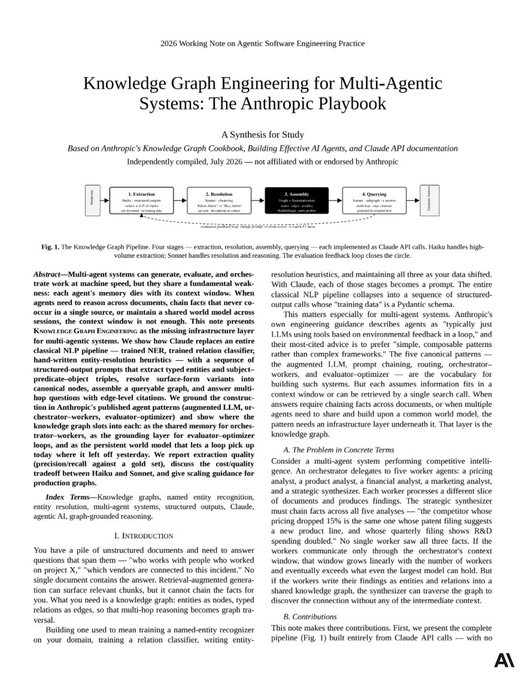
Andrej Karpathy joined Anthropic five weeks ago.
Two Anthropic seniors just made Karpathy's loop 1000x better with "Graph Engineering"
the agentic systems got 1000x better the moment you wired agents into a graph
I dropped it into my setup. The very first response was different.
Not slightly different. Completely different.
Claude stopped giving generic answers and started working exactly the way I think.
Bookmark it before it gets lost in your feed.
Read it now, then check the article below.
to the extent Claude is more *like this* than GPT, i suspect it is because GPT’s tokenizer (o200k) has a rich vocabulary of tens of thousands of single-token space-prefixed words, whereas Claudes (after Opus 4.6) use a new tokenizer with several times fewer single-token words.
Impressive research from Google on building better environments for agents.
Training environments for agents are hand-built and go stale. The agent improves, the environment does not, and it's not able to see the agent's weaknesses in the first place.
EnvHarness wraps a static environment in a programmable plug-in layer that reshapes its behavior without touching the underlying logic. Every reshaped environment keeps its original verifier; this is what makes the reshaping safe to train on.
EnvRigger treats the policy as a black box, reads its execution trajectories, synthesizes harness components aimed at the diagnosed flaws, then validates them with fresh rollouts.
Across five benchmarks in four domains, up to 9.0 points better on held-out instances with 9.8% fewer execution steps.
Paper: https://t.co/sCeXq0jdMg
Track more trending AI papers in our academy: https://t.co/1e8RZKs4uX
Ultra-FineWeb-L1📊 Open English web corpus for LLM pre-training from @OpenBMB
https://t.co/vVf9QWTfnq
- 1T+ tokens / ~1.14B documents
- Common Crawl data up to CC-MAIN-2025-51
- Apache 2.0
- Advanced cleaning with Trafilatura 2.0 + customized quality inspection
Current frontier AI will be commoditized and will run locally
The future frontier AI wont have millions of users and will likely be priced on useful tokens rather than pure tokens
Why do agentic AI systems stall? Because a handful of long, tool-heavy trajectories hog GPUs, while training and rollout fight over resources.
Hong Kong’s CUHK team built Libra to fix this—and hit 3.0x higher throughput.
Libra is a resource manager for agentic RL post-training. It uses a global planner that dynamically shifts GPUs between rollout and training via an elastic hybrid pool. To handle unpredictable workloads, it routes requests using a causality-driven scheduler based on actual tool-return signals—not fragile length predictions.
Tested on 48 A800 GPUs, Libra converges up to 2.5x faster in reward versus baselines.
Libra: Efficient Resource Management for Agentic RL Post-Training
Paper: https://t.co/dlPci8gl4d
Code: https://t.co/w8MgpqA7lj
Our report: https://t.co/Y2nGl5ufbN
📬 #PapersAccepted by Jiqizhixin
This @GoogleDeepMind's paper is really worth your time
It's on how to help Transformers not lose the right context on the way to the final answer.
For this, the researchers introduce Recirculation:
Normally, information passes through Transformer layers once. Recirculation changes that flow:
→ Some of what the model figures out in deeper layers is passed back to earlier layers and used when processing the next input.
For example, once the model understands that “bank” means river bank in a fishing context, that interpretation can stay available when it later gets a question about an ATM.
So here is how recirculation works:
1. The model processes the input normally.
2. Deeper layers build a more contextualized representation.
3. A small part of that activation is mixed back into a shallower layer.
4. The next input is processed with this updated state.
The weights stay frozen, and you're changing how information flows through the model at inference time, not retraining it.
This method really works in practice:
- recirculation reduced contextualization errors by 60%
- reduced perplexity by 23%
- improved GSM8K accuracy by 21%
- improved performance on several other tasks
And now, the most interesting question: is this an alternative to Chain-of-Thoughts?
Not really. CoT adds computation through generated reasoning tokens; recirculation helps the model keep track of what it has already understood internally.
It’s also different from looped Transformers: they repeat the same layers, effectively adding depth, while recirculation feeds deeper representations back into earlier processing.
So instead of asking the model to reason out loud, let it reuse more of what it has already figured out internally.
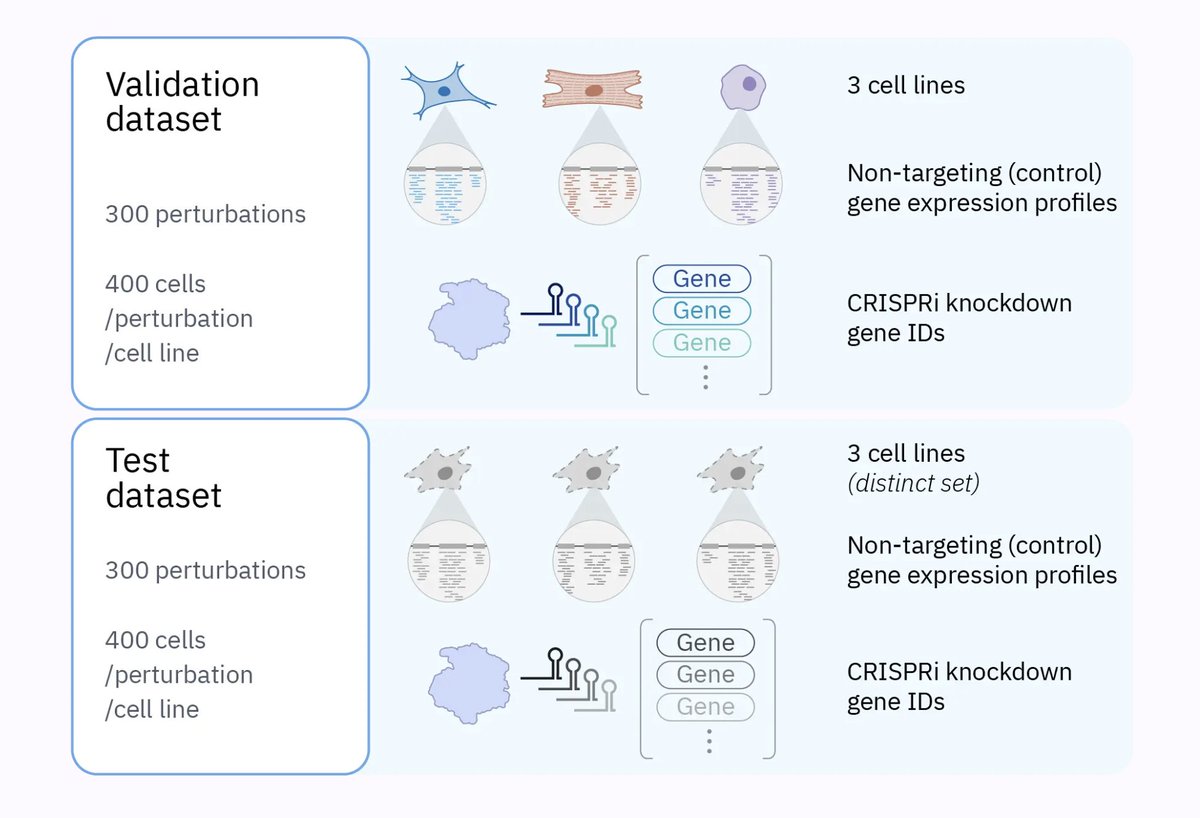
Competitors will receive a validation dataset with 3 cell lines, each containing the non-targeting control profiles plus the CRISPRi knockdown gene IDs to predict for 300 perturbations per cell line. A test set with 3 distinct cell lines will be held out until the final phase.
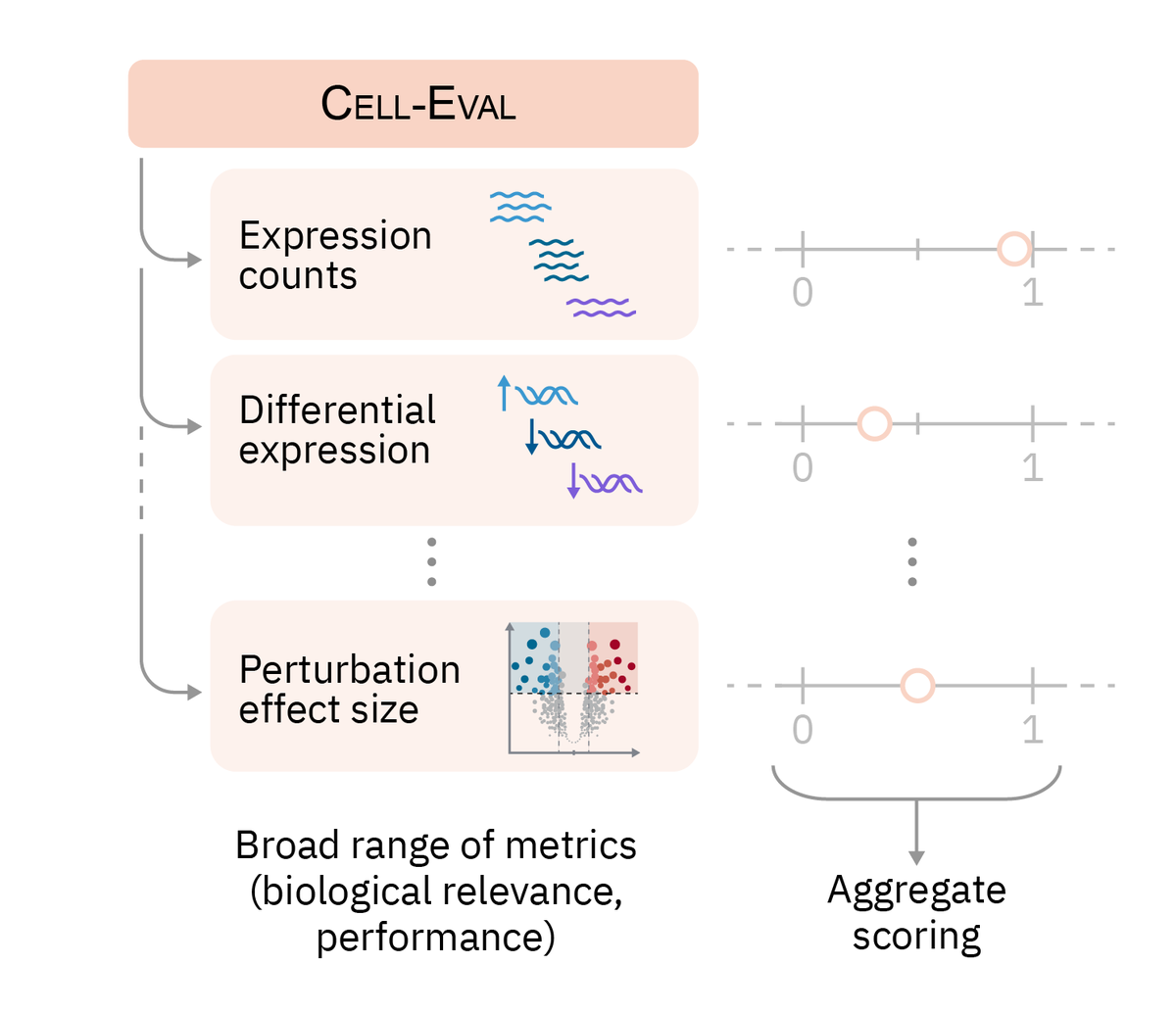
We also redesigned the scoring. We're using six complementary metrics, each scaled between the cell context mean and data from a real replicate experiment.
The overall score is a single unweighted average over the six metrics and cell contexts.
The 2026 Virtual Cell Challenge has begun! Submissions and the leaderboard are now open.
This year's task: multi-context generalization and zero-shot prediction. Models will need to predict perturbation responses in cellular contexts with no Challenge-specific training data.
https://t.co/JESPsrjWNr
5× context compression did surprisingly little to GPT-5.5’s final task result.
The compressed agent remained statistically as successful as the full-context version.
What changed was how it got there: it relied much more heavily on retrieval to reconstruct dropped information.
– arxiv. org/abs/2608.16370
Title: "What Does Context Compression Cost an Agent? Interaction Costs Unrevealed by Task-Completion Metrics"
Fascinating: Indian FinTech giant Razorpay just built AI but for payments 😳
They didn't train it on text. They trained it on how money actually moves across India.
UPI. Cards. Netbanking. Cash on delivery.
4 billion payments, ~3,000 signals each, 3 trillion data points total.
The AI learned the "language" of Indian payments.
Every payment became a set of tokens.
Even a missing field became a signal.
And patterns started to emerge.
Think of it as a living map of India's payment rails 💸
Failed routes become predictable.
Fraud rings light up across merchants.
Checkout preferences surface instantly.
The crazy part?
This replaces a whole set of separate payment models.
→ Smart routing
→ Network-level fraud detection
→ Risk scoring
→ Checkout personalization
All powered by one shared model instead of siloed systems.
And the early numbers are wild:
↳ +8-10% payment success rates
↳ 8x more international card fraud caught
↳ 5x more fraud flagged without more merchant alerts
↳ +100K-200K extra completed purchases per month
↳ Live across 51,000+ businesses including Blinkit & redBus
More importantly, this is a different way to build payments infra:
→ Old model: one problem → one model → one team
→ Vulcan: one foundation → everything built on top
Which leads to something even bigger:
→ Routing shifts from rules → real-time prediction per transaction
→ Fraud shifts from single-merchant views → network-level patterns
→ Checkout moves from static flows → individual preferences
And above all, it compounds: every new payment makes the model better for everyone on the network.
Nubank has nuFormer. Revolut has PRAGMA. Stripe has its payments model.
Razorpay just built India's answer, trained, hosted, and regulated at home.
Everyone said AI would eat fintech. Razorpay just showed fintech can eat AI.
Heart-rate variability measures not how quickly the heart beats, but how regularly spaced those beats are. We explain why a higher number—that is, a more irregular pattern—is generally what you want https://t.co/HvktYLe19L