Really proud to share our latest work @embojournal. This was a long, joint effort from everyone in the lab (some of which have since left). Here, we looked at out how cells decide when to divide.
https://t.co/pf0X6V23nv
In new work, we lay out a vision for a high-level programming language for generative biology, called Proto.
Proto composes generative and predictive models spanning DNA, RNA, proteins, ligands, and their interactions, which we use to design complex biological functions. 1/n
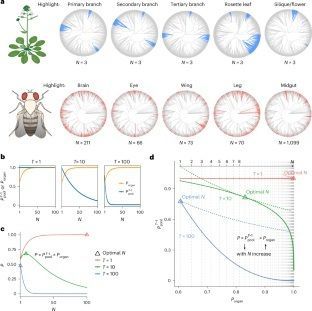
🌱 Gene expression & co-expression across 630,000 RNA-seq samples from 10,700+ plant species — free, in your browser.
Search a gene → see where it's expressed on the UMAP → explore its co-expression network.
https://t.co/PRhoLXBs2o
#PlantScience#RNAseq#Bioinformatics
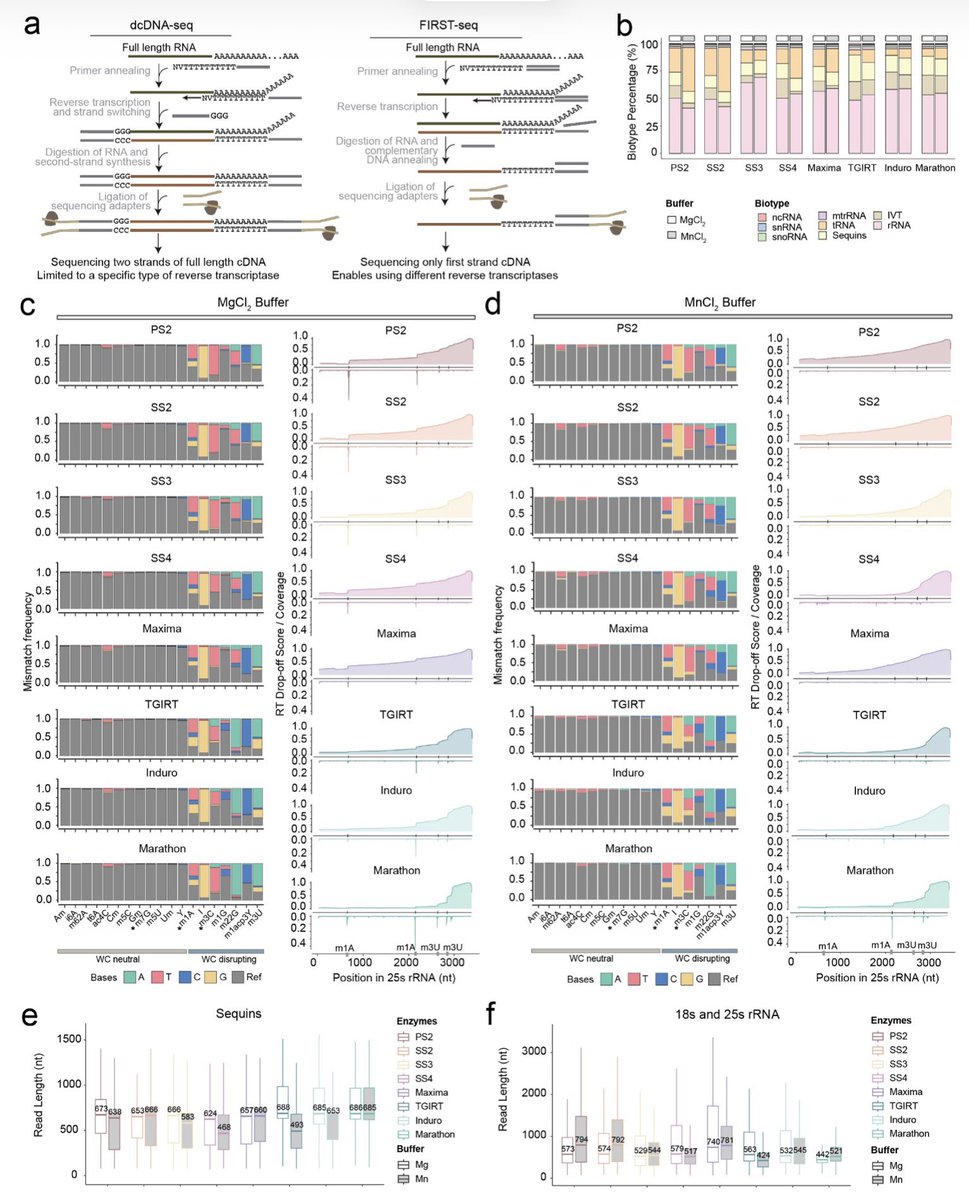
Fine-tuned DNA language models improved de novo gene annotation over existing tools and generalized to species far outside the training set. Pretrained DNA language model embeddings alone did not capture the features needed for precise gene segmentation. The study also introduces biologically grounded benchmarks for gene models, UTRs, and non-coding transcripts. https://t.co/j8HQSxMVrD
Excited to share our new bioRxiv preprint!
We introduce RIPPLE, a synthetic platform that couples reaction–diffusion circuits with protein condensation to generate tunable sub-cellular architectures.
I’m deeply grateful to @MaggieXzj and @CellRaiser_ for their mentorship, collaboration, and support throughout this project. It has been a long but incredibly rewarding journey.
https://t.co/2vLVvMmF2S
We're excited to share our latest publication, from graduate student Julia Dierksheide in the lab! In B. subtilis, the fast-moving RNA polymerase outpaces the leading ribosome, leaving mRNA transcripts vulnerable to the transcription termination factor Rho. (1/2)
A PhD's success depends more on the fit between the student, the advisor, and the lab than on the specific topic being studied (it barely matters at all).
Similarly, a lab's success depends more on how excited (or miserable) its researchers are than on the precise project they are working on (it could be virtually anything).
This information isn't in papers or in grant proposals, you have to ask the researchers.