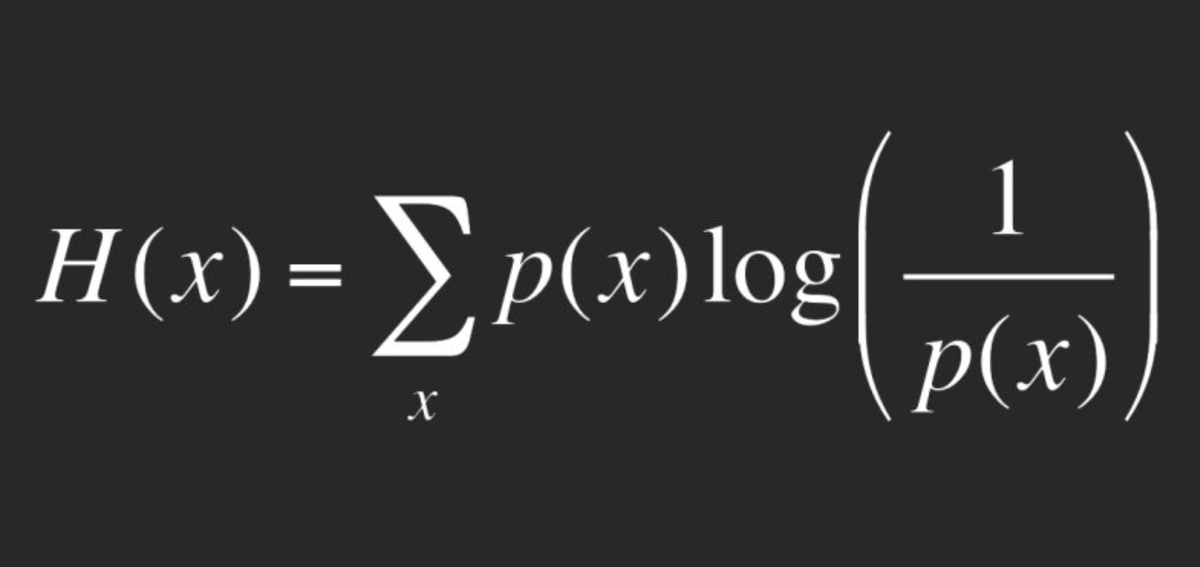
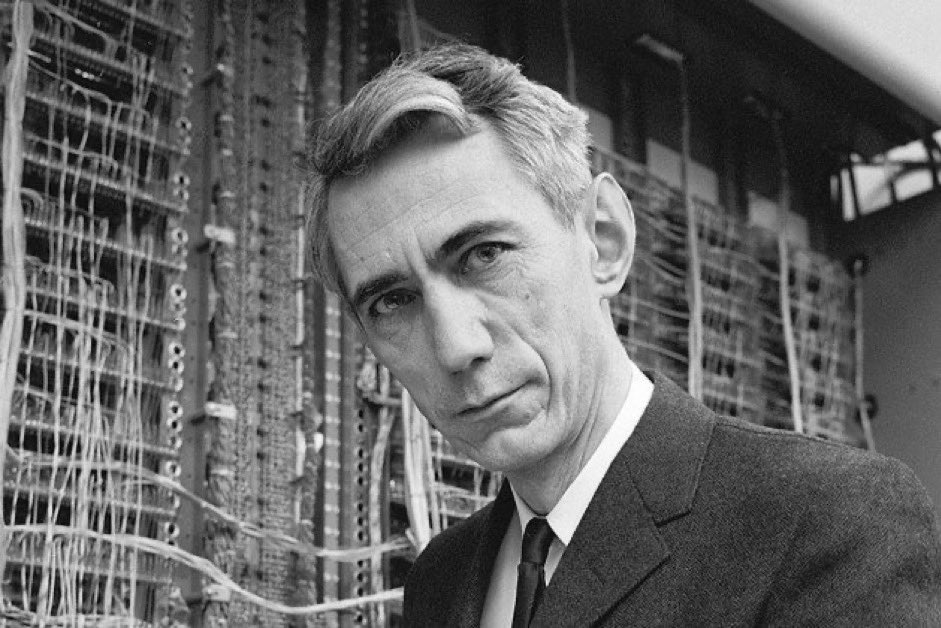
75 years ago this week Claude Shannon ushered in the field of information theory with his paper "A Mathematical Theory of Communication", which has been cited over 100,000 times: https://t.co/6wIpUjzBg9 (v/@TheSIAMNews)
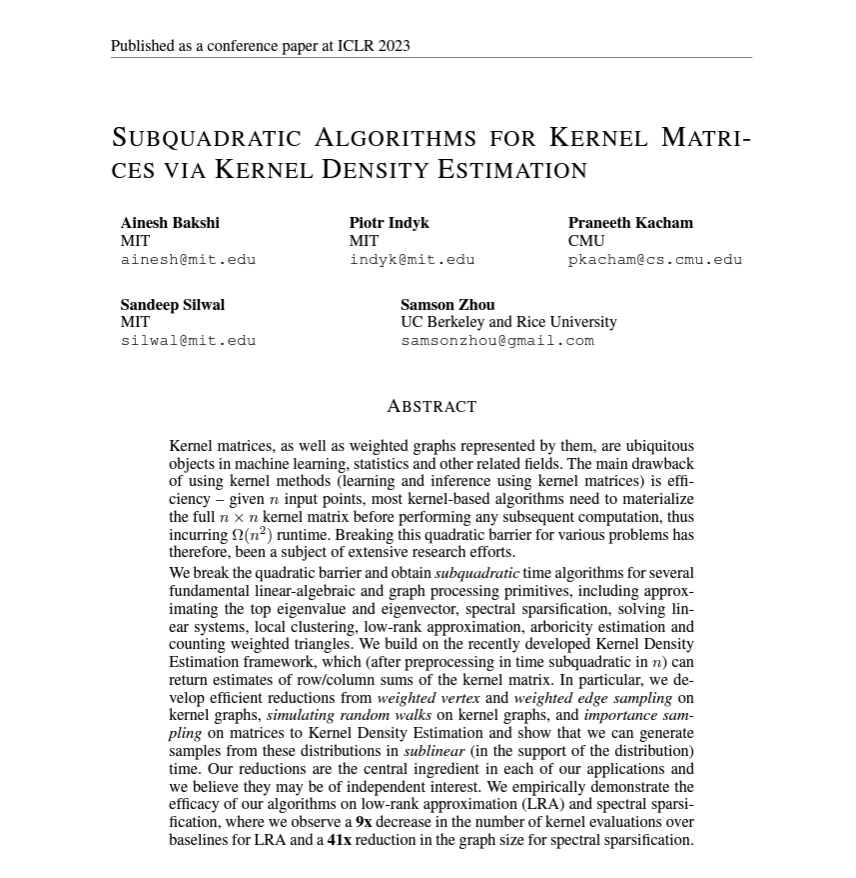
MIT research proposes versatile algorithms that reduce overhead of kernel methods from quadratic complexity to only linear, making the ML methods much more scalable & efficient: https://t.co/YAJ9yJZxMi
Thanks for highlighting; The paper that introduced Attention (by @DBahdanau, @kchonyc, Bengio) gets ~1000X _less_ attention than the paper "Attention is All You Need". And it is historically amusing that both are very general but happened to be developed for machine translation.
Today 6 years ago, "Attention is All You Need" went on Arxiv! Happy birthday Transformer! 🎂
Fun facts:
- Transformer did not invent attention, but pushed it to the extreme. The first attention paper was published 3 years prior (2014) and had an unassuming title: "Neural Machine Translation by Jointly Learning to Align and Translate", from Yoshua Bengio's lab.
It is a combination of RNN + "context vectors" (i.e. attention). Many of you likely haven't heard about this paper, but it's one of the greatest milestones in NLP and has been cited 29K times (compared to Transformer's 77K).
- Neither Transformer nor the original attention paper talked about the general-purpose sequence computer. Instead, both were conceived as solutions to one narrow & specific problem: machine translation. It's remarkable that AGI (some day soon) can trace its origin to the humble Google Translate. 😅
- Transformer was published at NeurIPS 2017, one of the top AI conferences worldwide. Yet it didn't even get an Oral presentation, let alone awards. There were 3 best papers at NeurIPS that year. Combined, they have 529 citations as of today.
Thinking about a master's degree? We've a couple you should consider! Take a look at what @FortuneMagazine has to say about our new offerings. https://t.co/KgtFTous2X
@BallState @BallStateCSH
Approximate nearest-neighbor search is central to many ML applications, and graph-based search is an effective way to do it. In a paper at @TheWebConf, Amazon researchers speed graph-based search by 20% to 60%, regardless of graph construction method. #TheWebConf2023
.@LifeAtPurdue is America's #1 university in #semiconductors, the foundation of the digital economy. 3 weeks this month, we've launched 3 partnerships: May 2 with @imec_int, May 9 with @Semicon_India, and May 21 with Japan as part of a historic G7 Summit. #BoilerUp to #Chips!
Bringing Far-Field Objects into Focus with Synthetic Data for Camera-Based AV Perception | NVIDIA Technical Blog #vehiclesecurity#nvidia https://t.co/ctislasCHu
According to @usnews, Purdue has some of the best graduate school programs in the U.S. 👇
👷 #4 graduate engineering program
🧑🌾 #1 graduate agricultural and biological engineering program
🧑🔬 #1 graduate analytical chemistry program
https://t.co/wgZpHN2Iar
Common ways to finetune LLMs are to
a) update the output layers vs
b) update more (or all) layers.
Usually, the more parameters we update, the better for target-task performance (wrote about here: https://t.co/MZVdpm09Ex).
Small plot twist via https://t.co/UtPqJ2DN5q
1/3
Congrats to the graduates of @LifeAtPurdue’s largest commencement in history with 9,776 bachelor's, master's, professional & doctoral degrees walking individually across stage over 9 ceremonies. Excited to confer honorary doctorates to #Boilermakers David Ricks & Thomas Shelby.
In 1962, @LifeAtPurdue became the first university to create a #ComputerScience department.
Learn how #PurdueCS evolved into the largest and most selective program on campus and how important initiatives in #DataScience and #AI will shape its future. ⬇️ https://t.co/m3FF24M7CK
Internet inventors Cerf and Kahn to join President Chiang for September Presidential Lecture Series event, marking #PurdueCS’s 60th anniversary https://t.co/5d5llq06P6
Born 107 years ago #Today, Claude Shannon was a mathematician, an electrical engineer, and a cryptographer universally recognized as "the father of information theory"
[read more: https://t.co/OPmRwrxwUQ]
In 1911, Srinivasa Ramanujan posed this problem involving an infinite nested radical (a never-ending expression that has square roots inside of square roots). Remarkably the answer is exactly 3
[read more: https://t.co/NrzFehl8oG]