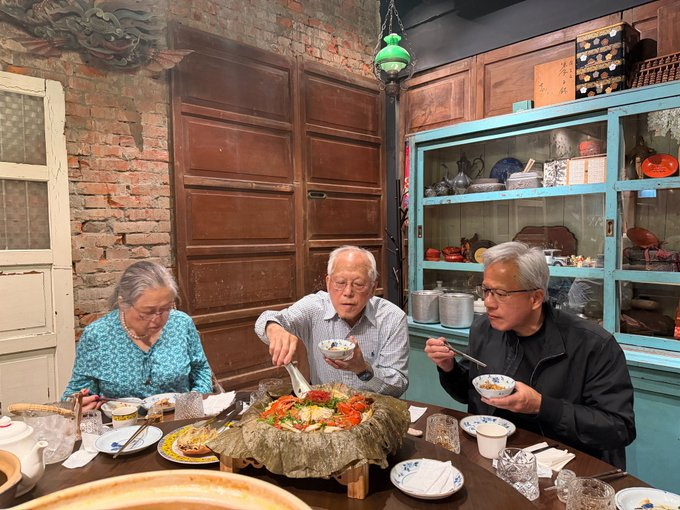
Jensen Huang joined his parents for a family meal in a simple local spot.
The CEO of the world’s most valuable company still makes time for dinner with the people who made the whole thing possible.
Hard not to root for the guy.
Lesson: how a company treats you after you say no tells you more than how they treat you during the sale.
@Policygenius — your follow-up here was something else. Glad with my decision.
You have no experience.
You’ve never started a company.
You’ve never had a full time job.
Nike is going to kill you.
You’re a kid.
You don’t have technical skills.
You shouldn’t build hardware.
Apple is going to kill you.
You can’t build hardware.
You can’t measure heart rate non-invasively.
Athletes don’t care about recovery.
Under Armour is going to kill you.
It won’t be accurate.
You don’t listen.
You’re an ineffective leader.
You can’t recruit great talent.
You’re going to have to pay every athlete.
You can’t measure sleep non-invasively.
It’s too expensive to research.
Athletes are a small market.
The product costs too much to make.
The product costs too much to sell.
Your valuation is too high.
Consumers aren’t going to want it.
Hardware is too hard.
You should measure steps.
Fitbit is going to kill you.
You can’t build a marketing engine.
You can’t raise enough money.
You need a real CEO.
Google is going to kill you.
You can’t be a subscription.
You can’t build a brand.
You can’t do consumer in Boston.
Your valuation is too high.
You shouldn’t make accessories.
You shouldn’t make apparel.
Lululemon is going to kill you.
You can’t predict Covid.
Stay in your niche.
You are going to run out of money.
You can’t build a health platform.
Amazon is going to kill you.
You can’t measure blood pressure.
You can’t get medical approvals.
The market is too small.
You don’t understand AI.
The market is too competitive.
It won’t work internationally.
The supply chain is too complicated.
You can’t build an AI.
You can’t raise enough money.
It’s too competitive.
Healthcare isn’t going to want it.
…
Just keep going ✌️
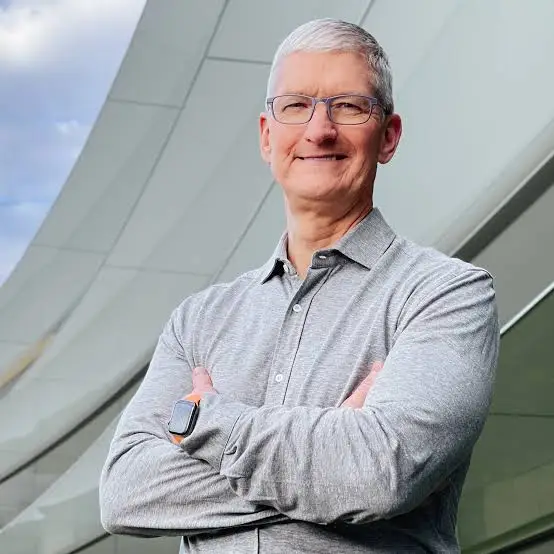
> Be Tim Cook
> Microsoft, Goog, Meta burning billions for AI
> stocks go wild
> half-assedly promise new Siri
> delay half-assed Siri
> keep shipping iPhones
> no promises of AGI next quarter
> stock called "boring" for 18 months straight
> still have no strategy
> ask daddy Sundar for help with Siri
> market starts to hate all the capex
> AI trade starts cracking
> Nasdaq down 5% in a week
> AAPL +7.5%
> Tim Apple mode activated
> Haters suddenly quiet
> Still no functional Siri
> Still no strategy
> Doesn't matter
> Still winning
🚨IMPORTANT: 529 plans just became more powerful under the new tax bill.
If you have kids (or plan to), you need to know these changes.
Here's what's different:
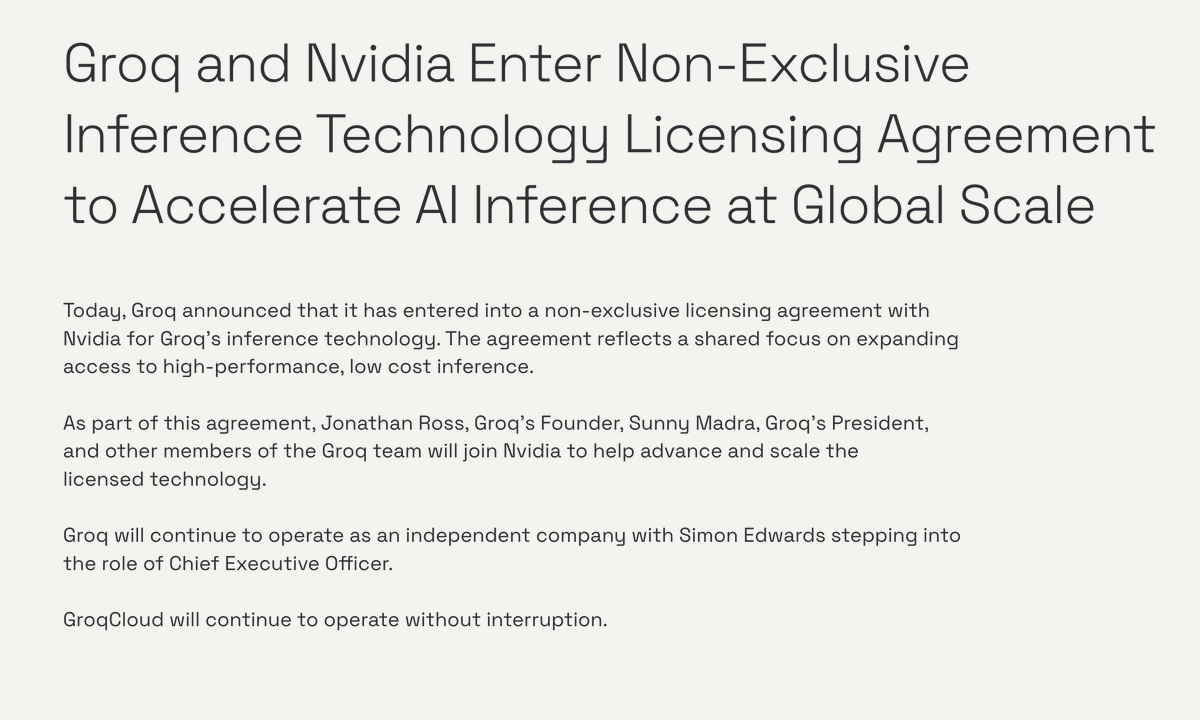
The "Licensing" structure is regulatory arbitrage.
$NVDA got the IP (speed).
NVDA got the Talent (Jonathan Ross).
NVDA avoided the FTC (Non-exclusive).
NVDA avoided AWS/Azure conflict (Groq Cloud stays separate).
They effectively bought the company without "buying" the company.
Nvidia paid 3X Groq's September valuation to acquire it. This is strategically nuclear.
Every AI lab was GPU dependent, creating massive concentration risk. Google broke free with TPUs for internal use, proving the "Nvidia or nothing" narrative was false. This didn't just demonstrate technical feasibility, it revealed that Nvidia's moat was shallower than markets believed. When a hyperscaler successfully builds custom silicon, every sophisticated buyer starts running" should we build our own?" calculations. This drops Nvidia’s TAM.
Jonathan Ross (Groq’s founder) is the inventor of TPU. He understood the architectural principles that made non-GPU AI acceleration viable. His LPU architecture targeted inference workload where GPUs are actually over-engineered. This matters because inference is where the real money is long-term. Training is one-time capex, but inference is recurring opex that scales with usage. If Groq proved LPUs could hit competitive price-performance on inference, every cloud provider would white-label their architecture. Nvidia would get squeezed into "just training" while losing the annuity stream.
It is safe to see this deal as Nvidia insuring against Groq enabling an entire ecosystem of Nvidia alternatives. But what is more interesting is the second-order effect, the customer lock-ins. Now, Nvidia owns both the incumbent standard (CUDA + GPU) and the most credible alternative architecture (LPUs). This is MSFT buying Github-level strategic. Any AI lab evaluating "build vs buy vs alternative vendor" now faces:
- Option A (Nvidia GPUs)
- Option B (Nvidia <> Groq LPUs)
- Option C (start from scratch)
Turning a competitive threat into a customer segmentation tool, Jensen is the master of trades. They can now price-discriminate: premium customers pay for GPUs, price-sensitive inference gets funneled to LPUs, and Nvidia captures both.
If Nvidia doesn't integrate LPUs in its roadmap, this was a pure defensive play. If they do integrate it and start offering "GPU for training, LPU for inference" bundles, this becomes a textbook moat-widening acquisition.
The most expensive thing in technology isn't building the future, it's preventing someone else from building a future without you.
@KRQ123xyz I think it’s smart. If Nvidia runs a cloud service, they compete against AWS and Azure. By divesting it, they stay a pure hardware supplier and don’t compete against its biggest customers. Just keep selling them the best chips possible.
$Groq was the potential "Nvidia-killer."
$Nvidia just bought the bullet.
$20B is a bargain to monopolize the infrastructure layer.
Oh and Groq was founded by the inventor of $Google ’s TPU…so Jensen just bought the one person who knew how to beat them. All roads lead to…
@KRQ123xyz I’d rather they spend <1 quarter of cash to own the "Inference Era" than hoard it and watch $Googl win on efficiency. By owning Groq, Jensen can now basically tell customers “Train on our Blackwell GPUs, run on our Groq LPUs."
You never need to leave the Nvidia ecosystem.
@KRQ123xyz Exactly why i think this is so bullish $nvda. The ASIC wave is Nvidia's biggest threat. GPUs are inefficient for pure inference. Groq plugs that hole. Now they have a dedicated architecture to fight back against Trainium/TPUs.
Most bullish Nvidia call given Blackwell and Rubin demand off the charts and a $500 billion backlog (and building quickly) into FY26. Anyone saying AI Bubble is not listening to this call/seeing the numbers of trillions of more demand per Jensen coming down the road. 🔥🏆🐂🍿🎯