Moderna-Merck clinical trial data for an mRNA-based skin cancer vaccine leaked on social media on Thursday. Here’s what the data actually show:
https://t.co/YL9UBJafnq
Researchers have developed an AI-based approach to help physicians with real-life clinical workups, starting with the patient’s chief complaint, systematically asking questions and deciding what laboratory and imaging tests to order, and then continuing the evaluation on the basis of the answers received.
Learn more this week in Science: https://t.co/ae2ayifjST
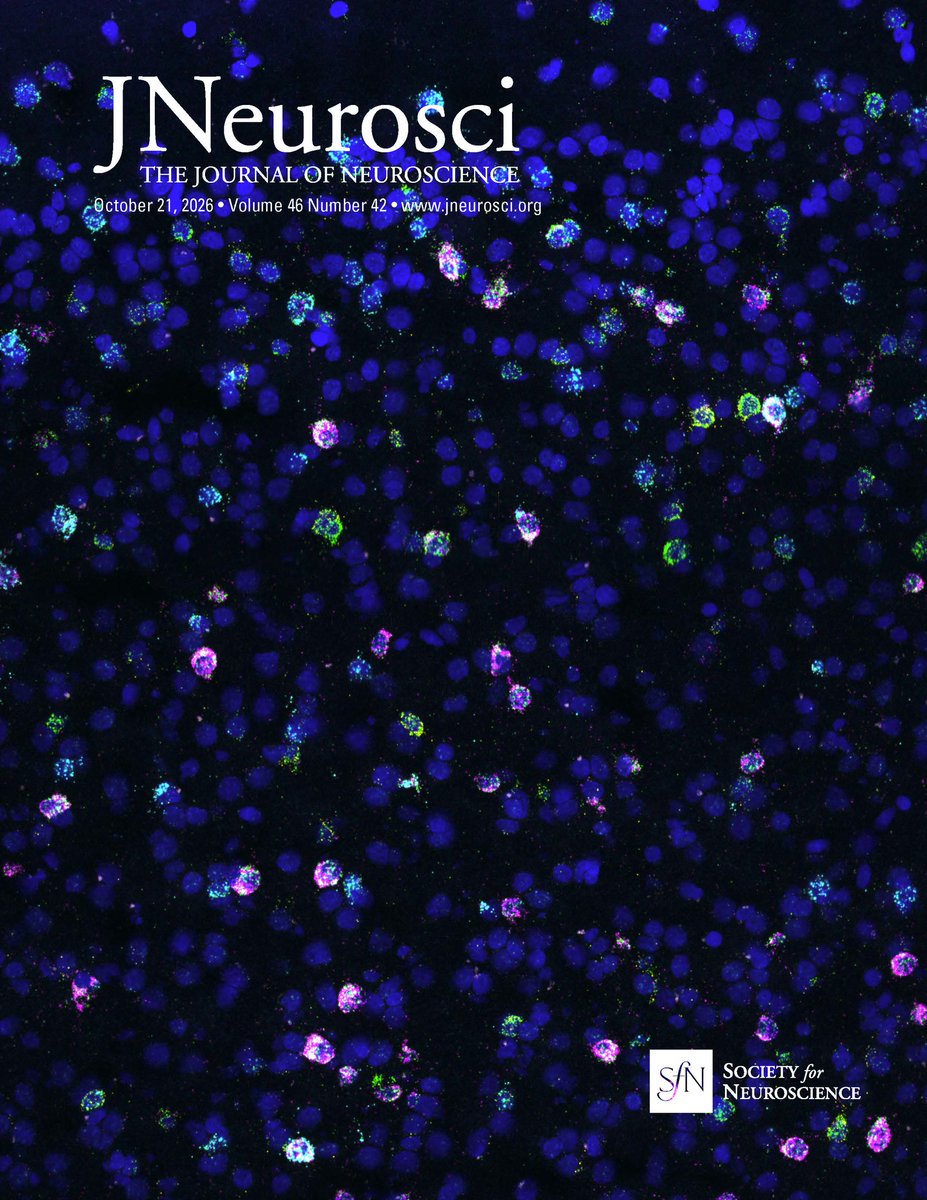
This Week in the Journal #JNeurosci | Exploring α-Synuclein's Natural Function; How the Brain Perceives Self-Motion under Sensory Conflict
https://t.co/tXluFObVQU
Surviving on blood alone is no picnic. But a handful of genetic tweaks may have helped vampire bats evolve to become the only mammal known to feed exclusively on the stuff. https://t.co/cVMaECmAmS
Los grandes simios se anticipan a la respuesta emocional de otros cuando estos se van a llevar una sorpresa. Para esto deben poder integrar: lo que el otro cree que encontrará, lo que encontrará, y su sorpresa (!)
(preprint) DOI 10.64898/2026.10.12.758475
por @IsabelleLaumer
In 1974, paleoanthropologist Don Johanson and student Tom Gray unearthed a 40% complete skeleton of an early human ancestor, fundamentally changing the human family tree. The specimen acquired a nickname that persisted: Lucy, after the Beatles song playing at the fossil hunter’s camp—“Lucy in the Sky with Diamonds.”
At 3.2 million years old, some thought her species, Australopithecus afarensis, was close to when the ancestor of humans had split from the ancestor of chimpanzees. But in the past 50 years, discoveries of hominins both older and the same age as Lucy have pushed that split millions of years deeper in time, and challenged her position as mother of us all.
Learn more: https://t.co/RyZCWt9IE8 #ScienceMagArchives
Flu season is ramping up earlier than usual. Here’s why that might be and everything else you need to know—including when to get your flu shot
https://t.co/3kl2P8onDR
#JNeurosci: How do birds decipher information from their songs? Ahmadi et al. found that neurons in the primary auditory forebrain of birds synchronously respond to salient sounds from birdsong to comprehend messages from this form of communication.
https://t.co/v7JODAf5Ps
Gerty Cori was employed on much less favourable terms than her husband. She became a professor 16 years after him, just two months after they shared the Nobel Prize in Physiology or Medicine 1947.
Learn more about her life: https://t.co/XLMGnRDmtT
#NobelPrize
New in The Innovation Insights! The Nobel Prize and the Scientific Commons.
The 2026 Nobel Prizes have been announced, underscoring the pivotal role of scientific discovery in advancing human knowledge. Nobel-recognized breakthroughs continue to propel scientific progress and reinforce the global scientific community.
https://t.co/oMP9m3bftc
#NobelPrize
Study of almost 900 dogs from roughly 120 breeds finds that rapid ageing of large canines is linked to changes in the epigenome
https://t.co/akK4n1yER9
Posible medicación social en abejorros.
En este estudio, los abejorros expuestos a un hongo que afecta a las larvas aumentaron progresivamente su preferencia por néctar artificial con quercetina (antioxidante vegetal antimicrobianas)
(paper) DOI 10.1098/rsos.260777
Scientists have debated for decades whether the human brain sprouts new neurons throughout life.
What would it mean if it could?
https://t.co/iOHSZijCyj
New Research: Stage anxiety and piano performance: the sequential mediating roles of self-efficacy and attentional control www.frontiersin.org/articles/10.3389/fpsyg.2026.1895260 #FrontiersIn#Psychology