@MArakHay75@Youzarw@c94omuniste@_SaxX_ Je n'ai pas les moyens de l'état et pourtant je fais mieux. L'état s'est fait récemment défoncer une kyrielle de services. Le dernier par un gamin de 15 ans. Foutage de gueule total. Et toujours aucune loi ou jurisprudence pour protéger les victimes d'usurpation d'identité.
Hacking the #EU#AgeVerification app in under 2 minutes.
During setup, the app asks you to create a PIN. After entry, the app *encrypts* it and saves it in the shared_prefs directory.
1. It shouldn't be encrypted at all - that's a really poor design.
2. It's not cryptographically tied to the vault which contains the identity data.
So, an attacker can simply remove the PinEnc/PinIV values from the shared_prefs file and restart the app.
After choosing a different PIN, the app presents credentials created under the old profile and let's the attacker present them as valid.
Other issues:
1. Rate limiting is an incrementing number in the same config file. Just reset it to 0 and keep trying.
2. "UseBiometricAuth" is a boolean, also in the same file. Set it to false and it just skips that step.
Seriously @vonderleyen - this product will be the catalyst for an enormous breach at some point. It's just a matter of time.
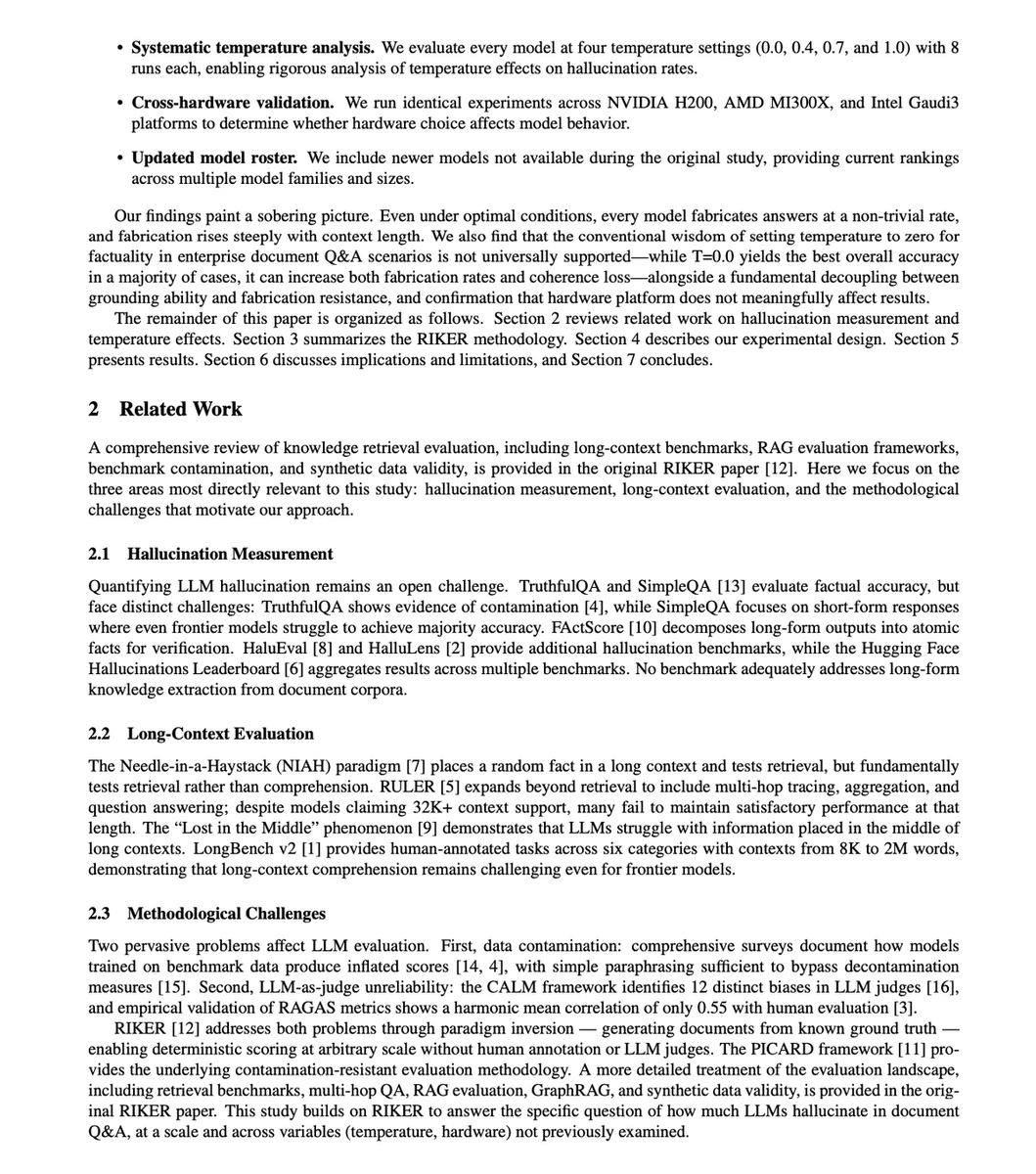
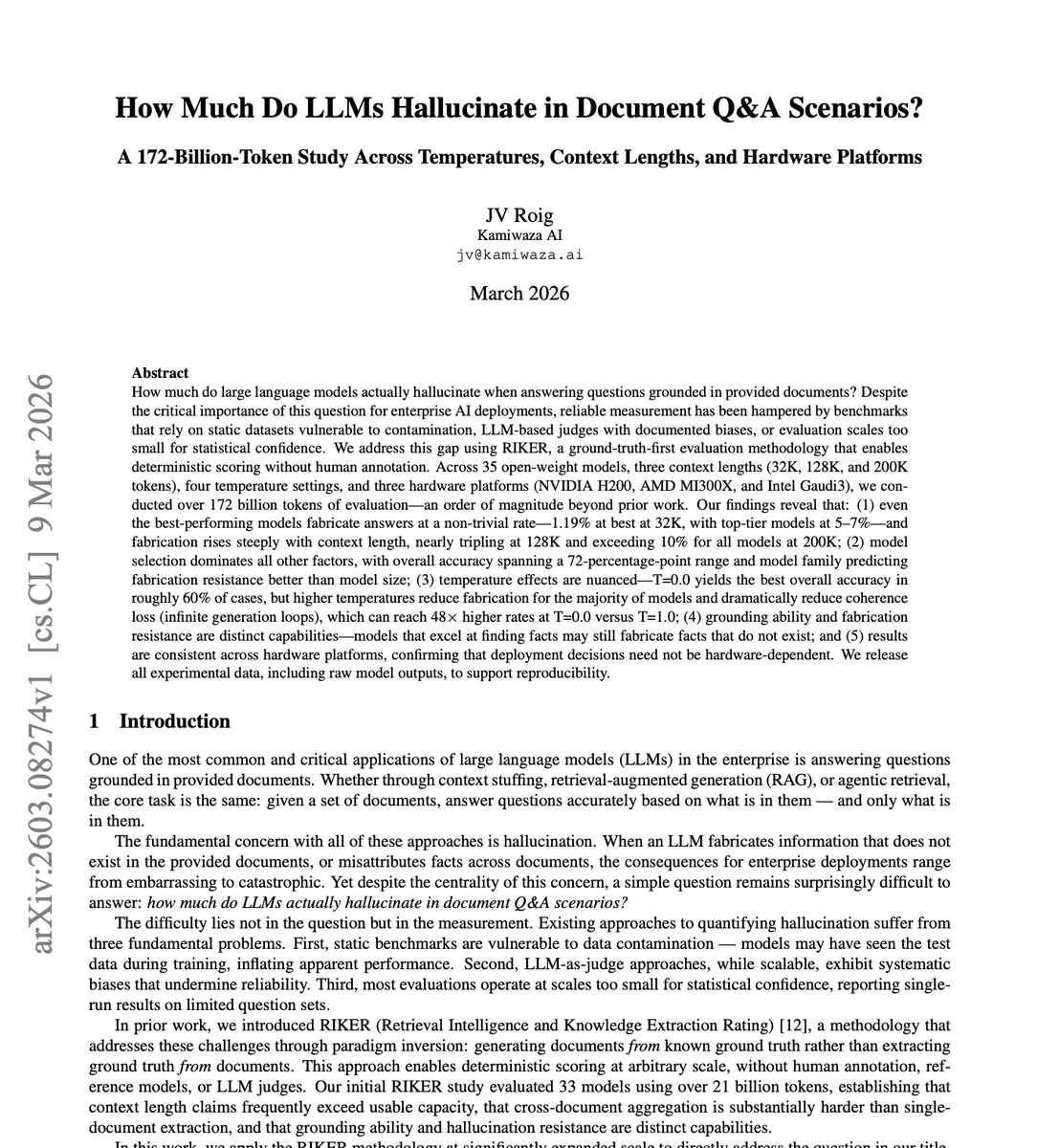
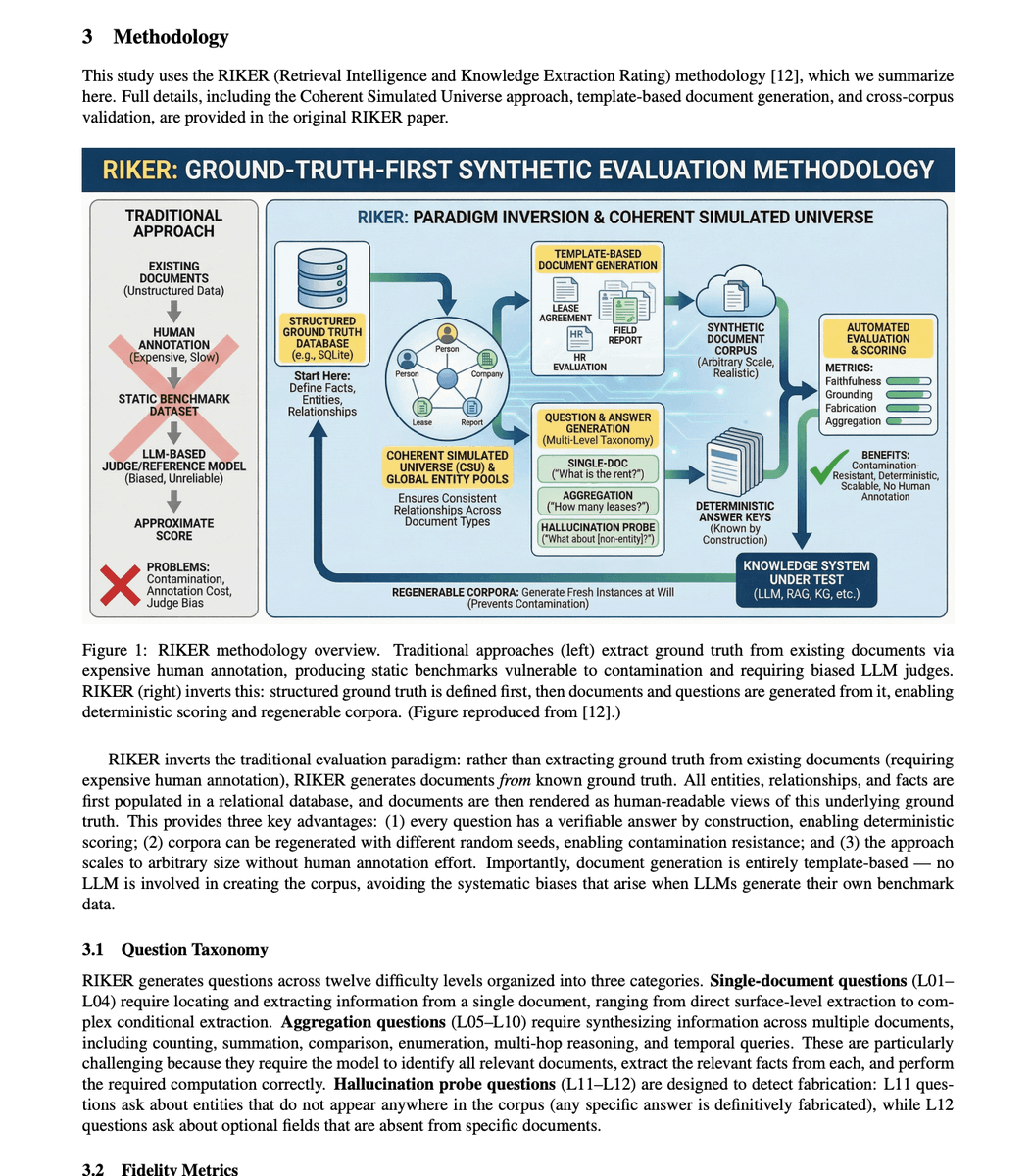
BREAKING: 🚨 Someone just tested 35 AI models across 172 billion tokens of real document questions.
The hallucination numbers should end the "just give it the documents" argument forever.
Here is what the data actually showed.
The best model in the entire study, under perfect conditions, fabricated answers 1.19% of the time. That sounds small until you realize that is the ceiling. The absolute best case. Under optimal settings that almost no real deployment uses.
Typical top models sit at 5 to 7% fabrication on document Q&A. Not on questions from memory. Not on abstract reasoning. On questions where the answer is sitting right there in the document in front of it.
The median across all 35 models tested was around 25%.
One in four answers fabricated, even with the source material provided.
Then they tested what happens when you extend the context window. Every company selling 128K and 200K context as the hallucination solution needs to read this part carefully.
At 200K context length, every single model in the study exceeded 10% hallucination. The rate nearly tripled compared to optimal shorter contexts.
The longer the window people want, the worse the fabrication gets. The exact feature being sold as the fix is making the problem significantly worse.
There is one more finding that does not get talked about enough.
Grounding skill and anti-fabrication skill are completely separate capabilities in these models.
A model that is excellent at finding relevant information in a document is not necessarily good at avoiding making things up. They are measuring two different things that do not reliably correlate. You cannot assume a model that retrieves well also fabricates less.
172 billion tokens. 35 models. The conclusion is the same across all of them.
Handing an LLM the actual document does not solve hallucination. It just changes the shape of it.
@aki_korhonen@ConsistInconsis@elonmusk The Serbs hacked their RADAR systems and changed the wavelength and were able to track the F-117. They were smart, not just "lucky".
@nddevs@ConsistInconsis@elonmusk If I understood correctly, OTH RADARs can see stealth planes easily. But RADAR guided missiles cannot (shorter wavelength). The real question is: what's the use of seeing the plane if you cannot shoot it down?
Well you can, but it is harder.
https://t.co/Ru1saCL9Cp
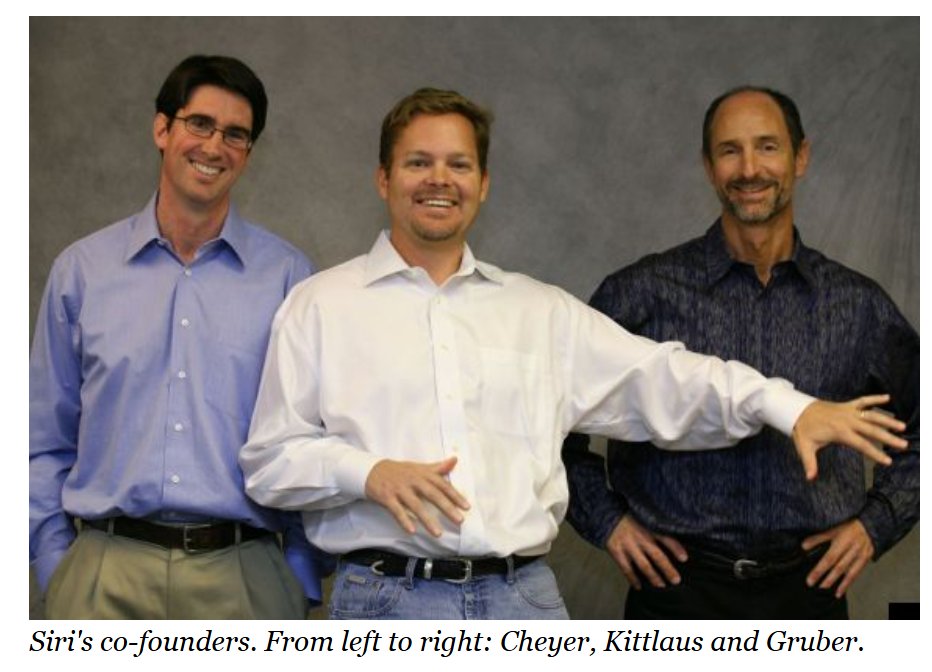
Les co-fondateurs de Siri sont Adam Cheyer, Dag Kittlaus et Tom Gruber. Depuis la sortie de ma vidéo sur Luc Julia, plusieurs personnes ont tenté de les contacter.
Voici déjà une réponse que Gruber a accepté de rendre publique: "Luc had nothing to do with the creation of Siri."
@j32pmxr@nddevs@ConsistInconsis@elonmusk Over-the-horizon RADARs have existed since the 50s or 60s. Moreover, current stealth planes are not stealthy at all in the long wavelength bands that these RADARs use.
https://t.co/hic1orijOa
@SNCFVoyageurs Quelles sont les règles de votre concours d'amendes injustes et injustifiées avec la RATP @ClientsRATP. La dénonciation calomnieuse (injures non prouvées) est autorisée? Ce n'est pas hors jeu?
Il faut voyager avec un huissier?
https://t.co/a7XRwmi37t
To the journalists contacting me about the AGI consensual non-consensual (cnc) sex parties—
During my twenties in Silicon Valley, I ran among elite tech/AI circles through the community house scene. I have seen some troubling things around social circles of early OpenAI employees, their friends, and adjacent entrepreneurs, which I have not previously spoken about publicly.
It is not my place to speak as to why Jan Leike and the superalignment team resigned. I have no idea why and cannot make any claims. However, I do believe my cultural observations of the SF AI scene are more broadly relevant to the AI industry.
I don't think events like the consensual non-consensual (cnc) sex parties and heavy LSD use of some elite AI researchers have been good for women. They create a climate that can be very bad for female AI researchers, with broader implications relevant to X-risk and AGI safety. I believe they are somewhat emblematic of broader problems: a coercive climate that normalizes recklessness and crossing boundaries, which we are seeing playing out more broadly in the industry today. Move fast and break things, applied to people.
There is nothing wrong imo with sex parties and heavy LSD use in theory, but combined with the shadow of 100B+ interest groups, leads to some of the most coercive and fucked up social dynamics that I have ever seen. The climate was like a fratty LSD version of 2008 Wall Street bankers, which bodes ill for AI safety.
Women are like canaries in the coal mine. They are often the first to realize that something has gone horribly wrong, and to smell the cultural carbon monoxide in the air. For many women, Silicon Valley can be like Westworld, where violence is pay-to-pay.
I have seen people repeatedly get shut down for pointing out these problems. Once, when trying to point out these problems, I had three OpenAI and Anthropic researchers debate whether I was mentally ill on a Google document. I have no history of mental illness; and this incident stuck with me as an example of blindspots/groupthink.
I am not writing this on the behalf of any interest group. Historically, much of OpenAI-adjacent shenanigans has been blamed on groups with weaker PR teams, like Effective Altruism and rationalists. I actually feel bad for the latter two groups for taking so many undeserved hits. There are good and bad apples in every faction. There are so many brilliant, kind, amazing people at OpenAI, and there are so many brilliant, kind, and amazing people in Anthropic/EA/Google/[insert whatever group]. I’m agnostic. My one loyalty is to the respect and dignity of human life.
I'm not under an NDA. I never worked for OpenAI. I just observed the surrounding AI culture through the community house scene in SF, as a fly-on-the-wall, hearing insider information and backroom deals, befriending dozens of women and allies and well-meaning parties, and watching many them get burned. It’s likely these problems are not really on OpenAI but symptomatic of a much deeper rot in the Valley. I wish I could say more, but probably shouldn’t.
I will not pretend that my time among these circles didn’t do damage. I wish that 55% of my brain was not devoted to strategizing about the survival of me and of my friends. I would like to devote my brain completely and totally to AI research— finding the first principles of visual circuits, and collecting maximally activating images of CLIP SAEs to send to my collaborators for publication.
The thing about being active in the hacker house scene is you are accidentally signing up for a career as a shadow politician in the Silicon Valley startup scene. This process is insidious because you’re initially just signing up for a place to live and a nice community. But given the financial and social entanglement of startup networks, you are effectively signing yourself up for a job that is way more than meets the eye, and can be horribly distracting if you are not prepared for it. If you play your cards well, you can have an absurd amount of influence in fundraising and being privy to insider industry information. If you play your cards poorly, you will be blacklisted from the Valley. There is no safety net here. If I had known what I was getting myself into in my early twenties, I wouldn’t have signed up for it. But at the time, I had no idea. I just wanted to meet other AI researchers.
I’ve mind-merged with many of the top and rising players in the Valley. I’ve met some of the most interesting and brilliant people in the world who were playing at levels leagues beyond me. I leveled up my conception of what is possible.
But the dark side is dark. The hacker house scene disproportionately benefits men compared to women. Think of frat houses without Title IX or HR departments. Your peer group is your HR department. I cannot say that everyone I have met has been good or kind.
Socially, you are in the wild west. When I joined a more structured accelerator later, I was shocked by the amount of order and structure there was in comparison.