The White Snake 4 part narrative EP that has been really special to make this year
So excited to finally share the music I’ve been performing all summer
🤍 Infinite gratitude🤍 to my collaborators @RamonPang and @0_1_1_6_6_8
https://t.co/cqavbQJ8BU
As an adult with no kids, it's my solemn duty to embrace the hobbies and adventures my peers no longer have time for, because they've sacrificed their freedom to keep the human race alive. I must travel, nap, pursue whimsical interests, and have fun in their honor.
Not all hurt people hurt people. Some spend their lives making sure no one else feels what they did. They break cycles, build safe spaces, and turn pain into purpose. Hurt people don't just hurt people, they heal people too.
people pleasing comes from a very unregulated nervous system. once you regulate, you grow teeth. you feel what it’s like to bite. then you find a good medium
I can’t stand the way people that aren’t from here talk about LA. Los Angeles is more than West Hollywood or silverlake. Mfs swear it’s all transplants trying to get into show biz and completely disregard the millions of working class folks that have lived here for generations.
Not many people realize it, but LA is in a golden age of underground raves
Some of the best nightlife in the world right now is at illegal warehouse parties in DTLA
I worked at Epic Games for two years. This is real, and the strategy behind it is smarter than most people realize.
Tim Sweeney has spent nearly two decades buying North Carolina forest land. 50,000+ acres across 15 counties. He’s now one of the largest private landowners in the state. The purchases started in 2008, right after the real estate collapse wiped out developers who had been planning golf resorts and luxury communities on biodiverse wilderness.
Sweeney paid $15 million for Box Creek Wilderness, a 7,000-acre stretch in the Blue Ridge foothills containing 130+ rare and threatened species. Developers had owned 5,000 of those acres before the crash. He bought them for conservation prices when nobody else was bidding.
He runs the acquisitions through an LLC called “130 of Chatham.” He buys the land, holds it for years, then either donates it to the U.S. Fish and Wildlife Service, sells it at a discount to state parks, or hands it to land trusts. In 2021, he donated 7,500 acres in the Roan Highlands to the Southern Appalachian Highlands Conservancy. Largest private land donation in North Carolina history.
The part people miss: he told the News & Observer that since 2021, land got too expensive to keep buying. So he shifted focus to converting his existing 50,000 acres into permanent conservation status. He’s locking the land into legal structures that make development impossible regardless of who owns it in the future.
A billionaire worth roughly $6 billion is spending tens of millions acquiring wilderness specifically during economic downturns, then giving it away or placing it under permanent legal protection. The land will outlast him, Epic Games, and Fortnite.
That’s the part that separates Sweeney from billionaires who write checks to get their name on a building. The building depreciates. The forest compounds.
I genuinely think that our purpose as humans in the eco system was to care for all the other species. Why else would humans have the capabilities of projecting emotions and empathy onto literally anything? It's because we were supposed to care. And now? All we do is destroy.
If you’ve studied mind control you know one of the methods used is deliberate shock, trauma and overwhelm meant to fracture a person’s psyche. On a mass or collective scale, this is how social engineering works. Back to back crises with no time to recover in between.
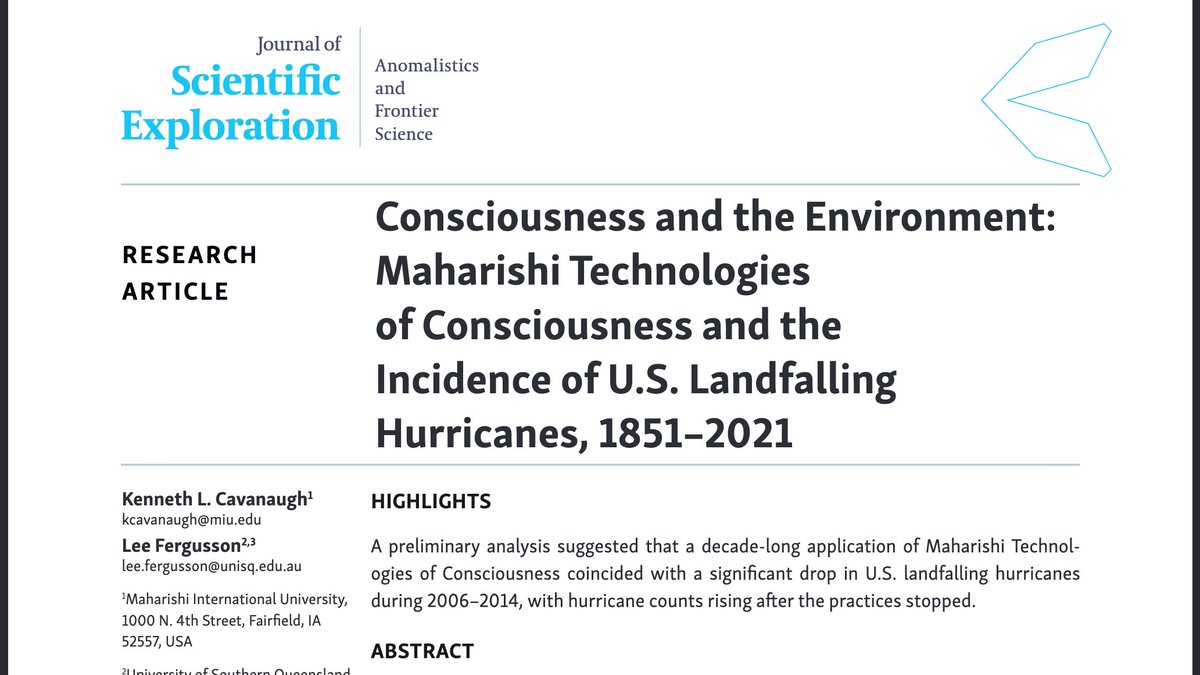
Perhaps the most startling and methodologically rigorous evidence for collective consciousness comes from what researchers term the Maharishi Effect.
The demonstration that group meditation by approximately the square root of 1% of a population significantly reduces societal violence, with studies even including potential causal relationship with environmental damage avoidance, specifically in relation to hurricanes making or failing to make landfall.
Over eighteen peer-reviewed studies spanning forty years validate this phenomenon with what appears to be a statistical level of certainty.