Cyclic numerical sequences from the doubling circuit modulo nine populate the repeating cells across this periodic grid.
Distinct horizontal color bands segment the layout, and multicolored line networks connect points to depict shear pathways on the torus.
A green vertical strip marks the central axis. Bottom insets display supporting representations including a circular star-connected point set, crossed quadrilateral figures, a twisted prism-like projection, and a labeled wave pattern.
It is used to illustrate cyclic number flows under shear transformations in toroidal configurations within vortex based mathematics.
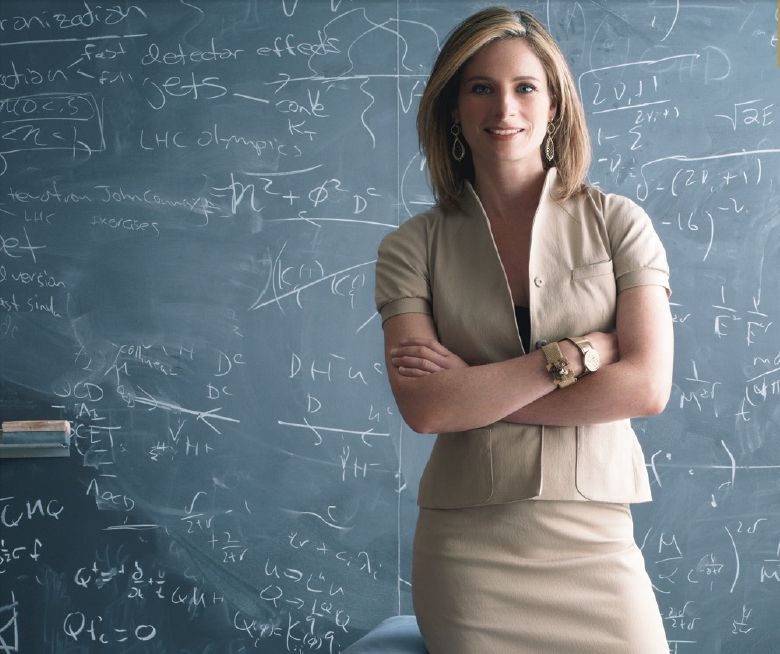
Lisa Randall is a world-renowned American theoretical physicist and the Frank B. Baird, Jr. Professor of Science at Harvard University.
She is best known for co-developing the Randall, Sundrum model (with Raman Sundrum), groundbreaking work on warped extra dimensions that offers a solution to the hierarchy problem. Her research spans particle physics, supersymmetry, dark matter, cosmological inflation, and LHC phenomenology.
A highly cited theorist and bestselling author (Warped Passages, Knocking on Heaven’s Door, Dark Matter and the Dinosaurs), she broke barriers as the first tenured woman in physics at Princeton and first tenured female theorist at Harvard.
American physicist Edward Witten explains why it wasn’t until Einstein's work that we fully understand the reason behind the inverse square law, and why it's specifically a square rather than some arbitrary decimal
1 / distance² vs. 1 / distance¹·⁷⁴⁸²²⋅⋅⋅
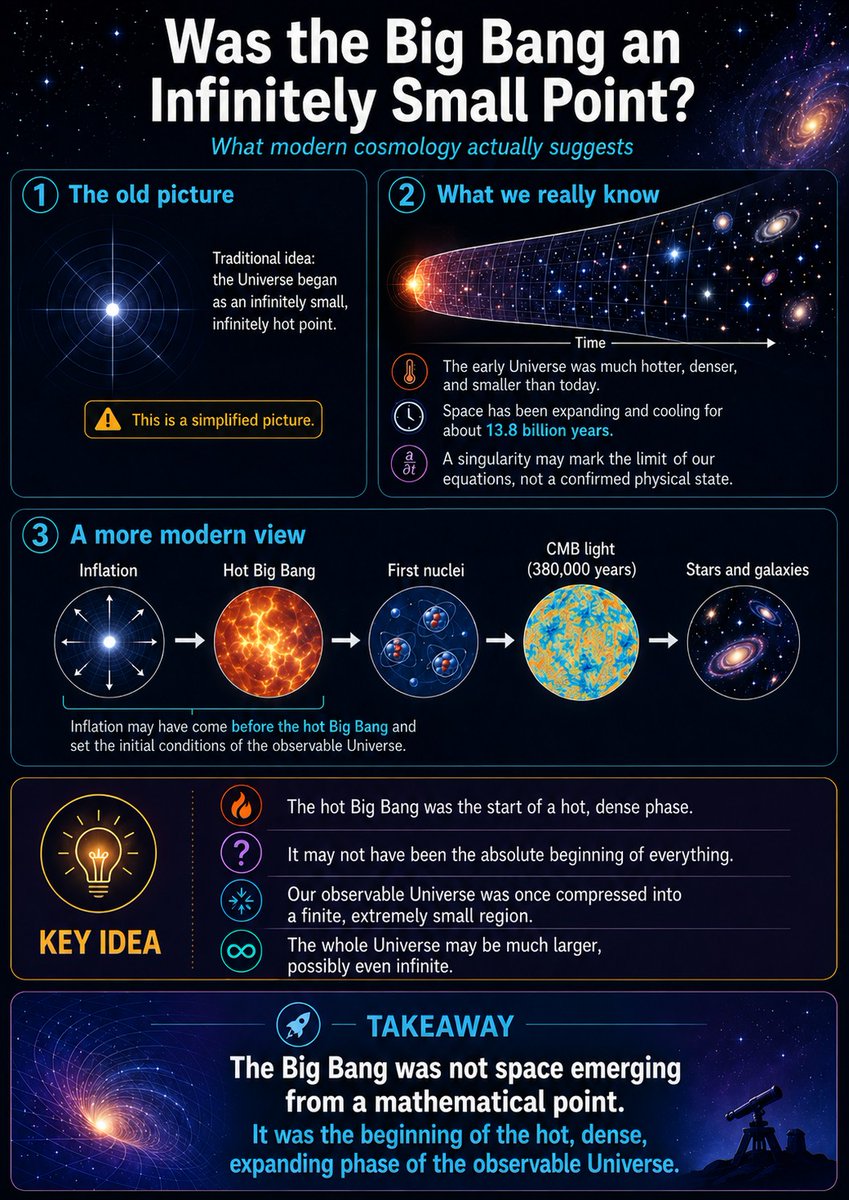
For a long time, the Big Bang was often described as the moment when the entire Universe was compressed into an infinitely small point: zero volume, infinite density, infinite temperature. It is a powerful image, but it is also a misleading one.
Modern cosmology does not really say that the observable Universe began as a mathematical point.
What it says, with much more confidence, is that the early Universe was once far hotter, denser and more uniform than it is today, and that it has been expanding and cooling for about 13.8 billion years. The difference matters, because “hot and dense” is physics; “infinitely small and infinitely hot” is where our known physics stops being reliable.
The original Big Bang picture came from a simple but profound extrapolation. If distant galaxies are moving away from us today, and if space itself is expanding, then going backward in time means the Universe was smaller. Smaller means denser. Denser means hotter.
Keep running that movie backward without interruption, and the equations of general relativity seem to lead to a singularity: a state where density and temperature become infinite and the scale of space becomes zero. But a singularity is not necessarily a physical object. Very often, in physics, it is a warning sign. It tells us that the theory we are using has been pushed beyond its valid domain.
The observable Universe today has a radius of about 46 billion light-years, not because light has travelled faster than light, but because the fabric of space has expanded while that ancient light was travelling toward us. Around 380,000 years after the Big Bang, the Universe cooled enough for electrons and nuclei to form neutral atoms, allowing light to travel freely. That ancient light is the cosmic microwave background, the oldest electromagnetic signal we can observe directly. It is not a photograph of the Big Bang itself, but it is a fossil image of the young Universe, released when space first became transparent.
That ancient light is one of the reasons we can no longer treat the singular Big Bang picture as the whole story. The cosmic microwave background is not perfectly uniform; it carries tiny temperature fluctuations, the seeds from which galaxies and cosmic structure later grew. But those fluctuations are small, coherent and highly specific. They tell us that the early Universe was extraordinarily smooth, but not perfectly smooth. It had just enough irregularity for gravity to begin building the cosmic web, while remaining uniform enough to suggest that something had already stretched and smoothed space before the hot Big Bang phase began.
That is where cosmic inflation enters the picture. Inflation is the idea that, before the hot Big Bang phase, the Universe underwent an extremely brief period of accelerated, exponential expansion. This was not an explosion of matter through space. It was space itself stretching dramatically. In fact, distant regions of the Universe can still recede from one another faster than light today because of the expansion of space, so the important point about inflation is not simply that it involved superluminal recession. What makes inflation special is how violently and exponentially that stretching happened in an almost unimaginably tiny fraction of a second. It could have taken a minuscule patch of space and expanded it so enormously that it became the smooth, flat-looking observable Universe we see today.
This changes the meaning of “the beginning.” In the modern view, the hot Big Bang is not necessarily the absolute beginning of everything. It is the beginning of the hot, dense, radiation-filled phase that evolved into the Universe we observe. Inflation, if correct, came before that. When inflation ended, its energy was converted into particles and radiation, reheating the Universe and starting the hot Big Bang. So the hot Big Bang was not an explosion of matter into empty space. It was a transition: the moment when an inflationary state gave way to a Universe filled with matter, antimatter, radiation and the ingredients from which atoms, stars and galaxies would eventually form.
This is why the claim that “space was infinitely small when the Big Bang began” is probably not right. If we extrapolate the hot Big Bang phase backward, temperature rises as the Universe gets smaller. But observations place limits on how hot the hot Big Bang could have been. The early Universe reached an extreme temperature, but not an arbitrarily infinite one. That matters because if the temperature was finite, then the density was finite too, and the region that became our observable Universe had a finite size. It may have been incomprehensibly small compared with today, but it was not a point of zero volume.
That does not mean the entire Universe had to be small in an absolute sense. We must distinguish between the whole Universe and the observable Universe. The observable Universe is the region from which light has had time to reach us since the hot Big Bang. The whole Universe may be much larger than that, perhaps even infinite. If space is infinite today, it may also have been infinite during the earliest hot Big Bang phase, just with every region much denser and hotter than it is now. Infinite space can expand. It does not need an edge. It does not need a center. Expansion means that distances between unbound regions of space increase with time.
A useful way to think about this is not “everything came from a point,” but “everything we can currently observe was once compressed into a much smaller volume.” That volume was not infinitesimal. It was finite if we are talking about our observable patch, and its minimum size depends on the maximum temperature reached after inflation. The higher the reheating temperature, the smaller our observable patch could have been at the start of the hot Big Bang. But because observations limit that temperature, they also imply a lower bound on the size of that patch. In other words, the observable Universe was once extremely small compared with today, but not zero-sized.
This is subtle because popular language often collapses several different ideas into one phrase: “the Big Bang.” Sometimes it means the entire origin of the Universe. Sometimes it means the hot early phase. Sometimes it means a mathematical singularity. In contemporary cosmology, the safest definition is narrower: the Big Bang describes the early hot, dense, expanding state from which the observable Universe evolved. It is not automatically a claim that time began from a point, or that space emerged from literal nothingness, or that the whole Universe once occupied a single location.
The data also keep the story disciplined. Inflation is strongly motivated, but not fully proven in every detail. The pattern of primordial fluctuations supports a Universe that was once extremely smooth, spatially flat to high precision and seeded by tiny quantum variations stretched to cosmic scales. At the same time, many simple inflationary models have been constrained, and primordial gravitational waves have not yet been definitively detected. A future detection of primordial B-mode polarization would be a major clue about inflation’s energy scale, but the absence of such a detection so far already tells us that the earliest observable conditions were not arbitrarily energetic.
The deeper question remains open: what came before inflation? There are several possibilities. Inflation might have lasted for an extremely long time before our hot Big Bang region formed. There may have been a previous phase described by quantum gravity. There may have been a bounce instead of a singular beginning. Or the question itself may require concepts we do not yet have, because time, causality and space may behave differently near the earliest accessible boundary of physics. What matters is that current evidence does not force us to say that the Universe began as an infinitely small point.
The more scientifically careful picture is also more interesting. The early Universe was not a tiny fireball expanding into darkness. It was space itself, hot, dense, smooth and expanding everywhere. Before that hot phase, inflation may have stretched space enormously, making our observable region large enough, flat enough and uniform enough to become the cosmos we see. When inflation ended, the Universe was reheated, particles emerged, light filled space, and the clock of the hot Big Bang began.
So the Big Bang was not necessarily the birth of space from a point. It was the beginning of the Universe as a hot, particle-filled, expanding plasma. Our observable cosmos was once unimaginably compressed, but it was not infinitely so. The singularity may be less a place we came from than a boundary of our current theories. And that distinction is important, because science advances not by forcing the Universe into old images, but by knowing exactly where those images break.
The Riemann hypothesis is one of the most famous unsolved problems in mathematics, but also one of the strangest: almost everyone agrees it is central, enormously important and probably true, yet very few mathematicians are actively trying to prove it.
The reason is not lack of interest. It is that the problem appears to sit far beyond the reach of current mathematical tools. It has resisted every serious attempt since Bernhard Riemann proposed it in 1859, became one of Hilbert’s great problems in 1900, and was later named one of the Clay Mathematics Institute’s Millennium Prize Problems, with a million-dollar reward attached to a proof.
At its core, the Riemann hypothesis is about prime numbers, the indivisible building blocks of arithmetic. Every whole number can be broken down into primes, which makes them fundamental to number theory in much the same way that forces are fundamental to physics.
But primes behave in a frustrating way: they are not distributed regularly along the number line. They become less frequent as numbers get larger, and there are statistical patterns in their distribution, but their exact locations still look irregular and difficult to predict.
Gauss noticed that the density of primes follows a broad trend, but that trend was only an approximation. The deeper question was how to understand the errors, the deviations, the fine structure behind where primes actually appear.
Riemann’s insight was to connect this problem to a complex mathematical object called the zeta function. This function takes complex numbers as inputs, meaning numbers with both a real and an imaginary part, and produces complex outputs.
The crucial points are the places where the function equals zero.
Riemann realized that these zeros encode information about the distribution of prime numbers. In a simplified way, Gauss’s approximation gives the broad shape of the prime distribution, while the zeros of the zeta function describe the corrections needed to make that picture precise.
It is comparable to decomposing a musical note into harmonics: each zero contributes one part of the “sound” of the primes.
The Riemann hypothesis says that all the important, nontrivial zeros of the zeta function lie on one specific vertical line in the complex plane, known as the critical line, where the real part is exactly one half. If this is true, it would mean that the hidden fluctuations in the primes are constrained in the cleanest possible way.
It would not make prime numbers simple, but it would show that their apparent randomness is governed by a deep and elegant order. That is why the hypothesis matters so much: it would give mathematicians a much sharper understanding of the primes and would confirm a structure that already underlies a huge amount of modern number theory.
The problem also matters because it has connections far beyond prime numbers. The same kind of mathematics appears in other L-functions, which are attached to many different mathematical objects. Versions of the Riemann hypothesis have become organizing principles across number theory and related fields.
There are also surprising links to physics, including patterns resembling energy levels in atomic nuclei, random systems, chaos theory and even black hole mathematics. This does not mean the hypothesis is “about” physics in a direct sense, but it shows that the same mathematical structures appear in very different parts of reality.
One of the striking points is that mathematicians already use the Riemann hypothesis as a conditional tool. Many papers prove results of the form: if the Riemann hypothesis is true, then something else follows. In other words, part of mathematics has already been built around the assumption that it is true, even though no one has proved it.
A proof would not simply settle an old question; it would lock into place a vast network of results and intuitions that mathematicians have been using for decades.
But proving it is another matter. The problem is so difficult that it falls outside the normal “productive zone” of mathematical research. Mathematicians usually work on problems that are hard enough to matter but not so hard that there is no visible path forward.
The Riemann hypothesis is different.
It is important precisely because solving it would probably require new mathematics, not just clever use of existing techniques. Even recent progress, such as work by James Maynard and Larry Guth, has only slightly improved known bounds on where the zeros can be. That progress is significant, but it does not look like a direct path to a proof.
So the paradox is that the Riemann hypothesis is both central and almost untouchable. It is a problem everyone recognizes, many mathematicians assume, and almost no one knows how to attack. Its real value may not lie only in the final answer, but in the kind of mathematics that would have to be invented to reach it.
A proof would likely reveal why the primes, despite their apparent disorder, obey such a profound hidden structure. That is why the hypothesis remains intimidating: not because mathematicians do not care, but because caring is not enough when the problem seems to demand a new way of seeing numbers.
The timeline in this image tracks the evolution from linear physics to exponential computation.
It highlights how we moved from foundational variables like the Schrödinger equation (1926) to complex operations like Shor’s factoring algorithm (1994).
We are currently transitioning from NISQ (Noisy Intermediate-Scale Quantum) devices to algorithmic fault tolerance, scaling the probability of error toward zero.
Cuando un lobo pierde una pelea y sabe que no tiene chance de ganar, no sigue luchando. En vez de eso, baja la cabeza y se rinde. Le muestra su cuello al otro lobo, ofreciéndose sin resistencia.
Y entonces pasa algo asombroso: el lobo vencedor se detiene. No ataca, no mata. Algo dentro de él más fuerte que el instinto de dominar lo frena. Es como si su propio cuerpo recordara que no vale la pena destruir a quien ya aceptó la derrota. Que proteger a los suyos es más importante que demostrar fuerza.
No es cobardía. No es debilidad. Es sabiduría salvaje.
Nadie aplaude al que mata a un lobo rendido. Nadie celebra la violencia innecesaria. Los lobos lo saben: ganar no es aplastar al otro, sino saber cuándo parar. Así, ambos sobreviven y la vida sigue.
Ojalá los humanos entendieran eso. Que no todo se trata de poder, orgullo o venganza. A veces, lo más valiente es saber rendirse. Y lo más fuerte, saber perdonar.
A veces creemos que rendirse es perder, pero no siempre es así.
Saber cuándo parar, cuándo soltar el orgullo, también es una forma de inteligencia.
Los lobos nos enseñan que la fuerza verdadera no está en dominar al otro, sino en respetarlo, incluso en la derrota.
En el helado corazón de Siberia, los científicos hallaron algo que parece imposible: un cachorro de león cavernario de hace 28,000 años, tan bien conservado que aún se distinguen sus bigotes, dientes y pelaje dorado. 🧊✨
Este pequeño depredador, apodado “Sparta”, murió durante la Edad de Hielo, pero el permafrost lo protegió durante milenios, evitando que el tiempo lo tocara. 🕰️
Sus órganos y tejidos permanecen casi intactos, permitiendo a los científicos estudiar una especie extinguida que caminó junto a mamuts y rinocerontes lanudos. 🐘🦏
Cada hallazgo como este es un regalo del hielo… pero también una advertencia: el derretimiento del permafrost por el cambio climático está sacando a la luz los secretos más antiguos del planeta. 🌍🔥
"Algebrica" is a free and open mathematical knowledge base. All entries are progressively being released in Markdown format on GitHub for anyone who wants to study mathematics freely and openly.
Alongside the texts, the individual SVG illustrations are also made freely available. They are minimal, mathematically accurate, and designed to be easily reusable in notes, lecture material, or educational resources. Since they are vector-based and code-driven, they can also be modified or improved simply by editing the source.
Another step toward making the knowledge base more open, transparent, and genuinely useful over time.
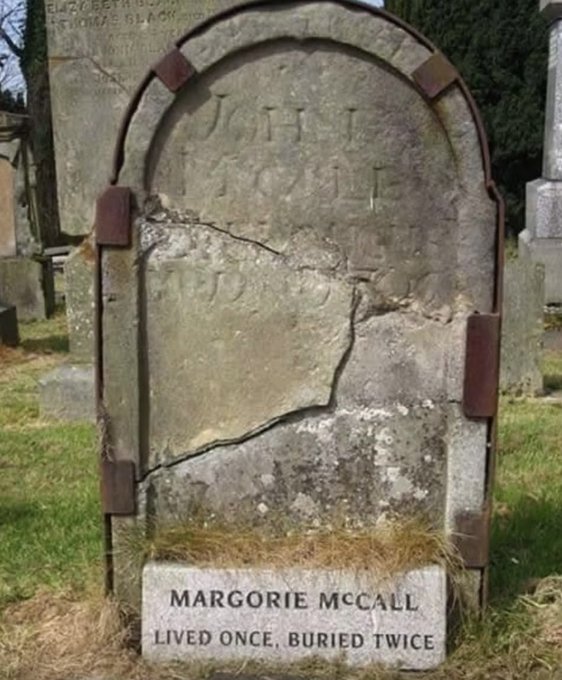
In 1705, an Irish woman named Marjorie McCall fell gravely ill with a fever in Lurgan, Ireland. Believing she had died, her family hastily buried her to prevent the spread of contagion. Her husband, John McCall, a local physician, had been unable to remove her valuable ring because her finger was badly swollen — a detail that soon attracted the attention of grave robbers.
That same night, body snatchers dug up the fresh grave. Unable to pull the ring from her finger, they began cutting it off. The sudden flow of blood shocked the still-living Marjorie out of her deep coma. She sat upright in the coffin and screamed, terrifying the robbers, who fled and reportedly never returned to their grim trade.
Covered in dirt and still wearing her burial clothes, Marjorie climbed out of the grave and walked home. When she knocked on the door, her husband John, still in mourning, jokingly remarked that if his wife were alive, he would swear it was her at the door. Upon opening it and seeing Marjorie standing before him — alive, bleeding, and in her shroud — he collapsed from shock and died on the spot.
John McCall was later buried in the grave originally dug for his wife.
Marjorie survived the ordeal, eventually remarried, and had several children. When she died many years later, she was laid to rest in Shankill Cemetery in Lurgan. Her headstone famously reads:
“Lived Once, Buried Twice.”