Best news on this chart for small businesses: the highest-impact, lowest-effort move is improving pages you already have.
Start there before building anything new. ✅
If you have a limited SEO and GEO budget, check out what is producing the highest impact.
Ideally, you need to excel in all aspects to compete in the long run. But these will produce the best outsized returns.
🇺🇸 There are people in every community who once wore a uniform.
For the time given, the years away, and everything it asked of them and their families.
A big thank you. ♥️💙
#veteransday#thankyouforyourservice#honor#remembrance
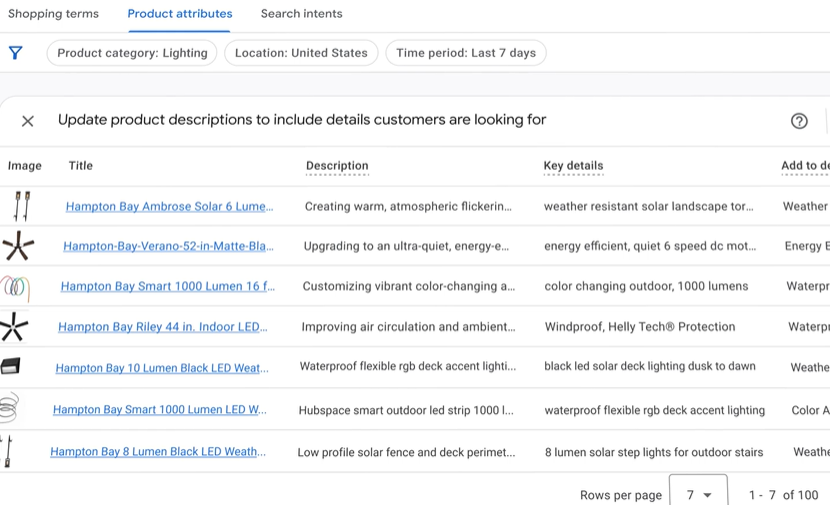
@alexgroberman Knowing where in the funnel you're losing AI visibility completely changes how you optimize product attributes vs. supporting content. Incredible breakdown!
Shoppers now ask for hyper-specific, multi-constraint questions. Google’s new AI Performance report proves that having deep product attributes and use-case content is what wins recommendations.
Are you already optimizing your product feeds for AI Overviews? 👇
Google is now literally showing ecommerce businesses specifically how to get traffic from AI Search.
Yes, directly inside your Google dashboard.
This is probably one of the most useful AI Search updates for retailers in 2026.
Let’s go through it.
If you want to see whether your business is appearing across Google AI, ChatGPT, Claude, Perplexity, Grok and broader AI search, start here. It’s free:
https://t.co/Evw8cXXicl
Google recently made its new AI Performance Insights report generally available inside Merchant Center for eligible businesses in the United States, Canada, Australia, India and New Zealand.
The current report covers English-language conversational shopping queries across Google AI Mode and AI Overviews.
Google is essentially giving ecommerce companies an AI Search diagnostic report.
You can see whether your products are being surfaced when somebody uses Google’s AI features to research what to buy, and where competitors are getting visibility that you are not.
Let’s start with share of voice.
Google calculates AI share of voice based on how many AI impressions your brand or products receive compared with you and the competitor set Google has defined for related searches.
What exactly does that mean?
Well, when Google AI is helping shoppers research your category, how much of that visibility are YOU getting?
If competitors are appearing constantly while your products barely show up, you finally have first-party Google data showing you the gap.
No manually asking AI Mode the same question 50 times or trying to infer everything from referral traffic - Google itself is telling you.
The report then breaks conversational shopping searches into three stages:
Discovery.
Evaluation.
Ready to buy.
This might be the most useful part of the entire report.
Suppose you have strong visibility during Discovery, but it falls during Evaluation and nearly disappears at Ready to buy.
That tells you your products are being surfaced early in the research journey, but losing visibility as shoppers get closer to making a decision.
The opposite could happen too.
Maybe you perform well for shoppers who already know what they want, but competitors are being introduced much earlier.
That is far more useful than simply knowing you were “mentioned in AI Search.”
And it is why SEO Stuff approaches AI Search Optimization as more than checking whether ChatGPT mentioned your name once:
https://t.co/MMsDTFf4rg
Then there are the actual searches.
Traditional ecommerce SEO has historically focused heavily on relatively clean keywords like “running shoes,” “carry-on luggage” or “standing desk.”
AI shopping queries can look more like:
“What’s a good lightweight running shoe under $150 for someone with flat feet who runs mostly on pavement?”
Those searches contain use cases, constraints, features, price ranges and preferences all at once.
Google’s report is built around that reality.
Its Top Terms section shows the concepts shoppers are prioritizing inside conversational queries.
Google gives examples such as “maximum cushioning” and “arch support,” then tells merchants to incorporate relevant high-frequency terms into product titles and descriptions where appropriate.
That is Google directly connecting conversational AI Search behavior to product optimization.
The report also surfaces Popular Attributes.
Think size, color, material and other structured product specifications.
Google can show which attributes shoppers frequently care about and which may be missing from your product data.
If shoppers repeatedly want to know whether something is machine washable, expandable, 100% cotton or supports a certain weight, but your product data does not clearly provide that information, you have an information gap.
Google’s recommendation is straightforward: populate missing attributes and prioritize the ones shoppers are asking about most.
Then there is Top Search Intents.
This goes beyond individual terms and looks at WHY somebody is searching.
A shopper may want an office chair for lower back pain, want to compare two models, stay under $300 or understand whether mesh or leather is better.
Those are very different buying situations, and Google is now giving retailers more information about which conversational shopping intents are actually occurring.
So the optimization loop becomes pretty straightforward:
Look at your AI Search share of voice, identify where competitors are beating you, see where visibility falls across Discovery, Evaluation and Ready to buy, review the terms and attributes shoppers care about, improve your product information and keep monitoring.
Google is explicitly recommending this kind of workflow.
Keep product data accurate.
Add relevant high-frequency terms where appropriate.
Populate missing attributes.
Keep reviewing the report as new opportunities appear.
There is another important detail.
The AI Performance report currently measures organic AI visibility.
Paid Ads traffic is not included.
That makes this particularly relevant for SEO.
But Merchant Center product data is only part of the equation.
People researching expensive or complicated products also ask things like:
“What is the best X for Y?”
“X vs. Y.”
“Is X worth the money?”
“Best X under $500.”
“What should I look for when buying X?”
A product feed alone may not answer those questions, but your website can.
Buying guides, comparison pages, category pages, FAQs, use-case content, product education, original research and expert explanations give Google more context around the buying decision.
Suppose shoppers are researching “best running shoes for plantar fasciitis.”
Your product feed can help Google understand which shoes may be relevant.
Your website can explain which features matter, which products contain those features, how models compare and who each shoe is designed for.
That gives Google considerably more information to work with across the broader research journey.
This is what the SEO Stuff Premium Content Bundle is designed to build:
https://t.co/5osvnSaiGB
Then there is authority.
Your product feed and website are still information coming from YOU.
Search and AI systems also encounter reviews, editorial publications, comparison articles, industry websites, third-party mentions and contextual backlinks discussing your company and products.
That broader authority is why the SEO Stuff done-for-you package combines content with contextual DR50+ placements:
https://t.co/MMsDTFf4rg
And Google just gave ecommerce businesses considerably more data to see where those efforts may need to be focused.
There is another development worth paying attention to - Google is also introducing Conversational Attributes in Merchant Center.
These are optional product-data fields designed to help AI systems and conversational agents understand more nuanced information about products.
They can include product questions and answers, supporting documents, related products, variant information and popularity information.
Google recently disclosed a test involving lululemon.
The company submitted conversational product attributes, and Google says those attributes were incorporated into relevant AI Mode product recommendations 50% of the time during testing.
Mind you, that does NOT mean adding conversational attributes gives you a 50% chance of being recommended, it just means the additional information lululemon supplied was incorporated into relevant recommendations half the time within that test.
Google wants more detailed product information because AI shopping queries are becoming more detailed, and it is increasingly giving merchants tools to both supply that information and measure what happens afterward.
If you run an ecommerce company, I would be paying very close attention to this report.
AI shopping is already measurable inside Google, and Google is now giving businesses tools specifically designed to help them understand and improve their presence within it.
And if you want to see where your business stands across Google AI, ChatGPT, Claude, Perplexity, Grok and broader AI search, start here:
https://t.co/Evw8cXXicl
The bar for what marketing and tech teams can build in-house just dropped again ⚡
Models that handle complex reasoning and code unlock massive speed for product marketers and builders.
Introducing Claude Fable 5.2 and Claude Mythos 5.2, designed to tackle the most daunting technical challenges.
They’re capable collaborators on ambitious projects in many fields, and show improvements in areas like coding, reasoning, and vision.
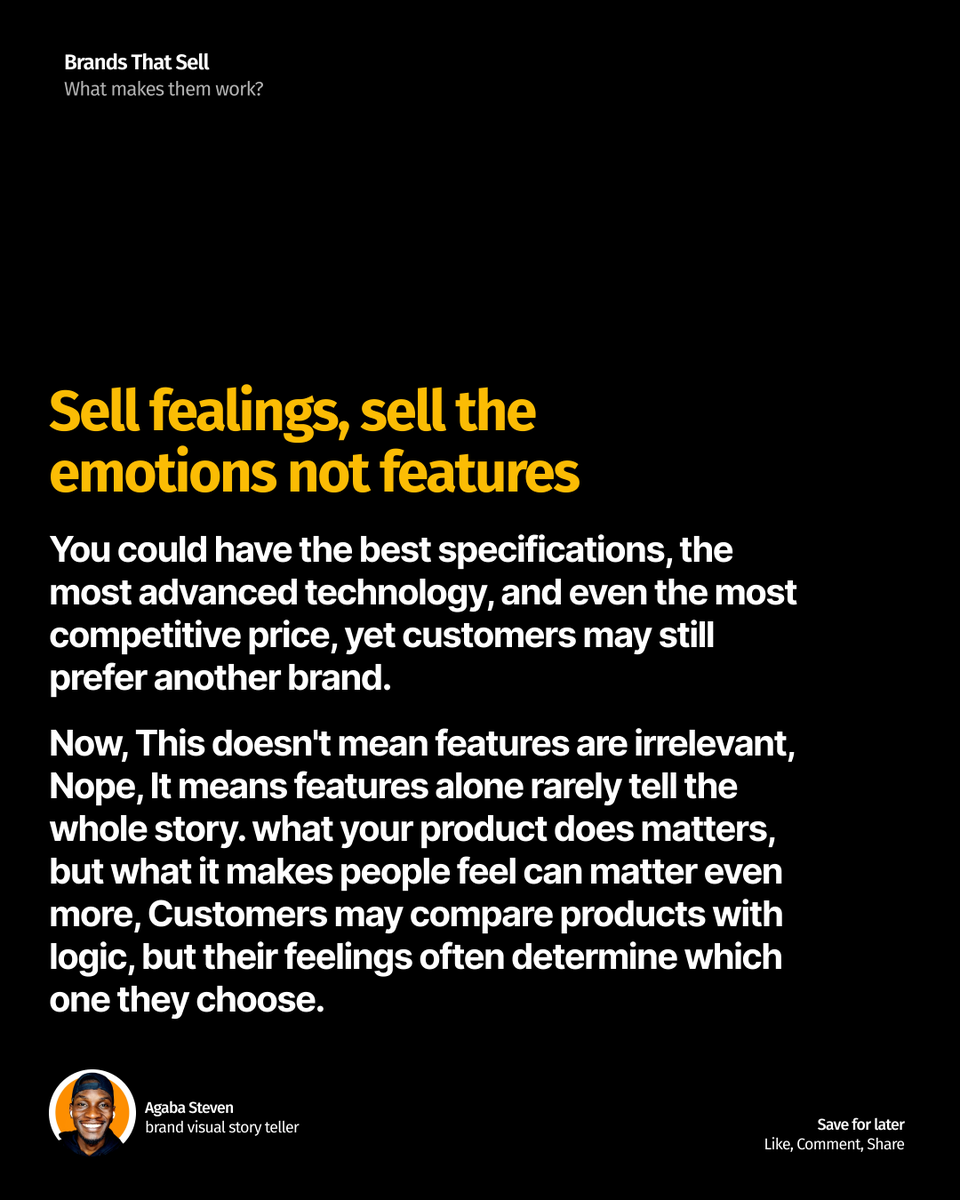
Features tell, emotions sell. 🧠💡
Most brands spend their budget explaining what their product does, while market leaders focus entirely on how it makes people feel.
What’s one brand you buy from purely for how it makes you feel? 👇
People don't always buy the best product. They buy the product that makes them feel the best, It's always about the feeling, the emotions, like the common Quote always infers
Research prooves that People make 95% of their purchasing decisions subconsciously, driven by feelings and emotions, and then use logic and facts afterward to justify what they chose.
Like Micheal Harris Once asserted in his article on the subject "Our subconscious/intuitive decision to buy is then communicated to the conscious mind via an emotion. The conscious mind then searches for rational reasons, and that’s how we complete the circle: We justify our emotional signals to buy with logical reasons. Phew, the illusion is now complete that the conscious mind that we identify with is in control so we can feel safe and secure".
Nike, for example doesn't neccesarily sell shoes with comfortable soles and durable materials. It sells ambition, confidence, and the belief that anyone can become an athlete. That's why its communication focuses more on human achievement than product specifications. Cocacola often shows friends laughing, families celebrating, and people sharing happy moments. the product has became associated with those experiences.
Always remember, Customers may compare products with logic, but their feelings often determine which one they choose.
An analytics dashboard showing citations and business presence changes how we evaluate brand authority.
Would you optimize content purely to be cited as an authoritative source inside ChatGPT, even without a direct click? Let’s talk below 👇
Well this is pretty big news: OpenAI is building an analytics tool to see how businesses appear and get cited in ChatGPT.
Is this the first iteration of a ChatGPT Search Console? 👀👀👀
Will be following this closely!
H/t @HannsKronenberg for flagging
https://t.co/bz9zyMDSjL
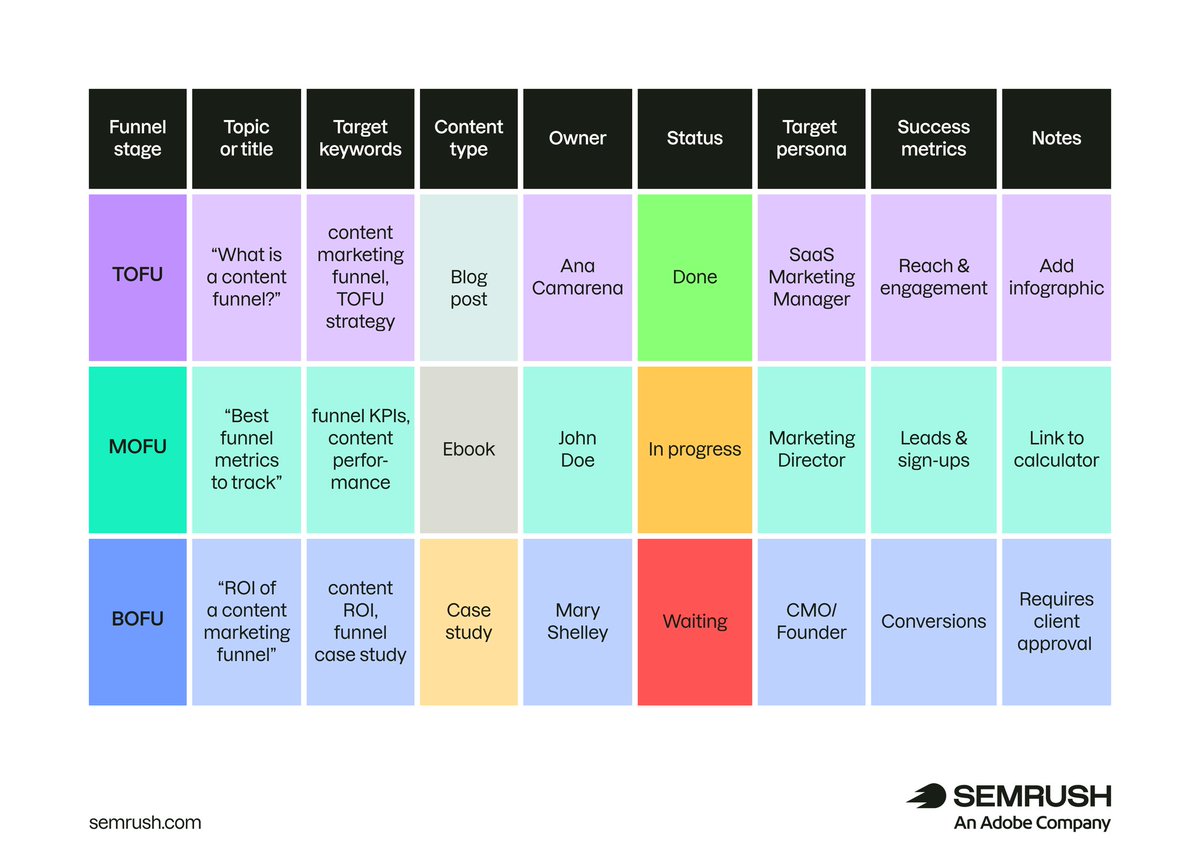
Map TOFU, MOFU, and BOFU content types, define target keywords and personas and track KPIs and stage-specific success metrics with our free content funnel planner template 👇
https://t.co/fQOjfyuFom.
I did say we'd be releasing our models periodically...introducing Gemini 4 Carbon, our next frontier model.
Following Argon's release just two weeks ago, Carbon shows the pace at which we’re pushing the frontier, it ranks #1 on the recently updated v5.0 of @ArtificialAnlys Intelligence Index at 59. It also leads across key cybersecurity evaluations scoring 88.2% on SEC-bench Pro for finding vulnerabilities, 54.8% on ExploitGym for exploitation, and 71.0% on CWE-bench for patching.
We’re seeing significant improvements in long-horizon tasks even compared to Argon, and we’ve strengthened frontier safeguards.
As we did with Argon, we’re going to roll it out gradually + responsibly. Some trusted cyber defenders will get access starting this week. We'll be expanding it to more partners through our Fairwind Program, ahead of wider availability soon, so hang tight!
We’re launching a preview of our Connected Apps Platform, giving developers a single place to build and manage apps for Search and the @GeminiApp.
Plus, we’re rolling out a new set of Connected Apps from partners like @Adobe, @Calm, and @onepeloton to make your everyday activities more streamlined.
Why isn’t your brand showing up in AI search? The problem could be in one of four areas:
1. Discoverability: AI systems can't reliably access the information they need about the brand
2. Clarity: AI systems access that information but describe the brand inaccurately or inconsistently
3. Authority: AI systems describe the brand accurately but rarely include it in relevant comparisons or shortlists
4. Trust: AI systems consider the brand but rarely recommend it, or recommend it with recurring caveats
Each problem needs a different fix. Our guide explains how to diagnose the gaps and decide what to tackle first 👇
https://t.co/HnOUXJo7YU.
📌 Posting more won’t fix unclear content.
Before the caption, the graphic, or the hashtag, those two answers matter most.
Want content with a clearer purpose? Contact us https://t.co/F3U7ugWDFD 🎯
#marketingstrategy#smallbusiness#contentmarketing