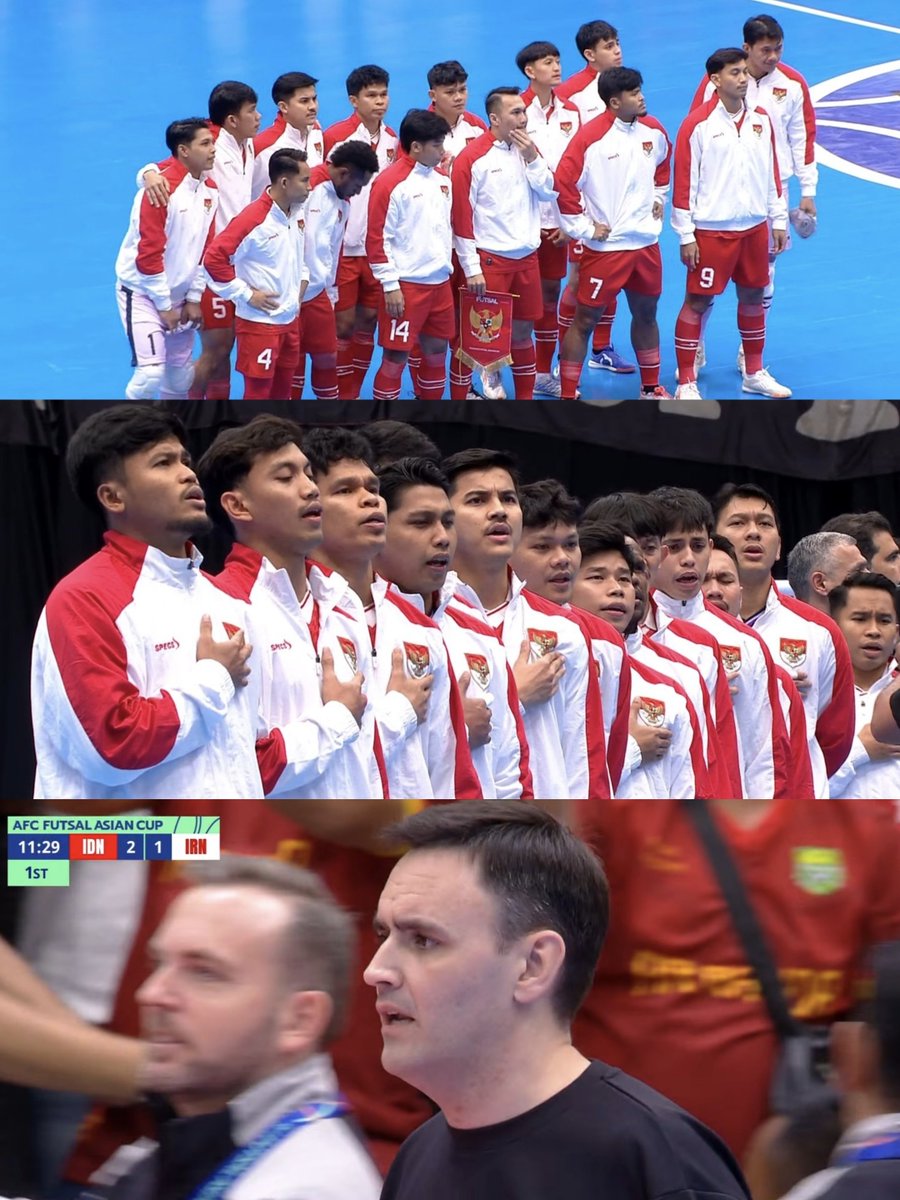
🚨 Indonesia mencatatkan sejarah di AFC Futsal Cup 2026 tahun ini:
✅ pertama kali lolos semifinal (vs. Vietnam (rank 20)
✅ pertama kali lolos final (vs. Jepang (rank 13)
✅ menahan RAJA futsal Asia, Iran 5-5 hingga babak adu penalti
KAMI BANGGA! 🇮🇩👏
@piecesofmeng Aku yakin teman2nya akan datang ke pestanya, demi sebuah persahabatan n dukungan, tp masa iya pacaran dua thn ini krukok ga dikenalin ke “financed” nya
🐢 KENAPA SEMAKIN BANYAK?
kamu tau teritip?
yep, bener banget, yang suka ada di tubuh paus dan penyu!
tau ga sih, ternyata jumlah teritip sekarang itu banyak banget dan menganggu adek satwa di laut, termasuk si penyu di bawah ini.
kok bisa, ya?
[thread belajar bareng]
“since AI can do coding and everyone is a programmer now”
Wrong
The same way telling Dall-E to generate an art piece doesn’t make me an artist
Sure, you can create a basic project with AI, that’s fine. But for anything even slightly complex, a real programmer needs to step in.
Object-Oriented Programming in Under 4 Minutes:
Object-oriented programming (OOP) is a programming paradigm in which programs are designed using classes and objects. This design allows related functions and data to be grouped together in self-contained and reusable units.
A class is a template or blueprint from which objects are made from. Classes define the properties and methods that an object can have, and objects are unique instances of a class.
For example, let's say you want to create a life simulation game where players can adopt and raise pets. You would have a "Pet" class that defines the properties of each pet (like "name" and "age"), as well as behaviors they can do (like "speak" and "eat").
You could then create objects, or instances, of this class for each specific pet. Each object could have its own values for each property. For example, you could have a 2-year-old pet named "Winston", & a 1-year-old pet named "Wesley"; both initialized from the "Pet" class.
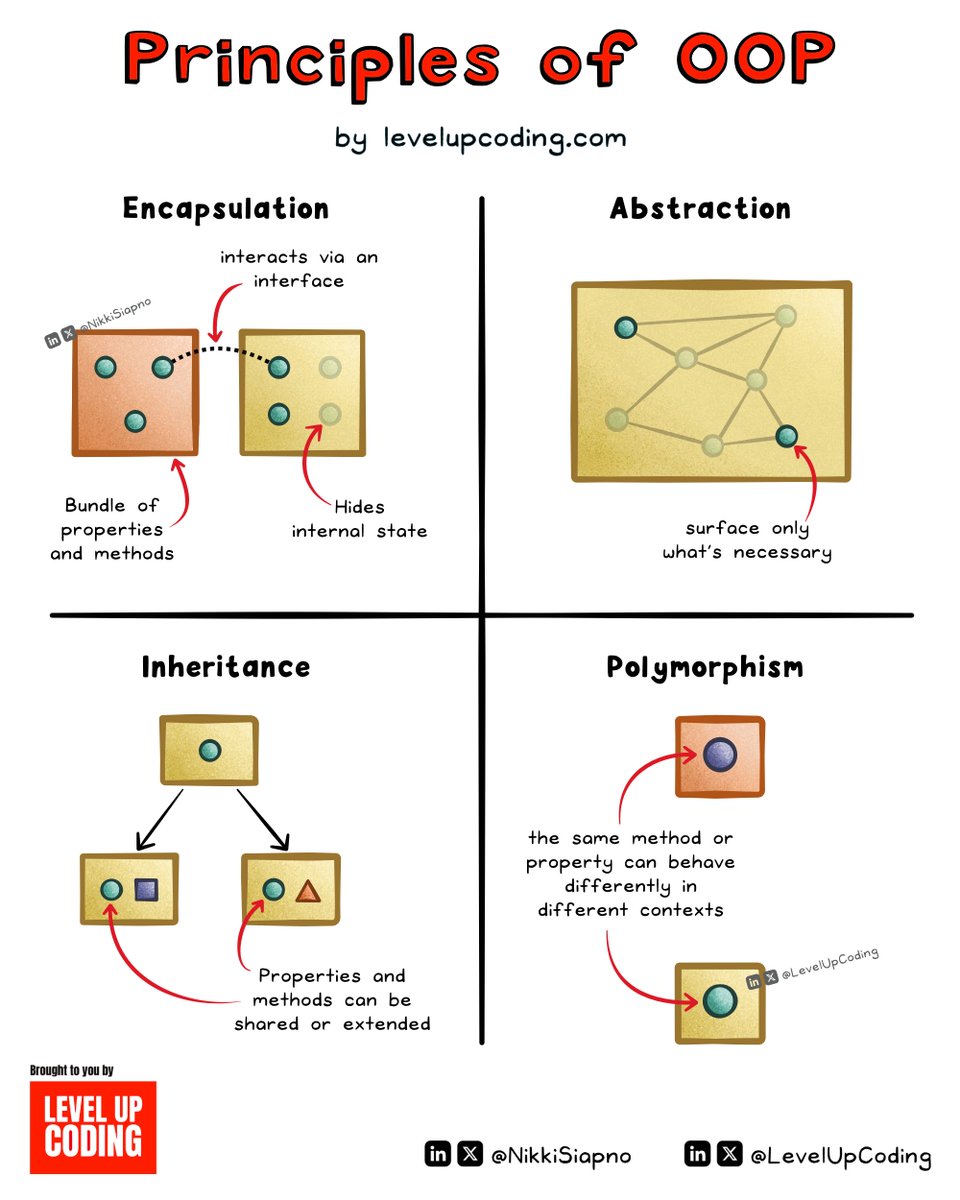
Object-oriented programming has 4 main principles; encapsulation, inheritance, abstraction, and polymorphism.
Encapsulation hides internal details but exposes data & methods via a public interface, preventing unintentional changes. E.g. — a player can view a pet's age but can't accidentally change it. But they can run methods avail on the public interface like changing a pet's name.
Inheritance allows classes to inherit properties and methods from other classes, making code reusable and organized. E.g. — A "SuperPet" class that extends from "Pet "and would inherit "age", "name", "eat", and "speak"; while defining new behaviors like "fly"
Polymorphism is a principle that enables objects to change their form by extending or overriding existing methods. E.g. A "Dog" & "Cat" class that extended from the "Pet", shouldn't share the same "speak" method. You'd override it to have its own logic like "woof" or "meow"
Abstraction reduces complexity by only surfacing the information needed for a given context or use case. E.g. A “Player” class doesn’t need to know how the “eat” method works in the “Pet” class, it just needs to know how to interact with it — i.e. its input and output.
OOP provides a way to design your program that makes it reusable, secure, stable, and easy to understand. But it isn't without disadvantages. A couple of arguments against it are that it can lead to over-engineering and complexity on a large scale.
~~
Thank you to our partner Kickresume who keeps our content free to the community.
Did you know you can turn your LinkedIn into a resume with one click?
Check it out: https://t.co/DIeENAT5gp
We currently have an open position for an iOS Developer at @VerveAR
Email your resume, website or github to [email protected].
Can't wait to have you join our amazing team! 😀
Software architectural patterns are reusable solutions to commonly occurring design problems in software architecture that provide a structured way to organize and design a software system to achieve specific qualities such as flexibility, scalability, and maintainability.
1. Event-Driven Architecture (EDA):
- In an event-driven architecture, the flow of the system is determined by events such as user actions, sensor outputs, or messages from other systems. Components in the system communicate through events, and event handlers respond to these events.
- 🔑 Key Concepts: Events, Event Handlers, Asynchronous Communication.
2. Layered Architecture:
- Layered architecture organizes the system into distinct layers, where each layer has a specific responsibility. Communication typically occurs only between adjacent layers, and each layer provides specific functionality.
- 🔑 Key Concepts: Presentation Layer, Business Logic Layer, Data Access Layer.
3. Monolith:
- A monolithic architecture is a traditional approach where all components and modules of a software application are tightly integrated into a single codebase and deployed as a single unit. This contrasts with distributed architectures like microservices.
- 🔑 Key Characteristics: Single Codebase, Tight Integration, Single Deployment Unit.
4. Microservices Architecture:
- Microservices break down a software application into small, independently deployable services. Each service focuses on a specific business capability and communicates with others through APIs. Microservices promote scalability, maintainability, and flexibility.
- 🔑 Key Characteristics: Independent Deployability, Service Isolation, Decentralized Data Management.
5. Model-View-Controller (MVC):
- MVC is a design pattern that separates an application into three interconnected components: Model (data and business logic), View (user interface), and Controller (handles user input and updates the model and view accordingly).
- 🔑 Key Components: Model, View, Controller.
6. Master-Slave Architecture:
- In a master-slave architecture, one central node (the master) controls and manages one or more subordinate nodes (the slaves). The master distributes tasks to the slaves, and they report back to the master.
- 🔑 Key Components: Master Node, Slave Nodes, Task Distribution.
These architectural patterns provide different ways to structure and design software systems based on various requirements, such as scalability, maintainability, and ease of development. The choice of an architectural pattern depends on the specific needs and goals of the application or system being developed.
👍🏿 Subscribe to our newsletter - https://t.co/hxARDoA98l
#systemdesign #coding #interviewtips
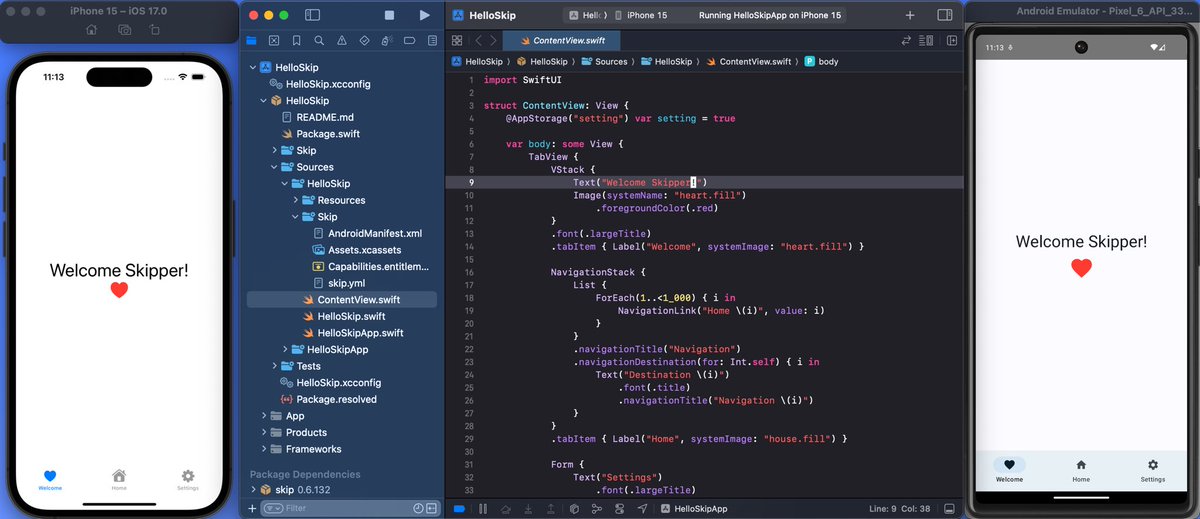
I’m thrilled to announce the tech preview of Skip: dual-platform app development in Swift.
You write a modern iOS app in Swift and SwiftUI. Skip’s Xcode plugin generates a native Android Kotlin and Compose version!
Docs: https://t.co/9O7v6HS0CJ
Video: https://t.co/tHNWpj1QlJ
The #accessibility team at Apple has two new full time software engineering positions available: one for systems engineering and one focusing on Apple Vision Pro. Feel free to introduce yourself via DM with a CV if interested!
note: These roles are in Cupertino, CA.