“Scaffolds act as bridges, connecting what students already know to the new concepts they are learning, while also making the language of instruction accessible and meaningful.” - @delgadong94 in this recent Edweek piece https://t.co/Xue4qMzK1q
📚 ❤️ We love this MyTWR moment from Ms. Marcum, Instructional Coach at Ezra Sparrow Early Childhood Center in Kentucky!
She writes: “I am the instructional coach and wanted to model this strategy for teachers. During kindergarten students' Library class I read the passage The Story Behind the Poppy to students, and then we completed the Sentence Expansion Activity. This was a perfect lesson to lead into our Veterans Day celebrations on Nov. 11th.”
As an educational nonprofit, The Writing Revolution is proud to offer this resource for free—available in two versions (K–2 and 3–12).
Got a MyTWR moment? We would love to see it! 🔗 https://t.co/SRSwNoevMw
#WritingRevolution #TWR #VeteransDay #SentenceExpansion #LiteracyInstruction #WritingInstruction #TeacherInspiration #ElementaryEducation #FreeResources #MyTWRMoment
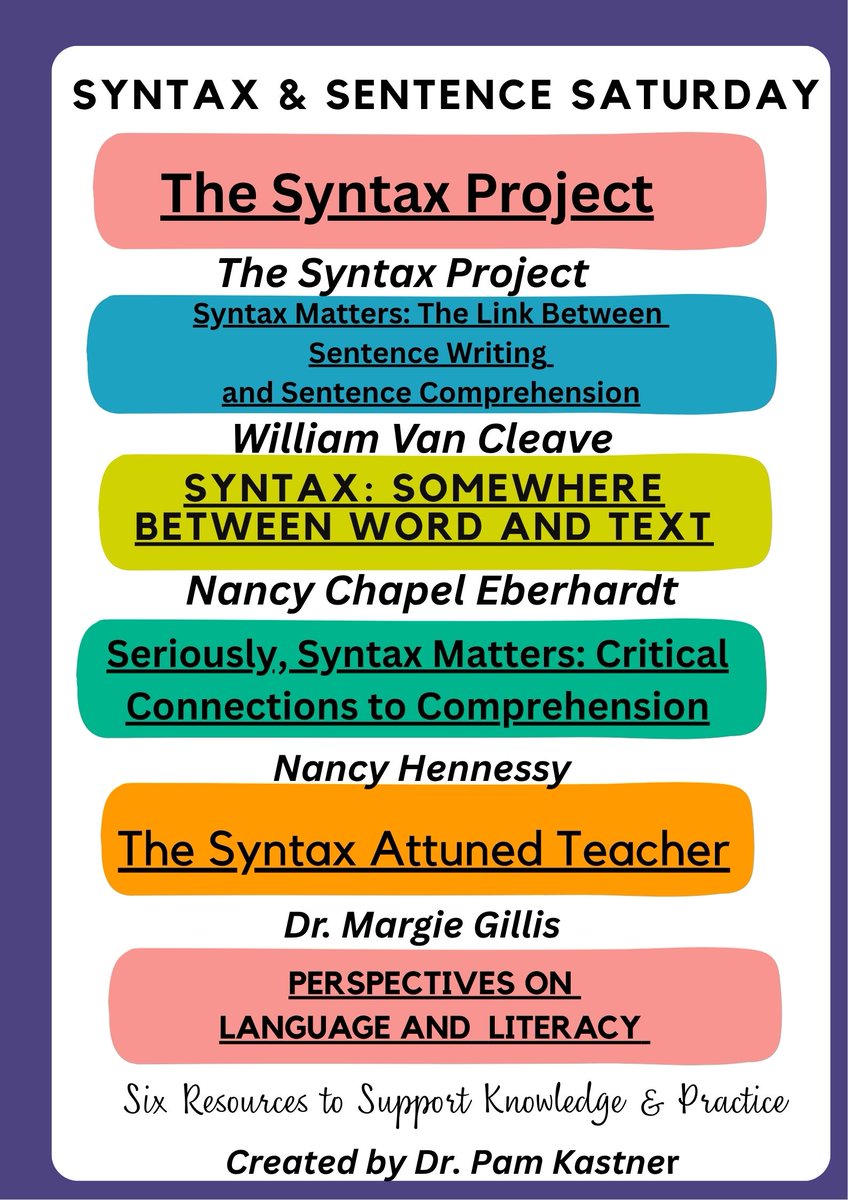
It's Syntax & Sentences Saturday! This week’s Summer Skill Saturday features 6 powerful syntax resources—lessons, presentations & more! Dive into the infographic for all the details: https://t.co/AZk7EIftP0 #SyntaxMatters#LiteracyInstruction
Designing and delivering initial Tier 1 reading instruction in ways that align with the research on how students best learn to read has the ability to prevent the need to intervene with large numbers of students. @readingleaguetn#ReadingScienceMTSS@sstollar6
"If students are always prevented from reading grade- level texts with complex structures and concepts because their reading levels are too low and the scaffolds not robust enough, when will they ever have an opportunity to catch up to peers?"
Fisher and Frey (2014)
Coming in July: The TLAC Guide to the Science of Reading.
What's in it you ask?
Seven arguments about what the research tells us reading should look like after students have mastered phonics. 🧵
“Gains from UFLI are equivalent to 8 months of additional instruction for kindergarteners, and almost a year-and-a-half of extra instruction for 1st graders, @devin_kearns said.” @s_e_schwartz via @educationweek
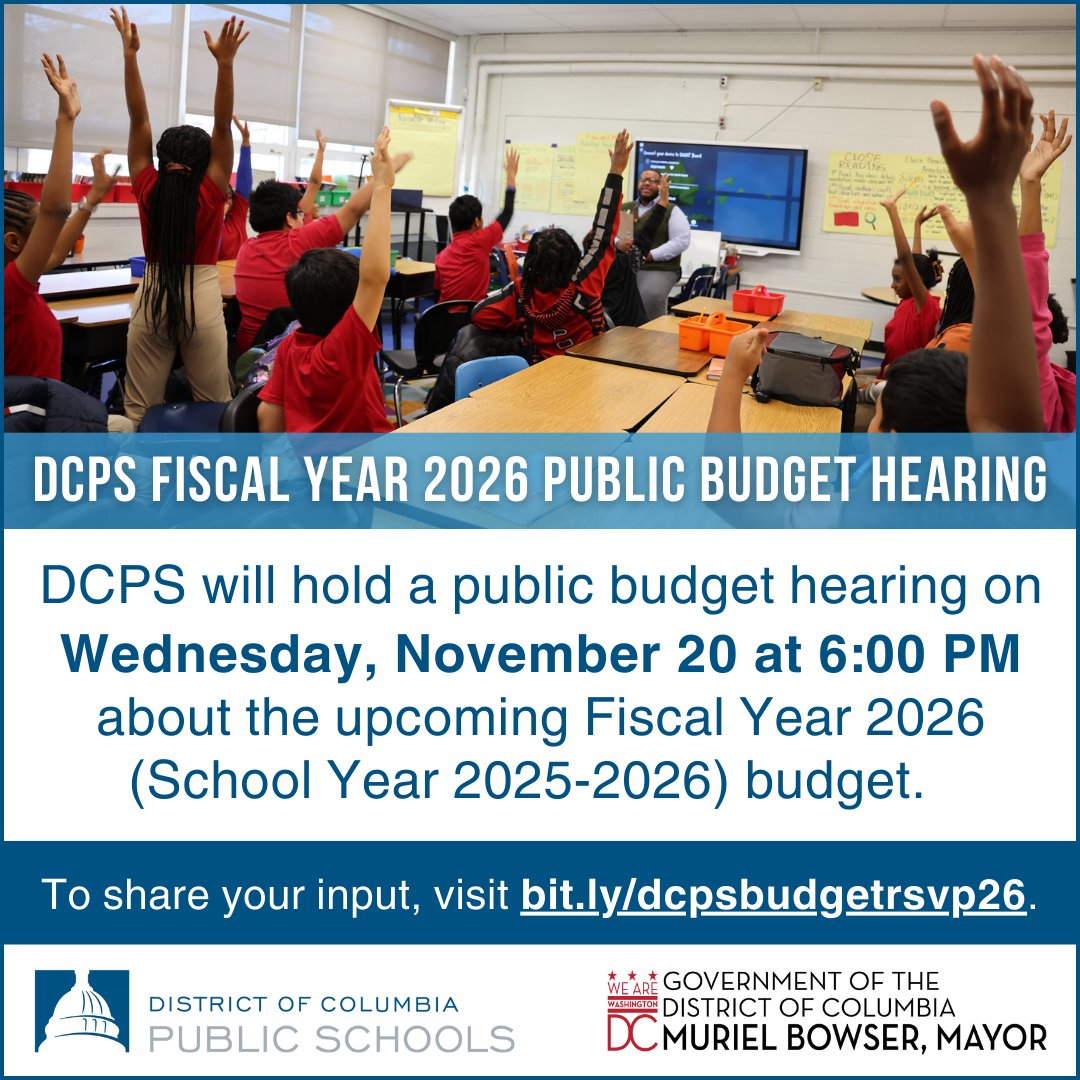
📢Let your voice be heard📢
Join DCPS for our upcoming public budget hearing on Wednesday, November 20 at 6:00 PM.
Register to testify or to hear about the Fiscal Year 2026 Budget at: https://t.co/DNetKXvUSL
Comprehension isn’t a skill to be transferred - or worse yet - “mastered!”
It’s a combination of processes that involve the reader, the text, and the task.
Growing up, my parents never had a doctor
The first time my mom saw one, she was being rushed to the scanner for a code stroke
The first time my dad saw one, he was being rushed to the cath lab for a heart attack
But now, the next time they will see a doctor, it will be me 🥹
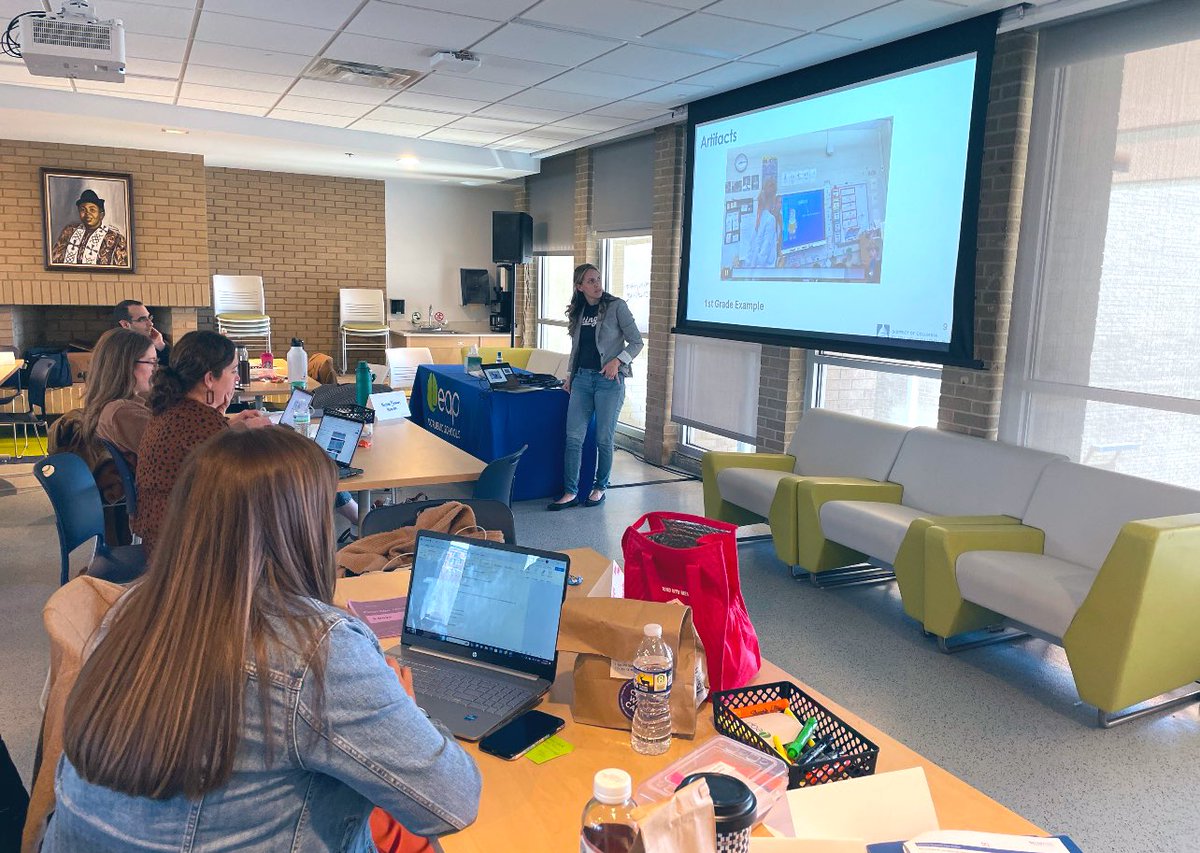
Enjoyed presenting about #morphology instruction in K-2 classrooms last week!
Currently, we are using #morphememagic and embedding it into our knowledge building curriculums and structured literacy lessons.
Educators- How are you implementing morpheme instruction?
It’s important that Ss can read CVC words fluently before moving onto multisyllabic words.
Speed Drill 🏃🏼♀️
Read the CVC slowly in your 🧠
Read it the fast way out loud 📢
Ss saw these smaller words within bigger words in the text 📖
@goyenfoundation@SoRclassroom
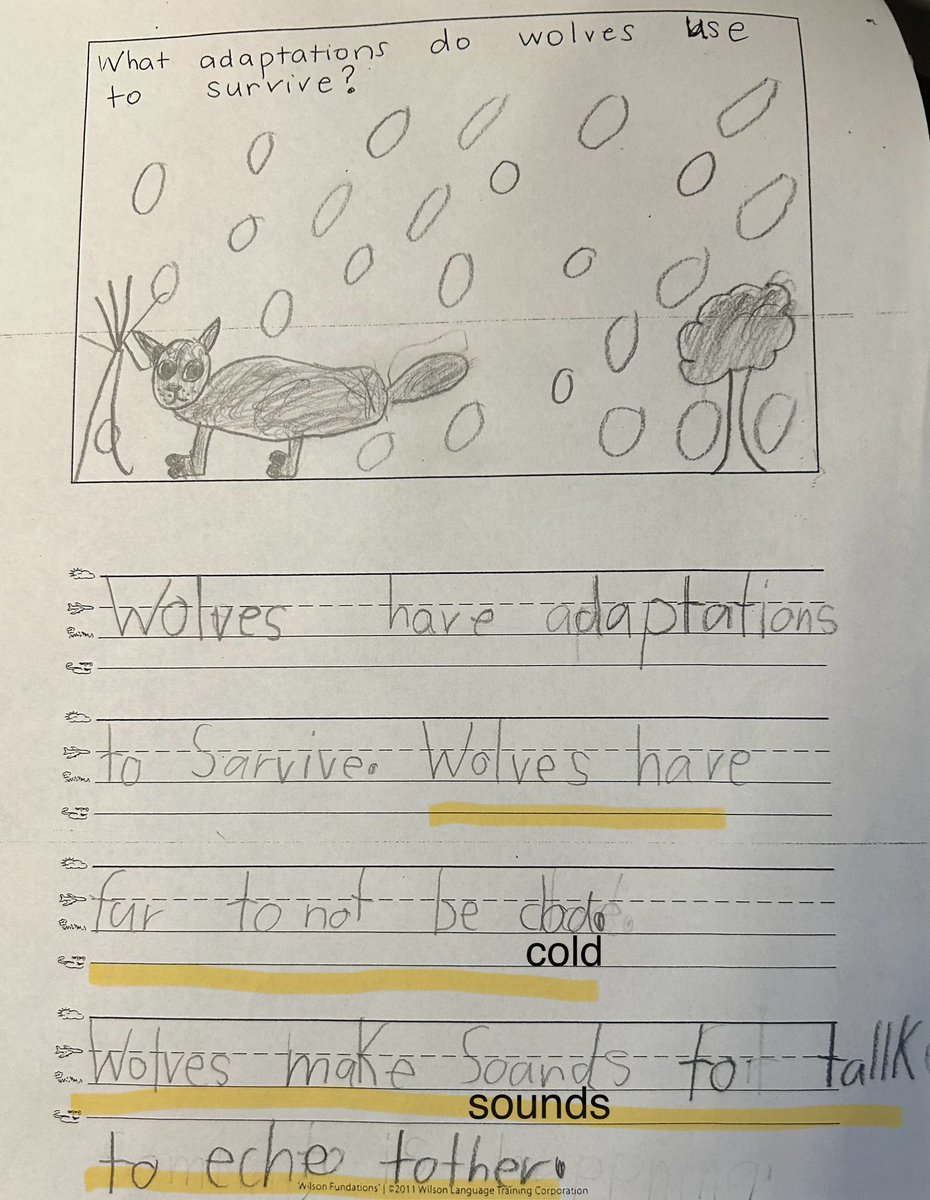
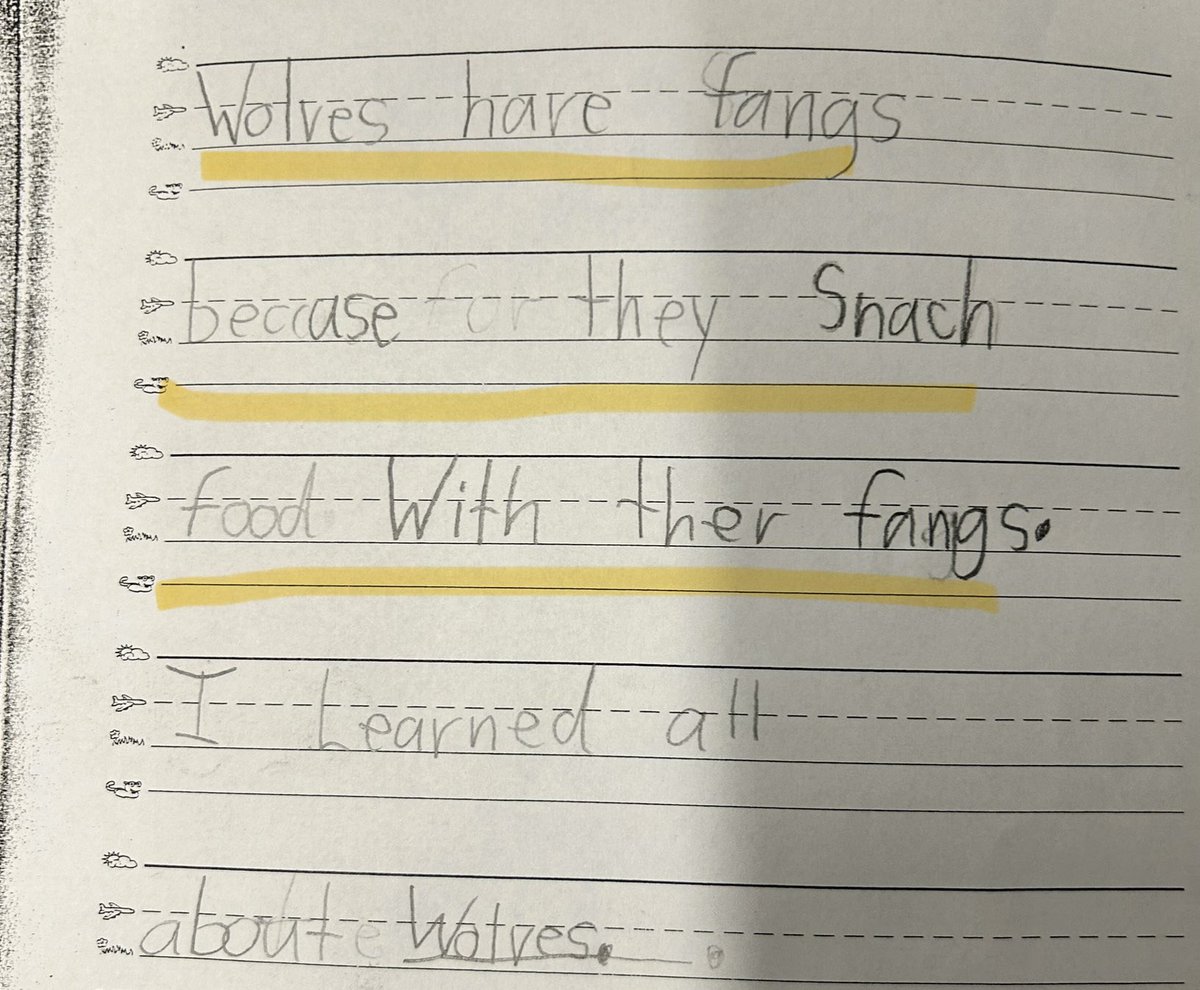
Here’s an example of a first grader applying “juicy” sentence strategies to her writing! 🧃
1️⃣ Identify key words about wolf adaptations
2️⃣ Key words ➡️ full sentences (Who? Did what? Why/How?)
It’s GREAT to see Ss internalizing syntax strategies 🤩 (independently too👏🏻)
NWF measures Ss ability to decode individual phonemes and blend them together to read 📖
My Ss learned today that multisyllabic words can contain syllables that are “nonsense words”
In isolation- there is no meaning (“muf”) BUT paired together- there is! 👏🏻
Vocabulary knowledge is 1 of the largest contributors to reading comprehension (RC). According to Stahl & Nagy(2006),vocabulary knowledge contributes 50-60% of the variance in RC. A consistent vocab instructional routine is a powerful tool every teacher needs in their tool box!