What if your voice agent could use real-time knowledge from a frontier model—database lookups, tool calls, and all—and weave it into conversation without compromising on millisecond-level responsiveness?
Check out our paper!
🔗 https://t.co/wHTLgF8axb
💻 https://t.co/Ozvte3qz6m
What if your real-time voice agent could reason like a frontier model?
Conversational Infill lets a tiny on-device model talk while a frontier model thinks in the background: fast and responsive, grounded in frontier reasoning.
w/ @vysrini
📄 https://t.co/anfJCk6vrB
🧵👇
To support complex, evolving conversations and original insights, LLMs must be designed for engagement, not just answers.
🔗Paper: https://t.co/lIlvq9n2Ed
(5/5)
Thanks to co-authors @timalthoff, @danmcduff, @xliucs, @Orson_Xu, @kmr_ayush, Issac Galatzer-Levy, Shwetak Patel
Excited to share our paper, Substance over Style: Evaluating Proactive Conversational Coaching Agents, accepted to ACL 2025 Main Track!
LLMs do well when given clear context up front.
But what if that context doesn't exist yet?
(1/5)
🔗Read more: https://t.co/lIlvq9n2Ed
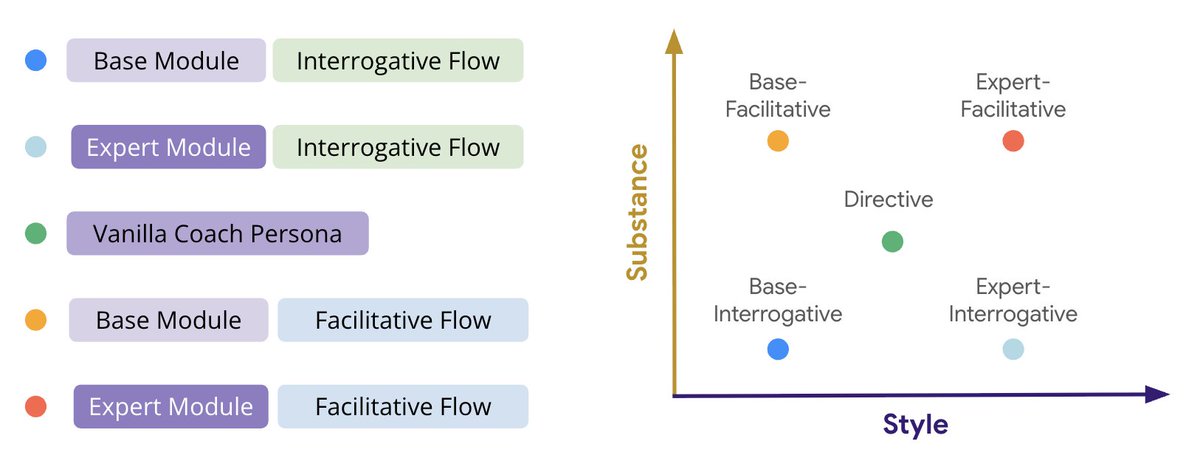
In this paper, we explore five coaching agent styles across real user conversations.
We find that users value core functionality over stylistic elements—and that third-person evaluations often miss what truly drives progress.
(4/5)
🔗 Read more: https://t.co/lIlvq9n2Ed
🚨What do users really want from #ConversationalAI? 🚨
Imagine a coach who truly gets you—understands and adapts to your goals, challenges, and preferences. Now imagine that coach is always there to check in on you. What would that take?
🔗https://t.co/lIlvq9n2Ed
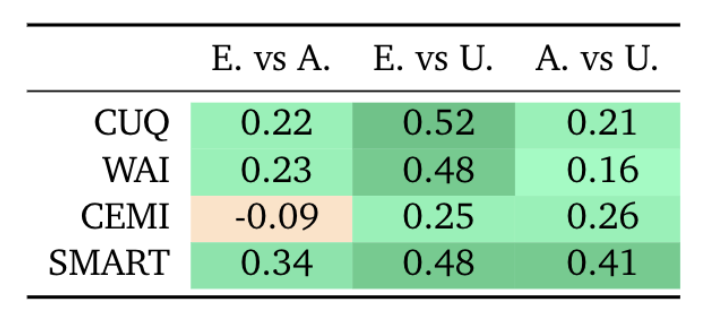
Furthermore, LM and expert ratings didn’t match real user feedback, revealing the complexity of evaluating #HumanCenteredAI.
Building agents that truly understand and adapt is challenging, much remains to be done!
🔗 Read our paper here: https://t.co/lIlvq9n2Ed (4/4)
Users expected conversations that pushed them to think, explore, and set meaningful goals. Style and tone mattered, but without substance, they were frustrating. Simple prompting wasn’t enough; elaborate thought chains were too slow. (3/4)