Meet Gemma 4 12B!
A unified, encoder-free multimodal model designed to bring high-performance intelligence directly to your laptop, and released under an Apache 2.0 license.
Bridging the gap between edge efficiency and advanced reasoning. Here is what’s new with Gemma 4 12B: 👇
we just crossed 3,000,000 users on @resend.
in just 6 months, we went from:
• 1M → 3M users
• 25 → 43 team members
• 1.4M → 6.8M weekly downloads on npm
here's how we're seeing the path ahead...
We’re giving away $10,000,000 to founders building agent-first businesses.
Autonomous, proactive agents will run tomorrow's companies.
We're backing 500 founders building them.
The Founding 500.
https://t.co/u8mxRWEXiT
@lpolovets No because Figma for instance hit the limit on designers but then expanded design an order of magnitude
This will probably expand people who touch software by 10x to 100x
I've been coding for 40 years. Here are the top 5 things I wish I knew when I started.
1. 90% of the job is debugging and fixing, not creating new code. Which is still fun if you're good at it.
I used to think programming was mostly writing fresh, clever stuff. In reality, most of your time is spent in other people's (or your own past self's) messy code, chasing down why something that "should" work doesn't. Get really good at debugging early. Learn assembly reading, call stacks, and kernel debuggers. It pays off hugely. The best engineers I saw were absolute magicians at this.
2. Manage complexity from day one (ie: don't write slop and "fix it later" if it goes somewhere).
Very early on, I'd hammer out code and refactor afterward. Big mistake. Now I start with clean, skeletal structure (minimalism first) and flesh it out carefully, with AI or not.
Messy code compounds and becomes unfixable. Upfront discipline on architecture, naming, and simplicity saves enormous pain later, especially in large systems like Windows.
3. Tools and processes matter more than you think
We suffered with basic diff/manual deltas instead of modern source control like Git. Branching, testing, and good tooling would have made porting and collaboration way smoother. Invest in your environment, automation, and reproducible builds early. Good tools amplify your output; bad ones (or none) drag everything down.
4. Understand the problem and existing code deeply before writing
Don't jump straight to coding. Map out the problem, study what's already there (you'll inherit a lot), and plan. Low-level knowledge (hardware quirks, alignment issues on different architectures like MIPS/Alpha) was crucial. Also: assert early and often. It forces clarity.
5. People, politics, and "the right tool for the job" beat pure tech arguments.
Brilliant engineers still argue endlessly. Sometimes it's about ego, not merit. Learn to spot the difference and "steer" the conversation rather than "winning" it.
Bonus from experience: Side projects like Task Manager (started at home because I wanted the tool) can become your biggest hits. Ship small, useful things often. If you're just starting, focus on fundamentals, patterns over syntax, and building resilience for the long haul. It's going to be a wild ride, but the fundamentals still matter.
@mher_ai@trq212 Yea or just use “open filename.html” on mac or tell claude code to open them for you when done, pops them right up in the default browser
LLM Knowledge Bases
Something I'm finding very useful recently: using LLMs to build personal knowledge bases for various topics of research interest. In this way, a large fraction of my recent token throughput is going less into manipulating code, and more into manipulating knowledge (stored as markdown and images). The latest LLMs are quite good at it. So:
Data ingest:
I index source documents (articles, papers, repos, datasets, images, etc.) into a raw/ directory, then I use an LLM to incrementally "compile" a wiki, which is just a collection of .md files in a directory structure. The wiki includes summaries of all the data in raw/, backlinks, and then it categorizes data into concepts, writes articles for them, and links them all. To convert web articles into .md files I like to use the Obsidian Web Clipper extension, and then I also use a hotkey to download all the related images to local so that my LLM can easily reference them.
IDE:
I use Obsidian as the IDE "frontend" where I can view the raw data, the the compiled wiki, and the derived visualizations. Important to note that the LLM writes and maintains all of the data of the wiki, I rarely touch it directly. I've played with a few Obsidian plugins to render and view data in other ways (e.g. Marp for slides).
Q&A:
Where things get interesting is that once your wiki is big enough (e.g. mine on some recent research is ~100 articles and ~400K words), you can ask your LLM agent all kinds of complex questions against the wiki, and it will go off, research the answers, etc. I thought I had to reach for fancy RAG, but the LLM has been pretty good about auto-maintaining index files and brief summaries of all the documents and it reads all the important related data fairly easily at this ~small scale.
Output:
Instead of getting answers in text/terminal, I like to have it render markdown files for me, or slide shows (Marp format), or matplotlib images, all of which I then view again in Obsidian. You can imagine many other visual output formats depending on the query. Often, I end up "filing" the outputs back into the wiki to enhance it for further queries. So my own explorations and queries always "add up" in the knowledge base.
Linting:
I've run some LLM "health checks" over the wiki to e.g. find inconsistent data, impute missing data (with web searchers), find interesting connections for new article candidates, etc., to incrementally clean up the wiki and enhance its overall data integrity. The LLMs are quite good at suggesting further questions to ask and look into.
Extra tools:
I find myself developing additional tools to process the data, e.g. I vibe coded a small and naive search engine over the wiki, which I both use directly (in a web ui), but more often I want to hand it off to an LLM via CLI as a tool for larger queries.
Further explorations:
As the repo grows, the natural desire is to also think about synthetic data generation + finetuning to have your LLM "know" the data in its weights instead of just context windows.
TLDR: raw data from a given number of sources is collected, then compiled by an LLM into a .md wiki, then operated on by various CLIs by the LLM to do Q&A and to incrementally enhance the wiki, and all of it viewable in Obsidian. You rarely ever write or edit the wiki manually, it's the domain of the LLM. I think there is room here for an incredible new product instead of a hacky collection of scripts.
Liftoff.
The Artemis II mission launched from @NASAKennedy at 6:35pm ET (2235 UTC), propelling four astronauts on a journey around the Moon.
Artemis II will pave the way for future Moon landings, as well as the next giant leap — astronauts on Mars.
just closed the books for Q1.
Resend has more cash in the bank today than it did in April 2025.
the thing nobody tells you about being profitable: it doesn’t come from one big deal. it comes from saying no to 100 shiny things and focusing on the boring things.
We're building TERAFAB to close the gap between today’s chip production & the future's demand – a future among the stars.
Join us → https://t.co/512DIlqNgY
skills, commands, subagents are HIGH LEVERAGE
which means you should probably WRITE THEM BY HAND
at least for a while.
If you let claude slop-out your instructions into agents/claude.md/skills etc, and you don't read them
its going to vomit information from the training set, which is BY DEFINITION what claude already knows
any instruction that impacts every developer on your project should be REVIEWED. TWEAKED. BY HAND. THROUGH MANY ITERATIONS.
sorry for the all caps i've been talking to opus all morning
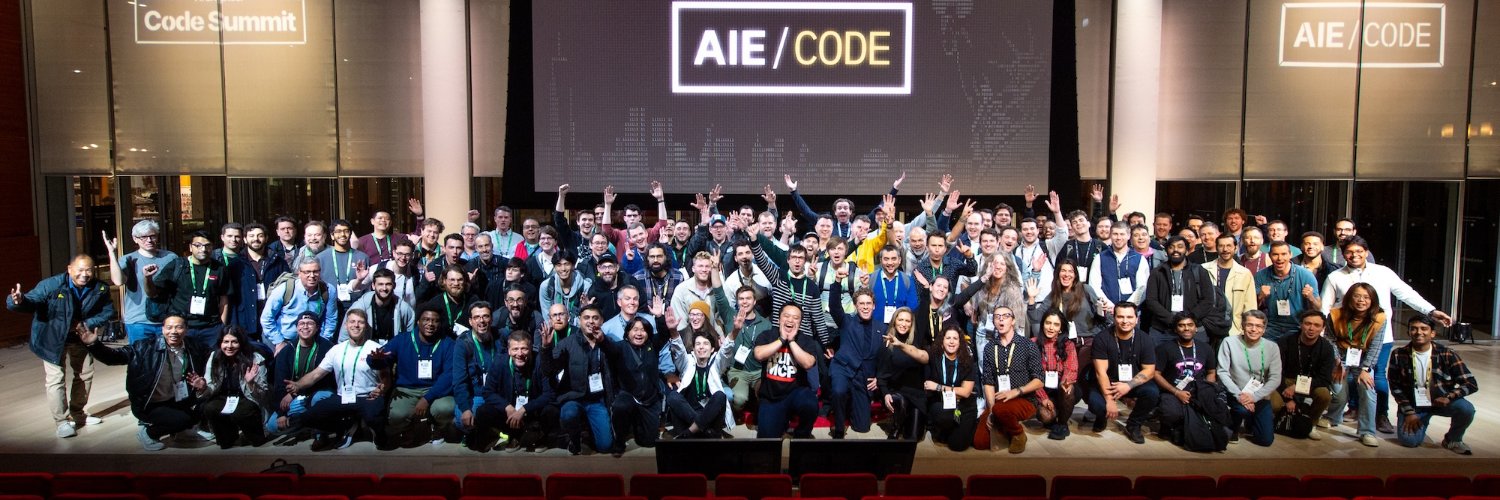
not only a great time, but one of the most information dense talks from @aiDotEngineer a few weeks back. Packed with great advice and clearly the product of a whole whole lot of hard work. Cheers @thekitze
https://t.co/9zVjKUHeJv