Traveled from Islamabad to Murree yesterday and they've flooded the Srinagar Highway with useless, shadeless palm trees at the foothills of Himalayas.
Climate change narrative is just for photo ops, they don't give a shit about the environment. Get ready for more brutal summers.
Now that the US-Iran deal has finally been announced, the government can legitimately feel elated on the foreign policy front. This is a big win. This week will be all about this Deal.
Before that happens, let’s sum up the budget debate
�� Thread
No deal. No ceasefire. A new normal.
Breaking down why no breakthrough is likely—here for @CNN:
“The ultimate hostage negotiation: Why Iran talks are deadlocked”
https://t.co/vBgsnJcnnd
Agreed PM Sahib… but maybe loans will not be needed if we reduce govt size and expenses, and create a business environment with less govt interference which would enhance export revenues?
If we want to fix a problem, we must first diagnose it properly
🇮🇷 Look — this is Iran, not Japan!
This system is intelligent road scales that measure the weight of trucks without stopping, right on the go. From the idea to production and installation — everything was done by one Iranian company.
Over the past eight or so days, the US has targeted Iranian vessels as well as targets on the Iranian mainland. This included non-Iranian oil vessels. In essence, this was the US seeking to escalate the blockade of the blockade.
At first, Iran's response was proportional. The US could tolerate that response.
In fact, it was beneficial to the US to continue the exchange of blows but keep them relatively limited, as it would slowly but surely erode Iran's deterrence without imposing intolerable costs on the US.
But yesterday, Iran moved to change that equation.
After the US struck a Botswana-flagged tanker as part of Trump's blockade, the Iranians counter-escalated disproportionally.
Tehran struck Kuwait International Airport as well as a US base in Kuwait, Ali Al-Salem.
It struck the 5th Fleet facilities in Bahrain. (Full extent of damage unknown.)
It struck Jordan. (Full extent of damage unknown.)
It struck northern Iraq. (Full extent of damage unknown.)
It struck the UAE. (Full extent of damage unknown.)
It struck the Al-Udeid Air Base in Qatar. (Full extent of damage unknown.)
It was a demonstration - and reminder - that Tehran retains escalation dominance.
Whereas the US is comfortable with either a possible deal or a low-level exchange of fire, but not a return to full-scale war, Tehran is comfortable with a possible deal or a full-scale war, but not with a low-level exchange of fire that erodes Iran's deterrence and allows for Trump's "blockade of the blockade" to become effective.
The area where both can actually be comfortable is some sort of a deal. Reaching it, however, is a different story.
BREAKING: The US House just voted 215 to 208 to end the Iran war.
The same day, Iran bombed Kuwait’s main airport and the US bombed Iran.
Both are true. The gap between them is the whole story.
The vote is historic, and misunderstood. It is the first time either chamber of Congress has passed a measure against this war since it began more than three months ago, and 4 Republicans crossed the aisle to do it. But it stops nothing. It is a concurrent resolution: it never reaches Trump’s desk, it still has to pass the Senate, its legal force is disputed, and Trump will contest it. It does not end the war. It measures how toxic the war has become.
So why did 4 Republicans break? The rebuke was aimed at Trump’s handling of the conflict and, in the reporting’s own words, the economic fallout, a war that has rattled the global economy with no end in sight. That is oil propped up by a draining reserve, fertilizer the world’s biggest importer now pays nearly double for, and the strait still shut since February. Congress just voted on the price of crude and bread. It only called it a war.
But the same afternoon, the war got bigger. Iranian drones and missiles hammered Kuwait’s main airport, killed 1 and wounded more than 60, and forced it shut. The US answered with a strike on an Iranian military site on Qeshm Island, inside the Strait of Hormuz. Israel kept hitting Lebanon, the sticking point Tehran says any deal must cover. The mediators were already cut off. Oil ticked up about 2%, Brent back near $97, while the strait stayed shut.
This is the new phase: a divergence. Abroad, the war is widening, Gulf states hit, Iran hitting back, talks frozen. At home, the will to keep paying for it is cracking for the first time. The binding constraint is sliding off the battlefield and onto the floor of Congress. Increasingly, the limit is not Iran. It is the bill.
The vote will not stop the war. But it is the first time the cost of one shut strait reached the floor of the House. The war is not ending. The willingness to keep paying for it is.
The interpretation in Tehran is that Trump only responds to power. In this view, the more #Iran stands firm and demonstrates resolve and a willingness to escalate, the greater the chance that he will back down:
Iran threatens to target Israel if Israel strikes Beirut → Trump calls Netanyahu and urges restraint.
Iran targets U.S. bases in the Persian Gulf in retaliation for U.S. strikes on its coastal military positions → Trump adopts a softer tone toward the Iranian leadership.
Iran strikes Kuwait and Bahrain today, likely in response for a strike on a vessel near Kharg earlier today.
To be frank, these are necessary and logical moves by Iran. The United States is clearly testing and proving the Iranian’s ability to strike, and more importantly, their willingness to do so.
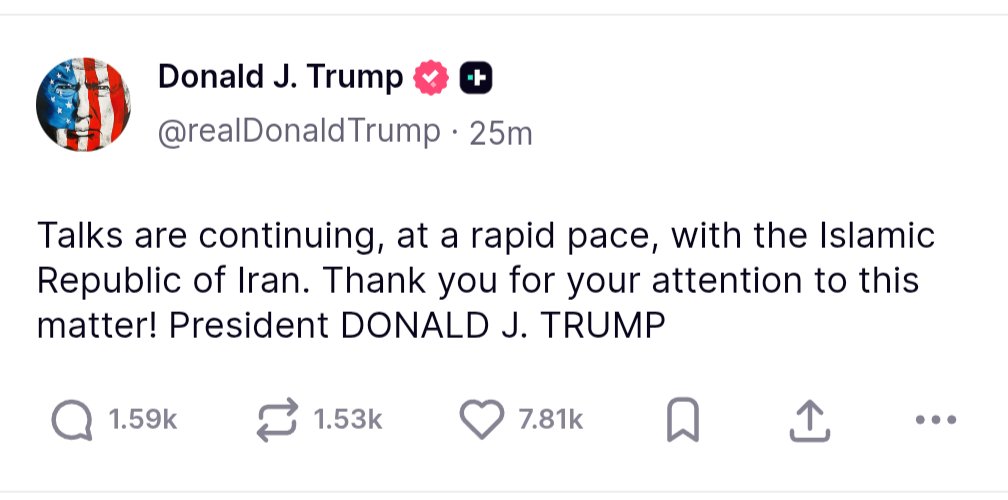
Unfortunately for the U.S… Iran seems plenty willing to go back to war, and the United States, and Trump in particular, clearly want an off-ramp.
This divergence will only lead to greater Iranian leverage at the negotiating table.
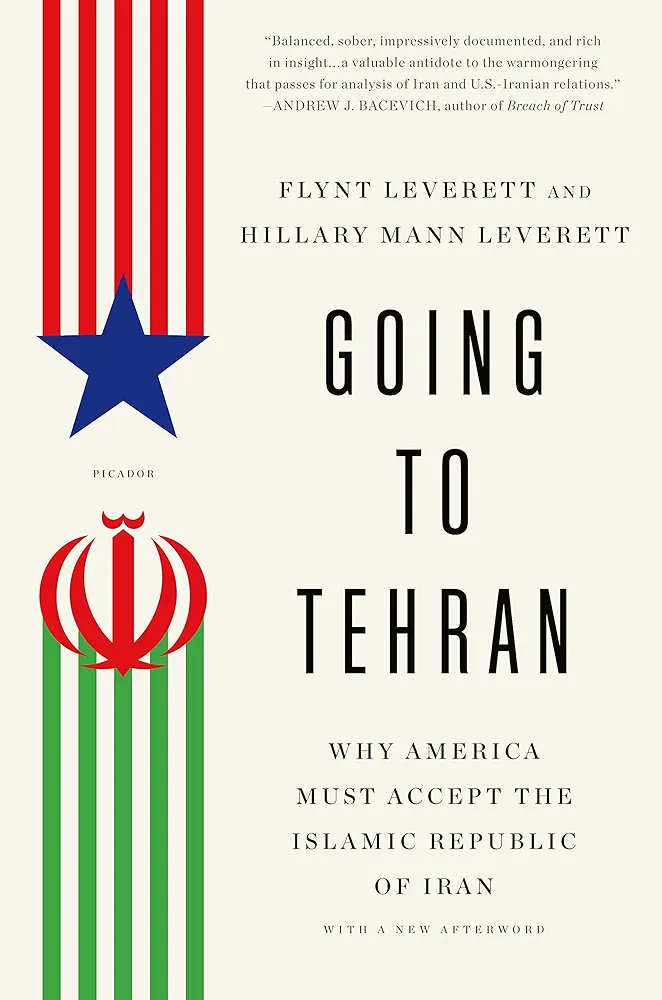
If you want to better understand Iran and the Resistance, these are the two best books I know of in English:
'Going to Tehran' by Flynt and Hillary Mann Leverett
'Resistance' by Alastair Crooke
Ex-CIA analyst Larry Johnson told Mario Nawfal that, quoting an intel source, Iran via Pakistan DPM/FM Ishaq Dar warned US Secretary of State Marco Rubio:
We withdraw from talks, exit non-proliferation treaty , and detonate a nuclear device acquired from a third country.
He quoted Iran as saying: “Leave us alone like North Korea. We got a weapon now.”
DPM/FM Ishaq Dar denied it to me directly, calling it “untrue. disinformation.”
And this lands amid the Axios-Trump-Netanyahu leaked abusive call.
Pattern is obvious: heavy anti-peace disinformation as the US-Iran deal remains in a fragile state.
History will not only remember and question how one of the most sanctioned countries in the world single handedly defeated two of the most powerful militaries in the world; but it will wonder how that sanctioned country was able to threaten and scare the leaders of those militaries into changing their course despite not having any nuclear weapons.
What America was like yesterday and what it has become today: In the past, when a statement was issued, its repercussions reached every corner of the globe, and every country took seriously any statement made against it. Today, it has a president who has rendered every statement issued by the White House meaningless; every hour, this “president” comes out with a statement!
We know that the purpose of these statements is to confuse the situation and divert attention from Israel’s current occupation of new heights in the Litani River Valley in Lebanon—so whenever Trump makes a statement, watch Israel’s movements on the ground.
Trump is swiftly emptying US strategic oil reserves and, by manipulating market prices, he is preventig demand destruction, thus quickening the speed of the US economic crisis. Iran will force the Trump regime to accept its demands.
https://t.co/1AtiWEmWET
My piece in @FT on why Iran has been reluctant to sign on to the MoU agreement and why the agreement is not likely to easily lead to a larger deal in 30 or 60 days:
"The dominant view shared across the political spectrum in Tehran is that, given Trump’s record, the promise of diplomacy could actually raise the threat of war. Washington’s seemingly generous concessions are interpreted as too good to be true. Tehran suspects that the US seeks not a lasting peace but a free hand to keep Iran isolated and weak, checking its nuclear and missile activities by periodically “mowing the lawn”. Faced with such a prospect, deterrence is all that matters.
Iranian leaders talk of control of the Strait of Hormuz and maintaining Iran’s stockpile of highly enriched uranium as the key to deterrence. They believe any durable deal that includes economic compensation for war damage and lasting sanctions relief would hinge on these two issues; the US is demanding that Iran concede on both. This makes striking a lasting deal highly unlikely."👇🏽
https://t.co/Po1LI2pyh6