Most startup playbooks are bloated, outdated, or written by people who’ve never built anything.
So I started writing the one I wish I had when I was scaling my first company.
It’s not theory or fluff.
It’s 101+ scrappy, unorthodox growth tactics that I’ve used (or watched founders use) to drive huge wins.
Here are a few favorites from the upcoming book: 👇
𝟭. 𝗔𝗱𝗱 𝗥𝗲𝗰𝘂𝗿𝗿𝗶𝗻𝗴 𝗥𝗲𝘃𝗲𝗻𝘂𝗲, 𝗘𝘃𝗲𝗻 𝗶𝗻 𝗪𝗲𝗶𝗿𝗱 𝗣𝗹𝗮𝗰𝗲𝘀
You don’t have to be SaaS to charge a monthly subscription.
Eight Sleep added a $200/year sleep optimization subscription, on top of selling mattresses. Web design agencies like Refresh Digital can charge a monthly subscription for edits, hosting, and support.
Monthly billing = stability, predictability, and easier CAC/LTV math.
No subscription = you're always chasing your next customer.
𝟮. 𝗛𝗶𝗷𝗮𝗰𝗸 𝗧𝗿𝗲𝗻𝗱𝗶𝗻𝗴 𝗩𝗶𝗱𝗲𝗼𝘀 𝗪𝗶𝘁𝗵 𝗮 𝗞𝗶𝗹𝗹𝗲𝗿 𝗖𝗼𝗺𝗺𝗲𝗻𝘁
Find viral videos in your niche. Drop an educational or witty comment. Use an engagement pod to push it to the top. Free brand awareness.
𝟯. 𝗧𝘂𝗿𝗻 𝗖𝘂𝘀𝘁𝗼𝗺𝗲𝗿𝘀 𝗜𝗻𝘁𝗼 𝗪𝗮𝗹𝗸𝗶𝗻𝗴 𝗕𝗶𝗹𝗹𝗯𝗼𝗮𝗿𝗱𝘀
Swag that’s actually good = free impressions for years. Think Golf balls, travel bags, hoodies, and dad hats. $10/day in ads vanishes. A $10 hoodie lasts years—and starts conversations.
Shameless plug: Brand Sauce makes this stupid easy.
𝟰. 𝗧𝗿𝗲𝗮𝘁 𝗬𝗼𝘂𝗿 𝗡𝗲𝘄𝘀𝗹𝗲𝘁𝘁𝗲𝗿 𝗟𝗶𝗸𝗲 𝗮 𝗣𝗿𝗼𝗱𝘂𝗰𝘁, 𝗡𝗼𝘁 𝗮 𝗧𝗮𝘀𝗸
A great newsletter = the most leveraged content engine in your business. 1 email → 10–30 content pieces.
Make it beautiful. Tactical. Shareable. Then syndicate it everywhere. Consistency compounds.
I recommend using beehiiv.
𝟱. 𝗔𝗱𝗱 𝘁𝗵𝗲 “𝗥𝗶𝗱𝗶𝗰𝘂𝗹𝗼𝘂𝘀𝗹𝘆 𝗘𝘅𝗽𝗲𝗻𝘀𝗶𝘃𝗲” 𝗢𝗽𝘁𝗶𝗼𝗻
At one of the first companies I co-founded, GLD, we added 24k solid gold pieces that were 20–50x the typical price. It wasn’t for everyone, but someone always bought it.
Any business can do this. Think luxury tiers, premium bundles, or white-glove services.
---
If you want the full list (101+ tactics ), I’m dropping a book later this year. Drop a comment and I’ll DM you the teaser.
Say hi to the new Poke! 🌴
Now officially approved by Apple to text on Apple Messages.
As the first and only AI agent. Chat now: https://t.co/VIWYU64dUI
I’ve been designing in tech for 15 years.
Somewhere along the way the work stopped resonating.
So I wiped the slate clean.
Deleted my entire portfolio.
Started from zero.
Rebuilt everything with intention.
My brand.
My style.
The clients I attract.
All from the ground up.
All aligned with what I actually believe in.
One shift changed everything.
I aligned my values with my craft.
It is never too late to recalibrate and reengage.
If you work in the software industry and have time to read only one long-form post today, read this one.
If you have time to read two, read this one twice.
Highly #recommend
tl;dr: Stay off the yellow brick road that the frontier model companies are racing down. There is plenty of opportunity to solve hard problems elsewhere. Focus on areas where you can build the system of work (workflows), capture compounding, non-public data and deliver deterministic outcomes that customers need.
POV: prospecting in 2026
Trellus - make 200 dials/hour
ChatAE - buyer intent in minutes
Tasklet -automated sales admin work
Origami - perfect lead list & sending in minutes
work like 3-4 SDRs, earning $250k+/yr
just to book meetings?
doesn’t get easier to make money
Un ingénieur IA senior chez Microsoft vient de dévoiler comment les équipes de Microsoft créent des agents IA avec Anthropic.
34 minutes de workshop gratuit, directement par l’équipe Microsoft.
Regarde le workshop. Ajoute en signet 🔖
Opus 4.7 + plus de 1 400 outils MCP déjà prêts à l’emploi.
Tu connectes Claude à un agent → tu lui ajoutes des outils → tu déploies en production.
Plus utile que la majorité des formations de vibe-coding vendues 500 $.
Your brand is in a format that AI agents can't see.
Google just open-sourced a fix. One markdown file. Portable forever. Works with any agent, any model.
It's called design.md.
I already built one for ClickFlow and Single Grain. I tell my agents "make me a landing page following this" and it actually matches. Same brand, same look, every time.
One designer gets you 20 assets with high consistency. One person + agent + design.md gets you 500.
If you're not building yours right now, you're behind.
00:00 Your brand is invisible to AI
00:30 Google's design.md announcement
01:15 What design.md actually does
02:30 ClickFlow design.md demo
03:30 Single Grain design.md demo
04:15 End-to-end agent workflows for ads
05:00 The lock-in problem with proprietary tools
06:00 Marketing volume: 20 assets vs 500 assets
07:15 Sales use case: before and after
08:00 awesome design.md repo (66K stars)
08:45 Stealing designs from Intercom, https://t.co/4OOKR97C1L, Cursor
10:00 Why you need to do this now
a $100M founder told us his exact meta ads strategy on mic and my CPMs dropped 50% the same week. here's everything we covered:
1. bid caps are the meta ads cheat code nobody talks about. set your budget to something insane like $1M/day and your bid cap to the max CPA you'll accept. it signals to zuck you've got big balls and opens up the entire auction. my CPMs dropped 50% overnight and I went from burning cash at $1K/day to printing at sub 2 ROAS. if you're raw dogging meta with no bid cap you're lighting money on fire.
2. the $500/week creative team hack. post a job on upwork, get 50 replies, filter to 10 decent ones, pay each $50 for a paid test project. 7 will suck, 3 will be great. you just hired a full ad creative team for $150 in test costs. they care about their star rating so if they bomb you just ask for a refund. tom's pumping out 10-15 ads per week with this setup.
3. AI avatars are replacing UGC creators but most people are doing it wrong. don't just tell chatGPT "generate a girl in a park" — it looks AI as hell. screenshot a viral tiktok, feed it to chatGPT image gen, ask it to keep the same background and lighting but change facial features and clothing. the ads that convert are the ones you can't tell are AI.
4. I'm making $50K/mo from one SEO page. ranked for a top keyword in my industry, sold the #1 spot to a competitor for $14K/mo, put myself at #2, and filled slots 3-8 with affiliate offers pulling $5K/mo. plus $30K/mo from my own offer. one page. purely organic.
5. hire from pakistan. not a joke. $100/page shopify devs that are cracked. entire teams doing cashflow management. the philippines got complacent — pakistan and bangladesh are the new alpha. train them with claude, throw them in the deep end, and they'll 10x output because they have zero ego about using AI.
6. the best heuristic for teaching anyone AI: don't think, just ask. outsource your thinking but never outsource your knowledge. your VA doesn't need to be smart — they need to follow instructions and not have ego about asking a machine for answers. that combo beats a $150K/yr employee who "prefers to think with their brain."
7. AI layoffs are just starting. coinbase drama. cloudflare cut 2000 citing AI directly. the dream job kids — CS degree, S&P 500 company, mid six figures with options — they're the ones getting cut first. meanwhile landscapers, barbers, and locksmiths are thriving. tom is bullish on businesses that require hands.
ep 4 of NGMI with @itstonyyu and Tom Wang watch/listen ↓
Major cheat code in life: A decision made fast and corrected later beats a perfect decision made too late. Most people overthink because they're scared of being wrong. The people who move fastest aren't smarter. They're just less afraid of adjusting. Decide. Then adjust.
INSTEAD OF SCROLLING ALL NIGHT.
Spend 60 minutes with this instead.
Obsidian + Browser-use = 24/7 Knowledge Ingest.
Your assistant builds its own brain while you sleep.
The people who implement this tonight will never wake up the same.
Read it and Bookmark it now.
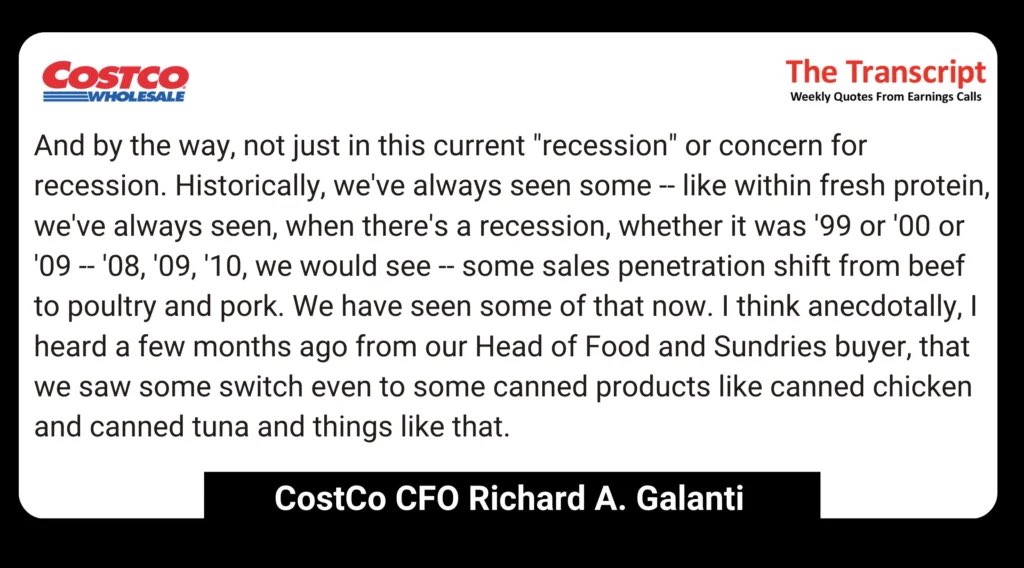
Costco spots a recession before economists do.
When members shift from beef to chicken, then to canned tuna, something in the economy is bending.
You don't need a model. You need a checkout counter and millions of members with long memories.
The Hollow Men
American capitalism is rotting from the head down. We have replaced the "Owner-Operator"—the risk-taker-with a new, parasitic class of corporate bureaucrat: The Risk-Free Insider.
By "Insider," I am not referring to a specific title. I am referring to the entire administrative state that has captured the modern corporation. This includes the Directors who exist solely to collect fees, the Executives who exist solely to collect bonuses, and the Managers who exist solely to hire consultants.
These are the hollow men of the boardroom. They are masters of PowerPoint. They wear the right suits. They say the right buzzwords about "governance" and "ESG." But they are mercenaries fighting a war with someone else’s ammunition.
In a functioning economy, authority is tied to liability. If you make a bad decision, you lose your own money. That fear of loss is the only thing that keeps a business honest. It forces you to cut waste, obsess over the customer, and stay late to fix what is broken.
Today, we have severed that link.
We have rigged the game so that heads, the Insider wins; tails, the shareholder loses.
If the stock goes up, the Insider collects a massive performance bonus. If the stock crashes due to their own incompetence, they are fired with a "Golden Parachute" worth tens of millions. They are gambling with the house’s money, and they never leave the table poorer than they arrived.
This looting starts in the boardroom.
We have normalized a "Country Club" culture where directors are selected based on social profiling rather than their ability to build a business. The modern board member is often a professional tourist—paid an average of $350,000 a year.
Let’s be brutally honest about what that number represents. The average director is paid nearly five times the GDP per capita of the United States. They earn more for attending four quarterly lunches than the vast majority of Americans earn in five years of hard labor.
And for what?
Most of these directors are "over-boarded," sitting on three or four boards simultaneously. They treat directorships as a gig economy for the elite. They fly in, rubber-stamp a compensation package they didn't read, and fly out. They collect checks from companies they do not understand, do not use, and certainly do not love.
They are not there to ask hard questions. They are there to be collegial. They are there to protect the other Insiders.
And what happens when these boards hire executives who also have no personal capital at risk?
We get the Delegation Economy.
When a Risk-Free Insider faces a crisis—bloated expenses, a broken supply chain, or a stale product—they do not roll up their sleeves. They hire a consultant. They pay a strategy firm millions of shareholder dollars to produce a 100-page deck telling them what they already know.
This is not management. It is intellectual money laundering.
They use shareholder capital to buy an insurance policy for their own careers. If the plan fails, they can blame the consultants. They delegate the work because they are terrified of the responsibility. They would rather preside over a slow, comfortable decline than risk a bold mistake.
While American Insiders are busy optimizing their severance packages, our global competitors are optimizing their products. They are not slowed down by bureaucracy. They are not waiting for a slide deck. They are outworking us.
If we continue to fill our C-suites with administrators instead of operators, we will lose our edge. We will see iconic American franchises hollowed out by fees, managed for the benefit of the Insiders, while the true owners—the shareholders—are left holding the bag.
The time for polite governance is over.
If we want to save the American economy from mediocrity, we must demand a return to the "Owner’s Mentality." We need leaders who treat shareholder capital with the same reverence they treat their own savings. The era of the Risk-Free Insider must end.