Maybe too obvious to be worth saying, but: frontier models are now obviously superhuman at some mathematical tasks, including ones that the profession has, historically, rewarded with prestige etc.
Genius is mostly an output game, not an intelligence game. These individuals often produced 10x the volume of their peers before striking gold.
We saw a neuroscientist with 300+ papers, of which 2 had made them famous, and a unicorn founder who had 20 unsuccessful products over nearly a decade before one was worth billions. We also heard the story of a showrunner with two Emmy-winning shows but pitches for 70 others unsold in a drawer.
The world sees the successes, but spouses/close friends are the ones who see hundreds of wreckages hidden behind the curtain. The world’s most successful people almost always have a long line of previous failures behind them if you dig deep enough.
@daniel_iversen@Workato@zapier Hi Daniel. Sorry to hear that and thanks for sharing your feedback. Do you mind hopping on a call to share your thoughts in more detail? We have a few features cooking that may help with what you’re experiencing. Thanks!
One more “hack for sailing close to this wind”: having kids can force you to learn how to prioritize ruthlessly.
I’ve founded two companies that had successful exits. One before kids. One after.
With @Optimizely I made up for my lack of prioritization through sheer effort. I worked almost every waking hour of the day. Then when we sold I looked back (with the benefit of hindsight) and realized that much of that work didn’t ultimately matter in determining the outcome. Only about 5 things actually mattered. If I knew what those things were at the time I would have focused all my energy on them and stopped spending time on everything else. The challenge is you only know with certainty what those things are with hindsight.
With @LimitlessAI I was forced to take a different approach since I had three kids under 4 years old. I internalized the mantra: “the main thing is that the main thing stays the main thing.” I thought hard about what the main thing was at each stage in the company’s evolution and just focused on that (e.g. a key hire, the limiting factor on growth, a key engineering challenge), and didn’t spend time on everything else (e.g. networking, talking to junior VCs, worrying about competition, recurring 1:1s with direct reports). At 5pm every day I paused work to have dinner with my family and put my kids to bed. Giving myself that constraint meant I said no to a lot of things my former self would have done. Because of this constraint I ended up doing more impactful & productive work from 4:30pm to 5pm than my former self would have accomplished in a full day. Constraint breeds creativity. Embrace it.
Berkson's paradox.
Tradeoffs don't have to exist within an entire population (and often don't) -- to exist within a selected portion of the population.
Karpathy manually went through every training image on ImageNet. Then the entire test set. Just to set a human benchmark.
He recently implemented a 1989 LeCun paper to measure how much efficiency you gain by simply knowing the deep learning future.
And these are just two examples we know about. There are probably 100+ of these curiosity-driven side quests.
Knowledge is not built by working at frontier lab or raising 100M but by the willingness to go absurdly deep on random questions just because you're curious.
My timeline is now full of people quoting and misinterpreting Karpathy. Maybe what they should actually take from him is this.
The most underrated use of AI isn’t learning faster—it’s becoming capable of learning knowledge that’s deeper, harder, and more abstract.
In this article, I share how I use AI to teach myself a textbook step by step, and why the gains in depth + quality have been mind-blowing.
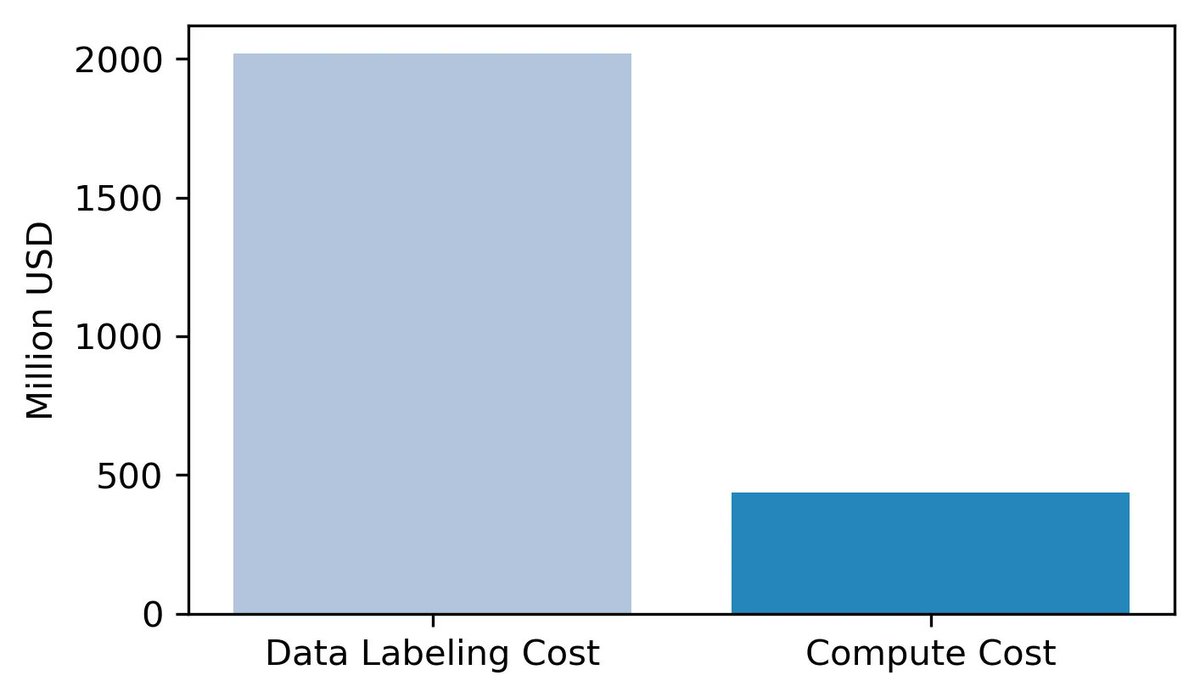
The prevailing wisdom is that compute is the most important factor for frontier AI training. We think this is wrong: data is the most costly and important component of AI training.
We collected estimates of revenue for major data labeling companies and compared them with the marginal compute cost for training top models in 2024. Our estimates show that data labeling is ~3x higher than the marginal training compute.
1/8
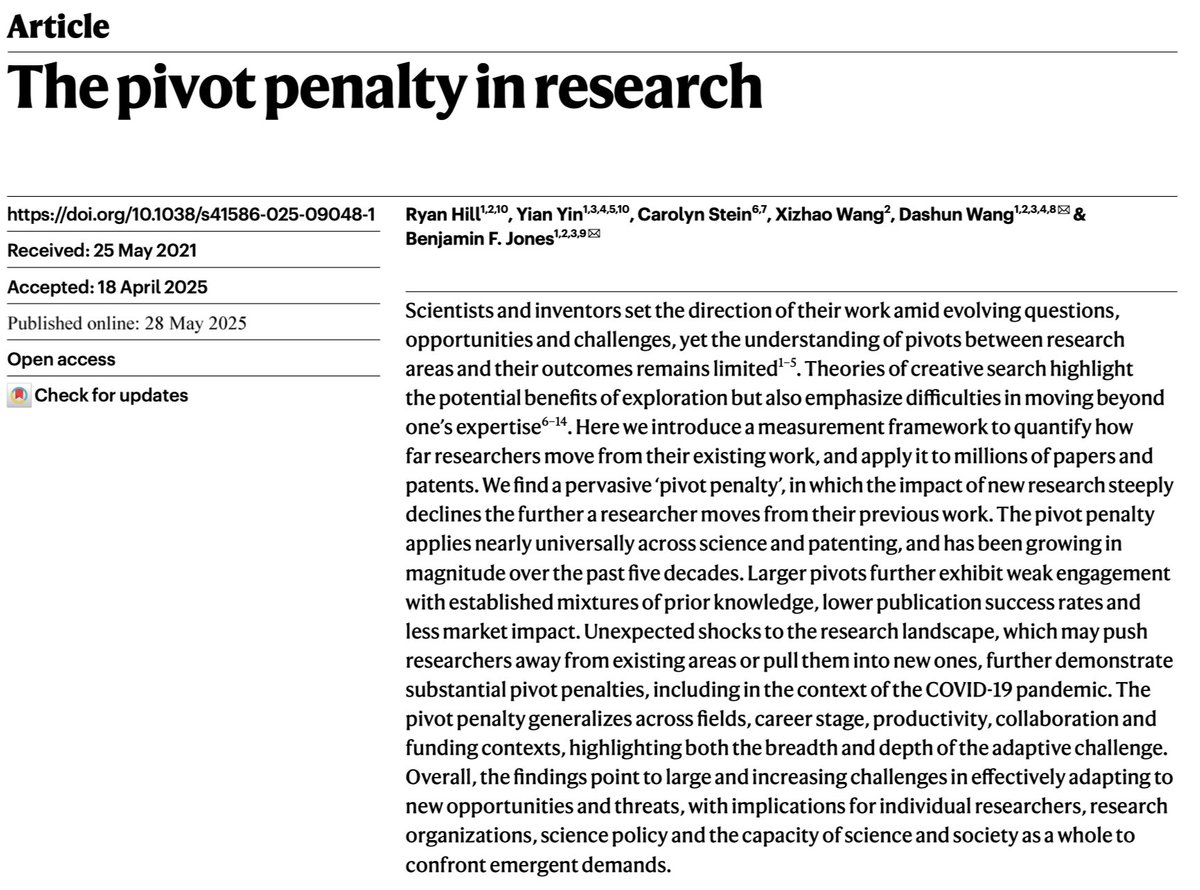
🚨New paper🚨 Excited to share our latest on @Nature today: The PIVOT PENALTY in research. https://t.co/V4ENiGCssY
More than five years in the making. Key finding: The impact of new research steeply declines the further a researcher moves from their previous work.
This chart shows the common course of economic development in OECD countries and China:
Beginning as agricultural economies, industrializing, then ultimately becoming service-based (tertiarization)
I read the study behind this and it's well done and interesting.
For CS skills, US students are comparatively better against all countries at all levels save for a similar right tail to China.
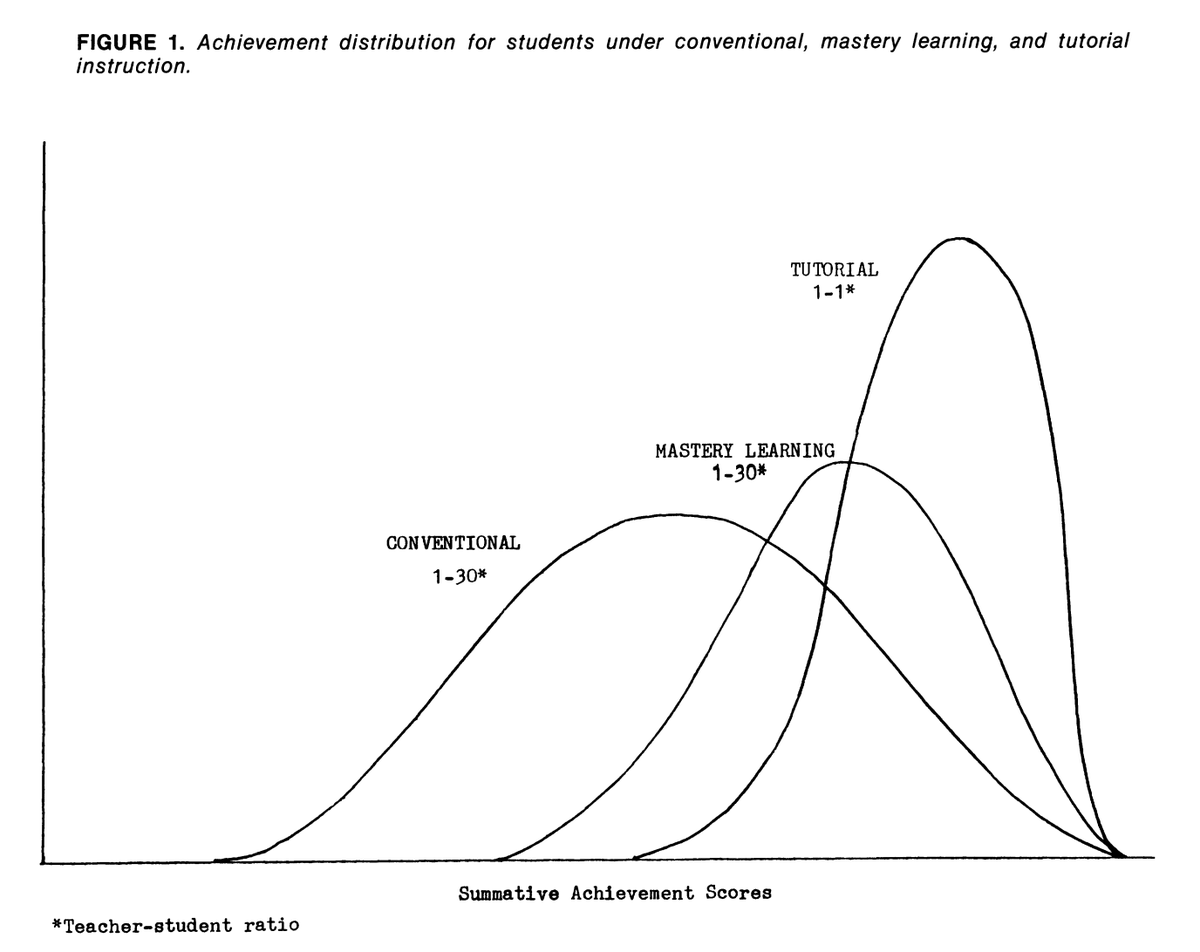
Why AI based tutors are going to be such a big deal
1:1 tutoring = 2 sigma improvement in learning achievement
Image from "The 2 Sigma Problem: The Search for Methods of Group Instruction as Effective as One-toOne Tutoring" by Benjamin S. Bloom
The real question: throughput. If a $20k/month AI agent can deliver PhD-level innovation weekly (~50 papers/year), that’s a massive competitive edge—private insights without the lag of public academia. If you’re efficient at turning those into business impact, $20k/month might actually be a bargain. For comparison, many Research Scientists in industry labs easily make over $300k per year, yet most may produce fewer than five first-author papers annually.
Problems with OpenAI plans to charge so much for agents:
1. Anthropic is far ahead in coding capability. They are also... cheaper. For agents as well (Claude Code)
2. A PhD makes a fraction of $20K/mo. This is just non-sensible charging.
3. Competition will charge a fraction