“The AI interaction develops nuance that has less to do with accuracy and more to do with how it feels. And we get frustrated when we have to restate something already explained elsewhere.”
U.S. President Donald Trump has fired all 24 members of the National Science Board, the body that oversees the National Science Foundation. Many science advocates see it as the latest step by his administration to erode—some would say destroy—the independence of the 76-year-old research agency. https://t.co/5LrByFdzHz
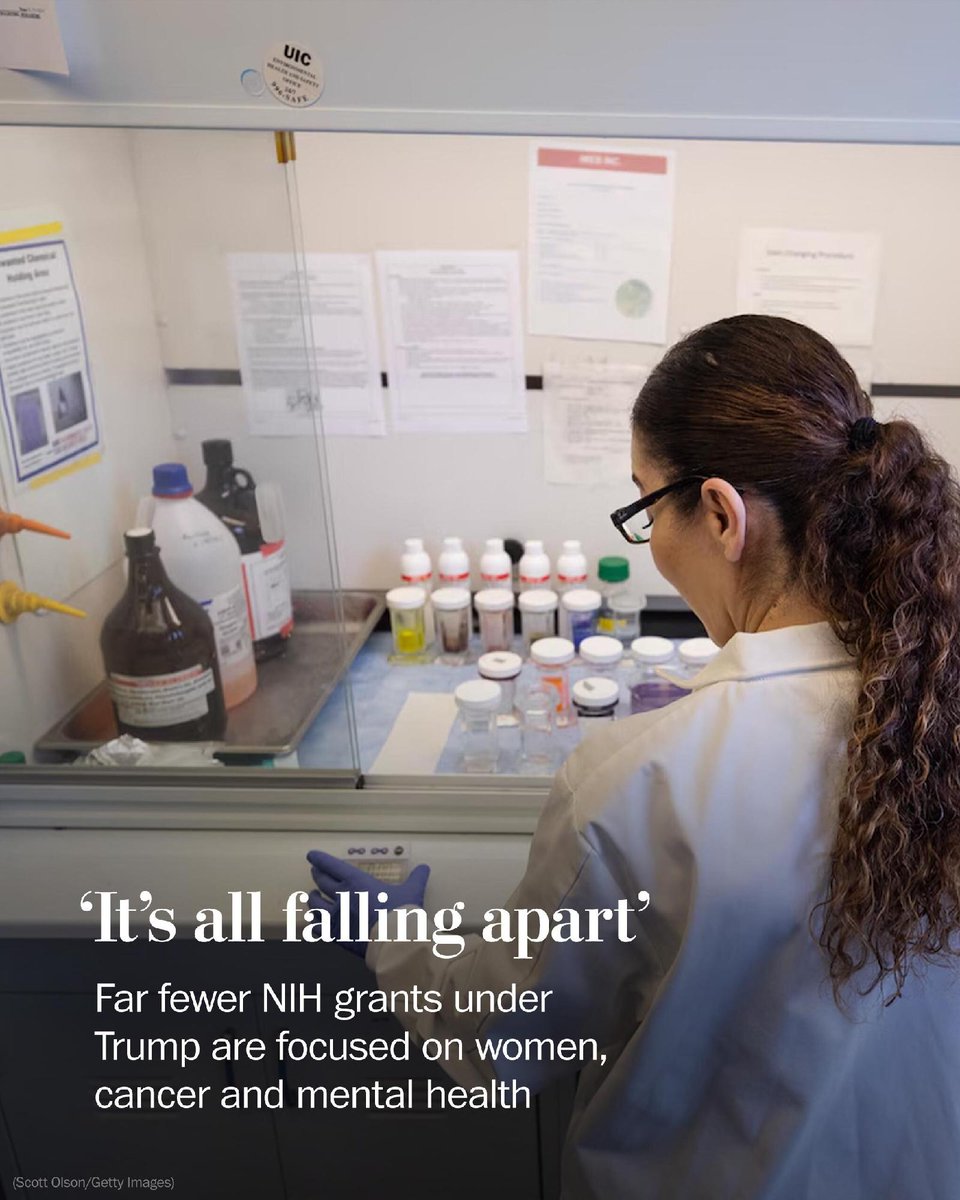
President Trump’s administration rocked the American research enterprise over the last year with disruptions and changes to the historically reliable stream of federal funding that fueled it.
Labs are running on fumes. https://t.co/z4XwchVWPQ
Important and relevant info on the “trust” issue in higher education. The focus on transparency and minimum standards for admissions are particularly meaningful.
Yale University is considering major changes to its admissions, cost, grading and other areas in a sweeping effort to combat the stark erosion of trust in higher education.
https://t.co/XahieZoxZK
Tapping already strained budgets, the Genesis Mission—DOE’s push into #AI—gives scientists just weeks to apply for its first awards. https://t.co/7YwwOFcSft
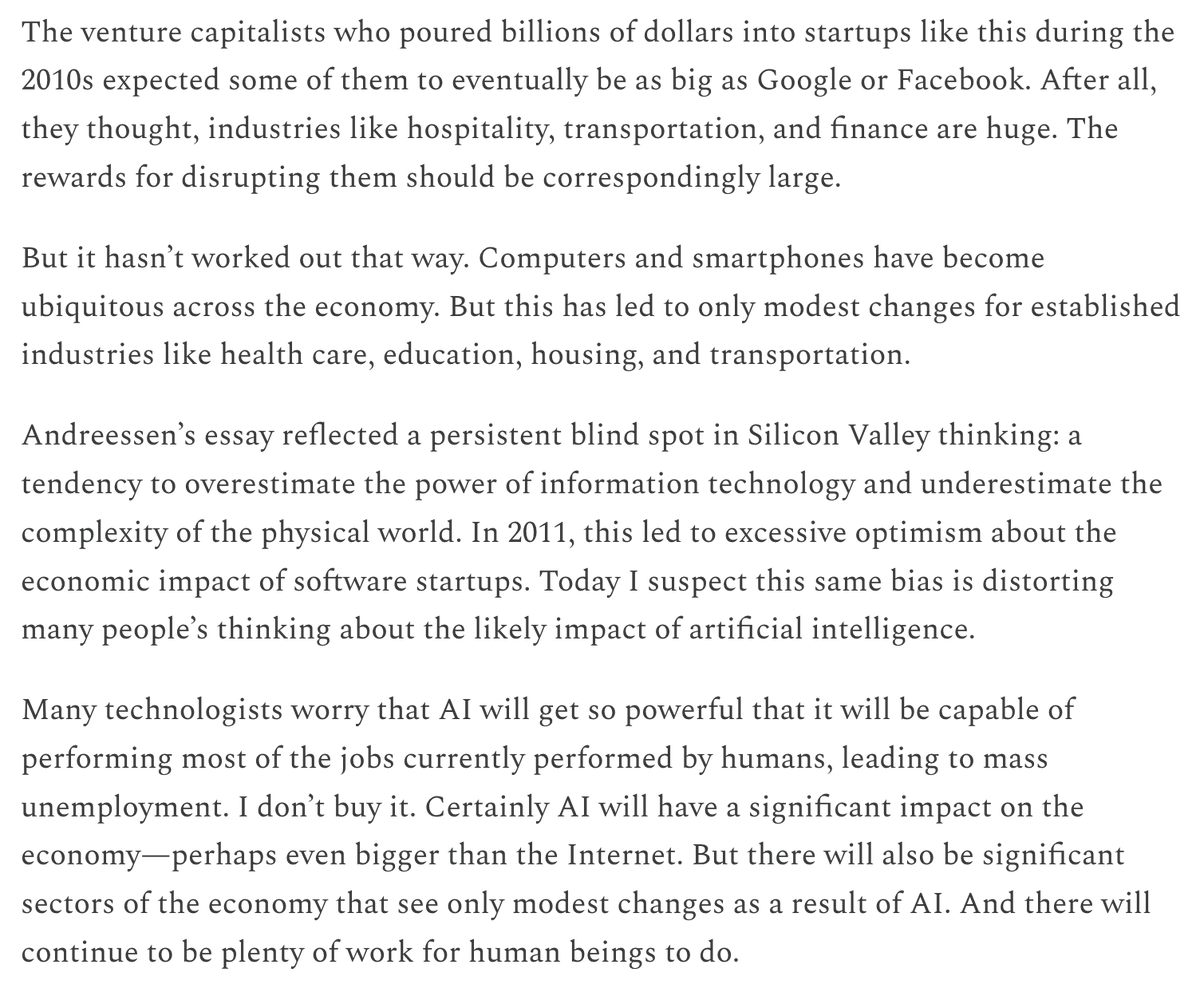
Marc Andreessen was wrong about software eating the world, and I see people making the same mistake about AI today. I wrote this almost three years ago and I wouldn't change a word if I were publishing it today.
"Never start a bombing campaign that will completely halt shipping in the Strait of Hormuz" is right up there with "never get involved in a land war in Asia” in terms of the classic blunders.
The math on this project should mass-humble every AI lab on the planet.
1 cubic millimeter. One-millionth of a human brain. Harvard and Google spent 10 years mapping it. The imaging alone took 326 days. They sliced the tissue into 5,000 wafers each 30 nanometers thick, ran them through a $6 million electron microscope, then needed Google’s ML models to stitch the 3D reconstruction because no human team could process the output.
The result: 57,000 cells, 150 million synapses, 230 millimeters of blood vessels, compressed into 1.4 petabytes of raw data. For context, 1.4 petabytes is roughly 1.4 million gigabytes. From a speck smaller than a grain of rice.
Now scale that. The full human brain is one million times larger. Mapping the whole thing at this resolution would produce approximately 1.4 zettabytes of data. That’s roughly equal to all the data generated on Earth in a single year. The storage alone would cost an estimated $50 billion and require a 140-acre data center, which would make it the largest on the planet.
And they found things textbooks don’t contain. One neuron had over 5,000 connection points. Some axons had coiled themselves into tight whorls for completely unknown reasons. Pairs of cell clusters grew in mirror images of each other. Jeff Lichtman, the Harvard lead, said there’s “a chasm between what we already know and what we need to know.”
This is why the next step isn’t a human brain. It’s a mouse hippocampus, 10 cubic millimeters, over the next five years. Because even a mouse brain is 1,000x larger than what they just mapped, and the full mouse connectome is the proof of concept before anyone attempts the human one.
We’re building AI systems that loosely mimic neural networks while still unable to fully read the wiring diagram of a single cubic millimeter of the thing we’re trying to imitate. The original is 1.4 petabytes per millionth of its volume. Every AI model on Earth fits in a fraction of that.
The brain runs on 20 watts and fits in your skull. The data center required to merely describe one-millionth of it would span 140 acres.