Creators deserve a grading system they can rely on.
When posts aren't counting and STARS aren't updating, it's difficult to know whether our efforts are being reflected fairly.
I hope @starlisting looks into this and gives participants a clear update before the campaign closes.
Fair grading and transparency matter to everyone taking part. 🤝
Something I appreciate about @beepzfun is the effort to bring more people into the BEEPZ ecosystem.
Collaborations can open new doors, connect communities and give creators a chance to contribute something meaningful.
Now, with the Top 50 creator spots offering GTD for the upcoming NFT launch, there's another opportunity worth watching.
Good things happen when communities build together.
Eyes on BEEPZ.
@injective is heading into a busy week, and the latest ecosystem developments are worth paying attention to.
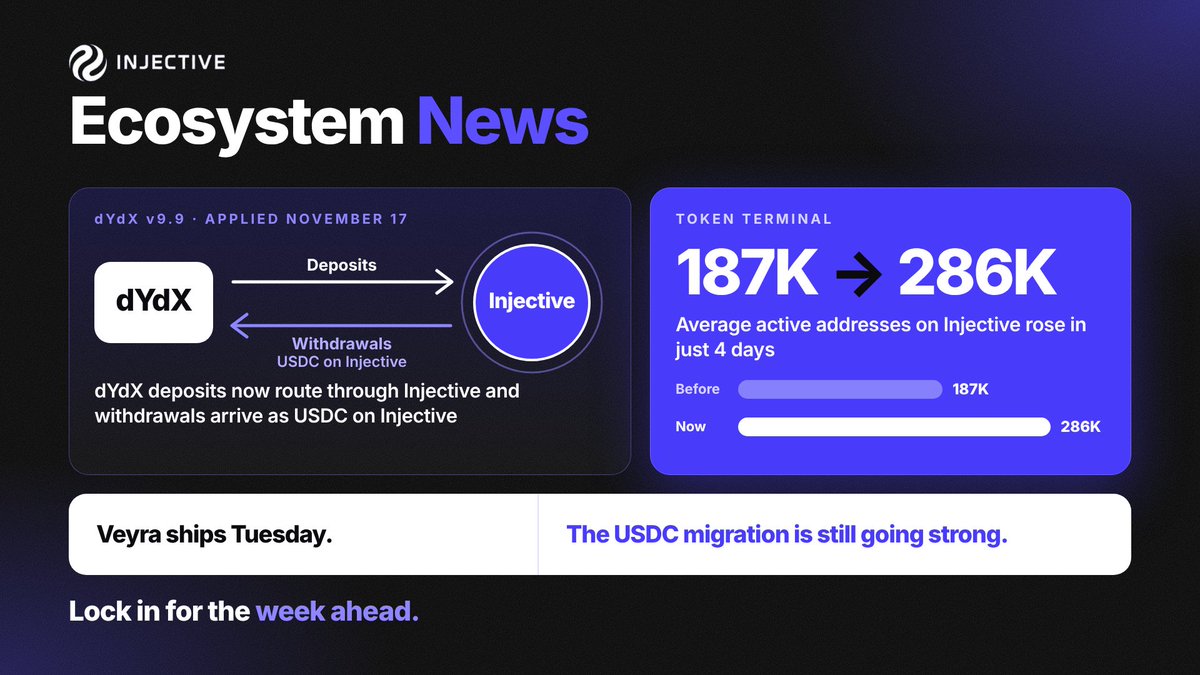
On November 17, @dYdX applied its v9.9 upgrade, bringing an important change to how deposits and withdrawals work. Deposits now route through Injective, while withdrawals arrive as USDC on Injective.
This creates a more direct connection between dYdX and Injective's infrastructure, while adding another source of activity to its USDC ecosystem.
Network activity is also showing encouraging growth. According to @tokenterminal, Injective's average active addresses increased from 187K to 286K in just four days.
That's a rise of roughly 53% in a very short period. While active addresses alone don't tell the whole story, the increase is a useful signal of growing participation across the network.
Then there's Veyra.
The mainnet upgrade is scheduled for Tuesday, November 24, bringing another step forward for Injective's institutional and RWA infrastructure. It also adds to the broader development happening across the ecosystem.
Between the continued USDC migration, new dYdX deposit and withdrawal routes, rising network activity and Veyra approaching, there's plenty to follow.
Injective isn't entering the week with just one headline. Several parts of its ecosystem are moving forward at once.
A lot to keep an eye on, Ninjas. 🥷
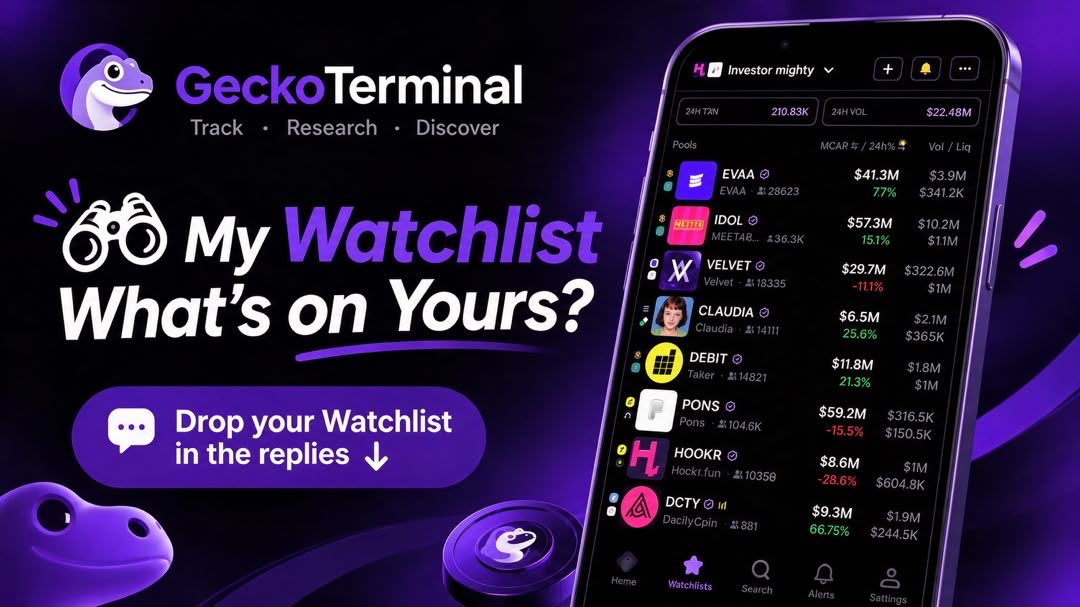
My GeckoTerminal Watchlist is a reflection of the different parts of Web3 I’m trying to understand.
Right now, I’m following $EVAA, $IDOL, $VELVET, $CLAUDIA, $DEBIT, $PONS, $HOOKR and $DCTY.
Each one gives me something different to look into.
With $EVAA and $DEBIT, I’m interested in how crypto is making financial services more accessible.
$IDOL and $CLAUDIA have me looking at the intersection of AI, online communities and crypto. I’m curious about how these projects turn attention and participation into something people actually use.
$VELVET and $HOOKR take me deeper into DeFi and the infrastructure behind onchain trading. I want to understand how these tools work and what kind of activity develops around them.
$PONS gives me another angle on token launches and participation in new onchain markets, while $DCTY lets me observe how a newer token market develops.
I don’t just open GeckoTerminal to check whether a token is up or down.
When I check my Watchlist, I look at price movements, trading volume, liquidity and transaction activity. I compare what I’m seeing across different pools and pay attention to how things change when I return.
A token moving up or down is only one part of the story. I want to understand what’s happening around it.
That’s why I keep these markets together in my Watchlist. It saves me from searching for the same pools repeatedly and gives me a starting point whenever I want to research.
Now I’m curious about your setup.
What tokens or pools are on your GeckoTerminal Watchlist? What made you add them, and what do you usually check first when you open the app?
Here is my watchlist 👇
https://t.co/tGHC9dg8mb
Drop your Watchlist or share a screenshot in the replies. I’d love to see what you’re researching and learn what others in the community are keeping an eye on.
Below is my entry for the OnePump Meme Contest! 👇
Featuring Canton Pepe, José, Uncle Walbert, Wojak, Lissa, Yessah Blessah, Happy and monkasaurus. All came together to enjoy the annual OnePad LaunchPad dinner.
But among that lot, guess who wasn't informed about the dinner? Monokosauraus. 😭
Bro wasn't invited, but that didn't stop him from finding his own way to crash the party! 💀
Enjoy the epic drama below 👇
[Recommended 1080p]
@onepumpcc
#OnePump #OnePumpMemeContest
1/5
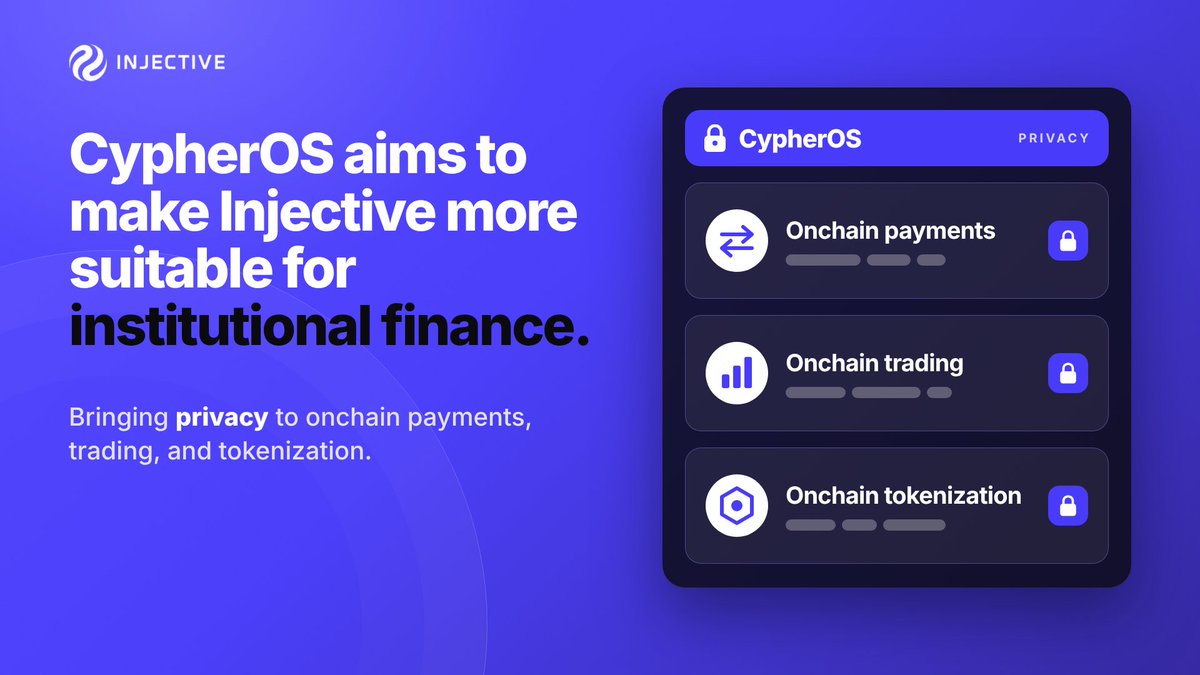
Privacy is still a major challenge for institutional adoption of public blockchains.
Financial institutions need onchain efficiency, but exposing every trade, client position and transaction isn't always an option. @injective is addressing this with CypherOS.
3 apps.
3 fees.
1 trade.
That's the hidden tax of crypto nobody puts on the chart.
You spot a move on one platform.
Swap into the right asset on another.
Park what's left somewhere else to earn.
Every hop is a new tab, a new login and a new fee.
By the time you're done, the trade you were right about has already paid everyone but you.
I made a video on the platform trying to fix this: ULANBIT.
Here's the full breakdown
🧵x 📹
Good morning and happy new week.
Sometimes the most useful trading insight comes after the position is closed.
A trader might remember the entry price and final result, but forget the smaller decisions made along the way.
That's why the "/pnl" and "/report" commands caught my attention in @Hypesium.
They give users a way to revisit their trading activity rather than treating every completed trade as an isolated event.
Over time, reviewing those records can help traders ask more meaningful questions:
- Am I exiting positions too early?
- Are my losses coming from repeated decisions?
- Does my actual performance match my strategy?
The goal isn't just to count wins and losses. It's to understand the decisions behind them.
Automation can handle parts of execution, but learning from your trading history still matters.
@Hypesium
I like the direction @injective is taking with Multi-VM because it addresses a problem that often gets overlooked in blockchain development: developers shouldn't have to choose between ecosystems just to build on the same network.
#Injective supports both WASM, through CosmWasm and Rust, and native EVM, through Solidity. More importantly, these environments operate within one network, sharing state, consensus and liquidity without needing bridges or separate rollups.
The MultiVM Token Standard takes this further by giving assets one identity and balance across both environments. Developers don't have to treat the same asset as two disconnected versions simply because it is being used by different virtual machines.
This also creates more flexibility for builders. Ethereum developers can continue using familiar Solidity tools, while Cosmos developers can work with Rust and CosmWasm. Both can still access Injective's native modules and shared financial infrastructure.
The interesting part is what this makes possible for applications.
With cross-VM composability, applications built in different environments can interact, access shared liquidity and even communicate within a single transaction. That opens the door to products that combine capabilities from both ecosystems instead of operating in isolated environments.
And Injective isn't stopping at Ethereum and Cosmos. Solana VM integration is also on the roadmap, potentially extending that flexibility even further.
I see Multi-VM as an important evolution for Injective. It's no longer just about providing infrastructure for trading and financial applications. It's about creating an environment where developers from different ecosystems can build together without giving up their existing tools, assets or access to liquidity. 🥷
That moment when everything suddenly clicks! 😂
The screen screaming SENSATIONAL! and the streamer completely caught up in the excitement on @1win.
It’s reactions like these that make live gameplay so fun to watch. You can feel the excitement through the screen! 👀
Be honest, how would you react if this happened to you 😂?
Let me in know in cs.